Can You Use Cat 5 Cable for Speakers? The Short Answer
Yes, can you use cat 5 cable for speakers? Absolutely. You can successfully repurpose standard Ethernet cable to wire your home audio system. However, because a single strand of Cat 5 wire is too thin to carry heavy audio signals safely, you must strip the cable and combine multiple internal wire strands together to lower the overall electrical resistance.

Many audio enthusiasts find themselves with spools of leftover networking cable after a home renovation. Instead of buying expensive, brand-name speaker wire, repurposing Cat 5 is a cost-effective alternative. When appropriately braided and terminated, Cat 5 can perform just as well—and sometimes better—than standard off-the-shelf audio cables.
TL;DR / Key Takeaways
- Direct Answer: Yes, Cat 5 cable works excellently for speaker wiring if you combine the internal twisted pairs.
- Wire Gauge (AWG) Matters: A single Cat 5 wire is 24 AWG (too thin). Combining all four solid-colored wires creates an 18 AWG equivalent, which is perfect for short runs.
- Cost-Effective: It is an amazing way to use scrap Ethernet cable instead of buying premium oxygen-free copper (OFC) speaker wire.
- Audiophile Approved: Braided Cat 5 designs are famous in DIY audio communities for lowering cable inductance, resulting in crisp high-frequency sound.
- Beware of High Power: Highly capacitive braided Cat 5 designs can strain some vintage amplifiers. Always check your amplifier’s impedance rating.
The Science of Audio: Why Can Cat5 Cable Be Used for Speakers?
To understand why this networking cable functions effectively in audio applications, we have to look at the anatomy of the wire itself. Standard Cat 5 (Category 5) or Cat 5e cable contains eight individual copper wires. These eight wires are divided into four twisted pairs.
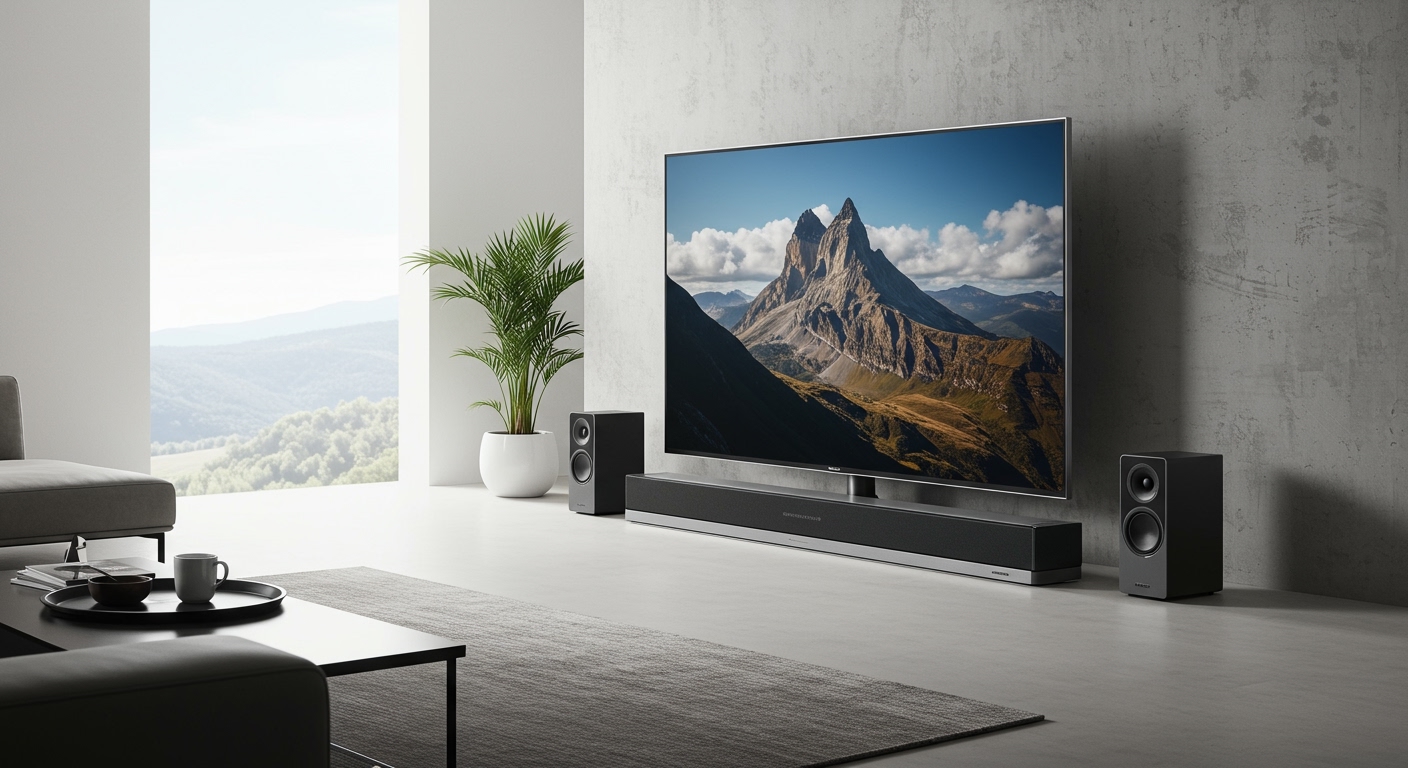
In the networking world, these twists cancel out electromagnetic interference (EMI) and crosstalk. In the audio world, these exact same properties can help deliver a pristine, noise-free audio signal from your A/V receiver to your bookshelf or floor-standing speakers.
Understanding American Wire Gauge (AWG)
Audio signals require a specific wire thickness to travel without losing power. We measure wire thickness using American Wire Gauge (AWG). The lower the AWG number, the thicker the wire, and the less electrical resistance it has.
A single strand inside a Cat 5 cable is typically 24 AWG. This is much too thin for a speaker. If you try pushing 100 watts of audio through a single 24 AWG wire, the wire will heat up, the sound will distort, and you risk damaging your amplifier.
However, wire gauge works on a logarithmic scale. Every time you double the number of identical wires, the AWG drops by three. Here is how you can achieve proper speaker wire thickness using Cat 5:
- 1 strand = 24 AWG
- 2 strands = 21 AWG
- 4 strands = 18 AWG (Good for small surround speakers)
- 8 strands = 15 AWG (Excellent for main left/right speakers)
- 16 strands (2 full Cat 5 cables) = 12 AWG (Audiophile grade)
By combining wires, the answer to “can cat5 cable be used for speakers” becomes a resounding yes, provided you do the math on your wire gauge.
Step-by-Step Guide: How Can You Use Cat 5 Cable for Speakers?
Creating your own DIY Cat 5 speaker cables requires a little patience, but the results are highly rewarding. As an audio technician, I have built dozens of these cables for budget home theater setups.
Here is my proven, first-hand method for converting a standard Ethernet cable into a high-quality speaker wire.
Step 1: Gather Your Tools and Materials
Before cutting into your cable, ensure you have the right tools on hand. You will need:
- A spool of Solid Copper Cat 5e or Cat 6 cable (Avoid Copper Clad Aluminum, or CCA, as it conducts heat poorly).
- Wire strippers capable of stripping 24 AWG wires.
- A utility knife to remove the outer PVC jacket.
- Banana plugs for clean connections.
- Heat shrink tubing for a professional finish.
- A digital multimeter to test for electrical shorts.
Step 2: Strip the Outer PVC Jacket
Determine the length of the speaker run you need, and add about 10% extra for slack. Cut the Cat 5 cable to size.
Using your utility knife, carefully slice off the outer PVC jacket. Be extremely careful not to nick the insulation of the eight tiny wires inside. Once the jacket is removed, you will see four pairs of twisted wires.
Step 3: Group the Wires by Polarity
Speakers require a positive (+) and a negative (-) connection. To keep things simple and to minimize cable capacitance, separate the wires by their color patterns.
- Positive Terminal (+): Group the four solid colors together (Solid Orange, Solid Blue, Solid Green, Solid Brown).
- Negative Terminal (-): Group the four striped colors together (Orange/White, Blue/White, Green/White, Brown/White).
By grouping the solids for positive and the stripes for negative, you create two distinct conductors. Because you are using four 24 AWG wires for each terminal, your resulting wire is a highly capable 18 AWG speaker cable.
Step 4: Strip and Twist the Ends
Using your 24 AWG wire strippers, remove about half an inch of insulation from the tips of all eight internal wires.
Take your four solid wires (positive) and tightly twist the bare copper ends together into a single, thick conductor. Repeat this process for the four striped wires (negative).
Pro Tip: For absolute best conductivity, I highly recommend using a soldering iron to apply a small amount of rosin-core solder to the twisted ends. This prevents the individual strands from fraying over time.
Step 5: Terminate with Banana Plugs
While you can technically screw bare copper directly into the back of your speaker, it looks messy and is prone to oxidization.
Slide a piece of heat shrink tubing over your newly twisted wire groups and use a heat gun to secure it. Then, insert the twisted positive bundle into a red banana plug and tighten the set screws. Insert the negative bundle into a black banana plug.
Step 6: Test for Shorts
This is the most critical step. Before plugging your new creation into your expensive Yamaha or Denon receiver, grab your digital multimeter.
Set the multimeter to the continuity setting (the one that beeps). Touch one probe to the positive banana plug and the other to the negative banana plug. If the multimeter beeps, you have a short circuit! You must find where the wires are touching and fix it. If there is no beep, your cable is safe to use.
The Advanced Audiophile Method: The Braided Cat 5 Cable
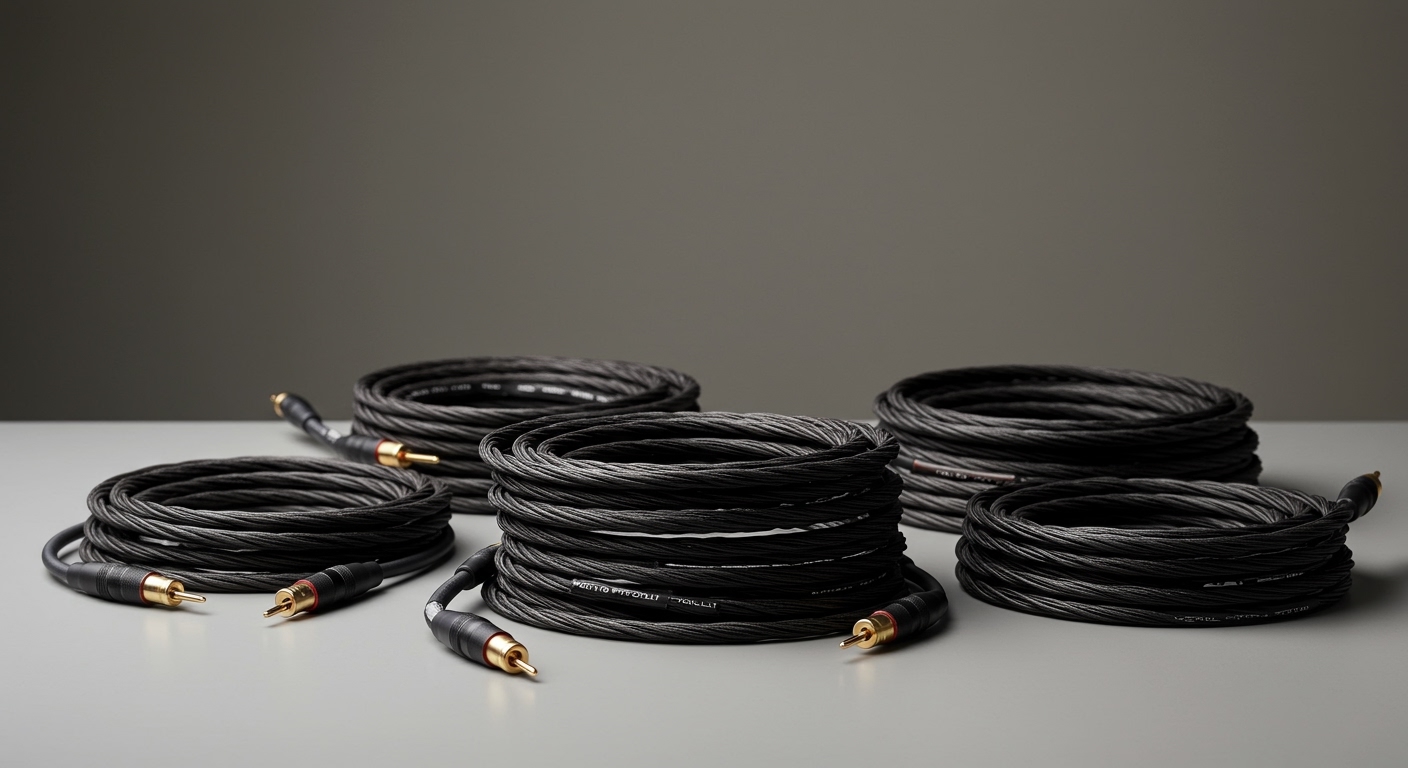
If you are researching “can you use cat 5 cable for speakers”, you might stumble upon legendary DIY designs like the Chris VenHaus Cat 5 Speaker Cable. Audiophiles have been using this specific braiding technique since the late 1990s.
Why Braid Ethernet Cables?
Standard speaker wire consists of two parallel conductors. This parallel design inherently creates high inductance. High inductance can subtly roll off high-frequency audio, making symbols and acoustic guitars sound slightly muffled.
By tightly braiding multiple Cat 5 cables together—often using 3 or even 6 entire cables per speaker—you force the positive and negative conductors to cross each other at 90-degree angles repeatedly.
The Pros and Cons of Braiding
- Pro: The 90-degree crossings nearly eliminate inductance. The high-frequency audio response is incredibly fast, transparent, and detailed.
- Con: Braiding massive amounts of wire drastically increases capacitance. Highly capacitive cables can act like a sponge for electrical current. If you use this braided method on a poorly designed or unstable vintage amplifier, it can trigger the amp’s protection circuitry or even cause it to overheat.
For 99% of home theater users, the simple “grouping” method outlined in my step-by-step guide is infinitely safer and still sounds fantastic.
Standard Speaker Wire vs. Repurposed Cat 5
How does networking cable stack up against the wire actually designed for audio? Let’s look at the objective data.
| Feature | Standard 16 AWG Speaker Wire | Standard Cat 5 (Grouped 18 AWG) | Braided Triple Cat 5 (13 AWG) |
|---|---|---|---|
| Primary Material | Oxygen-Free Copper (OFC) | Solid Core Copper | Solid Core Copper |
| Cost per Foot | $0.30 – $1.00 | Often Free (Leftovers) | Moderate (Requires 3x length) |