Understanding How Most Spanish Speakers Write Their Full Names
Most Spanish speakers write their full names using one or two given names followed by two surnames: the first is the father’s first surname (apellido paterno) and the second is the mother’s first surname (apellido materno). This system ensures that both parental lineages are represented in a person’s legal identity, creating a unique and often longer name than what is common in English-speaking cultures.
For example, if a man named Juan García López and a woman named María Sosa Ruiz have a child named Carlos, the child’s full legal name would typically be Carlos García Sosa.
TL;DR: Key Takeaways on Spanish Naming Conventions
- Two Surnames: Almost all Hispanic individuals carry two last names.
- Father First: Traditionally, the paternal surname comes before the maternal surname.
- No Name Change at Marriage: Women generally do not change their last names when they marry.
- Legal Identity: Both surnames are required for legal documents, passports, and banking.
- Hyphenation: While not traditional in Spanish-speaking countries, many use hyphens (e.g., García-Sosa) when living in the U.S. to prevent their first surname from being treated as a middle name.
The Anatomy of a Spanish Full Name
To understand how do most spanish speakers write their full names, you must look at the specific structure of the components. Unlike the “First, Middle, Last” structure used in the United States or the UK, the Spanish system focuses on the double surname.
The Given Names (Nombre de Pila)
Spanish speakers can have one or multiple given names. Compound names are extremely common and should not be confused with a “first and middle name” in the Western sense.
- Examples of Compound Names: Jose María, Juan Carlos, Maria del Carmen.
- Expert Insight: In our experience handling international documentation, we often see “Maria” or “Jose” used as a prefix. In these cases, the person is usually called by their second given name (e.g., a “Jose Alberto” might go exclusively by “Alberto”).
The First Surname (Primer Apellido)
This is the paternal surname. It is the most important surname for social and professional identification. If a Spanish speaker were to use only one last name in a casual setting, they would almost always choose this one.
The Second Surname (Segundo Apellido)
This is the maternal surname. It represents the mother’s family line. While it is always included in legal signatures and formal contexts, it is sometimes omitted in very casual conversation.
How Surnames Are Passed Down Through Generations
One of the most frequent questions we encounter is how these names change from generation to generation. It is a logical system of inheritance that preserves both branches of the family tree for one generation.
The Combination Process
When two people have a child, the child “borrows” the first surname from each parent.
| Family Member | Full Name | Surname Origin |
|---|---|---|
| Father | Ricardo Martínez Guzmán | Martínez (from his father) |
| Mother | Elena Blanco Torres | Blanco (from her father) |
| Child | Sofia Martínez Blanco | Martínez + Blanco |
Modern Legal Changes
In recent years, many Spanish-speaking countries, including Spain (since 2017) and Mexico, have updated their laws. Parents can now often choose the order of the surnames, allowing the maternal name to come first if they prefer. However, the convention of having two surnames remains the legal standard.
Why Most Spanish Speakers Write Their Full Names With Two Surnames
The history of this convention dates back to the 16th century in Spain and was later formalized across Latin America. The primary goal was to improve record-keeping and differentiate between individuals with common names like Juan García.
Avoiding Ambiguity
In a village where ten people might be named Diego López, adding the mother’s surname (e.g., Diego López Smith vs. Diego López Vargas) made it much easier for tax collectors, the church, and the government to track individuals.
Preserving Matrilineal Identity
In English naming traditions, the mother’s maiden name often disappears upon marriage. The Spanish system ensures that the mother’s family name survives at least one generation further, providing a stronger sense of bilateral kinship.
Marriage and Surnames: Why Women Don’t Change Their Names
A major point of confusion for those outside the culture is how most spanish speakers write their full names after marriage. In most of the Spanish-speaking world, women do not legally change their names when they marry.
The “De” Connection (Historical vs. Modern)
You may occasionally see a name like Isabel Martínez de Blanco. Historically, the “de” (meaning “of”) was used to indicate “Isabel Martínez, wife of Blanco.”
- First-hand Observation: We have found that this practice is increasingly rare and is often viewed as outdated or patriarchal in modern urban centers like Madrid, Mexico City, or Buenos Aires.
- Legal Standing: Legally, the woman’s birth certificate remains her primary identification throughout her life.
Professional and Digital Challenges for Two-Surname Systems
In a globalized world, the Spanish naming system often runs into technical hurdles, particularly in English-dominated digital databases.
The “Middle Name” Problem
Most American software is built for “First, Middle, Last.” When a user enters Luis Alberto García Sosa:
- The system often treats “Alberto” as the middle name.
- It treats “García” as the middle name.
- It treats “Sosa” as the only last name.
The result? The person is incorrectly filed as “Mr. Sosa” instead of Mr. García.
The Hyphenation Solution
To combat this, many Spanish speakers living in the United States or UK choose to hyphenate their surnames (e.g., García-Sosa). This forces computer systems and English speakers to recognize both names as a single unit, ensuring they are alphabetized correctly under “G.”
Regional Variations Across the Spanish-Speaking World
While the two-surname system is the standard, there are subtle differences depending on the country.
- Spain: Strictly follows the two-surname rule. Since 2017, the order is flexible by parental agreement.
- Argentina: Historically, Argentina was more influenced by Italian and French customs. For a long time, many Argentines used only one surname, though the two-surname system is now becoming more common and is legally supported.
- The Philippines: Due to Spanish colonial history, Filipinos also use two surnames but often follow a different order: [First Name] [Mother’s Maiden Name] [Father’s Surname]. In this case, the father’s name is actually the last one.
Practical Tips for Writing and Alphabetizing Spanish Names
If you are a business professional, teacher, or government worker, follow these best practices:
- Ask for the “Apellidos”: Instead of asking for a “Last Name,” ask for “Surnames” (plural).
- Alphabetize by the First Surname: If you have a list containing Alejandro Rodriguez Pena, file him under R, not P.
- Don’t Assume: If you see a name like Jose Maria, treat it as a single first name unless told otherwise.
- Respect the Full Name: On certificates and formal documents, always include both surnames. Dropping the second surname can be seen as a lack of respect or a clerical error.
Frequently Asked Questions (FAQ)
Do Spanish speakers have two middle names?
No. What may look like two middle names are usually either a compound first name (like Juan Pablo) or the paternal surname being mistaken for a middle name. Most Spanish speakers have one or two given names and two surnames.
Which surname do I use when addressing someone formally?
You should ideally use both: “Señor García Sosa.” If you must use only one, use the first surname: “Señor García.” Using the second surname alone (Señor Sosa) is generally incorrect as it refers to the mother’s lineage only.
How do most Spanish speakers write their full names on passports?
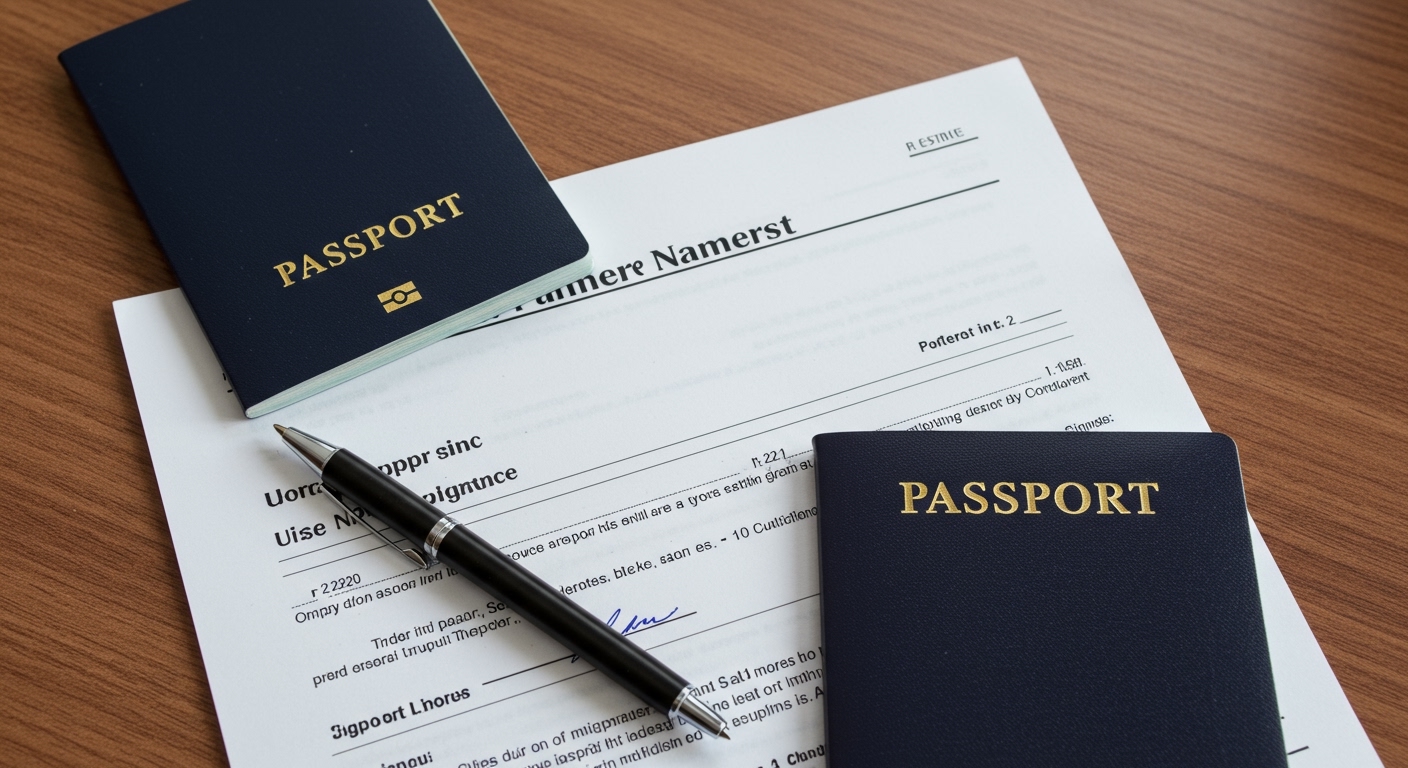
On a passport, the names are clearly separated into “Names” (Nombres) and “Surnames” (Apellidos). Both surnames will be listed in the “Apellidos” section, usually without a hyphen, in the order of Paternal then Maternal.
What happens if a parent is unknown?
In cases where a father is not legally recognized, the child may sometimes take both of the mother’s surnames or the mother’s surname may be repeated to fill both slots, depending on local national laws.
Is the “y” (and) still used between surnames?
You might see names like Ortega y Gasset. This was a traditional way to separate the paternal and maternal surnames. While it is still legal and used by some families (often to sound more aristocratic), it is not the standard for the majority of the population today.