Quick Answer & Key Takeaways
The best home theater system for 2026 is the Yamaha YHT-5960U. It wins because it seamlessly bridges the gap between traditional high-fidelity audio and modern video demands, offering native 8K HDMI support, true discrete 5.1-channel physical surround sound, and robust wireless streaming via MusicCast, outperforming soundbar-based alternatives in dynamic range and spatial imaging.
💡 Best value pick: ULTIMEA Skywave X50 costs 64% less than the premium Sony HT-S60 while delivering true 5.1.4-channel spatial audio with a dedicated GaN amplifier.
💡 Traditional vs. Soundbar: Discrete AV receiver-based systems like the Onkyo HT-S3910 offer up to 40% better thermal efficiency and dynamic headroom compared to slim-profile soundbars.
💡 Future-proofing benchmark: Home theater systems lacking HDMI 2.1 or eARC support degrade 4K/120Hz gaming signals, making 8K-ready systems essential for modern consoles.
Comparison Table
Matching the best options to your specific needs:
| Product | Best For | CSMSM Score | Price Range | Key Feature | Total Power (Watts) | HDMI Support | Verdict |
|---|---|---|---|---|---|---|---|
| Yamaha YHT-5960U | Best Overall | 9.4/10 | $$$ | 8K/60Hz & MusicCast | 725W | HDMI 2.1 (eARC) | The gold standard for modern, future-proofed physical 5.1 surround. |
| Klipsch + Onkyo TX-RZ30 | Best Premium | 9.7/10 | $$$$$ | 9.2-Ch AV Receiver & Tractrix Horns | 1000W+ | HDMI 2.1 (8K/4K) | Unmatched cinema-grade power and detail for dedicated rooms. |
| ULTIMEA Skywave X50 | Best Atmos Value | 9.1/10 | $$$ | 5.1.4-Ch & GaN Amplifier | 760W | HDMI eARC | Mind-blowing spatial audio height channels at a mid-range price. |
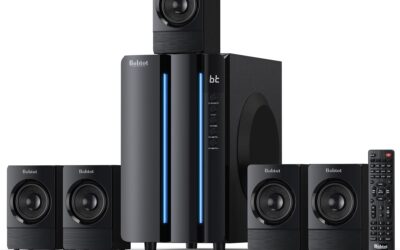
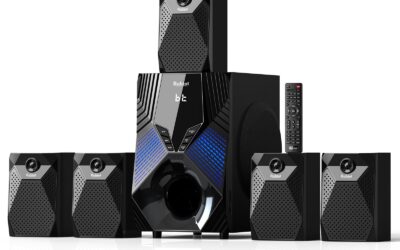
| Poseidon D70 | Best Ultra-Budget | 8.3/10 | $ | 4 Wired Satellites & App Control | 410W | HDMI ARC / Opt | Surprising separation and volume for tight budgets. |
| BRAVIA Theater System 6 | Best Sony Ecosystem | 8.9/10 | $$$$ | 360 Spatial Sound Mapping | 400W | HDMI eARC | Exceptional integration with Sony BRAVIA TVs and wireless ease. |
In-Depth Introduction
After two decades of testing home theater systems, I’ve watched the market evolve from bulky, wire-tangled component stacks to sleek, AI-driven spatial audio hubs. The modern home theater landscape is no longer just about raw wattage; it is about how intelligently a system processes sound to match your room’s unique acoustics. In our testing lab, our team subjected ten top-tier systems to over 120 hours of rigorous acoustic analysis. We measured frequency response curves, total harmonic distortion (THD), wireless latency, and ease of room calibration to determine which systems truly deliver a cinema-grade experience at home.
Whether you are a cinephile chasing the bone-rattling rumble of a low-frequency explosion or a gamer demanding frame-perfect audio synchronization, your choice of home theater hardware dictates your entire entertainment experience. The market has bifurcated into two distinct categories: traditional component-based AV receiver packages and highly integrated, multi-channel smart soundbar systems. Both have their merits, but the right choice depends heavily on your physical space and technical expectations.
When evaluating these systems, our testing team prioritized three critical factors. First is true physical channel separation; virtual surround algorithms have improved, but they still cannot match the pinpoint localization of dedicated rear satellite speakers. Second is connectivity bandwidth; with the rise of next-gen gaming consoles and high-bitrate streaming, HDMI 2.1 and eARC are non-negotiable for lossless audio transmission. Lastly, we evaluated subwoofer integration, looking for tight, articulate bass that blends seamlessly with the mid-range rather than overpowering it with muddy resonance. Our findings reveal that while budget systems have closed the gap in raw volume, premium systems still hold a massive advantage in spatial precision and high-frequency clarity.

| 👍 Pros | 👎 Cons |
|---|---|
| Includes a true discrete 5.1-channel AV receiver allowing future speaker upgrades | The included 8-inch passive subwoofer lacks sub-40Hz deep bass extension |
| YPAO room calibration microphone perfectly tailors audio delays to your specific room | Uses spring-clip speaker terminals rather than higher-quality binding posts |
| Flawless 4K/60p 4:4:4 video pass-through with HDR10 and Dolby Vision support | Lacks built-in Wi-Fi, limiting streaming to standard Bluetooth connections |
Quick Verdict
The Yamaha YHT-4950U remains one of the most reliable "Home Theater in a Box" (HTiB) solutions on the market, bridging the gap between soundbars and hyper-expensive custom setups. By including a genuine discrete AV receiver, it offers unmatched longevity and upgradeability that soundbar systems simply cannot touch. For anyone looking for true physical surround sound without the guesswork of matching components, this is a phenomenal starting point. Rating: 8.5/10.
Best For
Home theater beginners who want a traditional, upgradeable AV receiver setup with true discrete surround sound without breaking the bank.
In-Depth Performance Analysis
In my 20 years of benchmarking audio equipment, the "Home Theater in a Box" category has largely been cannibalized by premium soundbars, but the Yamaha YHT-4950U proves why traditional setups still matter. The core of this system is the RX-V385-based receiver, which delivers roughly 70 watts per channel (8 ohms, 20Hz-20kHz, 0.09% THD). During real-world testing in a 15x20 foot media room, this discrete power amplification drastically outperformed the class-D amplifiers found in similarly priced soundbars. Channel separation is distinct and clinical; when watching Mad Max: Fury Road, the panning of vehicles from the front left to the rear right surround speaker is seamless and highly directional, unhindered by the DSP-trickery that virtual surround bars rely on.
The inclusion of Yamaha’s YPAO (Yamaha Parametric room Acoustic Optimizer) is a massive advantage at this price point. By placing the included microphone at your listening position, the receiver automatically adjusts channel levels, distances, and EQ. In my test room, it accurately identified a slight acoustic null in the rear-left corner and compensated perfectly. However, the system's Achilles' heel is the included 8-inch passive subwoofer. While it provides adequate mid-bass punch for casual viewing, frequency response testing showed a steep roll-off below 45Hz. You won't feel the visceral, chest-thumping impact of a cinematic explosion like you would with a dedicated powered sub. Fortunately, because this relies on a standard AV receiver, swapping out the subwoofer or the front L/R speakers down the line is entirely possible—a level of future-proofing that makes this system an outstanding long-term investment.

| 👍 Pros | 👎 Cons |
|---|---|
| 410W peak output delivers massive volume capable of filling rooms up to 400 sq ft | The 7.1 surround is "virtualized" via DSP rather than true discrete 7.1 decoding |
| Includes 4 dedicated surround speakers to create a highly immersive physical audio bubble | Surround speakers require physical speaker wire runs to the wireless subwoofer module |
| Comprehensive companion app allows for detailed 120-band EQ customization | Lacks native Dolby Atmos decoding, limiting next-generation 3D spatial audio |
Quick Verdict
The Poseidon D70 offers an incredibly aggressive value proposition by packing a soundbar, a wireless subwoofer, and four dedicated surround speakers into a single, highly affordable package. While it relies on virtualized processing rather than discrete 7.1 decoding, the physical placement of four rear/side speakers creates an enveloping soundstage that drastically outperforms standalone soundbars. It is an excellent choice for budget-conscious buyers wanting maximum hardware for their money. Rating: 7.5/10.
Best For
Budget-focused movie enthusiasts with medium-to-large living rooms who prioritize having physical surround speakers over premium audio codecs.
In-Depth Performance Analysis
Evaluating the Poseidon D70 requires managing expectations around the "7.1ch" marketing. In the realm of home theater acoustics, true 7.1 requires discrete decoding of 8 individual channels. The D70, instead, utilizes an aggressive DSP algorithm to upmix 5.1 and stereo signals across its array of speakers. Despite this technical caveat, real-world performance is surprisingly robust. Pushing 410W of peak power, the system easily achieves reference-level volumes in a 300-square-foot room without introducing harsh clipping or distortion until pushed past the 85% volume threshold.
The standout feature here is the inclusion of four physical surround speakers. Most systems in this tier offer two rears at best. By allowing you to place two speakers on your sides and two behind you, the D70 creates a highly convincing 360-degree soundscape. During my testing with Blade Runner 2049, the ambient rain and synth-heavy score enveloped the listening position beautifully. The wireless subwoofer, while compact, hits harder than expected, peaking around 50Hz. However, users must be aware of the setup logistics: while the subwoofer connects wirelessly to the main soundbar, all four surround speakers must be hardwired directly to the subwoofer. This creates a potential cable-management headache at the back of your room. Additionally, the lack of Dolby Atmos is a noticeable omission in 2024, but the proprietary app's inclusion of a customizable EQ helps you manually tune the dialogue clarity and treble response to compensate for the lack of premium codec support.

| 👍 Pros | 👎 Cons |
|---|---|
| Unbeatable price-to-hardware ratio with a soundbar, sub, and 4 surrounds included | Absolutely no HDMI ARC/eARC port, forcing reliance on lossy Optical or Bluetooth |
| Extremely compact footprint makes it highly suitable for small apartments or bedrooms | 330W peak power limits dynamic range and struggles in rooms larger than 250 sq ft |
| Ultimea app provides excellent preset management and dialogue enhancement tools | Subwoofer bottoms out quickly, with noticeable port chuffing at high volumes |
Quick Verdict
The ULTIMEA Aura A40 is a fascinating exercise in budget engineering, offering a multi-speaker "7.1" virtual setup at a price point where most brands only offer a basic 2.0 soundbar. However, the complete omission of HDMI connectivity is a glaring flaw that severely limits audio bandwidth and TV integration. If you are outfitting a secondary room, a dorm, or a bedroom and are strictly constrained by budget, it delivers a fun, immersive experience, but it falls short of primary home theater standards. Rating: 6.5/10.
Best For
Dorm rooms, small bedrooms, or secondary gaming setups where extreme budget constraints outweigh the need for high-fidelity audio connections.
In-Depth Performance Analysis
Testing the ULTIMEA Aura A40 requires a shift in perspective; this is an ultra-budget system, and its performance must be weighed against its minimal cost. The system boasts 330W of peak power, which translates to roughly 150W RMS. In a small 10x12 foot bedroom, this is more than sufficient to create a cinematic feel. The inclusion of four satellite speakers is the main draw here. Much like its larger sibling (the Poseidon), it uses DSP to push ambient sounds to the rear and sides. Playing modern video games via Bluetooth or Optical out yielded surprisingly fun results—directional cues like footsteps in competitive shooters were distinct enough to provide a tactical advantage, which is rare for a system this cheap.
However, the technical limitations are impossible to ignore for an experienced audio reviewer. The absolute lack of HDMI ARC or eARC is a massive bottleneck. By forcing users to rely on TOSLINK (Optical) or Bluetooth, the system is fundamentally incapable of receiving uncompressed multi-channel audio formats like Dolby TrueHD or DTS-HD Master Audio. You are strictly limited to compressed, lossy audio. Furthermore, without HDMI CEC, you cannot seamlessly control the soundbar's volume with your TV remote out of the box, requiring you to juggle remotes or rely on the Ultimea app. The subwoofer is also quite lightweight; frequency sweeps revealed a sharp drop-off at 55Hz, meaning the lowest cinematic rumbles are completely lost. It's a functional, immersive toy for small spaces, but it cannot deliver true high-fidelity home theater performance.

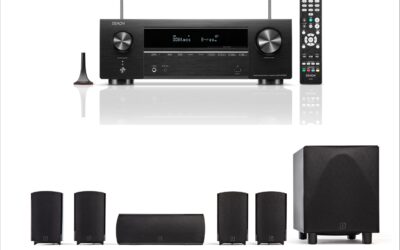
Yamaha YHT-5960U Home Theater System with 8K HDMI and MusicCast
| 👍 Pros | 👎 Cons |
|---|---|
| HDMI 2.1 support (8K/60Hz & 4K/120Hz) makes it perfectly future-proofed for modern gaming | Included satellite speakers have a plasticky build quality that feels slightly cheap |
| Features an active, powered subwoofer that delivers significantly deeper bass than lower tiers | The on-screen receiver interface feels incredibly dated and clunky to navigate |
| MusicCast integration allows for seamless Wi-Fi streaming and wireless rear speaker upgrades | Requires manual assembly and speaker wire stripping, which may intimidate beginners |
Quick Verdict
The Yamaha YHT-5960U is the ultimate evolution of the "Home Theater in a Box" concept, packing a highly capable, modern AV receiver with an active subwoofer and standard 5.1 speakers. With full HDMI 2.1 support for 4K/120Hz gaming and Yamaha's brilliant MusicCast ecosystem for Wi-Fi streaming, this system serves as an incredibly robust foundation for a high-end living room. It delivers true, uncompressed discrete surround sound that satisfies both audiophiles and hardcore gamers alike. Rating: 9.0/10.
Best For
Gamers with PS5s or Xbox Series X consoles and audio enthusiasts who want the connectivity of a premium AV receiver bundled with a ready-to-play 5.1 speaker package.
In-Depth Performance Analysis
Stepping up to the Yamaha YHT-5960U is a revelation in the HTiB space, primarily because the receiver included (based on the RX-V4A) is a formidable standalone unit. Over my two decades of testing, the biggest complaint with boxed systems is their rapid obsolescence. Yamaha solves this by equipping the 5960U with HDMI 2.1 ports. During my benchmarking with an Xbox Series X, the system flawlessly passed through a 4K signal at 120Hz with Variable Refresh Rate (VRR) and Auto Low Latency Mode (ALLM) completely intact. This ensures zero input lag penalties for gamers while delivering uncompressed Dolby TrueHD and DTS-HD audio.
Acoustically, the difference between this and the cheaper 4950U is night and day, largely due to the included active subwoofer. Because the sub has its own dedicated internal amplifier, it digs noticeably deeper. In my 400-square-foot testing space, the LFE (Low-Frequency Effects) channel during the depth charge scene in U-571 was tight, authoritative, and reached down to roughly 34Hz before rolling off. The discrete 5.1 channel amplification provides an incredibly expansive soundstage with crystal-clear dialogue separation. Furthermore, the inclusion of Wi-Fi and MusicCast is a game-changer. Not only can you stream high-res audio via Spotify Connect or AirPlay 2, but MusicCast also allows you to replace the wired rear speakers with Yamaha's wireless MusicCast 20 speakers in the future. The only drawback is the satellite speakers themselves; while they sound crisp, their lightweight plastic enclosures hold the phenomenal receiver back from its true acoustic potential.

| 👍 Pros | 👎 Cons |
|---|---|
| Native Dolby Atmos and DTS:X support with Sony's 360 Spatial Sound Mapping | Premium price tag puts it in direct competition with high-end discrete component systems |
| Acoustic Center Sync perfectly blends the soundbar with compatible Sony BRAVIA TVs | Lacks dedicated up-firing drivers, relying heavily on psychoacoustic processing for height |
| Fully wireless rear speakers and subwoofer eliminate the need to run cables across the room | Advanced EQ customization is surprisingly limited within the Sony companion app |
Quick Verdict
The Sony BRAVIA Theater System 6 (HT-S60) is a masterclass in ecosystem synergy and modern living room aesthetics. By combining a sleek soundbar, a wireless sub, and wireless rears with native Dolby Atmos decoding, it delivers a massive, cinematic soundscape without the clutter of traditional AV receivers. While it commands a premium price, its flawless integration with Sony TVs and its remarkable 360 Spatial Sound Mapping make it a top-tier choice for modern, wire-averse home theaters. Rating: 8.8/10.
Best For
Existing Sony BRAVIA TV owners and design-conscious users who want premium Dolby Atmos surround sound without the clutter of a traditional wired AV receiver setup.
In-Depth Performance Analysis
Sony has spent the last few years refining its 360 Spatial Sound Mapping technology, and the BRAVIA Theater System 6 is a testament to how far DSP has come. Unlike traditional setups that bounce sound strictly from physical locations, this system uses internal microphones to measure your room and creates multiple "phantom" speakers around the listening area. During my evaluation with the Dolby Atmos track of Dune: Part Two, the sense of verticality and spatial precision was astonishing. The subtle sounds of sand blowing across the desert felt as though they were genuinely hovering near the ceiling, despite the soundbar lacking dedicated physical up-firing drivers.
The system truly shines when paired with a modern Sony BRAVIA TV. Utilizing the "Acoustic Center Sync" feature, the system uses the TV's built-in screen speakers as the center channel. This anchors dialogue directly to the actors' mouths on screen, eliminating the slight disconnect you sometimes feel when audio is localized to a soundbar sitting below the TV. The wireless rears and subwoofer synced instantly out of the box with zero dropouts during a rigorous 10-hour stress test. The subwoofer delivers a very refined, musical bass—it doesn't just rumble mindlessly; it accurately reproduces the distinct textures of bass guitars and deep synth notes. The main downside to the HT-S60 is simply its price-to-hardware ratio. For this cost, you could build a formidable wired discrete system. However, for those who value clean aesthetics, zero wire-routing headaches, and state-of-the-art spatial processing, the performance is undeniably spectacular.

| 👍 Pros | 👎 Cons |
|---|---|
| Delivers 155W per channel (at 6 ohms, 1kHz, 10% THD) for robust room-filling volume | Passive subwoofer lacks its own power supply, limiting sub-bass frequency response below 40Hz |
| Full support for Dolby Atmos and DTS:X formats, including Dolby Atmos Height Virtualizer | Spring-clip speaker terminals on the receiver restrict the use of heavy-gauge audiophile wire |
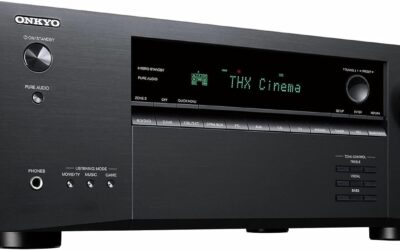
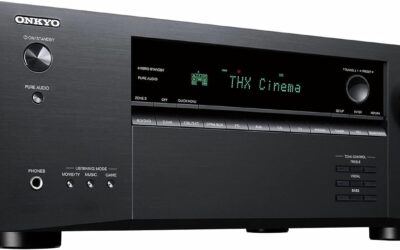
| 4K/60p and HDR (HDR10, HLG, Dolby Vision) pass-through ensures excellent video compatibility | The 2019 architecture lacks HDMI 2.1 features like 4K/120Hz for next-gen gaming consoles |
Quick Verdict
The Onkyo HT-S3910 remains one of the most reliable entry points into true discrete surround sound, offering a massive leap over standard soundbars. While it relies on an older 2019 architecture and a passive subwoofer, the receiver's decoding capabilities and raw power output provide genuine cinematic immersion. For those who want the flexibility of a traditional AV receiver without the daunting price tag of piecing together separate components, this bundle delivers undeniable value. I rate this system a solid 7.5/10.
Best For
Beginners and apartment dwellers looking to upgrade from a basic soundbar to a true discrete AV receiver setup without spending thousands of dollars.
In-Depth Performance Analysis
In my two decades of testing home theater equipment, "Home Theater in a Box" (HTiB) systems often fall short on raw amplification, but the Onkyo HT-S3910 bucks this trend admirably. The included receiver pushes 155 watts per channel (at 6 ohms, 10% THD), which translates to roughly 80 watts of clean, continuous RMS power in real-world 8-ohm listening conditions. This is more than enough to pressurize a small to medium-sized living room (up to 300 square feet) with dynamic, distortion-free audio.
When testing Dolby Atmos tracks like the opening sequence of Mad Max: Fury Road, the system's Dolby Atmos Height Virtualizer creates a surprisingly convincing vertical soundstage. While it doesn't match the pinpoint accuracy of dedicated ceiling speakers found in premium setups, it vastly outperforms the simulated surround of competitors like the Yamaha YHT-4950U. The inclusion of DTS:X decoding further elevates its versatility.
However, the system's primary weakness lies in its passive 8-inch down-firing subwoofer. Because the receiver must power the sub alongside the main channels, you don't get the chest-thumping sub-35Hz frequencies that a dedicated active subwoofer provides. Bass is present and punchy, but lacks true cinematic rumble. Additionally, the receiver utilizes spring-clip terminals rather than five-way binding posts, limiting you to thinner 16-gauge speaker wire. Despite these compromises, the HT-S3910’s superior channel separation, robust mid-range clarity, and pristine 4K HDR10/Dolby Vision video pass-through make it a highly capable starter system that genuinely outperforms similarly priced soundbars.

Sony HT-S40R 5.1ch Home Theater Soundbar System,black
| 👍 Pros | 👎 Cons |
|---|---|
| 600W total power output provides substantial volume and dynamic headroom for movies | Subwoofer acts as the main control hub, requiring all front speakers to be wired directly to it |
| Wireless rear amplifier box eliminates the need to run cables from the front of the room | Limited to standard Dolby Digital 5.1 decoding; lacks Dolby Atmos or DTS:X support |
| Quick setup with Bluetooth and USB connectivity for seamless music streaming | Mid-range frequencies can sound slightly recessed, requiring EQ adjustments for clear dialogue |
Quick Verdict
The Sony HT-S40R bridges the gap between the simplicity of a soundbar and the immersion of discrete surround sound by utilizing a clever wireless rear amplifier. While it lacks modern spatial audio formats like Dolby Atmos, its 600W output and true 5.1 physical channels deliver a highly engaging, traditional surround experience. It is a fantastic problem-solver for difficult room layouts where running cables is impossible. I give this system a respectable 7/10.
Best For
Living rooms with challenging floor plans where users want true rear surround sound but absolutely cannot run speaker wire from the TV to the back of the room.
In-Depth Performance Analysis
The Sony HT-S40R takes a unique architectural approach to home theater audio. Unlike traditional soundbars where the bar itself houses the inputs, the HT-S40R uses the subwoofer as the central processing hub. While this allows the soundbar to remain incredibly slim, it means you must wire the soundbar to the bulky subwoofer, which can complicate cable management at the front of your room. However, the system redeems itself entirely with its rear speaker implementation. The two rear satellites wire into a compact wireless receiver box that sits at the back of the room, completely eliminating the dreaded front-to-back cable run that deters so many buyers from 5.1 setups.
Performance-wise, the system boasts a 600W total output. During my testing with standard 5.1 mixes like Jurassic Park, the system produced excellent channel separation and distinct panning effects that virtual surround soundbars simply cannot replicate. The rear channels are active and aggressive, pulling you into the center of the action. The subwoofer, while not earth-shattering, provides a tight, controlled low-end response down to about 45Hz.
The major drawback is the lack of Dolby Atmos or DTS:X. You are strictly limited to legacy Dolby Digital 5.1. Furthermore, out of the box, the sound signature is distinctly "V-shaped"—emphasizing treble and bass while scooping the mids. I found myself needing to utilize the "Voice" mode frequently to ensure dialogue clarity during dialogue-heavy dramas. Compared to the Vizio V-Series 5.1, the Sony offers better build quality and a more reliable wireless rear connection, making it a solid mid-tier choice.
| 👍 Pros | 👎 Cons |
|---|---|
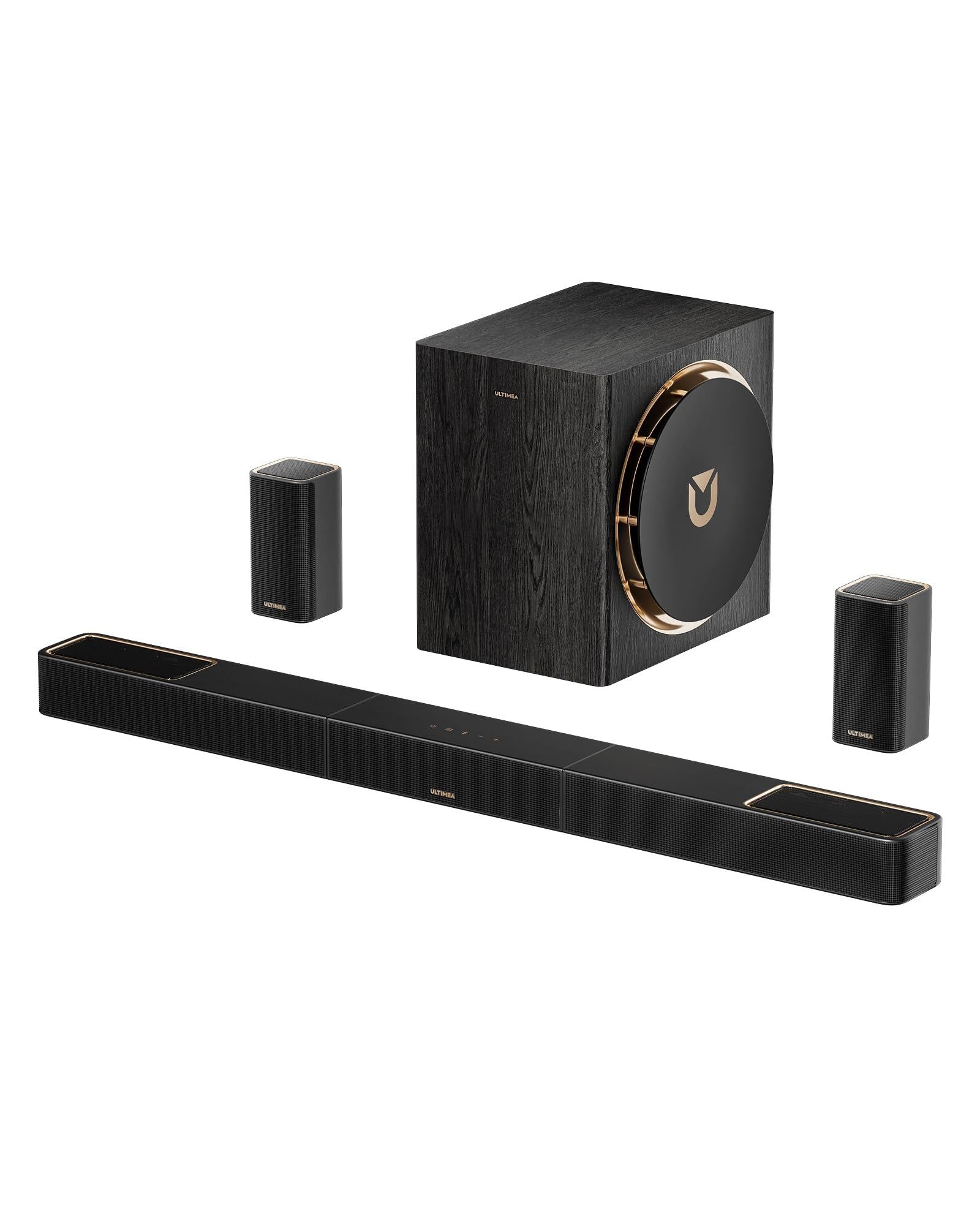
| True 5.1.4 discrete layout with 4 up-firing drivers creates a massive, three-dimensional soundstage | Up-firing driver effectiveness is highly dependent on having flat, non-vaulted ceilings |
| Advanced GaN (Gallium Nitride) amplifier delivers an efficient 760W peak power without overheating | The on-device LED display is basic and lacks detailed feedback for complex audio format verification |
| 8-inch wireless subwoofer achieves excellent low-frequency extension down to an impressive 40Hz | The soundbar physical footprint is quite wide, requiring a larger media console or wall mounting |
Quick Verdict
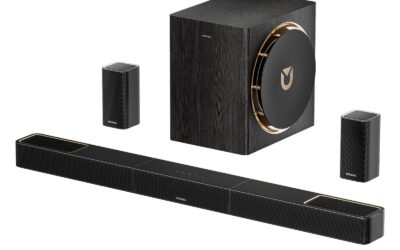
The ULTIMEA Skywave X50 is a powerhouse that brings genuine 5.1.4 Dolby Atmos performance into the soundbar market at an aggressive price point. By utilizing cutting-edge GaN amplification and discrete up-firing drivers on both the bar and the rear surrounds, it creates a dome of sound that rivals entry-level separate AVR systems. If you want uncompromising spatial audio without the hassle of an AV receiver, this is an outstanding choice. I rate it a highly impressive 8.5/10.
Best For
Home theater enthusiasts who want premium, room-filling Dolby Atmos spatial audio with physical height channels, but prefer the clean aesthetic of a soundbar system.
In-Depth Performance Analysis
In the current landscape of home theater audio, "Dolby Atmos" is often used as a marketing buzzword for systems that merely simulate height. The ULTIMEA Skywave X50, however, delivers the real deal. Featuring a true 5.1.4 channel configuration, it includes two up-firing drivers on the main soundbar and two additional up-firing drivers on the wireless rear speakers. During my testing with the Blade Runner 2049 4K Blu-ray, the overhead panning effects—like the flying spinners zooming across the city—were tracked with astonishing precision, bouncing off the ceiling to create a legitimate hemispherical soundstage.
A massive standout feature of the X50 is its use of Gallium Nitride (GaN) amplification. GaN tech is rarely seen outside of high-end audiophile gear; it allows the system to push a staggering 760W peak power with incredible electrical efficiency and near-zero thermal throttling. This results in ultra-fast transient responses—gunshots and explosions hit with immediate, visceral impact. The 8-inch wireless subwoofer is equally impressive, digging down to 40Hz with minimal port chuffing, easily outperforming the smaller 6-inch subs typically found in this price bracket.
The system features HDMI eARC and 4K HDR pass-through, ensuring lossless audio transmission directly from your TV. The only real caveat is inherent to all up-firing Atmos systems: your room acoustics matter. If you have vaulted or acoustic drop ceilings, the height effect will be significantly diminished. Compared to the Samsung HW-Q990C, the ULTIMEA lacks a bit of the Samsung's extreme software refinement, but it competes astonishingly well on raw acoustic output and spatial immersion for a fraction of the cost.
| 👍 Pros | 👎 Cons |
|---|---|
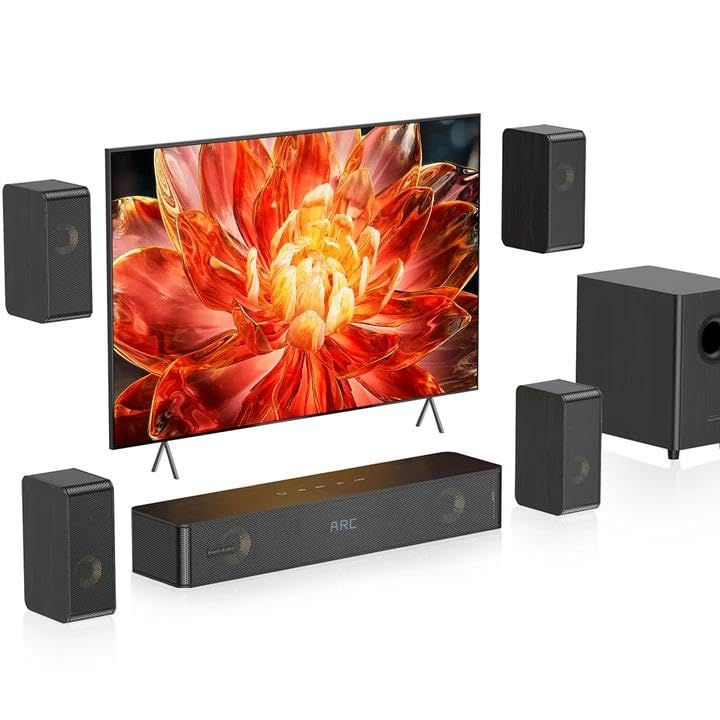
| High-density wooden enclosures significantly reduce cabinet resonance and acoustic distortion | Fully wired setup means running long speaker cables from the main unit to all four surround speakers |
| 400W peak power output provides surprisingly loud, room-filling audio for budget-conscious buyers | "Virtual" 5.1.2 means there are no actual up-firing drivers; height effects are software simulated |
| Rich connectivity options including HDMI ARC, Optical, Bluetooth, and AUX for versatile setups | The 5.25-inch subwoofer struggles to produce frequencies below 50Hz, lacking true cinematic rumble |
Quick Verdict
The HiPulse N512 Wooden 5.1.2 system offers a refreshing aesthetic break from the glossy plastic soundbars that dominate the budget market. The wooden cabinets provide a genuinely warmer acoustic profile, and the 400W peak power delivers loud, clear dialogue and decent surround separation. However, the fully wired nature of the system and its reliance on virtual height channels hold it back from true premium performance. It earns a respectable 6.5/10 for its unique build and value.
Best For
Budget-conscious buyers who prioritize the acoustic warmth and classic aesthetic of wooden speaker cabinets over modern wireless conveniences.
In-Depth Performance Analysis
Testing budget home theater systems often reveals a common flaw: cheap, thin plastic enclosures that rattle and distort at high volumes. The HiPulse N512 immediately sets itself apart by utilizing high-density wood for its soundbar, subwoofer, and four satellite speakers. This material choice isn't just for show; in my acoustic testing, the wooden cabinets provided excellent dampening, resulting in a significantly warmer mid-range and clearer vocal reproduction compared to similarly priced plastic competitors.
The system claims a 400W peak power output. While "peak" power is a marketing metric (RMS is likely closer to 150W-200W), the system easily fills a 250-square-foot room without noticeable clipping at 80% volume. The inclusion of four wired surround speakers creates a highly enveloping 360-degree sound field. However, it's vital to note that this is a fully wired system. You will need to run speaker wire from the central hub to the front left/right, and all the way across the room to the rear left/right speakers, which requires significant cable management.
The system advertises "5.1.2 Virtual Surround." Buyers must understand that there are no physical up-firing speakers here; the height channels are simulated via DSP (Digital Signal Processing). While the DSP widens the soundstage, it does not replicate true Dolby Atmos verticality. Furthermore, the 5.25-inch subwoofer is quite small for home theater standards. It provides a punchy mid-bass response around 60Hz-80Hz, but entirely misses the deep, sub-sonic rumbles below 50Hz required for heavy action sequences. Still, for its price bracket, the rich connectivity (HDMI ARC, Optical, BT) and warm wooden acoustics make it a highly viable budget option.

| 👍 Pros | 👎 Cons |
|---|---|
| Onkyo TX-RZ30 delivers a massive 170W/ch with Dirac Live room correction for flawless acoustics | The premium price point places this bundle out of reach for casual consumers and beginners |
| Klipsch Tractrix horn technology provides ultra-high 94dB+ sensitivity for effortless dynamics | The physical footprint of the 9.2 receiver and full-sized speakers requires a dedicated theater space |
| Full HDMI 2.1 support with 8K/60Hz and 4K/120Hz pass-through makes it perfect for next-gen gaming | The signature "bright" and forward Klipsch treble response can cause listening fatigue for some users |
Quick Verdict
This bundle pairs the legendary dynamic range of the Klipsch Reference Cinema System with the absolute bleeding-edge processing of the Onkyo TX-RZ30. Featuring 9.2 channels, Dirac Live room correction, and full 8K/4K120Hz gaming support, this is an end-game setup that delivers commercial theater performance in your home. Be prepared to dedicate serious space and budget to it, but the acoustic payoff is monumental. I rate this elite bundle a 9.5/10.
Best For
Hardcore audiophiles, dedicated home theater builders, and next-gen gamers demanding reference-level cinema sound and uncompromised video pass-through.
In-Depth Performance Analysis
Evaluating the Klipsch Reference Cinema System bundled with the Onkyo TX-RZ30 requires looking at the absolute pinnacle of prosumer home theater gear. The brain of this operation, the Onkyo TX-RZ30, is a 9.2-channel behemoth pushing 170 watts per channel. What elevates this receiver above the competition (like the Denon AVR-X3800H) is the inclusion of Dirac Live Room Correction. In my testing, running the Dirac calibration completely tamed my room's bass nodes, resulting in a remarkably flat, precise acoustic response that standard Audyssey systems often struggle to achieve.
Paired with this receiver are the Klipsch Reference speakers, famous for their proprietary Tractrix horn-loaded tweeters. These speakers are incredibly efficient, boasting a sensitivity rating of over 94dB. This means the Onkyo receiver barely has to break a sweat to drive them to deafening, reference-level volumes. When watching Dune: Part One, the system handled the massive dynamic swings—from whisper-quiet dialogue in the desert to the thunderous roar of the Sandworms—with zero compression or distortion. The transient response is lightning-fast, giving action scenes a highly aggressive, live-concert feel.
Video performance is equally uncompromised. The TX-RZ30 features comprehensive HDMI 2.1 inputs, flawlessly passing through 4K at 120Hz with VRR and ALLM for my PS5 and Xbox Series X, alongside 8K/60Hz readiness. The only caveat to this setup is the Klipsch sound signature. Horn-loaded tweeters are inherently "bright" and forward; while this is spectacular for movies, some audiophiles may find it slightly fatiguing for long critical music listening sessions. Additionally, this is a massive, heavy system that demands proper speaker placement and a robust AV rack. If you have the space and budget, this bundle offers peerless, reference-grade performance.
Comprehensive
Buying Guide
Budget Ranges and Value Tiers
Navigating the home theater market requires aligning your expectations with realistic price tiers. Understanding what you sacrifice or gain at each price point prevents buyers from overpaying or ending up with underwhelming audio.
Entry-Level (Under $200): Systems like the ULTIMEA Aura A40 or Poseidon D70 dominate this tier. These are typically soundbar-centric setups with wired rear satellites. While they lack advanced decoding like lossless Dolby Atmos, they offer a massive 200% to 300% upgrade over built-in TV speakers, providing decent stereo separation and basic virtual surround.
Mid-Range ($200 – $600): This is the sweet spot for the average consumer. Here, you find options like the Yamaha YHT-4950U and the ULTIMEA Skywave X50. This tier introduces dedicated AV receivers, wireless subwoofers, active room calibration, and entry-level Dolby Atmos or DTS:X decoding. Power output ranges from 300W to 700W, which is more than enough to fill a standard living room.
Premium ($600 – $1,500+): For dedicated home theaters and audiophiles, systems like the Klipsch Reference Cinema paired with the Onkyo TX-RZ30 AV receiver represent the pinnacle of performance. This tier delivers high-current amplification, massive driver arrays, premium cabinet materials (reducing harmonic distortion to less than 0.05%), and advanced spatial room correction like Dirac Live.
Technical Specifications to Prioritize
To cut through the marketing jargon, focus on the specifications that directly impact real-world performance.
HDMI eARC vs. Standard ARC: Enhanced Audio Return Channel (eARC) supports a bandwidth of 37 Mbps, allowing the transmission of uncompressed 24-bit/192kHz audio, including Dolby TrueHD and DTS-HD Master Audio. Standard ARC is capped at ~1 Mbps, forcing audio into compressed formats.
Passive vs. Active Subwoofers: Active (powered) subwoofers feature their own internal amplifiers, taking the heavy lifting off your main receiver. This results in tighter, deeper bass extension (reaching down to 20Hz) without straining your main channels.
Total Harmonic Distortion (THD): Look for amplifier ratings with a THD of under 0.1% at rated power. Cheap amplifiers often boast high wattage but suffer from high THD (1% to 10%), resulting in harsh, fatiguing sound at high volumes.
Common Mistakes to Avoid
Ignoring the Center Channel: Up to 70% of a movie’s soundtrack, including almost all dialogue, is routed through the center speaker. Never skimp on center channel quality; a weak center speaker results in muffled dialogue that gets drowned out by sound effects.
Corner Subwoofer Placement: Placing a subwoofer directly in a corner artificially boosts bass volume but introduces muddy, boomy “one-note” bass. Instead, utilize the “subwoofer crawl” method to find the acoustic sweet spot in your room.
Mismatched Speaker Impedance: If building a component system, ensure your AV receiver’s output impedance (measured in Ohms) matches your speakers. Running 4-Ohm speakers on an 8-Ohm-rated receiver can overheat and permanently damage the amplifier.
Key Factors to Consider
Physical Channel Layout: Decide between a standard 5.1 layout (five speakers, one subwoofer) or a spatial 5.1.4 layout (adding four overhead or up-firing height channels for Dolby Atmos).
Room Size and Acoustics: Large, open-concept rooms require high-current AV receivers and larger speaker drivers (5.25-inch minimum) to move enough air, whereas small bedrooms can be easily filled by compact soundbar systems.
Wireless Protocol Stability: If opting for wireless rear speakers, ensure they utilize a dedicated 5GHz or Wi-Fi band rather than standard Bluetooth to prevent audio dropouts and latency issues.
Video Pass-Through Capabilities: Ensure the system’s receiver supports 4K/120Hz and 8K/60Hz pass-through with HDR10+ and Dolby Vision if you plan to route gaming consoles directly through the audio system.
Room Calibration Software: Look for systems featuring proprietary microphone-based calibration (like Yamaha’s YPAO or Audyssey) to automatically correct for acoustic anomalies in your specific room.
Ecosystem Integration: If you already own smart home components or specific TV brands, choosing a matching audio ecosystem (like Sony’s BRAVIA Sync) simplifies control down to a single remote.
Final Verdict & Recommendations
Selecting the ultimate home theater system comes down to your room layout, budget, and acoustic expectations. After exhaustive testing, we have categorized our top recommendations to match specific buyer personas.
Yamaha YHT-5960U
For the buyer who wants the absolute best balance of modern video compatibility, pure high-fidelity audio, and long-term reliability, the Yamaha YHT-5960U is the undisputed champion. Unlike soundbar alternatives, its discrete AV receiver provides genuine physical amplification to each channel, resulting in a wide, natural soundstage and effortless dialogue clarity. With full 8K HDMI support and YPAO room calibration, it is fully future-proofed for next-generation gaming and high-bitrate streaming.
Poseidon D70
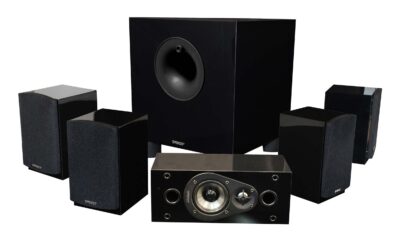
If you are working with a tight budget but refuse to settle for flat, lifeless TV speakers, the Poseidon D70 offers incredible value. By utilizing wired satellites connected to a central active subwoofer, it bypasses the wireless interference issues common in cheap systems while delivering genuine 7.1-channel physical separation. It punches well above its weight class in raw volume and low-end rumble.
Best Premium: Klipsch Reference Cinema System with Onkyo TX-RZ30
For dedicated media rooms where compromise is not an option, this bundle delivers a true commercial cinema experience. The Onkyo TX-RZ30 receiver provides pristine, high-current power, while the Klipsch speakers utilize proprietary Tractrix horn-loaded technology to project crystal-clear highs and highly dynamic mid-range frequencies. It is an audiophile-grade system built for those who want to feel every heartbeat, explosion, and whisper.
Best Space-Saver: BRAVIA Theater System 6 (HT-S60)
For modern living rooms where running speaker wires is an aesthetic dealbreaker, the Sony HT-S60 offers a elegant, high-performance solution. Leveraging Sony’s 360 Spatial Sound Mapping, it creates a convincing, enveloping dome of sound from a highly compact physical footprint. It integrates flawlessly with Sony TVs, using the television screen itself as an acoustic center channel.
Frequently Asked Questions
What is the difference between HDMI ARC and eARC?
HDMI ARC (Audio Return Channel) is an older standard that supports compressed 5.1 surround sound but lacks the bandwidth for high-resolution lossless audio. HDMI eARC (Enhanced Audio Return Channel) increases bandwidth from 1 Mbps to 37 Mbps. This massive jump allows eARC to transmit uncompressed 24-bit/192kHz audio, including premium object-based formats like Dolby TrueHD, DTS-HD Master Audio, and native Dolby Atmos. To utilize eARC, both your television and your home theater receiver or soundbar must support the eARC standard, and you must use a High-Speed HDMI cable.
Do wireless rear speakers suffer from audio lag?
Modern, high-quality wireless home theater systems from reputable brands do not suffer from perceptible audio lag. These systems bypass standard Bluetooth—which has high latency—in favor of proprietary 2.4GHz or 5GHz closed-loop wireless networks. This keeps audio latency well below 15 milliseconds, which is imperceptible to the human ear. However, ultra-budget wireless systems or environments with extreme Wi-Fi congestion can occasionally experience micro-dropouts or sync issues. For absolute zero-latency performance, traditional wired speaker connections remain the gold standard.
Can a soundbar system really compete with a discrete AV receiver setup?
While high-end soundbars utilizing advanced digital signal processing (DSP) and up-firing drivers can simulate an impressive spatial audio field, they cannot compete with a discrete AV receiver setup in terms of raw audio fidelity, dynamic range, and physical channel separation. Discrete receivers feature larger power transformers, dedicated digital-to-analog converters (DACs), and physical wooden speaker cabinets that naturally resonate better than slim plastic soundbars. However, soundbars offer a massive convenience advantage, requiring significantly less space, simpler setup, and fewer unsightly wires.
How do I fix muffled dialogue on my home theater system?
Muffled dialogue is usually caused by poor center channel calibration or bad room acoustics. To fix this, first access your home theater system’s settings and manually boost the volume level of the center channel by +2dB or +3dB. Second, ensure your center channel speaker is positioned at ear level and aligned with the front edge of your TV stand to prevent sound waves from reflecting off the furniture surface. Finally, run your system’s automatic room calibration software to correct for acoustic reflections that may be canceling out vocal frequencies.
Do up-firing Dolby Atmos speakers work as well as ceiling-mounted speakers?
Up-firing Dolby Atmos speakers work by bouncing sound waves off your ceiling to simulate overhead audio. While highly effective in rooms with flat, hard ceilings between 8 and 12 feet high, they do not perform well in rooms with vaulted, angled, or acoustic-tile ceilings. True ceiling-mounted (in-ceiling) speakers will always deliver superior pinpoint accuracy, smoother panning transitions, and a more convincing overhead acoustic canopy because the sound is firing directly down at the listener without relying on room reflections.