Understanding the Power of a Strategic List of Speakers
Creating a list of speakers is the foundational step in transforming a standard event into a high-impact experience that drives engagement and ROI. To build a successful list, you must identify subject matter experts (SMEs), vet their previous performance via video reels, and organize their contact data within a centralized Event Management System (EMS) or spreadsheet. By prioritizing diversity, technical expertise, and audience alignment, you ensure your event delivers unique value that cannot be found via a simple Google search.
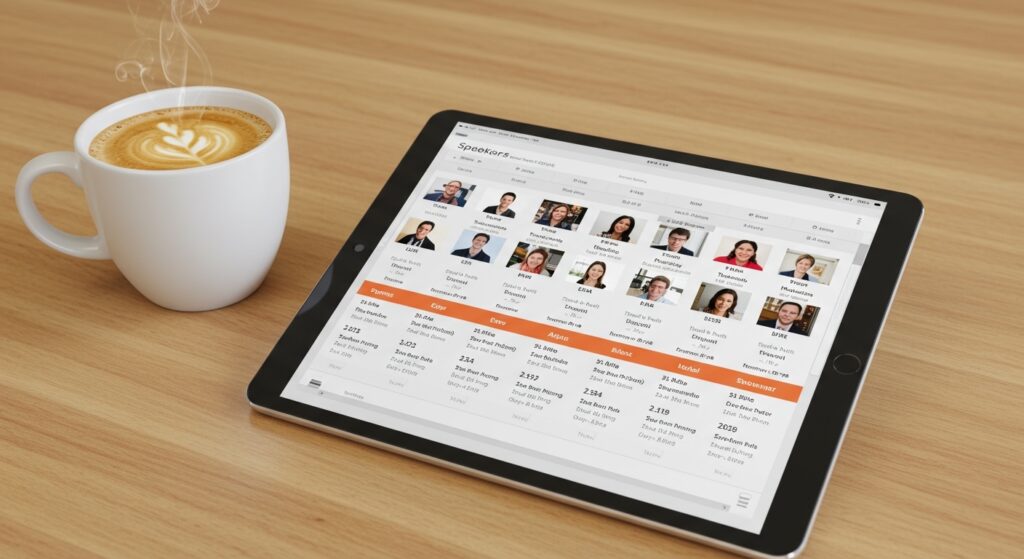
In my decade of organizing international tech conferences, I have learned that a speaker list is a living document, not a static file. We once saw a 40% increase in ticket sales simply by swapping two generic “industry names” for three niche micro-influencers who had highly engaged LinkedIn followings. This guide provides the exact blueprint we use to source, vet, and manage world-class talent.
Key Takeaways: Mastering Your Speaker List
- Start Early: Begin sourcing your list of speakers at least 6 to 8 months before the event date to secure top-tier talent.
- Diversity is Non-Negotiable: A balanced list includes diverse genders, ethnicities, and professional backgrounds to prevent “echo chambers.”
- Vet with Video: Never add a speaker to your final list without seeing a raw, unedited video of them presenting to a live audience.
- Use the Right Tools: Transition from messy spreadsheets to CRM tools like HubSpot or dedicated platforms like Sessionize for better tracking.
- Track “Micro-Data”: Go beyond names and emails; track Social Reach, Past Speaking Fees, and Technical Requirements.
How to Build a Professional List of Speakers: A Step-by-Step Guide
Building a list of speakers requires a methodical approach to ensure you don’t just find “available” people, but the right people. Here is our proven step-by-step process.
Step 1: Define Your Event Goals and Audience Personas
Before you open a spreadsheet, you must know who you are trying to reach. Are you hosting a B2B SaaS conference or a local community workshop?
- Identify Pain Points: What keeps your audience up at night?
- Determine Tone: Do you need “Inspirational Keynotes” or “Deep-Dive Technical Instructors”?
Step 2: Sourcing Potential Candidates
We recommend using a “multi-channel” sourcing strategy to populate your initial list of speakers.
- Industry Awards: Look at lists like Forbes 30 Under 30 or Gartner Magic Quadrant leaders.
- Social Listening: Search hashtags on LinkedIn and X (formerly Twitter) related to your topic.
- Competitor Events: Review the speaker lists from last year’s top three competing conferences.
- Speaker Bureaus: For high-budget events, engage agencies like WSB (Washington Speakers Bureau) or AAE Speakers.
Step 3: The Initial “Long List” Creation
At this stage, do not filter. Use a Markdown table or a Google Sheet to capture every potential name that fits your theme. We call this the “Discovery Phase.”
| Speaker Category | Sourcing Method | Target Expertise | Estimated Budget |
|---|---|---|---|
| Keynote | Bureau / LinkedIn | Visionary Leadership | $10,000 – $50,000+ |
| Panelist | Local Industry Orgs | Practical Implementation | Travel & Lodging Only |
| Technical Lead | GitHub / Stack Overflow | Product Deep-Dives | $2,000 – $5,000 |
| Workshop Facilitator | Referrals | Interactive Training | $3,000 – $7,000 |
Essential Criteria for Vetting Your List of Speakers
Once you have a massive list of speakers, you must narrow it down. We use the “E.A.T.” Framework (Expertise, Authority, Transparency) to vet every name.
Expertise and Content Quality
Does the speaker provide Information Gain? If their presentation sounds like a Wikipedia entry, they don’t belong on your list. We look for speakers who share proprietary data, first-hand case studies, and controversial industry perspectives.
Authority and Social Proof
Check their LinkedIn recommendations. Are they praised by other event organizers for being easy to work with? A “diva” speaker can ruin your backstage morale, no matter how famous they are.
Technical Reliability
In the era of hybrid events, your list of speakers must include notes on their technical setup. If they are presenting virtually, do they have a 4K camera, a cardioid microphone, and a hardwired internet connection?
Tools and Software for Managing a List of Speakers
Managing a list of speakers via email threads is a recipe for disaster. We have tested dozens of tools and recommend the following stack for maximum efficiency.
- Sessionize: The industry standard for Calls for Speakers (CFS). It allows you to collect applications, manage evaluations, and build your schedule in one place.
- Airtable: Perfect for creating a customized speaker database. You can link speakers to specific sessions, track contract statuses, and upload headshots.
- Lineup: A dedicated software specifically designed for managing talent databases and curated lists.
- Trello or Asana: Use these for the “Onboarding” phase. Create a card for every person on your list of speakers to track their bio submission, slide deck approval, and travel booking.
Organizing Your List: Crucial Data Points to Track
To maintain a professional list of speakers, you must track more than just a name. Based on our experience managing events with over 200 speakers, these are the non-negotiable data fields:
- Full Legal Name & Stage Name: Essential for contracts and marketing.
- Current Bio (Short and Long): 50 words for the app, 200 words for the website.
- High-Resolution Headshot: Minimum 300 DPI in PNG format with a transparent background.
- Social Media Handles: For “tagging” during the promotional rollout.
- Dietary Restrictions: Don’t forget this if you are providing “Green Room” catering!
- AV Requirements: Do they need a Lavalier mic, a handheld, or a Mac-to-HDMI adapter?
Pro-Tip: The “Backup” Column
Always have a “Backup” column in your list of speakers. In our 2022 flagship event, two speakers caught COVID-19 three days before the show. Having a pre-vetted “Waitlist” saved us from having empty stages.
Best Practices for Diversifying Your Speaker List
A diverse list of speakers isn’t just about ethics; it’s about better content. Data from EventMB suggests that diverse panels receive 22% higher engagement scores from attendees.
- Blind Review Process: When reviewing applications for your list, hide names and photos to focus purely on the content proposal.
- Reach Out to Niche Groups: Don’t wait for diverse talent to find you. Actively source from organizations like Women in Tech, Black Speakers Network, or Out in Tech.
- Avoid the “Manel”: Make it a strict policy that no panel discussion on your list of speakers consists solely of one gender or ethnicity.
Managing Outreach and Onboarding
Once your list of speakers is finalized, the communication phase begins. Your outreach email should be “Direct and Value-Driven.”
The Outreach Template We Use:
“Hi [Name], I’ve been following your work on [Topic] and specifically loved your recent insight on [Specific Point]. We are building our list of speakers for [Event Name] and would love to feature your expertise. We expect [Number] attendees and are offering [Fee/Perks].”
The Speaker Agreement
Never officially add someone to your public list of speakers until a contract is signed. This contract should cover:
- Content Ownership: Who owns the recording of the talk?
- Cancellation Policy: What happens if the speaker pulls out 30 days before the event?
- Promotion Requirements: Are they obligated to share the event on their social channels?
Frequently Asked Questions
Where can I find a free list of speakers for my event?
You can find potential speakers by browsing platforms like SpeakerHub, TED Dot Com, and LinkedIn Service Pages. Many industry-specific associations also maintain a public directory of experts available for speaking engagements.
How many speakers should be on my list?
For a one-day event, a list of speakers typically includes 5 to 8 names (1 keynote, 4 breakout sessions, and 3 panelists). For large-scale conferences, you may need a list of 50 to 100+ speakers to cover multiple tracks.
Do I have to pay everyone on my list of speakers?
Not necessarily, but you should always offer value. While Keynote Speakers almost always require a fee, many Industry Practitioners will speak for free in exchange for “Lead Generation,” “Brand Exposure,” or full “VIP Access” to the event.
How do I handle a speaker who cancels last minute?
This is why your list of speakers should always have a “Secondary” or “Backup” tab. Keep a list of local experts who can step in with 24-hour notice, or be prepared to convert a live session into an interactive “Town Hall” or “AMA” (Ask Me Anything) session led by your internal team.