Why Precision Matters When You Measure Car Door Speakers
Learning how to measure car door speakers is the single most important step in upgrading your vehicle’s audio system. To measure accurately, you must find the mounting hole diameter, the bolt hole spacing, and the top mounting depth to ensure the new unit fits behind the door panel without hitting the window glass.
Most DIY installers make the mistake of measuring only the cone, which leads to buying speakers that are either too deep or have mismatched screw holes. This guide provides a professional framework for how to measure car door speakers to guarantee a perfect “drop-in” fit every time.
### 💡 Expert Summary: Key Takeaways Standard Sizes: Most cars use 6.5-inch, 6×9-inch, or 5.25-inch speakers, but “nominal” sizes vary by manufacturer. Mounting Depth is King: Always measure the distance from the mounting surface to the nearest obstruction (like a retracted window). Bolt Pattern: Measure diagonally from the center of one screw hole to the center of the opposite hole. The “Flange” Factor: Don’t forget to account for the width of the outer rim (flange) which rests against the door metal.
Essential Tools for Speaker Measurement
Before you start, gather these tools to ensure your measurements are precise down to the millimeter. Using a flexible tape measure is often better for how to measure car stereo speakers because of the tight angles inside a door cavity.
| Tool | Purpose | Expert Tip |
|---|---|---|
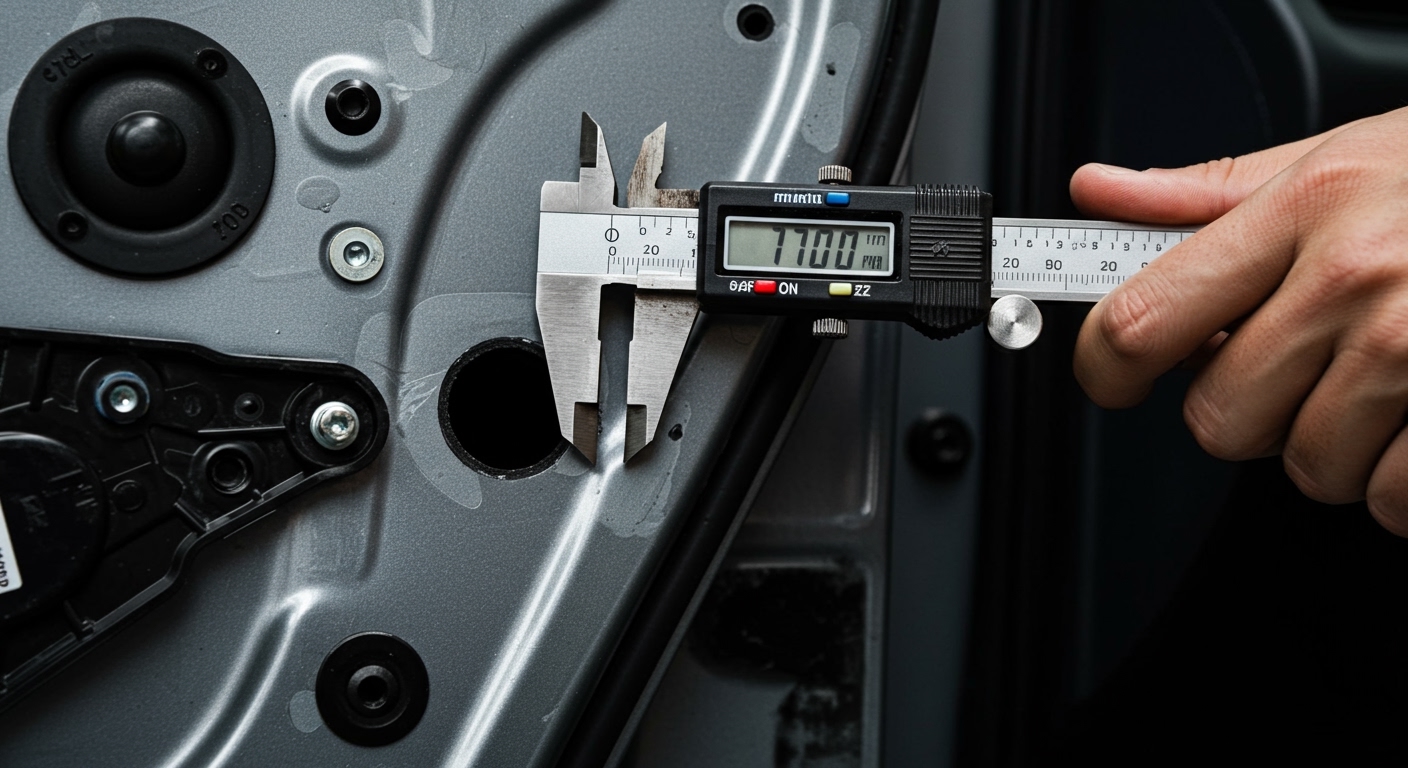
| Digital Caliper | Measuring exact hole diameters | Best for finding the exact screw-to-screw distance. |
| Tape Measure | Measuring overall width/depth | Ensure it has both inches and metric markings. |
| Trim Removal Tools | Taking off door panels | Use plastic tools to avoid scratching your interior paint or leather. |
| Screwdriver Set | Removing the factory speaker | You’ll likely need Phillips #2 or Torx bits for European cars. |
| Straight Edge/Ruler | Checking mounting depth | Place it across the speaker hole to create a flat reference point. |
Step-by-Step Guide: How to Measure Car Door Speakers for Replacement
To learn how to measure car speakers for replacement, you cannot rely on the car’s manual alone. Factory specs often list the “nominal size,” which doesn’t account for the unique shape of aftermarket baskets. Follow these steps for an expert-level measurement.
Step 1: Access the Mounting Location
You cannot accurately measure door speakers while they are behind a grille. You must remove the door panel or the speaker shroud.
- Locate all hidden screws behind door handles, armrests, and plastic “sails.”
- Use your trim removal tool to pop the plastic clips around the perimeter.
- Disconnect the wiring harness carefully. Expert Advice: Take a photo of the wiring colors before disconnecting so you know the polarity (+/-) later.
Step 2: Measure the Cutout Diameter
The cutout diameter is the actual hole the speaker sits in. This is critical for how to measure round speakers specifically.
Measure the width of the hole in the door metal from one inner edge to the other.
If the speaker is recessed, measure the diameter of the circular opening where the back of the speaker (the magnet and basket) must pass through.
Pro Tip: If you are learning how to measure car speakers in inches, remember that a “6.5-inch” speaker usually requires a 5.5-inch to 5.7-inch cutout.
Step 3: Determine the Mounting Depth
This is where most beginners fail when learning how to measure car door speakers. If your speaker is too deep, the window glass will shatter when you roll it down.
- Roll the window all the way down.
- Place a straight edge (like a ruler) flat against the speaker mounting surface.
- Measure the distance from the straight edge down to the window glass.
- This is your Top Mounting Depth.
- Safety Margin: Always subtract 1/8 of an inch from this measurement to allow for vibration and window track movement.
Step 4: Measure the Bolt Pattern (Screw-to-Screw)
The bolt pattern determines if the new speaker will screw directly into the factory holes.
For round speakers, measure diagonally from the center of one screw hole to the center of the opposite hole.
For oval car speakers, you need two measurements: the horizontal distance between holes and the vertical distance.
How to Measure Oval Car Speakers vs. Round Speakers
The geometry changes depending on the shape of your factory audio system. Here is the breakdown of the differences you need to know.
Measuring Round Speakers
When figuring out how to measure round speakers, the industry standard is to measure the frame diameter, not the cone.
4-inch speakers: Usually have a 4.5-inch total frame width.
6.5-inch speakers: Often the most confusing, as some brands use a “6.75-inch” oversized frame that won’t fit standard 6.5 holes without an adapter.
Measuring Oval Car Speakers
Learning how to measure oval car speakers (like 6x9s or 5x7s) requires measuring the two widest points of the ellipse.
Horizontal Axis: Measure from the outer edge of the flange on the left to the outer edge on the right.
Vertical Axis: Measure from the top outer edge to the bottom outer edge.
Common Sizes: In the US, the most common oval sizes are 6″x9″, 5″x7″, and 4″x6″.
How to Measure RV Speakers and Specialized Units
If you are looking at how to measure rv speakers, the process is slightly different because RV walls are much thinner than car doors.
Check Wall Clearance: RV speakers are often “shallow mount.” Measure the wall thickness to ensure the magnet doesn’t punch through to the exterior siding.
Weatherproofing: Measure the outer “grille” diameter. Many RV speakers are integrated units where the grille and speaker are one piece to prevent water ingress.
Nautical/Marine Specs: If measuring for an RV or boat, check the mounting flange height. You need to ensure the speaker sits flush so water doesn’t pool behind the gasket.
Understanding Nominal vs. Actual Size in Inches
One of the most frustrating parts of learning how to measure car speakers in inches is that the “size” is often a lie. A “6.5-inch speaker” is a category, not a measurement.
| Nominal Size | Typical Frame Diameter | Typical Cutout Diameter |
|---|---|---|
| 5.25″ | 5.1″ – 5.5″ | 4.5″ – 4.625″ |
| 6.5″ | 6.3″ – 6.75″ | 5.5″ – 5.7″ |
| 6×9″ | 6.5″ x 9.25″ | 6″ x 8.6″ |
| 4×6″ | 4.1″ x 6.1″ | 3.5″ x 5.6″ |
Expert Insight: Always check the Manufacturer’s Data Sheet for the “Physical Dimensions” section. If your measurement of the door hole is 5.5 inches, look for a speaker with a “Cutout Diameter” of 5.5 inches or less, regardless of whether it’s marketed as a 6.5 or 6.75.
Common Mistakes When Measuring for Replacement
Avoid these frequent errors that I have seen during a decade of professional car audio installations:
Measuring the Grille: Never measure the plastic cover on the door. It is almost always 20-30% larger than the actual speaker.
Ignoring Tweeter Protrusion: On coaxial speakers, the tweeter often sticks out past the frame. If you don’t measure the “Protrusion Height,” the tweeter might hit the back of your factory door grille.
Forgetting the Wiring Terminals: Make sure the cutout hole has enough room for the spade connectors to clip onto the speaker terminals without touching the metal frame (which causes a short circuit).
Measuring with Windows Up: This is the #1 cause of broken glass. Always measure door speakers with the window in the “down” position.
Frequently Asked Questions
(FAQs)
How do I know what size speakers fit my car without taking it apart?
While online databases are helpful, they are often generic. The only way to be 100% sure how to measure car stereo speakers for your specific trim level is to remove the door panel and measure the physical mounting space and depth.
Can I fit a 6.5-inch speaker in a 5.25-inch hole?
Not directly. You would need to use a mounting adapter bracket or enlarge the hole using a reciprocating saw or air saw. However, you must ensure there is enough flat metal surface for the larger speaker’s flange to seal against.
What is “Top Mount Depth” vs. “Bottom Mount Depth”?
Top Mount Depth is how deep the speaker goes into* the door. Bottom Mount Depth (rarely used) refers to the space needed if the speaker is mounted from behind a panel. For most people learning how to measure door speakers, Top Mount Depth is the only number that matters.
Does the magnet size matter for fitment?
Yes. A larger, beefier magnet usually indicates better power handling, but it can interfere with window tracks or door lock cables. If you have a tight space, look for speakers with Neodymium magnets, which are smaller but very powerful.
Is it better to measure in inches or millimeters?
While most US speakers are sold in inches, using millimeters is much more accurate for bolt patterns and cutouts. Most professional installers use metric to ensure a “snug” fit that prevents air leaks.
Conclusion: Ready for Better Sound?
Mastering how to measure car door speakers is the bridge between a mediocre sound system and a professional-grade audio experience. By focusing on the cutout diameter, mounting depth, and bolt pattern, you eliminate the guesswork that leads to returned parts and damaged door panels.
Key Action Steps:
- Remove your door panel and roll the window down.
- Measure the actual hole diameter (cutout) and mounting depth.
- Compare your numbers to the “Technical Specifications” on the speaker box.
- If the fit is tight, consider using speaker baffles or spacers to gain a few extra millimeters of clearance.
Don’t settle for “close enough.” Take your measurements twice, buy your speakers once, and enjoy the crisp, clear audio you deserve.