Your Guide to Converting Old Speakers to AUX
Staring at a pair of fantastic-sounding, vintage speakers but have no way to connect them to your modern phone or laptop? It’s a common frustration. You have high-quality audio hardware collecting dust because it lacks a simple 3.5mm AUX jack. The good news is you don’t need to be an audio engineer to solve this. Learning how to convert old speakers to AUX is a straightforward project that usually requires just one key component: a mini amplifier. This guide will walk you through every step to breathe new life into your classic audio gear.
Key Takeaways: Converting Old Speakers
- Identify Your Speaker Type: The first step is determining if your speakers are passive (requiring an external amplifier) or active (with a built-in amp and power cord).
- Passive Speakers Need an Amp: Most old speakers are passive and use bare speaker wire. You will need a compact stereo amplifier to power them and provide an AUX input.
- Active Speakers Need an Adapter: If your speakers have their own power cord and RCA (red and white) inputs, you likely only need a simple 3.5mm-to-RCA adapter cable.
- Check Polarity: When connecting speaker wire, always match the positive (+) and negative (-) terminals on both the speaker and the amplifier to ensure proper sound quality.
Understanding Your Old Speakers: The First Crucial Step
Before you can connect anything, you need to know what you’re working with. The method for connecting your speakers depends entirely on whether they are passive or active (powered). This is the single most important distinction.
Passive vs. Active Speakers: What’s the Difference?
The core difference is the location of the amplifier, the device that provides power to make the speaker drivers move and create sound.
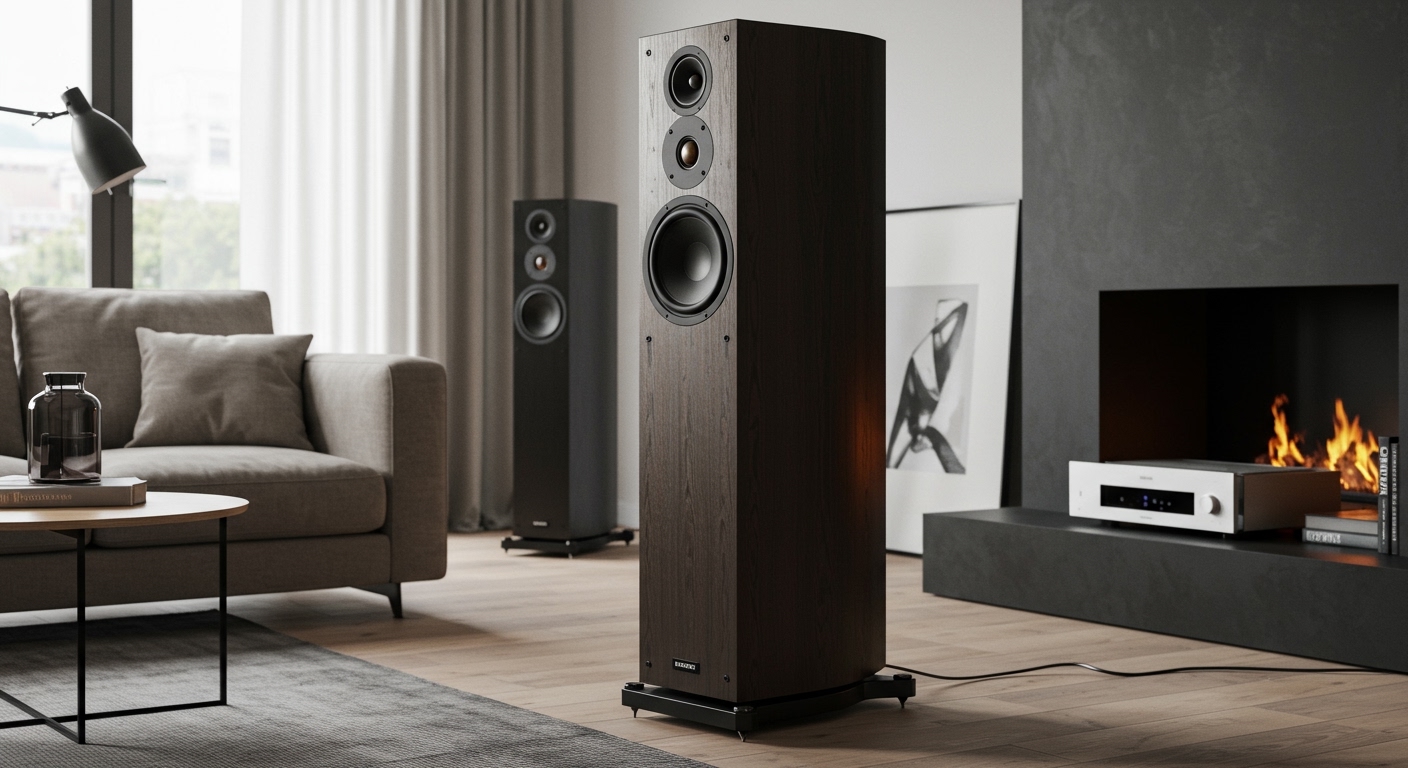
- Passive Speakers: These are the most common type of “old speakers.” They have no internal amplifier and no power cord. They are essentially just the speaker drivers in a box. They rely completely on an external amplifier or receiver to power them. You’ll identify them by their connection terminals on the back, which are typically spring clips or binding posts designed for bare speaker wire.
- Active (Powered) Speakers: These speakers have an amplifier built directly into the cabinet. Because of this, they need to be plugged into a wall outlet and will have a dedicated power cord. They are a self-contained system. Instead of speaker wire terminals, they will have input jacks like RCA (red and white connectors) or sometimes even a 3.5mm AUX input already.
How to Quickly Identify Your Speaker Type
- Look for a Power Cord: This is the easiest test. If a speaker has a power cord that plugs into a wall outlet, it’s active. If it only has terminals for speaker wire, it’s passive.
- Examine the Back Panel: Look at the connections. Two terminals (often red and black) for bare wire mean it’s passive. RCA jacks, a 3.5mm input, or an optical port mean it’s active.
- Find the Model Number: If you’re still unsure, find the model number on the back of the speaker and do a quick online search. The product page or manual will tell you definitively if it’s a passive or active model.
How to Convert Old Speakers to AUX: The Passive Speaker Method
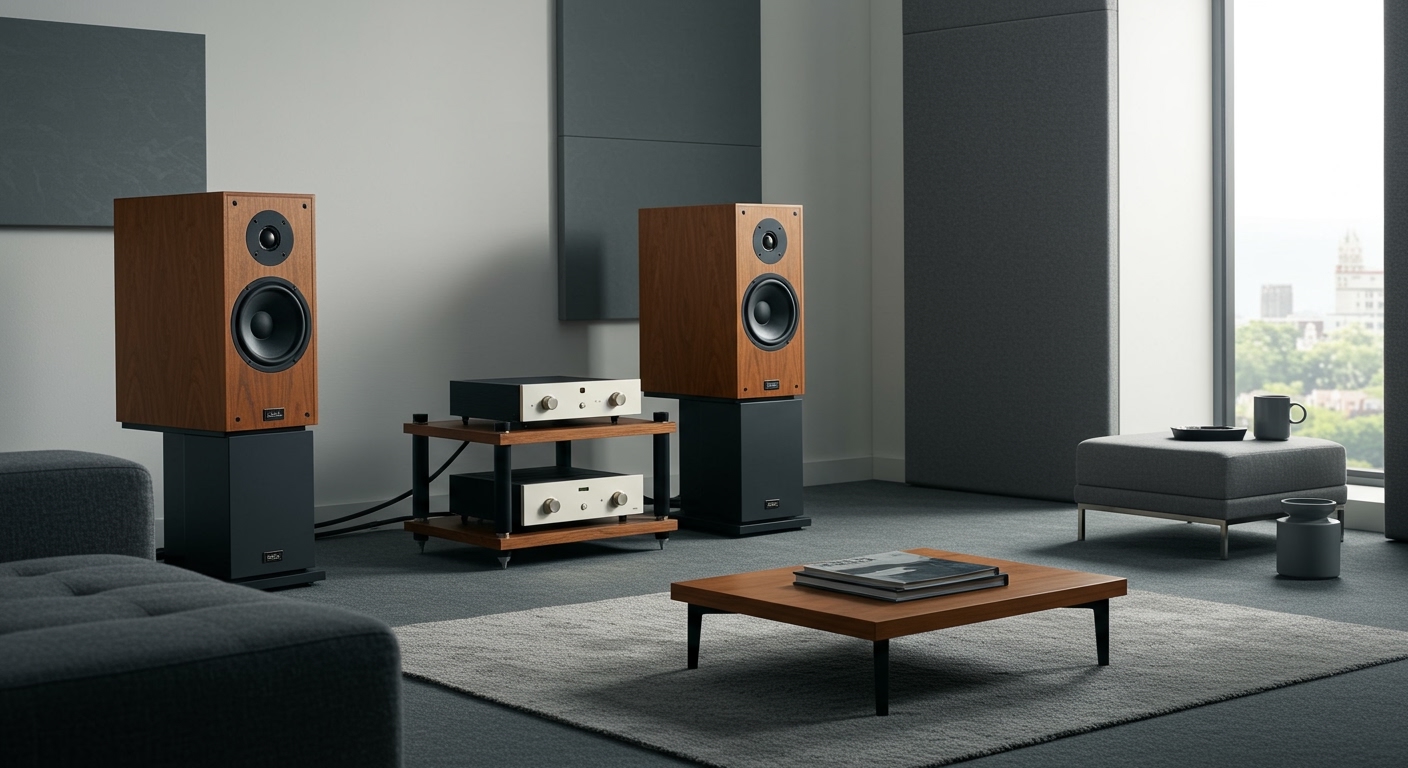
This is the most common scenario people face. You have a great pair of bookshelf or tower speakers with nothing but speaker wire connections. The solution is to introduce a small, modern amplifier into the system.
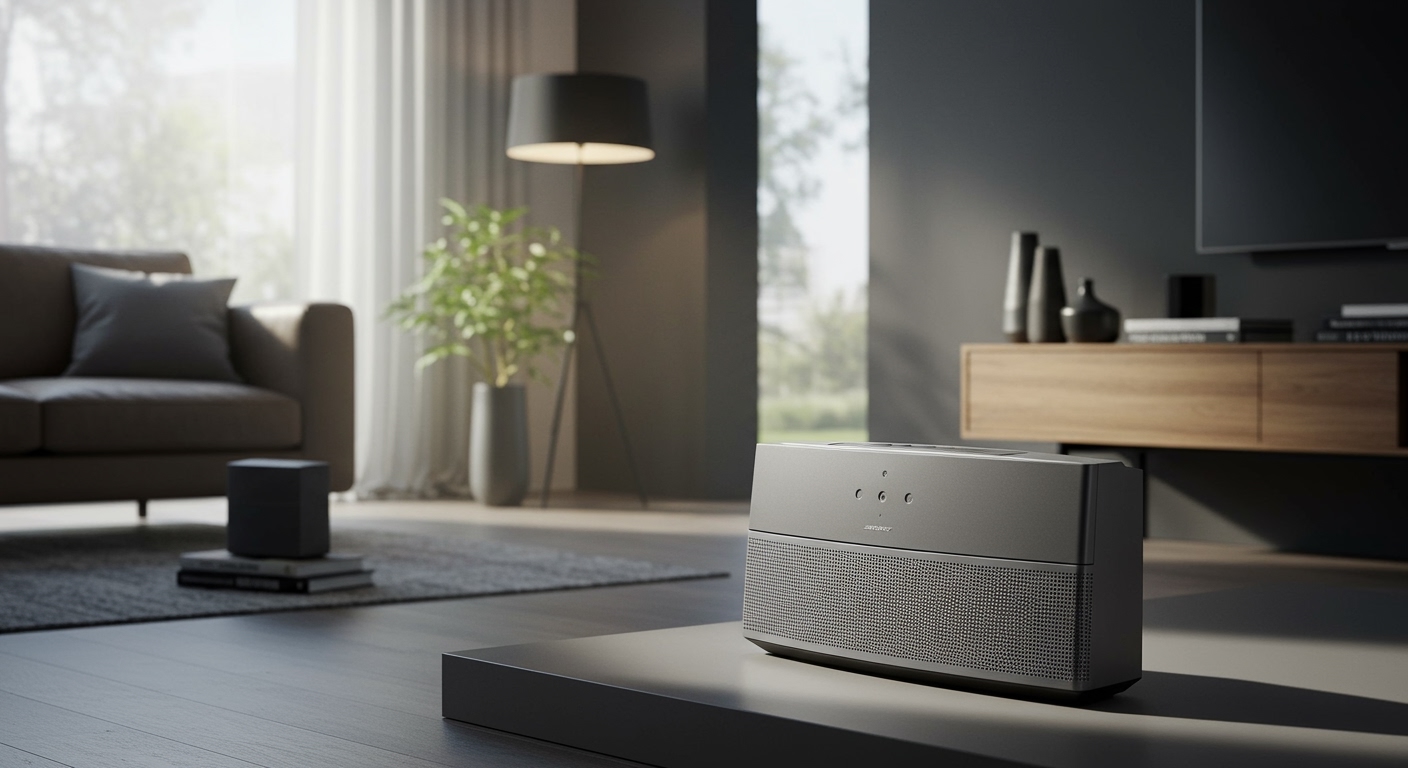
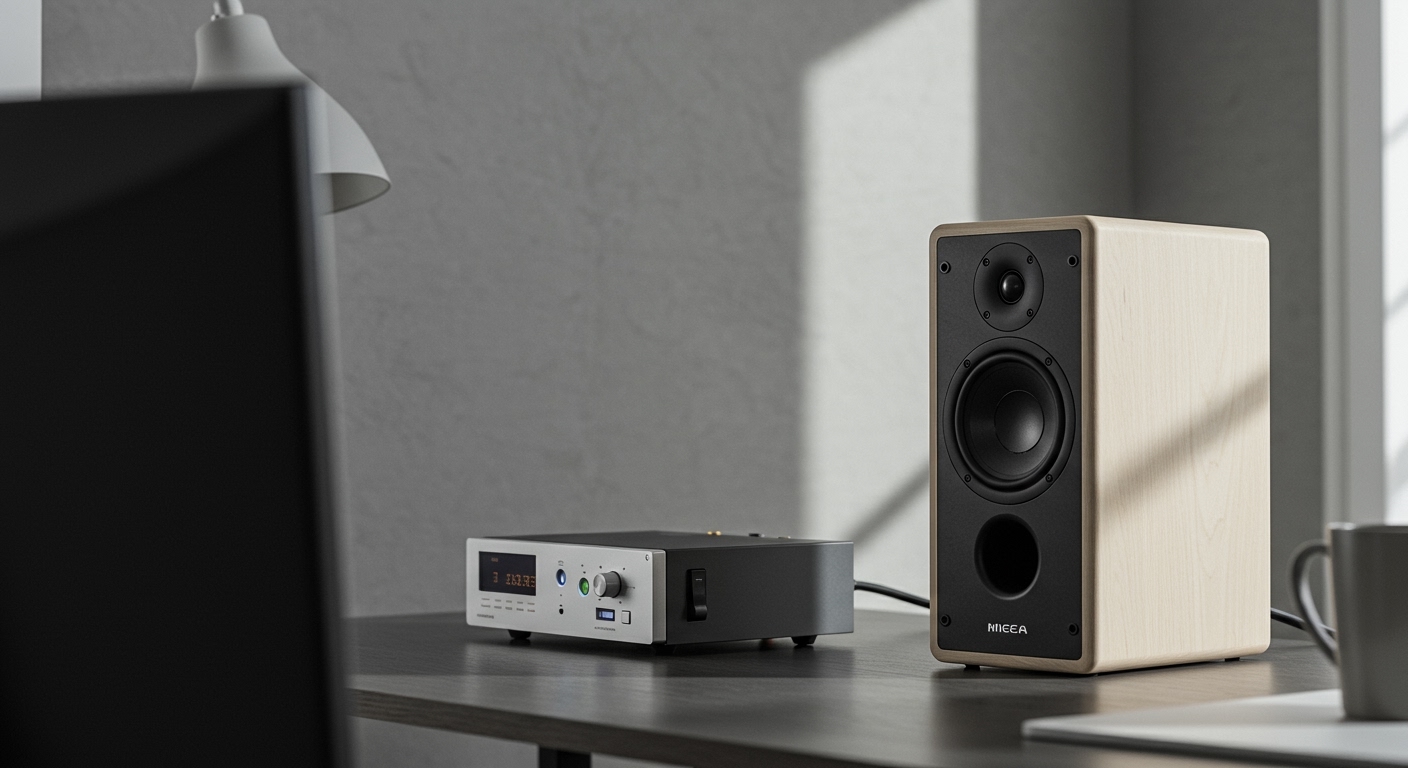
In my experience testing audio gear, I’ve found that modern Class-D mini amplifiers are a game-changer for these projects. They are incredibly compact, efficient, and affordable, making them perfect for reviving vintage speakers. A unit like the Fosi Audio BT20A is a fantastic starting point.
What You’ll Need (Your Toolkit)
- Your pair of passive speakers.
- A mini stereo amplifier (e.g., Fosi Audio, Nobsound, SMSL).
- A roll of speaker wire (16-gauge is a good all-purpose choice).
- A 3.5mm-to-3.5mm AUX cable.
- Wire strippers (or a sharp knife/scissors in a pinch).
Step-by-Step Conversion Guide
Follow these steps carefully. The entire process should take less than 15 minutes.
Step 1: Prepare the Speaker Wire
Your speaker wire consists of two insulated conductors molded together. You need to separate and strip the ends to make a clean connection.
- Pull the two conductors apart by about 2-3 inches at each end of the wire.
- Use your wire strippers to carefully remove about half an inch (1.5 cm) of the plastic insulation from the very tip of each conductor. You should see the bare copper wire underneath.
- Twist the exposed copper strands tightly with your fingers to prevent any stray wires from touching where they shouldn’t.
- Pay attention to polarity. One conductor will have a marking—a stripe, a different color, or ribbing—to distinguish it. This is typically used for the positive (+) terminal, while the plain wire is for the negative (-). Consistency is key.
Step 2: Connect the Wire to Your Speakers
Now, connect one end of each prepared wire to your speakers.
- Look at the back of your first speaker. You’ll see two terminals, one red (+) and one black (-).
- If you have spring clips, press the tab down, insert the bare positive wire into the red (+) hole, and release the tab. The clip will grip the wire. Repeat with the negative wire and the black (-) terminal.
- If you have binding posts, unscrew the cap, insert the wire into the small hole in the post (or wrap it around the post), and tighten the cap down firmly.
- Repeat this process for the second speaker.
Pro Tip: I always make sure the positive wire (the one with the stripe) goes to the red terminal on both speakers. This ensures they are “in phase” and will produce a full, centered sound.
Step 3: Connect the Wire to the Amplifier
With your speakers wired up, it’s time to connect them to their new power source.
- Look at the back of your mini amplifier. You will see a similar set of speaker outputs, labeled for the Left and Right channels.
- Take the wire coming from your left speaker and connect it to the amplifier’s Left output terminals. Again, carefully match the positive wire to the red (+) terminal and the negative wire to the black (-) terminal.
- Take the wire from your right speaker and connect it to the amplifier’s Right output terminals, maintaining the correct polarity.
- Give each wire a gentle tug to ensure it’s secure. A loose connection is a common source of audio problems.
Step 4: Connect Your Audio Source
This is the final connection and the reason you’re doing this!
- Take your 3.5mm-to-3.5mm AUX cable.
- Plug one end into the audio input jack on your mini amplifier. It will usually be labeled AUX IN or LINE IN.
- Plug the other end into the headphone jack of your smartphone, laptop, tablet, or PC.
Step 5: Power Up and Test
You’re ready to make some noise.
- Connect the power adapter that came with your mini amplifier and plug it into a wall outlet.
- Turn the amplifier’s power switch on. A small LED should light up.
- Crucially, turn the volume knob all the way down.
- Start playing music on your device.
- Slowly turn the volume knob on the amplifier up until you hear sound at a comfortable level. Congratulations, your old speakers now work with any device that has an AUX output!
How to Connect Old Speakers to AUX: The Active Speaker Method
If you identified your speakers as active (powered), your job is much simpler. Since the amplifier is already built-in, you don’t need to buy one. You just need the right adapter cable.
Identifying the Right Cable
Most active speakers from a previous era, like old computer speakers or studio monitors, use RCA inputs. These are the familiar