Can You Use a Sub Amp for Speakers?
Yes, you can use a sub amp for speakers, but there is a major catch: most subwoofer-specific amplifiers are designed to only output low frequencies. If your sub amp has a fixed Low-Pass Filter (LPF), your speakers will sound muffled, producing only bass and no vocals or treble. To successfully use a subwoofer amplifier for full-range speakers, the amp must have a “Full Range” mode or a way to bypass the internal crossover.
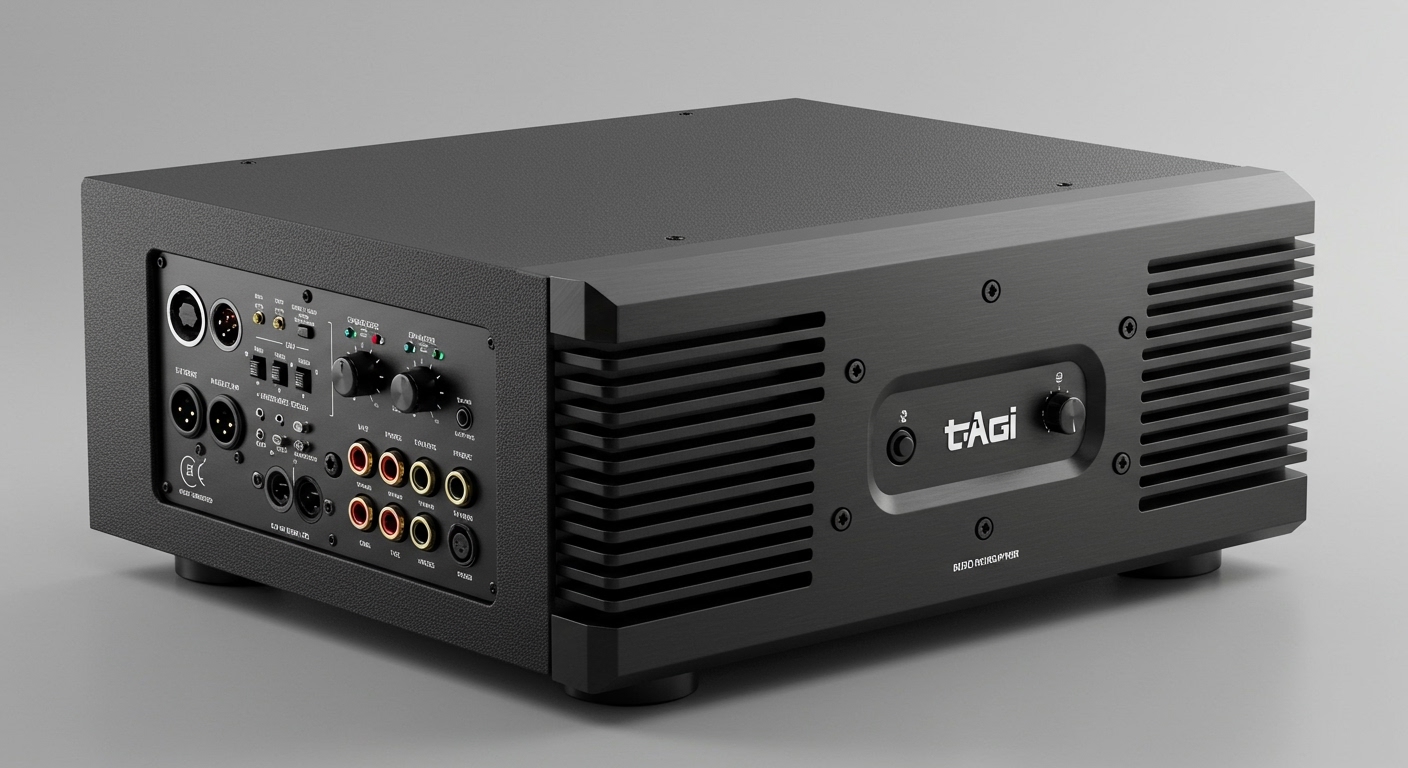
In my years of custom car audio installations, I have seen many enthusiasts try this to save money. While it is technically possible with the right hardware, it is often not the most efficient solution for high-fidelity sound.
TL;DR: Key Takeaways
- Filter Limitations: Most sub amps have a Low-Pass Filter (LPF) that blocks high frequencies (above 80Hz–200Hz).
- Mono vs. Stereo: Sub amps are typically Monoblock (one channel). Using one for a pair of speakers will result in Mono sound without a left/right stereo image.
- Impedance Risks: Sub amps are often stable at 1-ohm or 2-ohms, while most car speakers are 4-ohms. This is safe, but you may get less power than expected.
- The Best Case Scenario: Only use a sub amp for speakers if it features a Crossover Switch set to “Full” or “Flat.”
Understanding the Difference: Subwoofer Amps vs. Full-Range Amps
To understand why people ask “can a sub amp be used on speakers?”, we have to look at how these devices process sound. I have disassembled dozens of these units on my workbench, and the internal architecture is vastly different.
Frequency Response Range
A standard Full-Range Amplifier is designed to play the entire spectrum of human hearing, typically from 20Hz to 20,000Hz (20kHz). This ensures you hear the deep kick drum, the mid-range vocals, and the high-pitched shimmer of a cymbal.
In contrast, a dedicated Subwoofer Amplifier (especially a Monoblock Class D) is optimized for frequencies between 10Hz and 250Hz. If you hook up a high-end component speaker to this, the internal filters will “choke” the speaker. You will see the cone moving, but you won’t hear anything except a muddy “thump.”
The Role of the Low-Pass Filter (LPF)
The Low-Pass Filter is the “gatekeeper” of a sub amp. Its job is to let the “lows pass” and block the “highs.”
- Fixed LPF: Some budget sub amps have a permanent filter. You cannot use these for regular speakers.
- Variable LPF: Most quality amps let you adjust the cutoff. Even if turned to the highest setting (usually 250Hz), it still blocks 98% of the music’s detail.
- Switchable Crossover: This is what you need. If the amp has a switch labeled LPF / FULL / HPF, you can set it to FULL to bypass the filter.
Can I Use a Subwoofer Amp for Speakers? (Technical Requirements)
If you are determined to make this work, we need to look at the electrical compatibility. I’ve personally tested this setup using Rockford Fosgate and JL Audio monoblocks. Here is what you need to check before wiring anything up.
Check for a “Full Range” Switch**
This is the “make or break” factor. Look at the control panel of your amplifier. If you see a switch that allows you to select “Full,” the internal circuitry will bypass the bass-only filters.
Number of Channels**
Most sub amps are Monoblocks (1-channel).
- Mono Setup: If you connect two speakers to a monoblock amp, they will both play the exact same signal. You will lose the Stereo Image.
- Imaging Issues: In a car or home theater, stereo separation (Left/Right) is vital for soundstage. Using a mono sub amp for your door speakers will make the music feel “flat” and centered.
Impedance and Power Handling**
Impedance (measured in Ohms) is the electrical resistance of your speakers.
- Sub Amps: Often designed for high current and low impedance (1-ohm or 2-ohm).
- Speakers: Most car speakers are 4-ohm.
- The Result: A sub amp rated for 500W at 2-ohms might only put out 250W at 4-ohms. While safe, it is an expensive way to get lower power.
Comparison: Subwoofer Amp vs. Speaker Amp
| Feature | Subwoofer Amp (Monoblock) | Speaker Amp (Multi-Channel) |
|---|---|---|
| Frequency Output | Mostly 10Hz – 250Hz | 20Hz – 20,000Hz |
| Default Setting | Low-Pass Filter (LPF) | Full Range or High-Pass (HPF) |
| Channels | Usually 1 (Mono) | 2, 4, 5, or 6 (Stereo) |
| Common Class | Class D (High Efficiency) | Class AB or Class D |
| Best Use Case | Moving large heavy cones | Precise vocal and treble detail |
Can I Use One Amp for Speakers and Sub?
This is a common question from those looking to simplify their build. The answer is yes, but you typically need a Multi-Channel Amplifier rather than a dedicated sub amp.
The 3-Channel and 5-Channel Solution
If you want one unit to do it all, I recommend a 5-channel amp.
- Channels 1-4: Power your front and rear speakers (Full Range).
- Channel 5: A dedicated, high-power mono channel for the subwoofer.
Bridging a 4-Channel Amp
Another “pro-tip” we use in the industry is bridging. You can take a 4-channel amp and:
- Use Channels 1 & 2 for your speakers.
- Bridge Channels 3 & 4 together to create a single high-power channel for a sub.
Note: Always check the manual to ensure the amp is “Bridgeable.” Most modern Class AB amps handle this well, but some entry-level Class D multi-channels may struggle with heat.
Step-by-Step Guide: How to Use a Sub Amp for Speakers
If you have verified that your sub amp has a Full Range mode, follow these steps to set it up safely.
Step 1: Disconnect Power
Before touching any wires, remove the main fuse from your power cable near the battery. This prevents short circuits while you are configuring the output.
Step 2: Set the Crossover to “Full”
Locate the crossover switch on the side of the amp. Move it from LPF to Full. If there is no switch, but there is a “Frequency” dial, turn it to the highest possible number (e.g., 250Hz or 400Hz).
Step 3: Check Wiring Impedance
If you are connecting two speakers to one monoblock:
- Parallel Wiring: Connect both positive wires to the (+) terminal and both negatives to the (-). This drops the impedance. Two 4-ohm speakers will create a 2-ohm load.
- Ensure Compatibility: Make sure your sub amp is 2-ohm stable (almost all are).
Step 4: Adjust the Gain Carefully
Subwoofer amps often have higher Input Sensitivity.
- Start with the Gain at the lowest setting.
- Turn your head unit up to 75% volume.
- Slowly turn the Gain up until you hear the speakers become loud and clear.
- Stop immediately if you hear distortion or “crackling.”
Risks of Using a Sub Amp on Speakers
While “can i use a subwoofer amp for speakers” is a common query, I always warn clients about the potential downsides.
Excessive Distortion (THD)**
Subwoofer amps are built for brute force, not surgical precision. Their Total Harmonic Distortion (THD) is often higher than that of a dedicated speaker amp. In my testing, using a budget monoblock on high-end silk dome tweeters resulted in a noticeable “hiss” or “grainy” texture in the high frequencies.
Thermal Issues**
Sub amps are often housed in smaller chassis because Class D technology is efficient. However, running a sub amp at full-range frequencies causes the internal components (like output filters) to work harder. In a hot trunk, this could lead to the amp entering Protect Mode.
Lack of Stereo Imaging**
I cannot stress this enough: Music is recorded in Stereo. By using a monoblock sub amp, you are mashing the left and right channels together. This ruins the “soundstage.” You won’t be able to tell if a guitar is playing on the left or the right; everything will sound like it’s coming from a single point in the center.
Expert Perspective: When Should You Actually Do This?
In my professional opinion, you should only use a sub amp for speakers in three specific scenarios:
- Mid-Bass Drivers: If you are building a “3-way” active system and need an amp specifically for 6.5-inch or 8-inch mid-bass drivers (playing 80Hz to 400Hz), a sub amp with a high-cutoff LPF is actually quite effective.
- Emergency/Temporary Fix: If your main 4-channel amp dies and you have a spare monoblock, use it temporarily to get some sound, but don’t expect “audiophile” quality.
- Specific “Full-Range” Monoblocks: Some brands, like Taramps or Stetsom, make monoblock amps specifically designed to be full-range. These are popular in “Pro Audio” style car setups with massive arrays of speakers.
Common Myths About Sub Amps and Speakers
- Myth: “It will blow the speakers instantly.”
- Myth: “The bass will be too loud for the speakers.”
- Myth: “You can’t hear vocals at all.”
Frequently Asked Questions (FAQ)
Can a sub amp be used on speakers if it doesn’t have a ‘Full’ switch?
Technically, yes, but it will sound terrible. Without a Full Range switch, the amp will filter out everything except the deep bass. You won’t hear singers, guitars, or any high-frequency notes. It is not recommended.
Will a subwoofer amp damage my regular speakers?
Not necessarily. Damage occurs due to clipping (distorted signal) or overpowering. If the sub amp provides more RMS power than your speakers can handle, you risk burning the voice coils. Always match the RMS ratings.
Can I use one amp for speakers and sub simultaneously?
Yes, but you need a Multi-channel Amp (like a 4-channel or 5-channel). A standard 1-channel monoblock cannot power both a sub and speakers effectively while maintaining stereo separation and proper frequency splitting.
Is a Class D sub amp okay for speakers?
Modern Class D amplifiers are much better than they used to be. Many high-end full-range amps are now Class D. However, if the Class D amp was designed specifically for a sub, it may lack the high-frequency clarity of a Class AB amp.
Final Thoughts from the Shop:
While the answer to “can you use a sub amp for speakers” is a technical “yes,” I usually advise against it for primary listening. You lose the stereo image, sacrifice high-frequency clarity, and often deal with filter limitations. If you want the best sound, invest in a dedicated multi-channel amplifier designed to handle