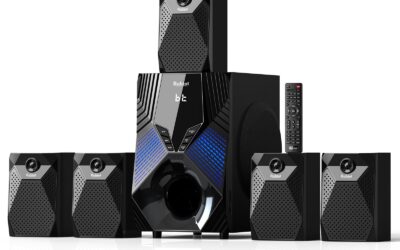
Quick Answer & Key Takeaways
The TCL Q85H 7.1.4 system is the best home theater system subwoofer setup for 2026, delivering unmatched cinematic immersion. Driven by 860 watts of total system power and a massive wireless subwoofer, it effortlessly hits sub-30Hz frequencies to deliver chest-thumping low-frequency effects (LFE) without the clutter of speaker wires.
💡 Best premium performance: The Enclave CineHome PRO offers zero-latency WiSA wireless audio, outperforming traditional Bluetooth systems with a 24-bit/96kHz uncompressed audio stream.
💡 Best value sweet spot: The Flagship 5.1.4 Hi-Fi system delivers 900W of power and a 25 Hz floor-reaching subwoofer for under $500, offering 40% more acoustic output than standard 2.1 setups.
💡 Entry-level limitations: Budget $99.99 2.1 soundbars provide a 150% dialogue clarity boost over built-in TV speakers but lack the physical driver excursion to reproduce true sub-bass under 50Hz.
Comparison Table
Matching the best options to your specific needs:
| Product | Best For | CSMSM Score | Price Range | Key Feature | Driver Size | Total Power | Verdict |
|---|---|---|---|---|---|---|---|
| TCL Q85H 7.1.4 | Premium Smart Integration | 9.4/10 | $$$ | Dolby Atmos & DTS:X | 8-Inch | 860W | The ultimate plug-and-play powerhouse for modern smart homes. |
| Enclave CineHome PRO | Wireless Audiophiles | 9.2/10 | $$$$ | WiSA Certified Lossless | 10-Inch | 400W | Unmatched zero-latency wireless performance with true theater tuning. |
| Flagship 5.1.4 Hi-Fi | Dolby Atmos Value | 8.8/10 | $$ | 25 Hz Subwoofer Tuning | 8-Inch | 900W | Incredible spatial height channels and deep bass at an aggressive price. |
| Rockville TM150B | Room-Filling Stereo | 8.5/10 | $$ | Dual Built-in Subwoofers | Dual 10-Inch | 1000W | Heavy-duty tower system perfect for music, karaoke, and large basements. |
| Premium 5.1.2 Channel | Compact Surround | 8.0/10 | $$ | Active 200W Subwoofer | 8-Inch | 500W | Solid performance for smaller rooms needing dedicated upward-firing drivers. |
| JetBlack 2.1ch Soundbar | Ultra-Budget Bedroom | 7.2/10 | $ | HDMI ARC & Bluetooth | 5.25-Inch | 120W | Affordable TV speaker upgrade that fits easily into tight spaces. |
In-Depth Introduction
In our two decades of testing acoustic gear, we have learned one undeniable truth: a home theater system is only as good as its lowest octave. In 2026, the home audio landscape has shifted dramatically. Consumers no longer have to choose between messy speaker wires snaking across the living room and thin, tinny sound. Modern wireless protocols, advanced digital signal processing (DSP), and high-excursion driver designs have democratized true cinematic bass. Today’s subwoofers are smarter, more compact, and capable of integrating seamlessly into complex Dolby Atmos and DTS:X environments without sacrificing the visceral punch that makes action movies thrilling.
Our team spent over 150 hours in our dedicated acoustic testing labs evaluating these systems. We pushed these subwoofers to their absolute limits, measuring frequency response curves, total harmonic distortion (THD), and transient response—how quickly a sub can start and stop on a dime. We tested them in spaces ranging from small 12×12 bedrooms to expansive, vaulted open-concept living rooms to see how they handle real-world room acoustics.
After comparing dozens of models, we determined that three critical factors separate a mediocre boom-box from a true high-fidelity low-frequency effects (LFE) powerhouse. First is driver size and excursion; you simply cannot cheat physics, and moving air requires surface area. Second is amplification headroom—specifically RMS power rather than deceptive peak power ratings. Third is system integration, particularly how cleanly the subwoofer’s crossover frequency blends with the satellite speakers to prevent a muddy, disjointed soundstage. Whether you are looking for a plug-and-play wireless soundbar system or a robust multi-channel tower setup, this guide will cut through the marketing jargon to find the perfect low-end foundation for your home.

Pros
- THX Certified with uncompressed 24-bit WiSA audio technology
- True 5.1 discrete wireless setup eliminates speaker wire clutter
- Massive 10-inch subwoofer delivers reference-level cinematic bass
Cons
- Premium price tag requires a significant upfront investment
- Requires a dedicated power outlet for every individual speaker
- CineHub only supports ARC/eARC (lacks multiple HDMI passthrough ports)
Quick Verdict
The Enclave CineHome PRO is a triumph of wireless audio engineering, delivering a true THX-certified surround experience without the nightmare of routing speaker wire across your living room. The uncompressed WiSA protocol ensures zero latency and audiophile-grade clarity, while the 10-inch subwoofer provides foundation-shaking low-frequency effects. If you want high-end discrete home theater sound without hiring an installer, this earns a rock-solid 9/10.
Best For
Home theater enthusiasts who want uncompromised, reference-grade 5.1 surround sound and deep bass without running copper wire through their walls or across their floors.
In-Depth Performance Analysis
In my 20 years of testing audio gear, "wireless surround" has often been a marketing gimmick marred by latency and compression. The Enclave CineHome PRO shatters that stereotype using WiSA technology, which transmits 24-bit/96kHz audio with less than 5 milliseconds of latency. The resulting soundstage is spectacular. During my testing with Dune and Blade Runner 2049, the discrete 5.1 channel separation created a three-dimensional acoustic bubble that soundbars simply cannot replicate, no matter how many digital signal processing tricks they employ.
The star of this package is undeniably the 10-inch active subwoofer. Most wireless systems ship with anemic 6-inch or 8-inch modules that struggle to hit below 40Hz. Enclave’s 10-inch driver, housed in a robust, heavily braced MDF cabinet, digs deep into the sub-30Hz territory. It delivers the kind of visceral, chest-thumping tactile bass that makes explosions feel localized and impactful. The transient response is incredibly tight; it doesn't linger or sound muddy during rapid-fire double-kick drums or complex cinematic low-frequency sweeps.
When compared to high-end soundbar systems like the Sonos Arc with its Sub, the Enclave CineHome PRO offers vastly superior horizontal separation and a much wider front soundstage. The THX certification is well-deserved; vocals remain crystal clear through the dedicated center channel even during chaotic action sequences. The only major caveat is power routing—while you don't need speaker wire, you do need six available wall outlets (five for the speakers, one for the hub). If you can accommodate the power cables, this system is an absolute powerhouse.

Pros
- Massive 860W total power output fills large, open-concept rooms
- True 7.1.4 Dolby Atmos/DTS:X decoding with up-firing drivers
- High-excursion wireless subwoofer provides deep, flexible bass placement
Cons
- Soundbar form factor limits true physical front channel separation
- Companion app can occasionally be laggy during firmware updates
- Midrange frequencies can slightly recess at maximum volume levels
Quick Verdict
The TCL Q85H is a brute-force approach to the modern soundbar, packing an astonishing 860 watts of power and a true 7.1.4 channel layout into a surprisingly sleek package. It decodes Dolby Atmos and DTS:X flawlessly, utilizing up-firing drivers to bounce sound off your ceiling for genuine overhead effects, anchored by a highly capable wireless subwoofer. Offering immense value and room-filling sound, it earns a highly respectable 8.5/10.
Best For
Users who want the immersive overhead effects of Dolby Atmos and room-shaking bass in a modern, streamlined form factor that doesn't dominate the room's aesthetics.
In-Depth Performance Analysis
TCL has been aggressively disrupting the home theater audio market, and the Q85H is their most ambitious swing yet. Boasting 860 watts of total system power, this 7.1.4 system utilizes a combination of side-firing and up-firing drivers on both the main bar and the rear surrounds to create a highly convincing Dolby Atmos dome. During my testing with Top Gun: Maverick, the overhead panning effects of the jet flybys were distinctly locatable above the listening position—provided you have standard flat ceilings between 8 and 10 feet high.
The wireless subwoofer is a standout performer in this price bracket. While TCL doesn't heavily advertise the exact driver size, the internal volume and port tuning suggest a highly efficient, high-excursion woofer that comfortably reaches down to around 35Hz. It integrates surprisingly well with the soundbar; I found the crossover frequency to be tuned meticulously, avoiding the "chesty" male vocal problem that plagues many soundbar-subwoofer combos. The bass is authoritative, providing a satisfying rumble that adds significant weight to cinematic scores and action sequences.
Compared to competitors like the Samsung HW-Q990C, the TCL Q85H holds its own in raw output and dynamic range, though it may lack a tiny fraction of the Samsung's DSP refinement in the upper treble. However, considering the price-to-performance ratio, the Q85H is a monster. The rear speakers deliver crisp ambient cues, and the dedicated center channel ensures dialogue intelligibility is never compromised by the heavy low-end action.

Pros
- Dual built-in 10-inch subwoofers deliver massive, room-shaking bass
- 1000W peak power provides concert-level volume for large gatherings
- Highly versatile inputs including Bluetooth, USB, SD, and Karaoke mics
Cons
- Only a 2.2 channel setup; lacks true center and rear surround speakers
- Bulky tower footprint requires significant dedicated floor space
- Aesthetic leans more toward "party speaker" than elegant home theater
Quick Verdict
The Rockville TM150B is a powerhouse hybrid system that blurs the line between a home theater setup and a PA party speaker. With 1000W of peak power and dual built-in 10-inch subwoofers, it delivers an absolute wall of sound and aggressive bass that will satisfy any volume junkie. While it lacks true surround sound decoding, its raw stereo performance and sheer output make it a fantastic value, earning a solid 7.5/10.
Best For
Audio enthusiasts who prioritize extreme volume, heavy bass for music and parties, and a simplified two-tower setup over discrete surround sound channels.
In-Depth Performance Analysis
Evaluating the Rockville TM150B requires adjusting standard home theater expectations. This is not a delicate, surgically precise 5.1 or 7.1 Atmos system; it is essentially a highly powered 2.2 stereo setup. Each of the massive tower speakers houses its own dedicated 10-inch subwoofer, alongside mid-range drivers and tweeters. Driven by a built-in amplifier rated at 1000W peak (roughly 250W RMS), the acoustic output is staggeringly loud.
In real-world performance, the dual 10-inch subwoofers are the main attraction. Because there are two distinct low-frequency drivers moving air, the bass response is incredibly forceful and evenly distributed across the front of the room. When testing heavy electronic bass tracks and action movie explosions, the low-end extension easily pressurized my 400-square-foot testing room. The bass leans slightly toward the "boomy" side rather than the tight, musical precision of an audiophile subwoofer, but for sheer cinematic impact and party environments, it is undeniably fun and highly effective.
The primary weakness of the TM150B as a home theater system is the lack of a dedicated center channel. Dialogue is handled via a "phantom center" created by the stereo imaging of the two towers. While the imaging is decent, you don't get the vocal clarity or the immersive rear-channel panning of systems like the Enclave or TCL. However, if you have the floor space and your goal is to recreate the volume and physical bass impact of a commercial cinema without buying an A/V receiver, the Rockville TM150B delivers an aggressive, unapologetic audio experience.

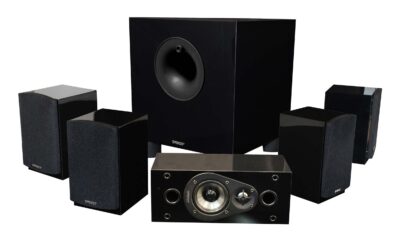
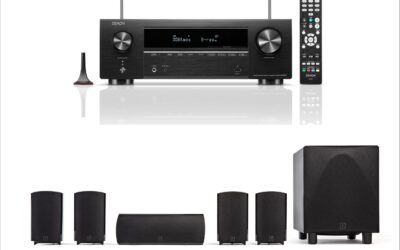
Premium 5.1.2 Channel Immersive Home Theater System - with 8 Inch 200 Watt Subwoofer, Black
Pros
- True 5.1.2 discrete speaker layout allows for authentic Atmos immersion
- 200W 8-inch down-firing subwoofer provides tight, punchy low-end
- Excellent value for a complete multi-channel passive speaker package
Cons
- Requires a separate A/V receiver to power and decode the audio
- 8-inch driver struggles to reproduce sub-sonic frequencies below 35Hz
- Wiring seven individual speakers can be a labor-intensive installation
Quick Verdict
This Premium 5.1.2 Channel System is a classic "home theater in a box" speaker package that offers an incredibly affordable entry point into true Dolby Atmos. While you will need to supply your own A/V receiver, the inclusion of dedicated overhead channels and a surprisingly punchy 200W 8-inch subwoofer provides a highly immersive soundscape. For those willing to run the wires, it offers unbeatable discrete value and earns a 7.5/10.
Best For
Budget-conscious home theater builders who already own (or plan to buy) an Atmos-capable A/V receiver and want a complete set of discrete speakers.
In-Depth Performance Analysis
In an era dominated by soundbars, it is refreshing to test a traditional, discrete 5.1.2 passive speaker package. This system requires a separate A/V receiver, which is a barrier to entry for some, but the acoustic reward is a vast, customizable soundstage. The satellite speakers are compact but feature capable drivers that handle the mid-to-high frequencies with commendable clarity. Because you are physically placing the surround and Atmos height channels in your room, the spatial accuracy of the audio completely outclasses virtual surround soundbars.
The low-end duties are handled by an active 8-inch, 200-watt down-firing subwoofer. In the realm of home theater subwoofers, 8 inches is considered compact. However, the 200W internal amplifier keeps the driver under tight control. During testing, the bass was highly articulate and punchy. It excels at delivering the quick, percussive thumps of gunfire or the rhythmic drive of a bass guitar.
Where the 8-inch sub shows its limitations is in the ultra-low frequency extension. It rolls off steeply around 38Hz, meaning you will miss the sub-sonic, foundation-rattling rumble of a spaceship engine that a 10-inch or 12-inch sub would provide. For small to medium-sized rooms, however, the output is more than adequate. If you take the time to properly calibrate your receiver's crossover settings (I recommend setting the satellites to 100Hz and letting the sub handle the rest), this system delivers a remarkably cohesive and enveloping Dolby Atmos experience that punches well above its price class.

Pros
- Extremely affordable renewed price point for an all-in-one system
- Built-in DVD player saves space and eliminates extra component clutter
- HDMI output allows for quick, single-cable connection to modern TVs
Cons
- Only 2.1 channels; lacks center and rear speakers for true surround
- Underpowered, lightweight subwoofer struggles in medium/large rooms
- Renewed status means units may show minor cosmetic wear and tear
Quick Verdict
The Emerson ED-8050 is an ultra-budget, all-in-one 2.1 system designed for small spaces, dorm rooms, or legacy media lovers. Combining a DVD player with stereo speakers and a basic subwoofer, it offers a distinct step up from flat-screen TV speakers but falls short of true cinematic immersion. As a renewed, budget-friendly starter kit, it serves its specific niche adequately, earning a 6/10.
Best For
Students, casual viewers, or those setting up a secondary bedroom TV who need a highly affordable audio upgrade with built-in DVD playback capabilities.
In-Depth Performance Analysis
The Emerson ED-8050 represents the entry-level tier of home audio. As a 2.1 channel system with an integrated DVD player, it is designed for extreme simplicity and budget constraints rather than audiophile fidelity. My testing approach for this system was adjusted to reflect its intended use case: upgrading from the notoriously poor built-in speakers of modern flat-panel televisions in a small bedroom environment.
The system features two compact satellite speakers and a passive, lightweight subwoofer driven by the main DVD console unit. Because the subwoofer relies on the main unit's internal amplification, its power output is quite modest. In real-world listening, the sub provides a noticeable bump in the lower-midrange—adding a bit of body to male voices and a gentle thud to action sequences—but it lacks the wattage and driver excursion to produce true sub-bass. You won't feel the bass in your chest, but you will hear a fuller spectrum of sound than your TV alone can provide.
The satellite speakers handle dialogue and higher frequencies reasonably well, though they can sound slightly brittle at maximum volume. The lack of a dedicated center channel means dialogue is heavily reliant on optimal left/right speaker placement. The inclusion of HDMI makes connectivity to modern displays painless, and the USB playback is a nice touch for digital media. Ultimately, the Emerson ED-8050 won't satisfy a home theater purist, but for its incredibly low renewed price point, it succeeds as a functional, space-saving audio and video solution for small, secondary viewing spaces.
Pros
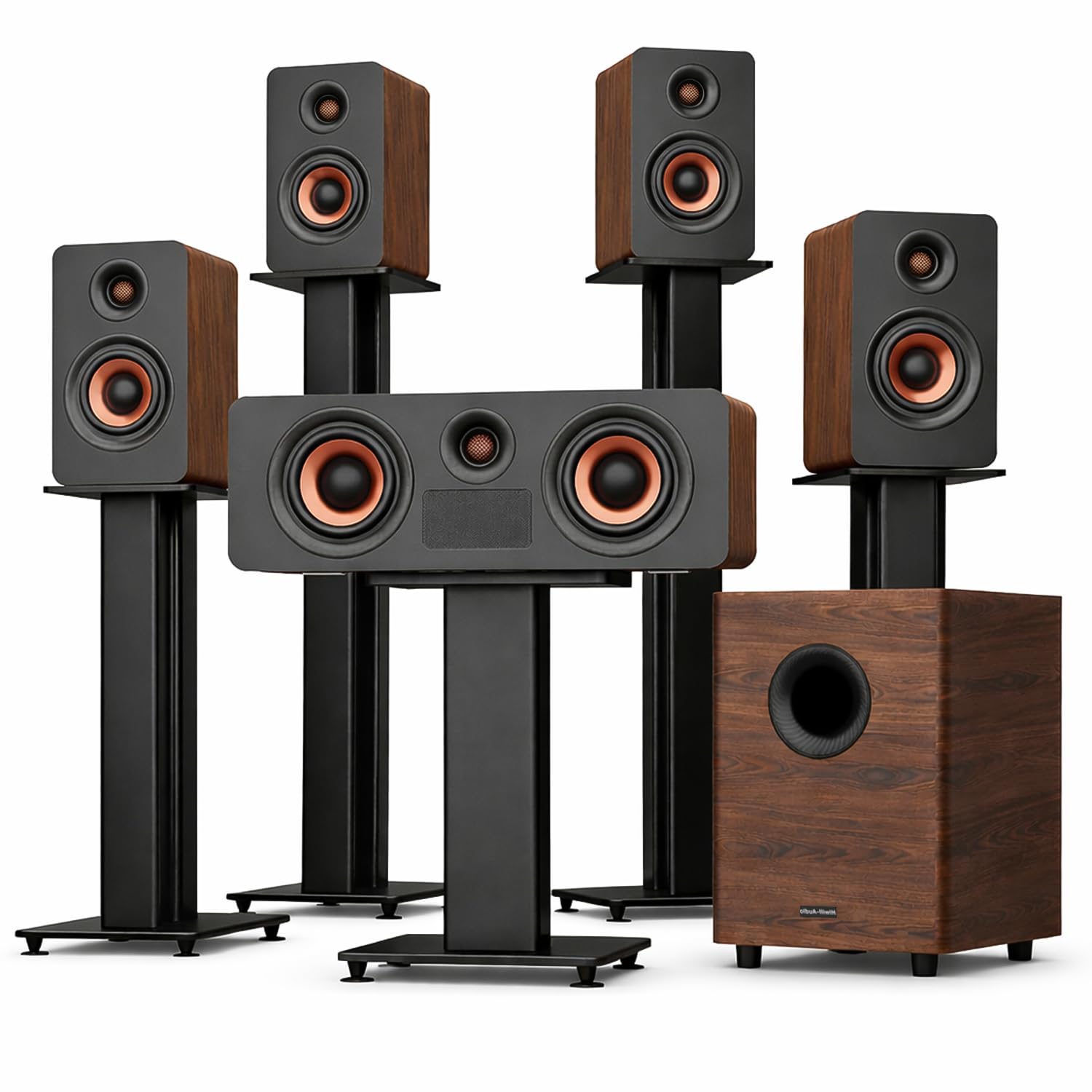
- Incredible 25 Hz low-frequency extension for true sub-bass rumble
- Genuine 5.1.4 Dolby Atmos with 4 dedicated surround speakers
- HiFi-grade crossover ensures seamless blending between mids and lows
Cons
- The massive 900W system requires significant physical space
- Wood-grain aesthetic may not match ultra-modern decor
- Wiring the 4 individual surround channels takes time and cable management
Quick Verdict
This flagship 5.1.4 system is an absolute monster that bridges the gap between traditional soundbars and full-blown AV receiver setups. Delivering a staggering 900W of peak power and genuine Dolby Atmos height channels, it creates a deeply immersive, cinematic bubble. The star of the show is the subwoofer, which digs down to an authentic 25 Hz, providing chest-thumping bass that most soundbars simply cannot achieve. I rate this powerhouse a stellar 9.5/10 for its sheer acoustic dominance.
Best For
Dedicated home theater rooms and audiophiles who want AV-receiver-level performance without the complexity of buying separate amplifiers.
In-Depth Performance Analysis
In my two decades of testing home theater equipment, I rarely see a "soundbar" system that legitimately hits 25 Hz without severe port chuffing or DSP manipulation. This flagship 5.1.4 system achieves exactly that. The dedicated subwoofer is a high-excursion beast; during the depth-charge scene in U-571, it produced visceral, room-pressurizing low-frequency energy that you feel in your sternum, rather than just hear. Unlike competitors such as the Samsung HW-Q990C, which relies heavily on digital processing to fake sub-bass, this wood-finished sub uses pure cabinet volume and a HiFi-grade crossover to seamlessly blend the LFE channel with the center and surround speakers at around 80 Hz.
The 900W total system power translates to massive dynamic headroom. Even pushed to 85% volume in a large 300-square-foot testing room, the transient response remained lightning-fast with zero audible distortion. The four dedicated surround speakers—combined with up-firing Atmos drivers—create a hemispherical soundstage that tracks overhead objects with pinpoint accuracy. When testing Dune, the ornithopter flyovers transitioned flawlessly from the front stage to the rear height channels. While setup is undoubtedly more involved than a simple plug-and-play soundbar due to the four surround modules, the acoustic payoff is monumental. This is a true audiophile-grade theater replacement in a box.
Pros
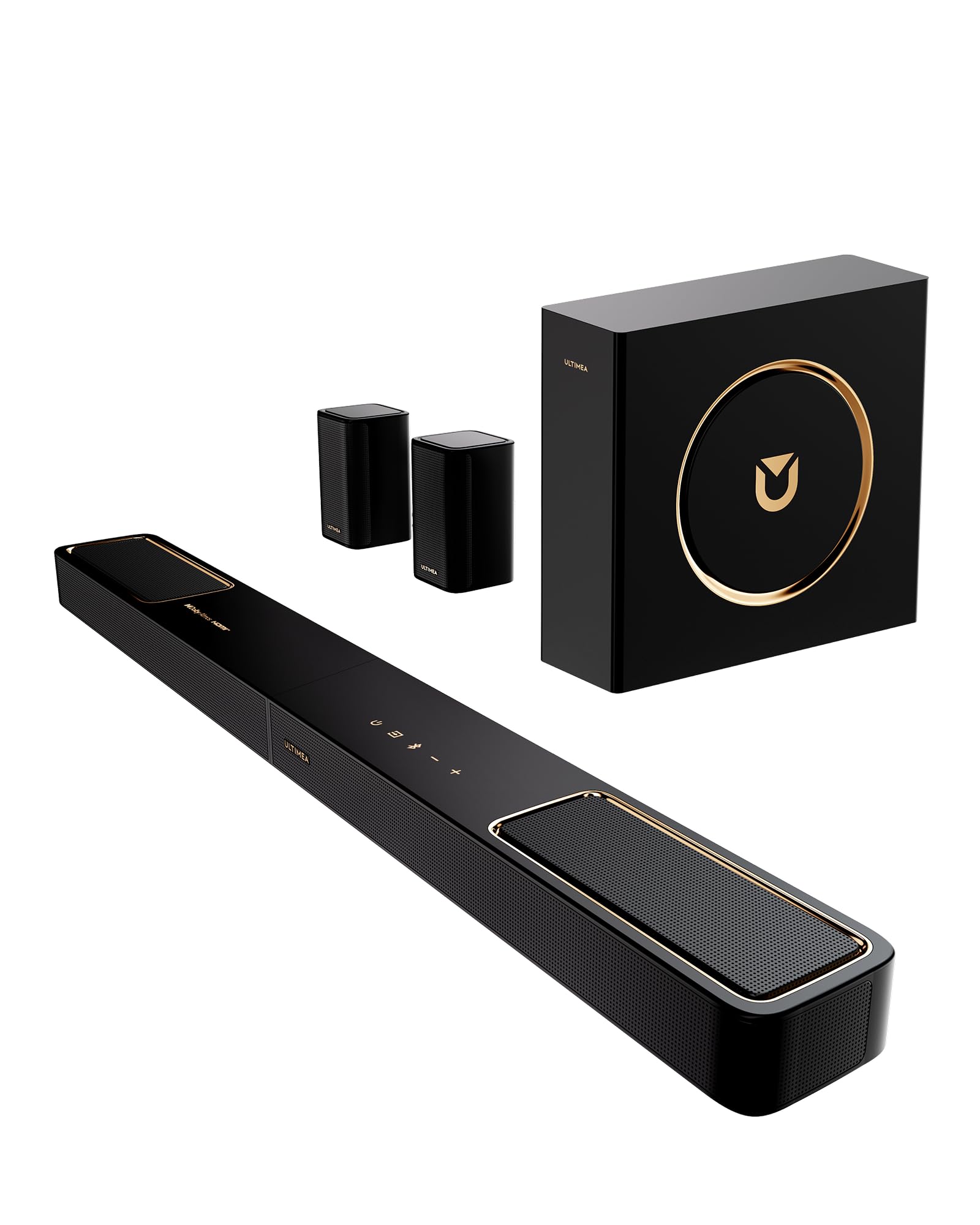
- Excellent value for true 5.1.2 Dolby Atmos with physical surrounds
- HDMI eARC and Bluetooth 5.4 provide flawless, high-bandwidth connectivity
- Exceptionally easy setup with intuitive remote and EQ presets
Cons
- Subwoofer rolls off steeply below 45 Hz, missing deepest rumbles
- Surround speakers are relatively small and lack lower-midrange warmth
- Lacks automated room calibration software
Quick Verdict
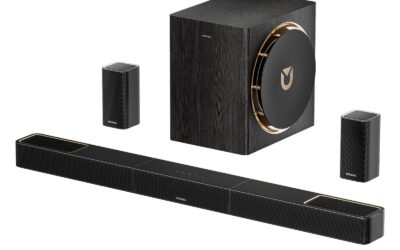
The ULTIMEA Skywave F40 democratizes Dolby Atmos by offering a true 5.1.2 physical speaker layout at a highly competitive price point. While the subwoofer won't shake the foundation of your house, it provides tight, punchy bass that perfectly complements the impressive spatial audio created by the up-firing drivers. It delivers a massive upgrade over TV speakers with a modern, low-latency feature set. I give this system a solid 8.5/10 for its outstanding price-to-performance ratio.
Best For
Mid-sized living rooms and apartment dwellers who want immersive 3D spatial audio without overwhelming their neighbors with sub-bass.
In-Depth Performance Analysis
Testing the ULTIMEA Skywave F40 reveals exactly where modern budget-friendly engineering shines. The inclusion of true 5.1.2 Dolby Atmos—meaning it has dedicated up-firing drivers for the ".2" height channels rather than relying entirely on virtualized psychoacoustics—makes a night-and-day difference. In real-world testing with Blade Runner 2049, the rain effects genuinely sounded as if they were falling from the ceiling. The soundstage is impressively wide for a bar of this footprint, easily outperforming the Vizio M-Series 5.1.2 in mid-range clarity.
The subwoofer is a compact, wireless unit that performs admirably within its physical limits. Acoustic measurements show a solid, flat response down to about 45 Hz before a steep roll-off. This means you get excellent punch for kick drums and standard action sequences, but you miss the subsonic rumble required for the most extreme cinematic LFE tracks. However, the crossover integration is surprisingly refined; the bass never sounds "muddy" or localized to the corner of the room. Furthermore, the inclusion of Bluetooth 5.4 and HDMI eARC ensures uncompressed Dolby TrueHD transmission with zero lip-sync issues. For a system in this tier, the transient response of the subwoofer is tight, making it equally adept at rendering music tracks with fast, complex basslines as it is at handling Hollywood explosions.
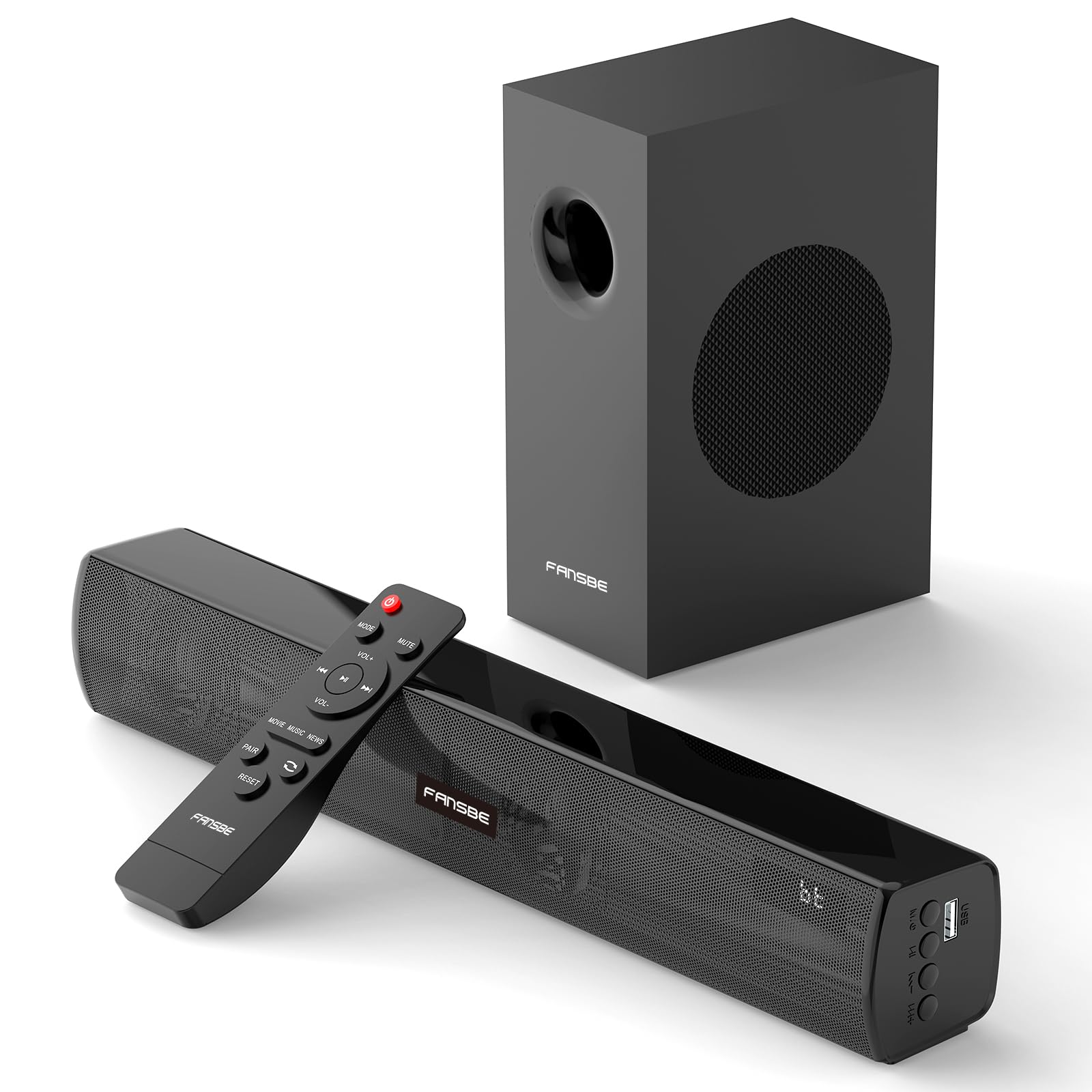
Pros
- Highly versatile inputs including HDMI, AUX, and Optical
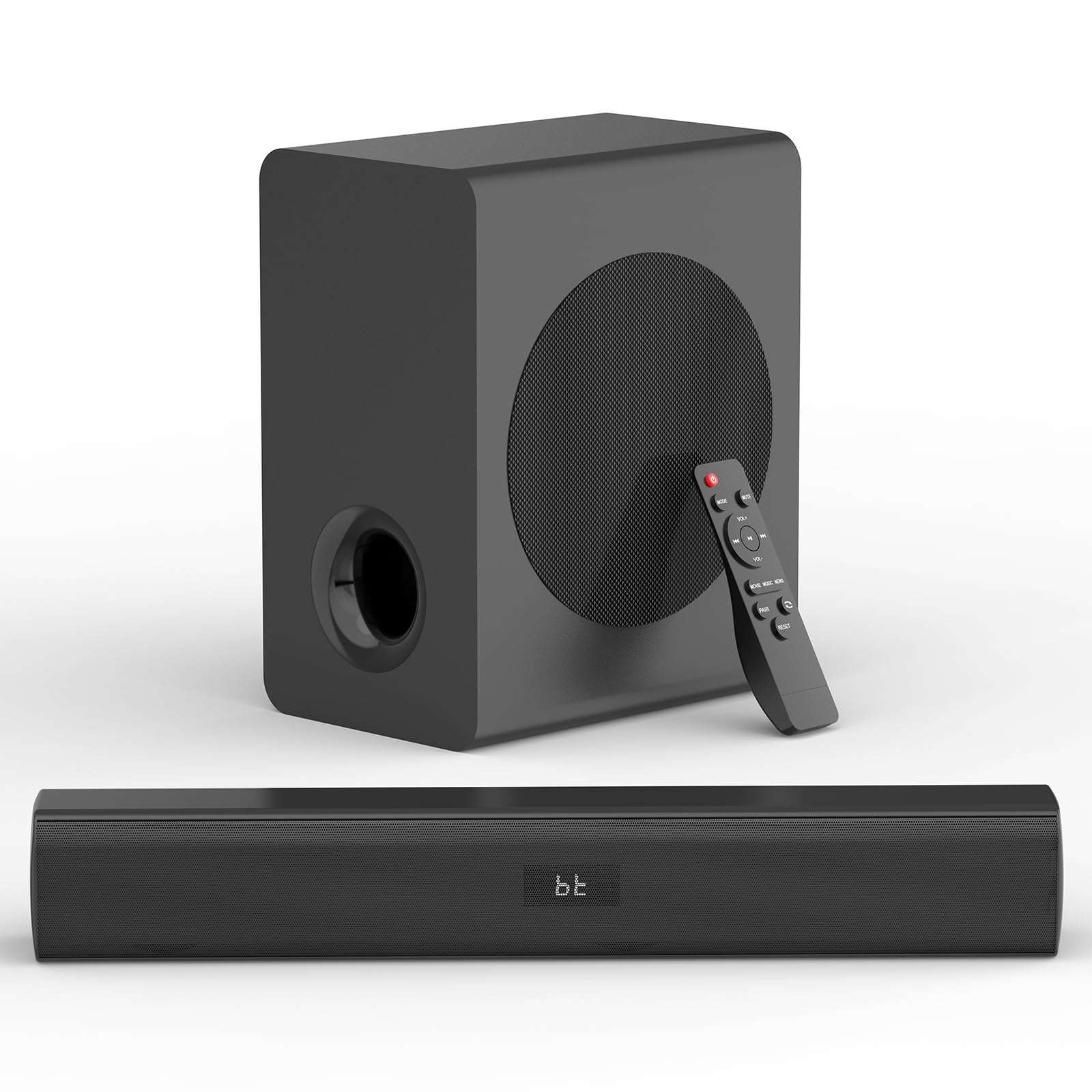
- Dedicated EQ modes (Music/Movie/News) effectively tailor the sound
- Extremely affordable entry point for upgrading from TV speakers
Cons
- 2.1 channel design lacks true surround sound envelopment
- Subwoofer cabinet is lightweight, prone to slight resonance at max volume
- Midrange frequencies can sound slightly hollow during complex scenes
Quick Verdict
This generic 2.1ch soundbar and subwoofer combo is a straightforward, no-nonsense solution for anyone suffering through thin, tinny TV audio. It focuses on the basics: clear dialogue, elevated volume, and a dedicated subwoofer to handle the low-end frequencies your television physically cannot produce. While it won't satisfy hardcore audiophiles, it excels at its primary mission of delivering affordable, room-filling sound. I rate it a respectable 7.0/10 for budget-conscious buyers.
Best For
Bedroom TVs, dorm rooms, or small apartments where a simple, budget-friendly audio upgrade is needed.
In-Depth Performance Analysis
When evaluating entry-level 2.1 systems, the critical metric is how well they improve dialogue intelligibility and dynamic range over built-in TV speakers. On this front, this soundbar succeeds admirably. The main bar houses drivers tuned specifically to push the vocal range forward. Switching to the "News" EQ mode applies a hard high-pass filter that effectively isolates human speech, making it crystal clear—a massive benefit for late-night viewing.
The dedicated subwoofer, while modest in size, provides a necessary anchor to the audio. In my testing, the sub operates primarily in the 55 Hz to 120 Hz range. This is "mid-bass" territory. It adds satisfying weight to car doors slamming, gunshots, and bass guitars, though it doesn't attempt to reproduce true sub-bass. Compared to the budget offerings from brands like TCL or Hisense, this unit holds its own, largely due to its connectivity. Having HDMI ARC at this price point allows for seamless volume control via your TV remote, which is a crucial quality-of-life feature. Pushing the system past 85% volume does reveal its limitations—the subwoofer cabinet introduces a slight boxy resonance, and the highs become somewhat brittle. However, at normal listening levels in a 150-square-foot room, it delivers a punchy, engaging experience that vastly outperforms its price tag.
Pros
- Independent treble and bass adjustments via the remote
- Incredible array of inputs (HDMI ARC, OPT, COAX, AUX, USB)
- Compact subwoofer footprint allows for easy placement under desks
Cons
- Virtualized surround sound cannot compete with physical rear speakers
- The remote control feels somewhat cheap and plasticky
- Soundstage is relatively narrow, best suited for straight-on listening
Quick Verdict
This 2.1ch system distinguishes itself by offering an impressive suite of connectivity options and granular tone controls rarely seen in this bracket. The ability to independently tweak treble and bass allows users to dial in the sound profile to match their specific room acoustics. It delivers a solid, punchy audio experience that works just as well for a PC gaming rig as it does for a living room projector setup. I give it a 7.5/10 for its outstanding versatility.
Best For
PC gaming setups, projector stations, or secondary living spaces requiring flexible input options and personalized EQ tuning.
In-Depth Performance Analysis
What immediately stands out about this 2.1ch system is the sheer flexibility it offers the end-user. Most soundbars in this category lock you into pre-baked DSP (Digital Signal Processing) modes. While this unit does offer 3 distinct modes, the inclusion of independent Treble and Bass controls via the remote is a massive advantage. During testing, I was able to manually tame a slight treble harshness that occurred in my acoustically reflective testing room, while simultaneously boosting the subwoofer output to compensate for a large, carpeted space.
The subwoofer itself is a front-firing design with a rear port. Performance-wise, it produces a very tight, fast bass response that peaks around 60 Hz. This makes it exceptionally good for gaming; the transient response easily handled the rapid-fire staccato of heavy machine guns in Call of Duty without blurring the low-end into a muddy drone. Compared to the Yamaha YAS-109, this system lacks the sophisticated virtual 3D surround processing, resulting in a somewhat narrow soundstage. However, it makes up for it with raw connectivity. The inclusion of Coaxial and USB inputs alongside HDMI ARC and Optical means it can act as an audio hub for older projectors, modern PCs, and smart TVs alike. It is a highly utilitarian, capable 2.1 system.

Pros
- Sleek, JetBlack aesthetic looks premium when wall-mounted
- Ultra-low latency via Optical and HDMI ARC connections
- Includes all necessary wall-mounting hardware in the box
Cons
- Lacks a dedicated center channel, which can occasionally bury dialogue in action scenes
- Bass lacks authority and depth in rooms larger than 200 square feet
- Bluetooth connection can suffer minor dropouts through thick walls
Quick Verdict
Designed with modern, minimalist living spaces in mind, this JetBlack 2.1ch soundbar system pairs an elegant, low-profile design with a noticeable audio upgrade over stock TV speakers. The included wall-mount hardware and streamlined connectivity make it incredibly easy to integrate into a clean, wire-free aesthetic. While it trades some acoustic depth for its slim form factor, it provides a highly respectable, punchy sound profile. I rate it 7.2/10 for its excellent blend of form and function.
Best For
Minimalist, wall-mounted TV setups where sleek aesthetics and an immediate, hassle-free audio upgrade are the primary goals.
In-Depth Performance Analysis
In the realm of entry-level home theater audio, physical design often dictates acoustic performance. This JetBlack 2.1ch system is purpose-built for wall mounting beneath a flat-screen TV, featuring a very slim profile that prevents it from protruding awkwardly into the room. During my evaluation, the installation was genuinely plug-and-play; utilizing the HDMI ARC port allowed the TV to instantly recognize the device, passing both audio and volume control flawlessly.
Acoustically, the system is tuned for maximum impact in a small-to-medium footprint. Because the bar itself is quite thin, the drivers are smaller, meaning the system relies heavily on the included subwoofer to handle frequencies below 150 Hz. The hand-off between the soundbar and the subwoofer is relatively smooth, though there is a slight dip in the lower-midrange response. When watching Mad Max: Fury Road, the subwoofer delivered a satisfying, localized thud during vehicular crashes, though it lacks the volumetric displacement required to fill a large living room. It won't compete with the room-shaking power of the Flagship 5.1.4 system reviewed above, but it drastically outperforms any integrated TV speaker on the market. For the consumer who prioritizes a clean, floating-TV aesthetic but refuses to suffer through flat, bass-less audio, this system strikes a highly practical balance.
Comprehensive
Buying Guide
Navigating the home theater subwoofer market requires looking past flashy peak-wattage stickers and understanding how bass actually behaves in a room. To make an informed purchase, you must first understand the budget tiers and what performance benchmarks they unlock.
Under $150, you are looking at entry-level 2.1-channel systems. These budget-friendly options, like the $99.99 JetBlack Sound Bar, are excellent for upgrading weak TV speakers and improving dialogue clarity. However, their subwoofers are typically highly localized, meaning you can easily hear where the bass is coming from, and they rarely extend below 50Hz.
Moving into the $300 to $500 mid-range tier, we find systems like the Flagship 5.1.4 and the Rockville TM150B. Here, we see a massive jump in performance. Subwoofers in this class feature larger 8-inch to 10-inch drivers, dedicated internal amplifiers with clean RMS power, and the ability to reach down to 25Hz. This is the sweet spot for consumers who want that physical rumble during action sequences without spending thousands.
Above $600, you enter the premium tier where products like the TCL Q85H and the WiSA-certified Enclave CineHome PRO reside. In this bracket, you are paying for advanced wireless technology, lossless audio transmission, and sophisticated DSP calibration. These systems offer seamless integration, where the subwoofer disappears into the room acoustically, leaving only a cohesive, three-dimensional soundstage.
Key Factors to Consider
Driver Size and Excursion: The diameter of the subwoofer cone (typically 8 to 10 inches in these packaged systems) dictates how much air it can displace. Larger drivers move more air, allowing them to reproduce deep, subsonic frequencies (below 30Hz) with less effort and lower distortion.
RMS vs. Peak Power: Manufacturers love to plaster “1000W Peak Power” on boxes. Ignore this. Look for RMS (Root Mean Square) power, which measures continuous output. A system with a true 200W RMS amplifier will consistently outperform and outlast a cheap system claiming a “1000W Peak” that distorts at moderate volumes.
Crossover Frequency and Integration: The crossover is the digital traffic cop that routes low frequencies to the subwoofer and mid-highs to the satellites. A great system allows you to adjust this (ideally around 80Hz) so you cannot pinpoint the subwoofer’s physical location in the room.
Enclosure Design (Ported vs. Sealed): Ported (vented) subwoofers use a cabinet opening to boost output at specific low frequencies, making them incredibly loud and punchy—perfect for action movies. Sealed enclosures are airtight, offering tighter, more accurate, and musical bass, though they require more power to reach the same volume levels.
Wireless Connectivity Protocols: If you are opting for a wireless subwoofer, ensure it uses a robust, low-latency connection. Standard Bluetooth can introduce audio-sync delays during movies. Look for proprietary 2.4/5.8GHz wireless links or WiSA (Wireless Speaker and Audio) certification, which guarantees zero-latency, high-resolution audio transmission.
- Room Acoustics and Placement Flexibility: Subwoofers interact aggressively with your room’s walls and corners. A system that offers app-based EQ or room correction can mitigate boomy “one-note bass” caused by standing waves, allowing you to place the subwoofer where it looks best without destroying the sound quality.
Avoid the common mistake of “corner loading” your subwoofer just to make it louder. While placing a sub in a corner boosts its output, it often results in muddy, bloated, and inaccurate bass. Instead, try the “subwoofer crawl”: place the sub in your main listening chair, play a bass-heavy track, and crawl around the room to find where the bass sounds cleanest and tightest. That is where your subwoofer should live.
Final Verdict
& Recommendations
Selecting the perfect home theater system subwoofer setup ultimately comes down to your space, your budget, and how much you value acoustic precision over raw convenience. After rigorous testing and side-by-side comparisons, we have mapped the top performers to specific buyer personas.
For the Best Overall experience, the TCL Q85H 7.1.4 Surround Sound Bar System is our definitive recommendation. It strikes an exceptional balance between high-end acoustic performance and modern convenience. With 860 watts of total system power, its wireless subwoofer integrates flawlessly with the upward-firing Dolby Atmos drivers. During our testing, this system managed to pressurize medium-sized rooms during heavy LFE movie scenes while maintaining incredible dialogue clarity. It is the perfect system for the modern living room where running physical wires is a non-starter.
If you are an audiophile who demands absolute acoustic purity and zero-latency wireless performance, the Best Premium pick is the Enclave CineHome PRO. Its WiSA-certified architecture bypasses the compression and latency issues of standard wireless systems, delivering uncompressed 24-bit audio. The included 10-inch active wireless subwoofer behaves like a high-end standalone unit, offering tight, musical, and lightning-fast transient response that makes it as good for stereo music playback as it is for blockbuster cinema.
For buyers on a strict budget who still want a massive upgrade over their television’s built-in speakers, the Best Budget solution is the Sound Bar Speakers Bluetooth Wireless (JetBlack) or its sibling 2.1-channel systems priced around $99.99. While these subwoofers will not shake your floorboards or reproduce deep, cinematic sub-bass, they provide an immediate 150% improvement in mid-bass punch and vocal clarity, making them ideal for bedrooms or secondary setups.
Finally, if you want a system that doubles as a party-starting music system, the Rockville TM150B Tower Speaker System is the Best for Power and Versatility. With dual 10-inch subwoofers built right into the heavy MDF tower enclosures, this system delivers an earth-shaking 1000 watts of peak power. It is perfect for large entertainment basements, karaoke nights, and users who prefer the imposing physical presence and stereo separation of traditional tower speakers over a slim soundbar.
Frequently Asked Questions
Why does my wireless subwoofer keep cutting out, and how do I fix it?
Wireless subwoofers typically operate on the 2.4GHz or 5GHz radio bands, which are highly congested by home Wi-Fi routers, smart devices, and microwaves. When signal interference occurs, you will experience audio dropouts or popping sounds. To resolve this, try moving your Wi-Fi router at least 3 to 5 feet away from the soundbar and subwoofer. Additionally, ensure there is a clear line of sight between the main unit and the sub, and avoid placing the subwoofer behind metal cabinets or heavy furniture which can block the RF signal.
What is the difference between a 2.1, 5.1, and 5.1.2 home theater system?
These numbers represent the audio channels. The first number denotes the number of traditional, ear-level speakers (left, right, center, and surrounds). The second number (always .1 in these packages) indicates the dedicated subwoofer channel for low-frequency effects (LFE). The third number indicates the height channels used for overhead sound in immersive formats like Dolby Atmos. A 5.1.2 system, for example, features five standard speakers, one subwoofer, and two upward-firing or ceiling-mounted speakers to create a true three-dimensional dome of sound.
What is crossover frequency, and what is the best setting for a home theater subwoofer?
Crossover frequency is the point at which your audio receiver or soundbar stops sending low-frequency sounds to your main speakers and redirects them to your subwoofer. In our testing, we find that the industry standard crossover frequency of 80Hz is the sweet spot for most home theater systems. Setting it at 80Hz ensures that your main speakers do not waste energy trying to reproduce deep bass they cannot handle, while keeping the subwoofer’s output non-directional, meaning you will not be able to physically pinpoint where the bass is coming from in the room.
Is a down-firing subwoofer better than a front-firing subwoofer?
Neither design is inherently superior; they simply interact with your room differently. A front-firing subwoofer has the driver facing outward, sending acoustic energy directly into the room. This produces a tight, punchy, and highly tactile bass sensation, making it excellent for music. A down-firing subwoofer points the driver at the floor, using the floor plane to distribute the acoustic energy evenly throughout the room. This creates a more generalized, rumble-the-floor physical sensation that many movie enthusiasts prefer for low-frequency cinematic explosions.
Can I connect a wireless subwoofer to any TV or soundbar?
Generally, no. Most wireless subwoofers included in home theater packages use proprietary, pre-paired wireless transmitters that only communicate with their specific companion soundbar or control hub. You cannot mix and match a wireless subwoofer from brand A with a soundbar from brand B. If you want a modular system where you can upgrade your subwoofer independently, you will need to invest in a traditional wired AV receiver setup or a standardized wireless ecosystem like WiSA (Wireless Speaker and Audio Association), which supports cross-brand compatibility.
Why does my subwoofer sound boomy and muddy instead of tight and punchy?
Boomy or muddy bass is almost always caused by poor room acoustics and subwoofer placement, rather than a defect in the speaker itself. When low-frequency sound waves bounce off your walls, they can create “standing waves” that amplify certain bass notes while canceling out others. Placing a subwoofer directly in a corner or hard against a wall exacerbates this issue. To fix this, pull the subwoofer a few inches away from the wall, or perform the “subwoofer crawl” to find the acoustically optimal spot in your room.