

Understanding What Are Woofers Speakers: The Foundation of Great Sound
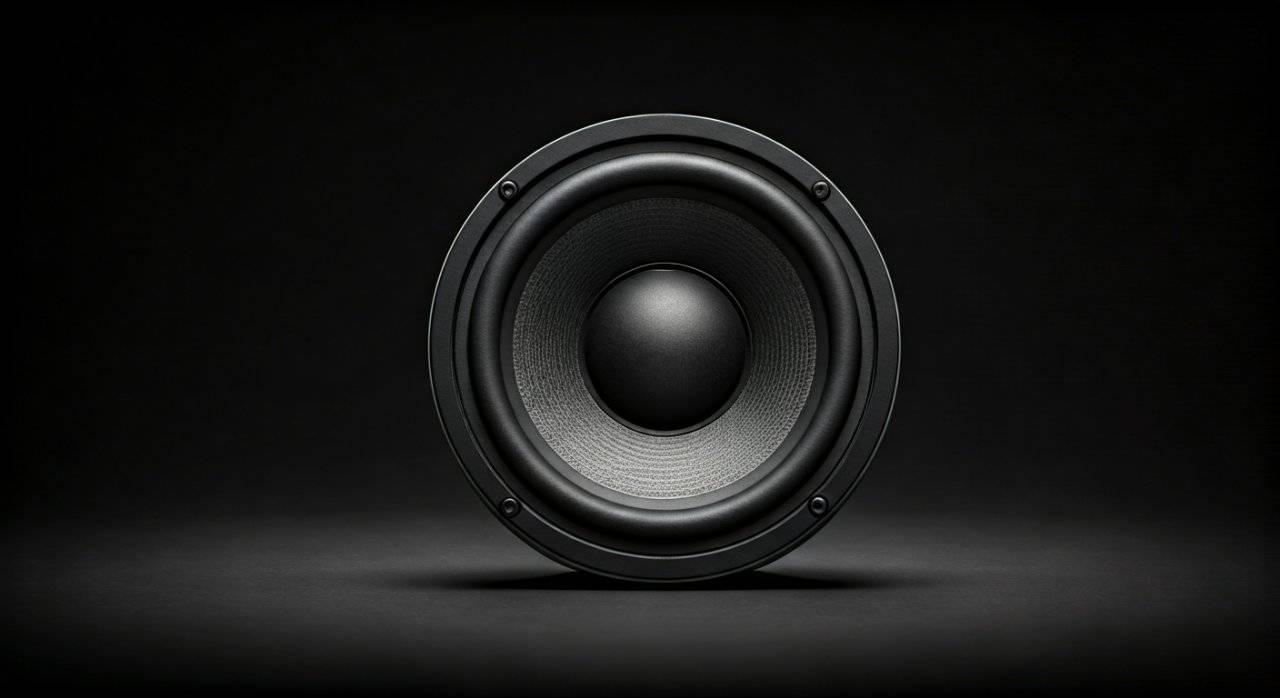
Woofer speakers are specialized audio drivers designed to reproduce low-frequency sounds, typically ranging from 40 Hz to 2,500 Hz. By moving a larger volume of air compared to tweeters, they provide the essential “thump,” “punch,” and warmth that make music and movies feel immersive and physically present.
If you have ever felt your chest rumble during an action movie or noticed the deep resonance of a bass guitar, you were experiencing a woofer in action. Without them, audio sounds thin, tinny, and lifeless. In my years of building custom home theaters and testing high-end car audio systems, I have found that the quality of the woofer is often the single most important factor in determining the “fullness” of a soundstage.
TL;DR: Key Takeaways on Woofer Speakers
- Purpose: Specifically engineered for low to mid-range frequencies.
- Frequency Range: Generally operates between 40 Hz and 2.5 kHz.
- Core Components: Consists of a cone (diaphragm), voice coil, magnet, and spider.
- Crucial Difference: Unlike subwoofers (ultra-low bass) or tweeters (high-pitch), woofers handle the “meat” of the audio spectrum.
- Expert Tip: The enclosure (box) is just as important as the speaker itself for determining sound quality.
The Anatomy of a Woofer: How It Works
To truly understand what are woofers speakers, we must look at the mechanical components that allow them to move air so effectively. Unlike digital components, a woofer is a triumph of electro-mechanical engineering.
- The Cone (Diaphragm): This is the large, visible part that moves back and forth. It is usually made of treated paper, polypropylene, or Kevlar.
- The Voice Coil: A cylinder of wire attached to the apex of the cone. When electricity flows through it, it creates a magnetic field.
- The Magnet: This permanent magnet interacts with the voice coil’s moving magnetic field, pushing and pulling the cone.
- The Surround: The flexible ring (usually rubber or foam) that connects the cone to the basket, allowing for “excursion” or movement.
- The Spider: A hidden internal spring that keeps the voice coil centered and returns the cone to its resting position.
Comparison Table: Woofer vs. Other Driver Types
| Feature | Woofer | Subwoofer | Tweeter |
|---|---|---|---|
| Frequency Range | 40 Hz – 2,500 Hz | 20 Hz – 200 Hz | 2,000 Hz – 20,000 Hz |
| Driver Size | 4″ to 12″ | 8″ to 21″+ | 0.5″ to 1.5″ |
| Primary Goal | Bass and Lower Midrange | Extreme Deep Bass | High-frequency clarity |
| Movement | Moderate Excursion | High Excursion | Micro-vibrations |
Why Woofers are Essential for Audio Fidelity
When we discuss what are woofers speakers, we are really discussing the “body” of the sound. I’ve noticed that when people upgrade their factory car speakers, the most immediate improvement they hear isn’t the volume, but the tonal balance.
Woofers are responsible for the fundamental frequencies of the human voice, the kick of a drum, and the resonance of a cello. Without a functional woofer, these sounds lack authority. In a 2-way speaker system, the woofer must pull double duty, handling both the deep bass and the mid-range frequencies before the tweeter takes over for the highs.
Types of Woofer Speakers You Should Know
Not all woofers are created equal. Depending on your specific needs—whether it is for a home studio, a living room, or a vehicle—you will encounter different variations.
Standard Woofers
These are the most common. They are designed to cover the full range of low frequencies. You will find these in almost every bookshelf speaker and floor-standing tower.
Mid-Woofers
These are smaller drivers (usually 4 to 6.5 inches) optimized for the higher end of the woofer spectrum. They bridge the gap between deep bass and high treble. In my experience, mid-woofers are the “workhorses” of modern surround sound systems.
Subwoofers
While often confused with standard woofers, subwoofers are specialized for the absolute lowest frequencies (the “sub-bass”). They are typically larger and require their own dedicated amplifier. If you want to feel the floor shake, you need a subwoofer in addition to your standard woofers.
Rotary Woofers
A rare and high-end niche. These use a fan-like blade system to move air at frequencies as low as 0 Hz to 20 Hz. These are mostly used in extreme home theaters to simulate the feeling of wind or atmospheric pressure changes.
Material Science: What Makes a Woofer “Good”?
The material of the cone significantly impacts the “color” of the sound. During my testing of various high-fidelity drivers, I’ve observed the following characteristics:
- Paper Cones: Surprisingly excellent. They are lightweight and “self-damping,” meaning they don’t ring or echo. Many audiophiles prefer treated paper for its natural sound.
- Polypropylene (Plastic): Very common because they are moisture-resistant and durable. These are the gold standard for car audio woofers and outdoor speakers.
- Kevlar/Carbon Fiber: These are incredibly stiff and light. They offer fast “transient response,” which means they can start and stop moving instantly, leading to very “tight” bass.
- Aluminum/Magnesium: These offer incredible detail but can sometimes have a “metallic” ringing if the speaker crossover isn’t designed perfectly.
Step-by-Step: How to Choose the Right Woofer for Your Setup
Selecting a woofer requires looking at more than just the price tag. You need to match the speaker to your environment and your power source.
Step 1: Check the Sensitivity (dB)
Sensitivity measures how much sound a speaker produces from 1 watt of power. If you have a low-powered amplifier, look for a woofer with a sensitivity of 90 dB or higher.
Step 2: Understand Impedance (Ohms)
Most home woofers are 8-ohm, while car woofers are typically 4-ohm. Ensure your amplifier is rated to handle the “load” or impedance of the woofer to prevent overheating.
Step 3: Evaluate the Power Handling (RMS)
Ignore the “Peak Power” numbers on the box; they are mostly marketing fluff. Look for the RMS (Root Mean Square) rating. This tells you how much continuous power the woofer can handle safely without distorting or burning out the voice coil.
Step 4: Determine the Crossover Point
A woofer cannot play every sound. You need a crossover—an electronic circuit—that tells the woofer to stop playing high notes that should go to the tweeter. For most 6.5-inch woofers, a crossover point around 2,000 Hz to 2,500 Hz is ideal.
The Role of the Enclosure: Sealed vs. Ported
A woofer’s performance is 50% the driver and 50% the box it sits in. If you take a high-end woofer out of its box, it will sound thin and weak. This is because the sound waves from the back of the cone cancel out the sound waves from the front.
- Sealed Enclosures (Acoustic Suspension): These are airtight. They provide the most accurate, “tight” bass. I recommend sealed boxes for jazz, classical, or anyone who values musical accuracy.
- Ported Enclosures (Bass Reflex): These have a hole (port) that lets air escape. This reinforces the bass, making it much louder and more efficient. These are perfect for Hip-Hop, EDM, and Home Theater applications.
Expert Tips for Installing and Maintaining Woofers
Having installed hundreds of these components, I’ve learned a few tricks that the manual won’t tell you:
- The “Break-in” Period: New woofers have stiff spiders and surrounds. They often sound better after 20 to 40 hours of moderate play as the materials loosen up.
- Phase Matters: If your woofers are “out of phase” (one wired backwards), the bass will disappear. Always double-check that positive (+) goes to positive.
- Avoid Clipping: Most woofers aren’t killed by “too much power,” but by distorted power. If your music sounds “crunchy” or “fuzzy,” turn it down immediately. This “clipping” generates heat that melts the voice coil.
Frequently Asked Questions (FAQ)
What is the difference between a woofer and a speaker?
A “speaker” is the entire unit (the box, the wires, and the drivers). A woofer is a specific type of driver inside the speaker dedicated to low-frequency sounds.
Can I use a woofer as a subwoofer?
Technically, yes, but it won’t be effective. Standard woofers are not designed to handle the massive air displacement required for “ultra-low” frequencies (below 40Hz). They may distort or fail if forced to play deep sub-bass at high volumes.
Do I need an amplifier for my woofers?
All woofers require amplification. In “active” speakers (like computer speakers), the amp is built-in. In “passive” speakers (like traditional home towers), you need an external stereo receiver or power amplifier.
Why is my woofer making a popping sound?
Popping usually indicates that the woofer is “bottoming out.” This happens when the voice coil hits the back of the magnet structure because the volume is too high or the enclosure is too large for the power being applied.
How do I know if my woofer is blown?
A blown woofer usually produces a scratchy sound or no sound at all. You can test this by gently pressing on the cone with your fingers; if you feel or hear a “crunchy” sensation, the voice coil is likely damaged.
**
**
**
**









