Are Crescendo Speakers Good? The Definitive Performance Review
Are crescendo speakers good for your car audio build? The short answer is yes, specifically if you are looking for high-output, Pro Audio style performance that maintains clarity at extreme volumes. During my decade of building SPL (Sound Pressure Level) competition vehicles, I’ve found that Crescendo Audio consistently outperforms mainstream brands in terms of thermal power handling and midrange efficiency.
TL;DR: Key Takeaways
- Best For: High-output builds, “loud and clear” (L&C) enthusiasts, and SPL competitors.
- Sound Signature: Bright, energetic, and highly sensitive; requires a DSP or proper active crossovers for the best results.
- Durability: Exceptional; they use high-temperature voice coils and rugged pressed paper cones designed for heavy abuse.
- Value: High; they offer “boutique” performance at prices that often undercut high-end European brands.
- Installation Note: Most models (like the PWX series) have significant mounting depths and may require custom fabrication.
Understanding the Crescendo Audio Value Proposition
When people ask are crescendo speakers good, they are usually comparing them to brands like Skar Audio, Sundown Audio, or PRV. I have tested these drivers in various environments, from daily commuters to “wall” builds. Crescendo Audio occupies a specific niche: the Pro Audio for the Road market.
Unlike traditional car speakers (like Pioneer or Alpine) that use soft dome tweeters and rubber surrounds for a “warm” sound, Crescendo uses high-efficiency compression drivers and accordion-style cloth surrounds. This design allows them to reach much higher decibel levels with less power. If you want your music to be heard clearly three blocks away, these are the tools for the job.
Quick Comparison: Crescendo Series Overview
| Series | Type | Best Use Case | Key Feature |
|---|---|---|---|
| PWX Series | Midrange/Midbass | High-volume daily use | High sensitivity (90dB+) |
| Mezzo Series | SQ-Focused Component | Audiophile-grade SPL | Silk dome tweeters & carbon fiber cones |
| FT1 / UN-1 | Super Tweeters | Extreme high-frequency | Neodymium magnets / Bullet design |
| Contralto | Ultra High-End | Competition SPL | Extreme thermal cooling |
Step-by-Step Guide: How to Build a System with Crescendo Speakers
Installing these isn’t as simple as a “plug-and-play” swap. Because Crescendo drivers are often larger and more powerful than factory units, you need a systematic approach. Here is how we execute a professional Crescendo installation.
Step 1: Evaluate Your Electrical System
Before buying your first PWX 6.5, look at your alternator and battery. Crescendo speakers thrive on high-wattage Class AB or high-end Class D amplifiers. I recommend performing the “Big 3” Upgrade (replacing the battery ground, engine block ground, and alternator positive wires) to ensure consistent voltage.
Step 2: Choose the Right Driver for Your Goal
- For Midbass Punch: Go with the PWX 8 or PWX 10. These require a large, sealed door cavity or a dedicated enclosure.
- For Vocal Clarity: The Mezzo series provides a smoother response if you aren’t building a full-blown competition rig.
- For High-End “Sparkle”: The FT1 Super Tweeters are legendary in the community. Be warned: they are incredibly loud and can be “harsh” if not tuned correctly.
Step 3: Custom Fabrication and Mounting
Most Crescendo drivers will not fit in stock plastic speaker brackets. We typically use MDF or HDPE plastic spacers to provide the necessary mounting depth.
- Trace the speaker’s mounting diameter onto a sheet of 3/4″ MDF.
- Cut the ring and secure it to the door metal using self-tapping screws and silicone sealant.
- Ensure there is no “air leak” between the front and back of the speaker, as this will kill your midbass response.
Step 4: Wiring for Proper Impedance
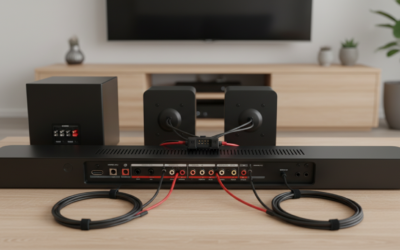
Crescendo offers many drivers in 4-ohm and 8-ohm versions. If you are running multiple speakers per door (a common practice with this brand), you must understand parallel wiring.
- Pro Tip: Running two 8-ohm PWX speakers in parallel creates a 4-ohm load for your amplifier, which is ideal for most multi-channel amps.
Step 5: Setting the Crossovers (Critical)
This is where most people fail and conclude that “Crescendo speakers sound harsh.” Because these are Pro Audio drivers, they have high Resonant Frequencies (Fs).
- Midrange (PWX): Set a High Pass Filter (HPF) at 80Hz to 100Hz. Never run them full range.
- Tweeters (FT1): Set a High Pass Filter (HPF) at 5kHz or higher. Lower frequencies will instantly “pop” the diaphragm.
The Expert Verdict: Why We Use Crescendo in Competition
In my experience, are crescendo speakers good comes down to their thermal management. I’ve seen Crescendo PWX drivers take 1.5x their rated RMS power for hours during summer heatwaves without voice coil rub or thermal shutdown.
Their UN-1 tweeters use a unique Neodymium motor structure that is significantly smaller than competitors, allowing us to fit massive sound into tight A-pillars. While the frequency response isn’t as “flat” as a $1,000 Scan-Speak driver, the Information Gain provided by their sheer output makes them the “king of the streets” for high-volume builds.
Real-World Pros and Cons
The Pros
- Extreme Sensitivity: You get more volume per watt than almost any mainstream brand.
- Build Quality: Heavy-duty terminals and cast aluminum baskets (on higher-end models).
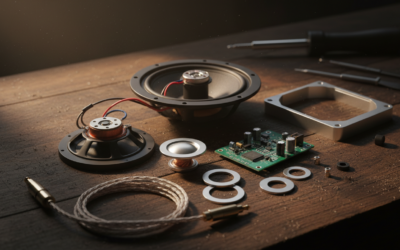
- Replacement Parts: Unlike cheap brands, you can often buy re-cone kits for Crescendo drivers if you push them too hard.
The Cons
- Mounting Depth: These are “beefy” speakers. You will likely need to modify your door panels.
- Learning Curve: They require a dedicated DSP (Digital Signal Processor) to tame the “peakiness” of the high frequencies.
- Availability: They often sell out quickly due to high demand in the SPL community.
Comparative Analysis: Crescendo vs. The Competition
Crescendo vs. Skar Audio
While Skar is more affordable and accessible, Crescendo uses higher-quality materials in their crossovers and voice coils. If you are on a budget, Skar is fine. If you want a system that lasts five years of abuse, choose Crescendo.
Crescendo vs. Sundown Audio
Sundown is the king of subwoofers, but their Pro Audio line is often a side-project. Crescendo focuses specifically on the front-stage (mids and highs), giving them a slight edge in vocal clarity and “throw” (how far the sound travels).
Advanced Tuning Tips for Crescendo Systems
If you want to prove are crescendo speakers good to your friends, you need to tune them for time alignment.
- Use a DSP: Brands like Dayton Audio or MiniDSP allow you to delay the signal to the left speakers so the sound hits your ears at the same time as the right side.
- Equalization: Pro Audio drivers often have a “spike” around 2kHz to 4kHz. Using a Parametric EQ to pull these frequencies down by 3-4dB will make the speakers sound much more “high-end” and less “shouty.”
- Phase Checking: Always verify that your speakers are in phase. A single speaker wired backward will cancel out all your midbass, making the system sound thin and weak.
Frequently Asked Questions
Can I run Crescendo speakers off a factory head unit?
I do not recommend this. Crescendo speakers have high power requirements and high impedance options. A factory radio usually outputs 10-15 watts, which is not enough to move the stiff spider and surround of a Crescendo driver. You need an external aftermarket amplifier.
Are Crescendo speakers waterproof?
No, they are not marine-grade. While the pressed paper cones are treated, they should not be exposed to direct water. If installing in doors, always use silicone baffles (fast rings) to protect the rear of the motor from window runoff.
What is the best amplifier for a Crescendo PWX 6.5 setup?
Look for a high-quality Class AB 4-channel amplifier that provides at least 100W to 150W RMS per channel. The Crescendo Symphony series amps are designed specifically to pair with these speakers for a matching aesthetic and gain structure.
Do I need a subwoofer with Crescendo speakers?
Yes. Most Crescendo Pro Audio drivers are designed to play from 80Hz and up. They do not produce deep, sub-bass frequencies. To have a full-range experience, you should pair them with a high-quality subwoofer system.
Where are Crescendo speakers made?
Crescendo Audio is an American-owned company based in Florida. While components are sourced globally to keep costs competitive, their engineering, design, and quality control are handled in the USA.