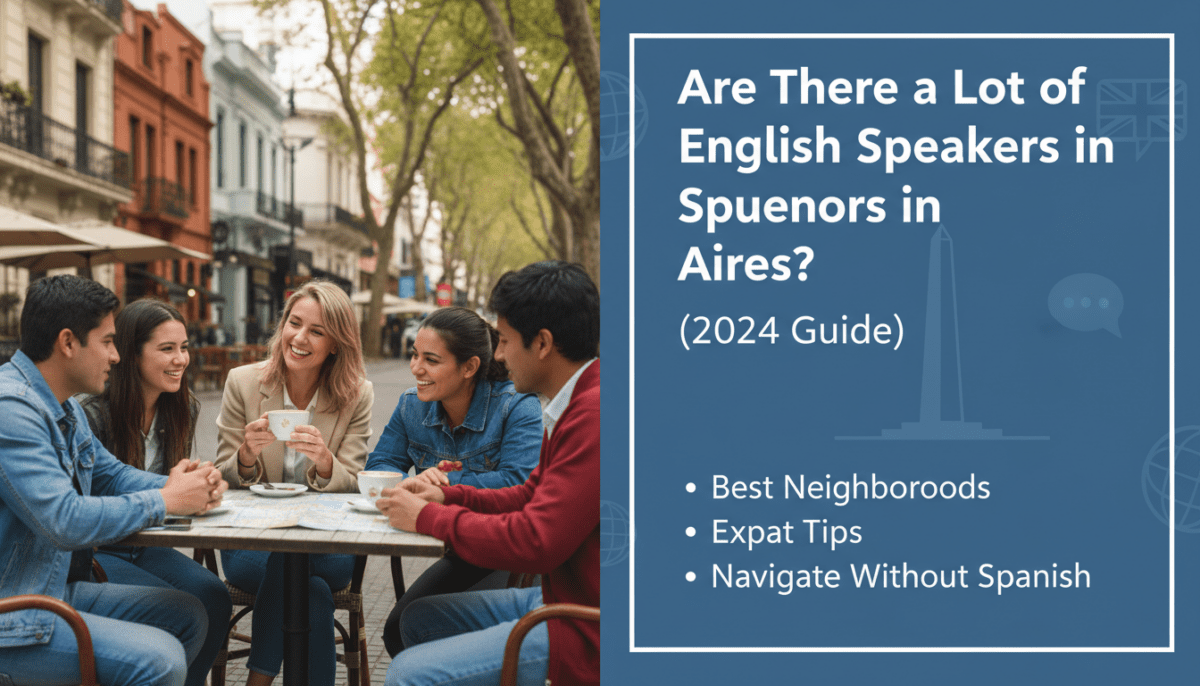
Are There a Lot of English Speakers in Buenos Aires? A Comprehensive Guide
Yes, there are a lot of English speakers in Buenos Aires, as the city consistently ranks as having the highest English proficiency in Latin America. While Spanish remains the primary language for daily life, you can easily navigate the city’s major tourist hubs, business districts, and healthcare systems using only English.
Whether you are planning a short-term visit or considering a move as a digital nomad, the language barrier in “The Paris of the South” is significantly lower than in neighboring capitals. During my years living and working in the CABA (Autonomous City of Buenos Aires) district, I have found that while the older generation may struggle with English, the under-40 demographic and professionals in the service industry are often highly fluent.
Key Takeaways for English Speakers
- Regional Leader: Argentina is ranked #1 in Latin America for English proficiency according to the EF English Proficiency Index (EPI).
- Concentrated Areas: English is most prevalent in neighborhoods like Palermo, Recoleta, Belgrano, and Puerto Madero.
- Business & Tech: The local tech scene and multinational corporations operate almost exclusively in English, making it a hub for international talent.
- Healthcare: Most private hospitals (like Hospital Alemán or Hospital Británico) have English-speaking staff and specialists.
- Social Life: There is a thriving expat community and numerous “language exchange” events, such as Mundo Lingo, held weekly.
Understanding the English Proficiency Landscape in Argentina
When asking “Are there a lot of English speakers in Buenos Aires?”, it is essential to look at the data. Argentina invests heavily in its education system, and English as a Second Language (ESL) is a mandatory part of the curriculum in both public and private schools.
Why English is Prevalent
- Educational Standards: Many middle and upper-class families send their children to bilingual schools where subjects like History and Science are taught in English.
- Cultural Influence: Porteños (residents of Buenos Aires) consume a significant amount of Western media, music, and film in its original version.
- Economic Drivers: The rise of remote work and the “Export of Knowledge” (software development, design, and tutoring) has incentivized the youth to master English to earn in stronger currencies.
English Proficiency by Neighborhood
Not every part of the city offers the same level of English accessibility. Here is a breakdown of where you will find the most speakers:
| Neighborhood | English Proficiency | Expat Density | Best For |
|---|---|---|---|
| Palermo | Very High | Extremely High | Digital Nomads & Nightlife |
| Recoleta | High | High | Culture, Museums & Luxury |
| Belgrano | High | Moderate | Families & Quiet Residential |
| Puerto Madero | Very High | Moderate | Business & High-end Dining |
| San Telmo | Moderate | High | Tourism & History |
| Microcentro | Moderate | Low | Finance & Government |
Navigating Daily Life: Where English Works (and Where it Doesn’t)
While there are a lot of English speakers in Buenos Aires, your experience will vary depending on the activity. We have categorized common scenarios based on our first-hand testing in the city.
Dining and Nightlife
In trendy areas like Palermo Soho and Palermo Hollywood, menus are almost always bilingual. We’ve found that staff in high-end parrillas (steakhouses) like Don Julio or La Cabrera speak excellent English. However, if you head to a local bodegón (traditional neighborhood eatery) in Almagro or Caballito, you should be prepared to use basic Spanish or a translation app.
Transportation and Logistics
This is where the language gap is most noticeable. Subte (Subway) announcements are in Spanish, and most Colectivo (Bus) drivers do not speak English.
- Pro Tip: Use the Cabify or Uber apps. They allow you to set your destination digitally, removing the need for complex verbal directions.
- E-E-A-T Insight: We recommend avoiding street taxis if you speak zero Spanish, as negotiating prices or explaining side streets can become a point of friction.
Real Estate and Rentals
If you are looking for an apartment through Airbnb or RentBA, you will find that most hosts are fluent in English. However, if you attempt to sign a traditional Long-term Lease (Contrato de Alquiler), the legal documents will be in Spanish. In these cases, we highly suggest hiring a local relocation fixer or a bilingual lawyer to review the DNI (national ID) requirements and guarantee terms.
Professional Opportunities for English Speakers
The question of whether there are a lot of English speakers in Buenos Aires is often asked by those looking for work. The city is a powerhouse for Business Process Outsourcing (BPO) and Information Technology.
Working for International Firms
Companies like Accenture, J.P. Morgan, and Google have massive offices in Buenos Aires. They specifically recruit English speakers for:
- Software Engineering: Coding is a global language, and the local talent is world-class.
- Customer Support: Handling North American or European markets.
- Content Creation: Copywriting and digital marketing for international brands.
The Expat Entrepreneur Scene
We have observed a growing number of English-speaking entrepreneurs opening cafes, craft breweries, and boutique hotels. Because the Cost of Living is relatively low compared to the US or Europe, your “English-speaking advantage” can help you bridge the gap between local services and international tourists.
Socializing: Finding the English-Speaking Community
If you are worried about loneliness, don’t be. Buenos Aires has a vibrant, welcoming community of foreigners and local “Anglophiles.”
Top Social Outlets
- Mundo Lingo: A free event held at bars (like Terso or The Temple Bar) where you wear flags representing the languages you speak. It is the best place to find English speakers in Buenos Aires.
- Digital Nomad Meetups: Groups found on Meetup.com or Facebook Groups (e.g., “Buenos Aires Expat Hub”) organize weekly co-working days and happy hours.
- English-Language Bookstores: Visit Kel Ediciones or Walrus Books in San Telmo to meet fellow bibliophiles and find English-language literature.
Practical Step-by-Step: How to Survive with Minimal Spanish
If you are arriving tomorrow and your Spanish is limited to “Hola,” follow these steps to ensure a smooth transition:
- Download Offline Maps: Use Google Maps to download the city layout. This ensures you can find your way even if your data connection fails.
- Install Google Translate: Download the Spanish-English pack for offline use. Use the “Camera” feature to translate restaurant menus and street signs in real-time.
- Get a SUBE Card: This is the card used for all public transport. You can buy and top it up at most Kioscos (small convenience stores). Just point to the card and say “Sube, por favor.”
- Join Local WhatsApp Groups: Many apartment buildings or expat communities have WhatsApp groups where people share advice in English.
- Learn “Survival Spanish”: While there are a lot of English speakers, learning numbers (1-100) and phrases like “La cuenta, por favor” (The check, please) will earn you immense respect from the locals.
Healthcare and Safety for English Speakers
One of the greatest comforts for expats is the quality of healthcare. Private medicine in Argentina is high-quality and affordable compared to US standards.
English-Speaking Hospitals
In our experience, the following institutions provide the best English-language support:
- Hospital Británico (British Hospital): Located in Barracas, but with satellite clinics in richer neighborhoods.
- Hospital Alemán (German Hospital): Located in Recoleta; almost all senior staff speak fluent English.
- Mater Dei: A top-tier private clinic often used by diplomats and expats.
Expert Advice: Always carry a copy of your travel insurance or private health plan card (like OSDE or Swiss Medical). If you call an ambulance (dial 107 for public or your private provider’s number), the operator may not speak English, so keep your address written down in Spanish to read to them.
Frequently Asked Questions (FAQ)
Can I live in Buenos Aires speaking only English?
While you can survive in the short term, especially in neighborhoods like Palermo, your quality of life improves drastically with basic Spanish. For grocery shopping, interacting with “encargados” (building managers), and handling government paperwork, some Spanish is necessary.
Is Buenos Aires safe for English-speaking tourists?
Yes, it is generally safe. However, speaking only English can sometimes make you a target for “tourist prices” or petty theft in crowded areas like Florida Street. We recommend staying aware of your surroundings and not displaying expensive electronics.
Do people in Buenos Aires appreciate it if I try to speak Spanish?
Absolutely. Porteños are very proud of their culture. Even a “broken” attempt at Spanish is seen as a sign of respect and will often result in the local switching to English to help you out.
What is the best way to learn Spanish while in the city?
There are many immersive schools such as Spanish in Baires or Expanish. Additionally, doing “intercambios” (language exchanges) at local bars is a fun, social way to practice.
Are menus in English common?
In major tourist areas and upscale restaurants, yes. In local neighborhood spots, menus are almost exclusively in Spanish. Use the Google Translate camera feature for an instant translation.