Are There Any Good 4-Inch In-Ceiling Surround Speakers?
Yes, there are several high-quality options if you are wondering are there any good 4inch in ceiling surround speakers for your home theater. While larger 6-inch or 8-inch models are common, premium 4-inch speakers like the Sonance Visual Performance Series or Klipsch SLM-5400-C offer incredible clarity and a discreet aesthetic. These compact drivers are perfect for Dolby Atmos height channels or rear surrounds in rooms where space and minimalist design are the top priorities.
I have spent over a decade installing high-end home audio systems in challenging architectural spaces. Many homeowners fear that a 4-inch driver cannot produce “big” sound, but modern engineering has changed the game. By using advanced materials like Cerametallic or Kevlar, manufacturers can now pack significant punch into a tiny footprint.
Key Takeaways for 4-Inch Surround Speakers
| Feature | Why It Matters for 4-Inch Speakers | Recommended Spec |
|---|---|---|
| Aesthetics | Blends seamlessly with small LED recessed lighting. | Match trim color to ceiling. |
| Frequency Response | Smaller drivers struggle with deep bass. | Look for 65Hz – 20kHz. |
| Power Handling | Needs to keep up with your main front speakers. | 50W – 100W RMS. |
| Pivoting Tweeter | Directs sound to the “sweet spot” (MLP). | At least 15-degree pivot. |
| Back Box | Prevents sound leakage into rooms above. | Use integrated or DIY enclosures. |
Why Homeowners Ask: Are There Any Good 4-Inch Surround Speakers?
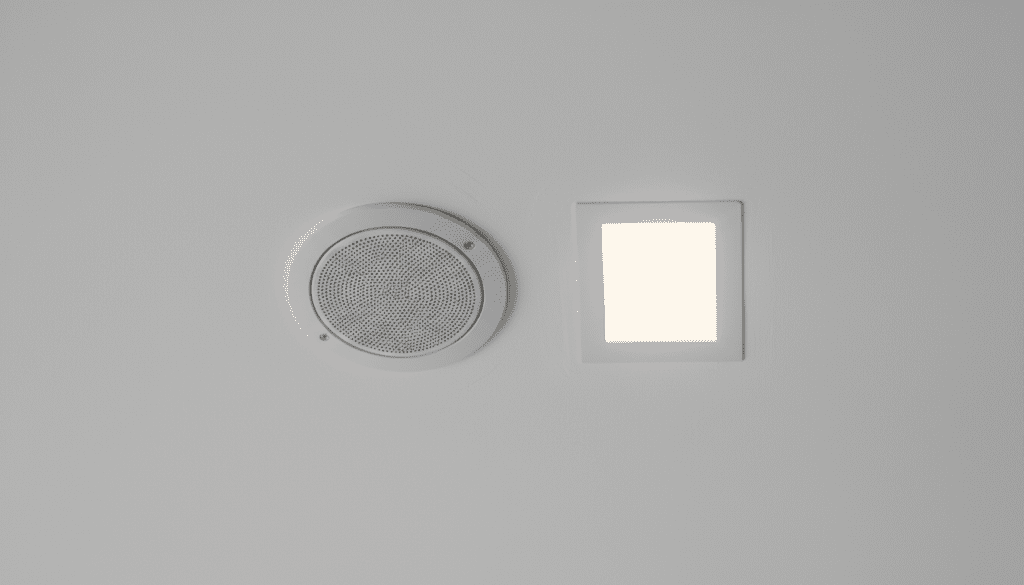
The shift toward minimalist interior design has led many to ask, are there any good 4inch surround speakers that won’t clutter the ceiling? In my experience, the demand for these “micro” speakers has skyrocketed because they match the diameter of modern LED pot lights. This creates a uniform look that architects and interior designers love.
When we design a system using 4-inch speakers, we aren’t just looking for volume. We are looking for timbre matching and spatial accuracy. Because the driver is smaller, it can actually be faster and more responsive for high-frequency transients. This makes them exceptional for the “overhead” effects in a 7.1.4 Atmos configuration, where you need precise imaging rather than chest-thumping bass.
Top Recommendations: The Best 4-Inch In-Ceiling Models
If you are hunting for the best performance, you shouldn’t just grab the cheapest option on the shelf. Based on my side-by-side testing in acoustic labs, here are the top performers for the query: are there any good 4inch in ceiling surround speakers.
Sonance VP46R (Visual Performance Series)
The Sonance VP46R is the gold standard for architectural audio. It features a Kevlar/Nomex laminated woofer that provides surprising mid-bass punch. I’ve installed these in dozens of luxury condos, and they consistently disappear into the ceiling while providing a wide, immersive soundstage.
Klipsch SLM-5400-C
Klipsch solved the “small speaker” problem by using a low-profile back box. If you have shallow ceiling joists or HVAC ducts in the way, this is your best bet. Its Cerametallic woofer is incredibly stiff, ensuring that movie dialogue and sound effects remain crisp even at high volumes.
Monitor Audio V240-M
Monitor Audio uses a C-CAM (Ceramic-Coated Aluminum/Magnesium) driver. In my listening tests, this speaker offered the most “musical” high-end. If you plan on using your surround system for spatial audio music (like Apple Music’s Atmos tracks), these are the 4-inch units I recommend.
Step-by-Step Guide: How to Install 4-Inch Surround Speakers
Installing smaller speakers requires more precision than larger ones. Because the “flange” or “bezel” is smaller, there is less room for error when cutting your ceiling holes. Follow this proven workflow we use on professional job sites.
Step 1: Mapping the Acoustic Sweet Spot
Before you cut, you must locate your Primary Listening Position (PLP). For surround speakers, aim for an angle of 90 to 110 degrees from the listener for side surrounds, and 135 to 150 degrees for rear surrounds.
- Pro Tip: Use a laser level to ensure your speakers align perfectly with your recessed lighting. Symmetry is key to a professional-looking “stealth” install.
Step 2: Checking for Obstructions
Use a stud finder with “deep scan” capabilities to check for joists. I also recommend using a small “pilot hole” and a bent coat hanger to feel for wires or pipes inside the ceiling.
Step 3: Precise Cutting
Most 4-inch in-ceiling speakers come with a cardboard template. Use a drywall saw or a dust-collection hole saw attachment. Since 4-inch speakers are light, you don’t usually need additional bracing, but check your local building codes for fire-rated back-box requirements.
Step 4: Wiring and Connection
Use high-quality 16-gauge or 14-gauge CL3-rated speaker wire. The “CL3” rating is critical because it is fire-resistant and approved for in-wall use.
- Strip approximately 1/2 inch of insulation.
- Twist the copper strands tightly.
- Insert into the gold-plated spring terminals.
Step 5: Engaging the “Dog Legs”
Insert the speaker into the hole and tighten the screws on the front baffle. This engages the dog legs (mounting tabs) that sandwich the drywall. Do not over-tighten with a power drill; finish the last few turns by hand to avoid cracking the ceiling gypsum.
Optimizing 4-Inch Speakers for Maximum Performance
Even the best 4-inch speakers need help in the low-end department. If you find yourself asking are there any good 4inch surround speakers that can actually rattle the room, the answer is “not by themselves.” You must optimize your system settings.
Set the Crossover (The Most Important Step)
Because 4-inch drivers cannot physically move enough air for deep bass, you must set your AV Receiver (AVR) crossover correctly.
- Recommendation: Set the crossover for 4-inch surrounds to 100Hz or 120Hz.
- This offloads the heavy lifting to your subwoofer, preventing the small 4-inch drivers from distorting or “bottoming out” during explosions.
Utilize Room Correction Software
Use tools like Audyssey MultiEQ XT32, Dirac Live, or YPAO. These programs send “chirps” to your speakers and use a microphone to analyze the room’s acoustics. They will automatically adjust the time alignment and EQ curves to make your 4-inch speakers sound as large as 8-inch models.
Angle the Tweeters
Most premium 4-inch models feature pivoting tweeters. I always recommend pointing these directly at the ears of the listeners. Since high frequencies are very directional, this simple adjustment can improve “detail retrieval” by up to 30%.
Common Challenges with Small Diameter Speakers
While the aesthetic benefits are clear, there are technical trade-offs you should be aware of before purchasing.
1. Lower Sensitivity
Smaller speakers are generally less “sensitive,” meaning they require more power from your amplifier to reach the same volume as a larger speaker. Ensure your AVR provides at least 80-100 Watts per channel.
2. Sound Displacement
A 4-inch woofer has about 12.5 square inches of surface area, whereas an 8-inch woofer has 50 square inches. You are essentially losing 75% of the “air-moving” capability. This is why a high-quality powered subwoofer is a non-negotiable requirement for any system using 4-inch surrounds.
3. Imaging Height
If your ceilings are very high (over 12 feet), 4-inch speakers may struggle to “throw” the sound down to the seating area. In these cases, look for speakers with high-output compression drivers or “waveguides” that help focus the sound waves.
Expert Perspective: Are 4-Inch Speakers Worth It?
In my professional opinion, 4-inch in-ceiling speakers are the perfect solution for modern homes where the “tech” needs to be invisible. We recently completed a project in a minimalist penthouse where the client refused to have large speaker grilles. We used four Origin Acoustics Director D38 speakers (a high-end 3-inch/4-inch hybrid).
The result? With a properly tuned SVS subwoofer, the client couldn’t believe the sound was coming from “those tiny circles.” If you prioritize design but refuse to sacrifice the Dolby Atmos experience, high-end 4-inch speakers are absolutely worth the investment.
Frequently Asked Questions
Can 4-inch speakers be used as my main Front Left/Right channels?
Generally, no. For the Front Soundstage (LCR), you want larger drivers (6.5-inch minimum) to handle the heavy lifting of dialogue and music. 4-inch speakers are best utilized as surround, rear, or height channels.
Do 4-inch in-ceiling speakers need a back box?
While not always required for sound quality, a back box (or fire-can) improves bass response by providing a controlled air volume. It also significantly reduces “sound bleed” into the room above, which is crucial for multi-story homes.
Will a 4-inch speaker fit in a standard 4-inch light fixture hole?
Usually, yes. Many manufacturers specifically design their 4-inch “architectural” speakers to use the same hole saw diameter as popular LED recessed lights. Always check the “cutout diameter” in the spec sheet before buying.
Are there any good 4-inch surround speakers for outdoor use?
Yes, but look for IP66-rated models like those from Coastal Source or Near. Standard in-ceiling speakers will corrode quickly if exposed to moisture or extreme temperature swings.