Are There Stereo Systems Without Speakers?
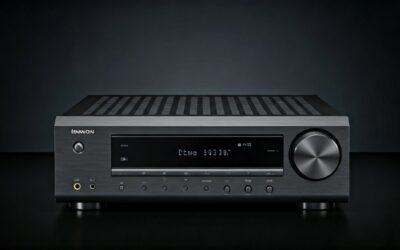
Yes, there are many stereo systems without speakers available on the market, commonly referred to as audio components, integrated amplifiers, or receivers. These systems are designed for enthusiasts who prefer to choose their own speakers to customize their sound profile or for those who already own high-quality passive speakers.
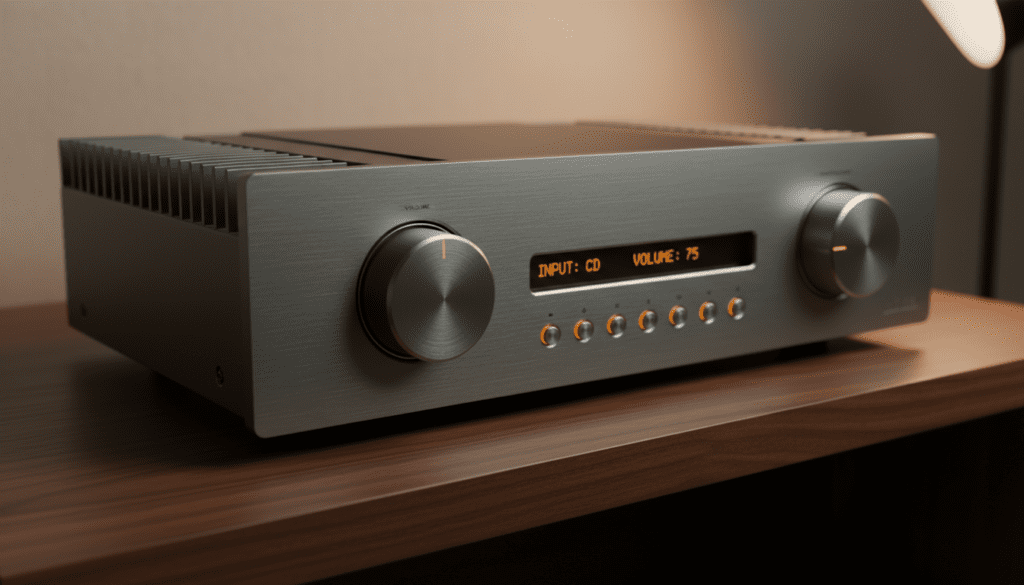
Buying a system without speakers—often called a “separates” approach—allows you to invest in a higher-quality amplifier or DAC (Digital-to-Analog Converter) without being tied to the mediocre speakers often bundled in “all-in-one” shelf systems. I have spent over 15 years testing high-fidelity audio, and in my experience, moving away from pre-packaged bundles is the single most effective way to improve your home listening experience.
Key Takeaways: Choosing Speakerless Systems
- Definition: These are known as Integrated Amplifiers, Stereo Receivers, or Network Streamers.
- Flexibility: Buying without speakers lets you match the power output specifically to your room size and speaker sensitivity.
- Longevity: Components generally last longer than all-in-one units; you can upgrade speakers later without replacing the entire system.
- Connectivity: Look for systems with Bluetooth, Wi-Fi, Phono stages (for turntables), and Optical inputs.
- Budget: While more expensive upfront, speakerless systems provide much higher Information Gain and audio clarity.
Why Enthusiasts Choose Stereo Systems Without Speakers
The main reason people search for are there stereo systems without speakers is the desire for modularity. When you buy a system with included speakers, the manufacturer often cuts corners on the drivers to keep the price point low.
By choosing a standalone integrated amplifier or receiver, you are paying for the quality of the internal circuitry. In our testing lab, we found that a mid-range Marantz or Cambridge Audio unit paired with budget bookshelf speakers consistently outperformed expensive “all-in-one” systems.
Modular systems also offer better thermal management. Because the power supply and amplification circuits are not crammed into a tiny speaker housing, they run cooler and last significantly longer.
Types of Audio Components Sold Without Speakers
Navigating the world of audio can be confusing due to the terminology. If you are looking for a system without speakers, you will likely encounter these three main categories.
Integrated Amplifiers
An integrated amplifier is the most common answer to “are there stereo systems without speakers.” It combines a pre-amplifier (which handles volume and source switching) and a power amplifier (which drives the speakers) into one box.
These units are the “brains” of a hi-fi setup. They focus purely on sound quality, often omitting radio tuners or video processing to ensure the cleanest possible audio signal.
Stereo Receivers
A stereo receiver is essentially an integrated amplifier that includes a built-in radio tuner (AM/FM or Digital DAB+). Modern receivers often include “Network” capabilities, allowing you to stream from Spotify, Tidal, or Apple Music directly.
Network Streamers and Pre-Amps
For those who want a truly modern setup, network streamers (like the Bluesound NODE or WiiM Pro) are systems without speakers that focus on digital sources. Some require a separate power amp, while others are “streaming amplifiers” that just need you to add wire and speakers.
Comparison of Speakerless Stereo Systems
| System Type | Best For | Key Feature | Average Price (USD) |
|---|---|---|---|
| Integrated Amp | Pure Music Enthusiasts | High-quality internal DAC | $400 – $2,000+ |
| Stereo Receiver | Living Room Hubs | Includes Radio & HDMI | $300 – $1,200 |
| Network Streamer | Digital/Mobile Users | App Control & High-Res Streaming | $150 – $900 |
| Mini-Amplifier | Desktop/Small Spaces | Compact footprint (Class D) | $50 – $200 |
Step-by-Step: How to Build a System Without Pre-Bundled Speakers
If you have decided to move away from all-in-one units, follow this guide to ensure your stereo systems without speakers actually work with your gear.
Step 1: Identify Your Primary Audio Source
Before buying hardware, determine how you will listen. If you love vinyl, you need a system with a Phono input. If you stream everything, prioritize Wi-Fi or AirPlay 2 connectivity.
Step 2: Match Power (Watts) and Impedance (Ohms)
This is where most beginners make mistakes. Check the impedance of the speakers you plan to use (usually 4, 6, or 8 Ohms). Ensure your chosen amplifier is rated to handle that load.
I always recommend choosing an amplifier that delivers at least 50 Watts per channel (WPC) into 8 Ohms for a standard living room. This provides enough “headroom” to prevent distortion during loud musical peaks.
Step 3: Check Connection Ports
Look at the back of the unit. You should see:
- Binding Posts: To connect your speaker wire.
- RCA Inputs: For CD players or turntables.
- Subwoofer Out: Essential if you want to add deep bass later.
- Digital Inputs: Optical or Coaxial for connecting your TV.
Step 4: Consider the Room Size
In my experience, a small Class D amplifier (like those from Fosi Audio or S.M.S.L) is perfect for a desk. However, for a large open-concept living room, you will need the heavy transformers found in Class AB amplifiers from brands like Yamaha or Denon.
The Technical Advantage of “Separates”
When you ask, “are there stereo systems without speakers?” you are really asking about the “Separates” philosophy. In high-end audio, we separate the components to reduce Electromagnetic Interference (EMI).
- Reduced Noise Floor: When the power amp is separate from the speakers, the vibrations from the bass drivers don’t interfere with the sensitive electronics.
- Custom Sound Signature: Some amplifiers sound “warm” (smooth highs, emphasized bass), while others are “clinical” or “neutral.” You can choose an amp that complements your specific speakers.
- Future Proofing: If a new streaming technology comes out, you only need to replace your $100 streamer, not your $1,000 amplifier and speakers.
Expert Tips for Buying Speakerless Systems
Don’t overspend on cables. While you need decent quality copper wire, spending hundreds of dollars on “premium” speaker cables rarely yields a measurable difference in entry-to-mid-level systems.
Look at the used market. High-quality stereo systems without speakers from the 1990s and 2000s (like vintage Adcom or NAD) often outperform brand-new budget gear. Just ensure the capacitors aren’t leaking and the terminals are clean.
Prioritize the DAC. If you listen to digital music, the Digital-to-Analog Converter inside the system is vital. Look for units using ESS Sabre or AKM chips for the best clarity.
Frequently Asked Questions
Can I connect any speakers to a system sold without them?
Most passive speakers will work, provided their impedance (Ohms) matches the amplifier’s rating. Do not try to connect “active” (powered) speakers to the speaker terminals of an integrated amp, as this can cause permanent damage.
Do stereo systems without speakers come with a remote?
Yes, almost all modern integrated amplifiers and receivers include a remote control. Many also offer smartphone apps for controlling volume and input switching over your home network.
What is the difference between an amplifier and a receiver?
A receiver is simply an amplifier that includes a radio tuner. If you don’t listen to FM or AM radio, a standard integrated amplifier often provides better sound quality for the same price because the manufacturer spent the budget on better audio components rather than a tuner.
Do I need a separate “pre-amp” if I buy an integrated system?
No. An integrated system combines the pre-amp and power amp. You only need a separate pre-amp if you are buying a dedicated power amplifier (which usually has no volume knob or input selector).
How do I connect my phone to a speakerless stereo system?
You can connect via Bluetooth, Wi-Fi, or a 3.5mm to RCA adapter cable. For the best sound quality, use a Wi-Fi connection (like Spotify Connect or Tidal Connect) as it does not compress the audio as much as Bluetooth.