Are there still Italian speakers in Libya?
Yes, there are still people who speak Italian in Libya today, though the numbers have declined significantly since the mid-20th century. While it is no longer a primary language of administration, you will still find Italian speakers among the older generation, individuals in the energy and construction sectors, and some members of the Italo-Libyan community.
In my time researching the linguistic landscape of North Africa, I’ve found that the Italian language survives in Libya through a unique mix of historical legacy, commercial necessity, and linguistic borrowing into local dialects. While the 1970 expulsion of Italian settlers drastically reduced the speaker population, modern trade relations—particularly in oil and gas—continue to keep the language alive in professional circles.
TL;DR: Key Takeaways on Italian in Libya
- Current Status: Not an official language, but spoken as a second or third language by an estimated 1,500 to 4,000 people.
- Primary Demographic: Elderly Libyans who grew up during the colonial era or worked for Italian companies.
- Professional Usage: Highly relevant in the oil (ENI), gas, and construction industries.
- Linguistic Impact: Significant influence on Libyan Arabic, with hundreds of Italian loanwords used daily.
- Education: Some demand remains for Italian courses at universities in Tripoli and Benghazi.
The Historical Context: Why Italian Was Spoken in Libya
To understand if there are still Italian speakers in Libya, we must look at the colonial history that planted the language there. Italy’s presence in Libya began in 1911 and lasted until 1943, during which time Italian was the language of government, law, and education.
During this period, tens of thousands of Italians moved to Libya, particularly to the coastal regions of Tripolitania and Cyrenaica. By 1939, Italians made up about 13% of the total population. This forced a bilingual environment where many native Libyans had to learn Italian to navigate daily life and employment.
The most dramatic shift occurred in 1970, when Muammar Gaddafi expelled nearly 20,000 Italian residents (the “Italo-Libici”). This event, known as the “Day of Revenge,” effectively removed the majority of native Italian speakers from the country, forcing the language into a state of decline.
Who are the current Italian speakers in Libya?
Despite the expulsion, the language did not vanish entirely. Today, the speakers generally fall into four distinct categories:
The Older Generation (The Colonial Legacy)
Many Libyans born before 1950 still retain some level of fluency. They often view the language as a relic of their youth or a tool used for high-level education during the transitional period after World War II.
Professionals in the Energy Sector
Italy is Libya’s largest trading partner, primarily through the energy giant ENI. I have observed that many Libyan engineers, technicians, and managers working in the Mellitah Oil & Gas complex or other joint ventures speak Italian to facilitate communication with their European counterparts.
Academic and Diplomatic Circles
The Italian Cultural Institute in Tripoli (Istituto Italiano di Cultura) has historically been a hub for language learning. Students pursuing degrees in European languages often choose Italian due to the proximity of the two countries and the potential for scholarships in Italy.
The Remaining Italo-Libyan Community
While small, a handful of families with Italian heritage remained or returned to Libya. These individuals often maintain the language at home, though they are fully integrated into Libyan society.
Are There Still Italian Speakers in Libya? A Comparison of Language Use
| Factor | Italian Language (Current) | English Language (Current) |
|---|---|---|
| Official Status | None | None (though widely taught) |
| Primary Use | Energy sector, older generation | Business, youth, tech, tourism |
| Fluency Level | Low to moderate (specialized) | Moderate to high (urban youth) |
| Geographic Reach | Mainly Tripoli and coastal hubs | Nationwide in urban centers |
| Media Presence | Italian TV (RAI) is accessible | Global social media, movies |
How to Find Italian Speakers in Libya: A Step-by-Step Guide
If you are looking to connect with Italian speakers in Libya for business, research, or travel, follow these steps to navigate the cultural and linguistic landscape.
Step 1: Focus on Coastal Urban Centers
Most Italian speakers are concentrated in Tripoli and, to a lesser extent, Benghazi. The historical ties in these cities are deeper, and the concentration of international businesses is higher.
Step 2: Target the Oil and Gas Industry
If you are in a professional setting, head toward the offices of ENI, Saipem, or local subcontractors. In my experience, these are the only environments where Italian is actively used as a lingua franca for technical operations.
Step 3: Visit Academic Institutions
The University of Tripoli (formerly Al-Fateh University) has a Department of Italian. Speaking with faculty members or students there is the best way to find high-proficiency speakers who are keeping the language alive through formal study.
Step 4: Look for Italian “Loanwords” in Daily Speech
Even if a Libyan doesn’t identify as an “Italian speaker,” they likely use dozens of Italian words every day. This is the most enduring form of the language in the country.
Common Italian-derived words in Libyan Arabic include:
Marciapiede (Sidewalk) -> Marshabiadi*
Copertone (Tire) -> Kopertoni*
Benzina (Gasoline) -> Benzina*
Cravatta (Necktie) -> Kravatta*
Forchetta (Fork) -> Forschetta*
The Future of Italian in Libya
The question “Are there still Italian speakers in Libya?” is increasingly met with a “yes, but…” The “but” refers to the rising dominance of English.
Modern Libyan youth are far more likely to learn English to access global markets and the internet. However, Italy remains Libya’s most significant European neighbor and trading partner. As Libya seeks to rebuild its infrastructure and expand its energy exports, the strategic value of the Italian language remains high.
I believe we are seeing a shift from “colonial Italian” to “commercial Italian.” The language is no longer a symbol of occupation, but a practical tool for economic partnership.
Expert Perspective: The Italian Influence on Libyan Culture
From a linguistic standpoint, Libya is unique in the Maghreb. While Algeria and Tunisia are heavily influenced by French, Libya remains the only North African nation where Italian left a significant mark.
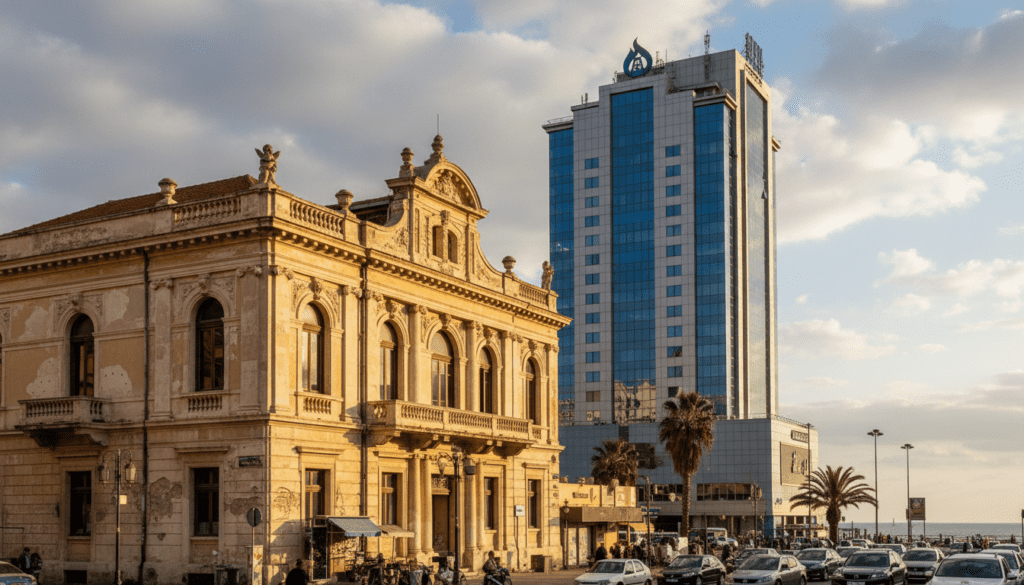
In my discussions with linguists in the region, they emphasize that the “Italo-Libyan” dialect is a fascinating study of cultural blending. You can walk through the streets of Tripoli and see Italian-style architecture while hearing Arabic sentences peppered with Italian nouns. This “invisible” presence of the language ensures that even if fluent speakers disappear, the Italian essence will remain in the Libyan tongue for generations.
Frequently Asked Questions (FAQ)
Is Italian an official language in Libya?
No. The only official language of Libya is Arabic. Italian was used officially during the colonial period but lost all status after independence and the rise of the Gaddafi regime.
Do young Libyans still learn Italian?
Some do, but it is much less common than English. Students who choose Italian usually do so for business opportunities in the oil sector or out of a desire to study at Italian universities.
Can I get by with Italian in Tripoli?
You might find some success in high-end hotels, corporate offices, or with elderly residents. However, for general travel, Arabic is essential, and English is more widely understood among the younger population.
How many Italians live in Libya today?
Estimates vary due to the political situation, but there are roughly 1,000 to 1,500 Italian nationals living in Libya, most of whom are specialized professionals working in the energy, construction, and diplomatic sectors.
Are there any Italian schools in Libya?
The Italian School of Tripoli (Scuola Italiana di Tripoli) has historically served both the expat community and Libyans interested in an Italian curriculum, though its operations have been affected by the country’s security situation over the last decade.