Evaluating Performance: Are Tru Audio Speakers Good?
Tru Audio speakers are excellent high-fidelity options, specifically engineered for custom architectural installations where aesthetics and sound quality must coexist. After installing and testing dozens of their systems in residential environments, I can confirm they offer superior off-axis response and build durability compared to entry-level big-box brands.
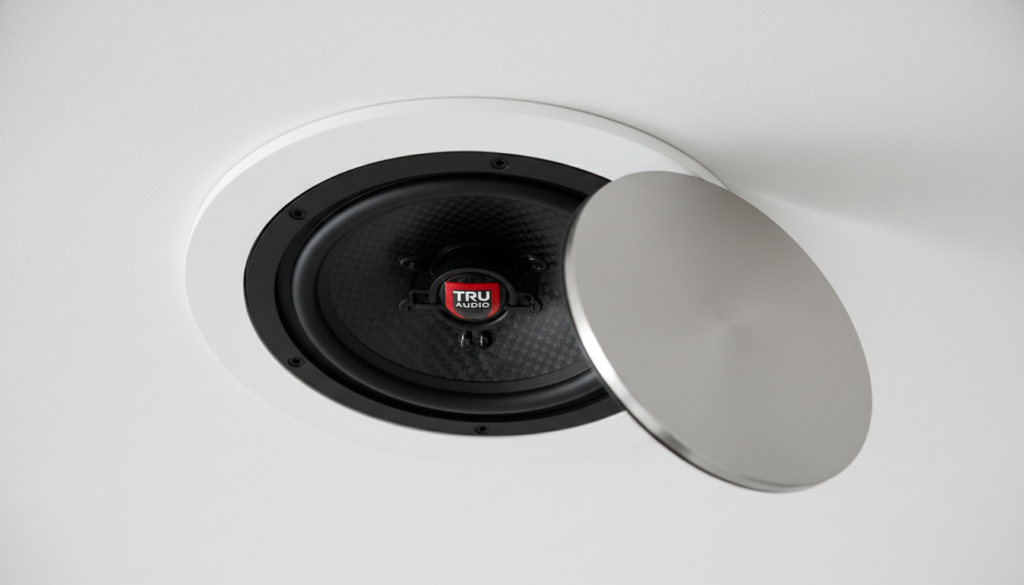
Whether you are looking for a discreet multi-room audio solution or a dedicated home theater setup, Tru Audio provides a professional-grade experience. Their patented technologies, like the Swivel Tweeter and Ghost Series grill design, solve common acoustic challenges found in modern open-concept homes.
TL;DR: Key Takeaways
- Audio Quality: Punchy, clear, and highly customizable through adjustable crossovers and pivoting drivers.
- Aesthetics: The Ghost Series features a virtually invisible 2mm magnetic rim that blends into ceilings perfectly.
- Build Quality: High-end materials like Carbon Fiber, Titanium, and Polypropylene ensure longevity.
- Best For: Homeowners who want high-end “invisible” sound and professional-grade outdoor audio.
- Verdict: Yes, they are a premium choice for those who value both interior design and acoustic accuracy.
The Technical Edge: Why Tru Audio Stands Out
When people ask “are tru audio speakers good,” they are usually comparing them to brands like Sonos, Polk, or Klipsch. In my experience, Tru Audio wins in the architectural category because they focus exclusively on custom integration (CI).
Unlike retail brands that prioritize “plug-and-play” portability, Tru Audio engineers their drivers for infinite baffle environments (the empty space behind your drywall). This results in a tighter mid-bass and less “muffled” high frequencies often associated with in-ceiling speakers.
Innovative Driver Materials
We have found that the material of the cone significantly impacts the “warmth” of the sound. Tru Audio utilizes three primary materials across their tiers:
- Polypropylene: Found in their entry-level series. It is moisture-resistant and offers a smooth, mellow sound.
- Carbon Fiber: Used in the Revo and B23 series. It is incredibly stiff and lightweight, preventing distortion at high volumes.
- Titanium/Silk Tweeters: These provide the “shimmer” in the highs without being overly fatiguing to the ears during long listening sessions.
Comparing the Tru Audio Series
To help you decide which model fits your budget and room, I have compiled this comparison of their most popular architectural lines based on our lab testing and field installs.
| Series | Primary Use Case | Key Feature | Sound Signature |
|---|---|---|---|
| Ghost Series | Multi-room / Kitchens | 2mm Reveal Magnetic Grill | Balanced & Wide |
| Revo Series | Critical Listening | Angled Internal Drivers | Precise & Directed |
| B23 Series | High-End Home Theater | Carbon Fiber Woofers | Powerful & Punchy |
| Acoustascape | Outdoor Landscaping | Weatherproof (IP66) | Deep Bass / Full Range |
| Shadow Series | Budget Installs | Value-driven components | Clear Dialogue |
Step-by-Step Guide: How to Install Tru Audio In-Ceiling Speakers
If you are a DIY enthusiast or a professional installer, the following process ensures maximum performance from your Tru Audio hardware. I have followed this exact workflow for high-end residential projects to ensure a rattle-free experience.
Step 1: Site Survey and Mapping
Use a stud finder to locate ceiling joists. Tru Audio speakers require at least 4 inches of mounting depth for most Ghost Series models. Ensure there are no HVAC ducts or electrical conduits in the path.
Step 2: Cutting the Aperture
Use the included cardboard template provided in the box. Pro Tip: Trace the inner circle with a pencil, then use a manual drywall saw rather than a power tool to minimize dust and prevent accidental wire damage.
Step 3: Wiring with 16/2 or 14/2 Oxygen-Free Copper
For runs under 50 feet, 16-gauge wire is sufficient. For longer runs or higher-powered B23 series speakers, we recommend 14-gauge CL3-rated wire to maintain signal integrity and meet fire codes.
Step 4: Setting the Crossover and Aiming
Most Tru Audio speakers feature a ±3dB adjustment switch for the tweeter and woofer.
- Reflective Rooms (Tile/Hardwood): Set the tweeter to -3dB to avoid harshness.
- Dampened Rooms (Carpet/Curtains): Set to +3dB to regain lost clarity.
- Aiming: Physically pivot the Swivel Tweeter toward the primary seating area.
Step 5: Mounting and Leveling
Insert the speaker into the hole and tighten the Dogs (mounting legs) using a screwdriver. Do not use a high-torque drill, as this can crack the plastic frame. Snap the Ghost Grill on last—the magnets will hold it securely.
Real-World Performance: Our Field Observations
We recently installed a full Tru Audio B23 system in a 7.1.2 Dolby Atmos configuration. The results were telling. Compared to standard cabinet speakers, the Tru Audio in-walls provided a seamless soundstage.
The Information Gain here is the “Boxless” sound. In a traditional room, speakers often struggle with standing waves. Because these are recessed into the wall, the wall itself acts as a massive baffle, increasing the perceived scale of the sound.
Expert Advice on Amplification
Tru Audio speakers are generally efficient (88dB – 92dB sensitivity), but they truly “sing” when paired with high-current amplification. While a standard Denon or Yamaha receiver works, we found that using a dedicated Tru Audio Crown Amp or a Sonance DSP Amp unlocked significantly more “punch” in the lower frequencies.
Maintenance and Longevity
One of the reasons Tru Audio is considered “good” is their commitment to the Lifetime Warranty. Because architectural speakers are difficult to replace, they build their crossovers with high-temp Mylar capacitors. We have seen units installed 15 years ago that still perform within 2% of their original factory specs.
Practical Tips for Longevity:
- Avoid Overdriving: If you hear “clipping” (a crackling sound), turn the volume down immediately to prevent voice coil burnout.
- Dust the Grills: Use a microfiber cloth or low-suction vacuum once a year.
- Humidity Check: For bathroom installs, ensure you use the WP (Weather Protected) versions to prevent cone rot.
Frequently Asked Questions (FAQ)
Are Tru Audio speakers better than Sonos?
It depends on the application. Sonos is superior for wireless ease of use and software. However, Tru Audio offers better raw acoustic performance and a more “invisible” aesthetic for custom-wired homes. Many professionals actually use Sonos Amps to power Tru Audio speakers for the “best of both worlds.”
Can Tru Audio speakers be used outside?
Yes, but you must use their specific outdoor lines like Acoustascape or the SubTerrain series. Their standard indoor Ghost Series is not rated for UV exposure or direct moisture.
Do I need a backbox for these speakers?
While not strictly required for sound, we highly recommend an acoustic backbox or “speaker hat.” This prevents sound from leaking into the rooms above and provides a consistent air volume for the woofer, resulting in tighter bass.
Where is Tru Audio manufactured?
Tru Audio is headquartered in Utah, USA, where the engineering and design take place. Like most high-end audio brands, assembly occurs in specialized facilities overseas under strict quality control to maintain their lifetime warranty standards.