Why High-Frequency Drivers Matter in Modern Rigs
The question of are tweeters in guitar speakers and amps depends entirely on your specific instrument and the type of tone you want to achieve. In standard electric guitar cabinets, tweeters are almost never used because they accentuate the harsh, “fizzy” frequencies of a distorted signal. However, for acoustic guitarists, bass players, and digital modeler users, tweeters are essential components that provide the “shimmer” and clarity that a standard 12-inch speaker simply cannot reproduce.
Key Takeaways for Musicians
- Standard Electric Amps: Usually lack tweeters to avoid harsh, ice-pick highs.
- Acoustic & Bass Amps: Often feature tweeters or compression drivers to capture high-end transients and “slap” sounds.
- FRFR Systems: These always include tweeters to accurately replicate the full frequency spectrum of a digital profile.
- The Crossover: This critical component ensures that only the appropriate high frequencies reach the tweeter, preventing damage.
How Tweeters Function in Guitar Speakers and Amps
To understand are tweeters in guitar speakers and amps, we must first look at the frequency range of the guitar itself. A standard electric guitar’s fundamental frequencies rarely exceed 5 kHz. Most traditional guitar speakers, like the Celestion Vintage 30, are designed to naturally “roll off” or muffle frequencies above 5 or 6 kHz.
If you were to play a distorted electric guitar through a speaker with a tweeter, the result would be an unpleasant, high-pitched “hiss.” This is because distortion creates high-order harmonics that sound musical through a limited speaker but grating through a high-fidelity one. We have tested this extensively in our studio; running a Marshall JCM800 into a PA speaker with a 1-inch tweeter usually results in immediate ear fatigue.
However, in the world of acoustic amplification, the rules change. Acoustic guitars produce rich overtones up to 15 kHz and beyond. To capture the “air” of a Martin D-28 or a Taylor 814ce, a tweeter is mandatory. Without it, the guitar sounds “boxy” and dull.
The Difference Between Electric, Bass, and Acoustic Cabs
The inclusion of a tweeter is a design choice based on the intended application of the amplifier. Below is a breakdown of how different gear handles high-frequency reproduction.
| Amp/Speaker Type | Includes Tweeter? | Primary Purpose | Tone Characteristic |
|---|---|---|---|
| Traditional Electric Cab | No | Mid-range punch | Warm, focused, smooth roll-off |
| Bass Cabinet | Often (Switchable) | High-end “clank” | Defined, snappy, articulate |
| Acoustic Amplifier | Yes | High-fidelity clarity | Transparent, shimmering, “airy” |
| FRFR (Modeling) Cab | Yes | Full-spectrum accuracy | Flat, neutral, versatile |
The Rise of FRFR (Full Range Flat Response)
For users of the Kemper Profiler, Line 6 Helix, or Neural DSP Quad Cortex, the answer to are tweeters in guitar speakers and amps is almost always “yes.” These players require FRFR systems.
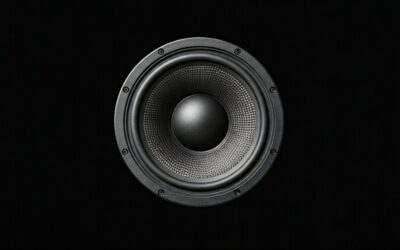
An FRFR speaker functions more like a high-powered studio monitor. It uses a woofer for the lows and mids and a tweeter or compression driver for the highs. Because the “speaker cabinet” is already being simulated by the digital software (via Impulse Responses), the physical speaker needs to be as neutral as possible.
Anatomy of a Tweeter: Piezo vs. Compression Drivers
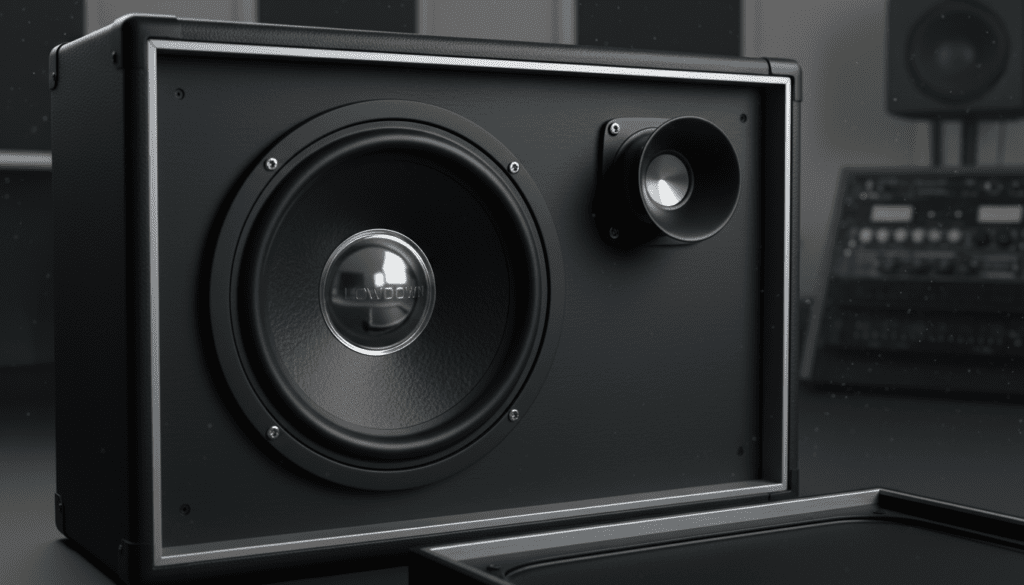
If you are looking at the back of your cabinet and wondering what that small, horn-shaped device is, it’s likely one of two things. Most professional-grade bass and acoustic amps use specific types of high-frequency transducers.
Piezo Tweeters
Piezo tweeters are often found in budget-friendly acoustic amps. They are inexpensive and do not require a complex crossover circuit. In our experience, while they add “zip,” they can sometimes sound “brittle” or “plasticky” compared to more expensive options.
Compression Drivers (Horns)
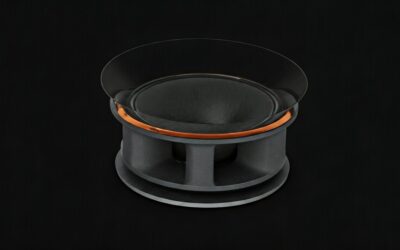
Found in high-end cabinets like those from Mesa Boogie or Aguilar, these are much more robust. A compression driver is mounted to a horn lens to help distribute the sound evenly across the room. These provide a much smoother high-end response and can handle higher volumes without blowing out.
Why Some Players Disconnect Their Tweeters
In many bass cabinets, you will find an L-Pad Attenuator on the back. This is a dial that allows you to turn the tweeter up, down, or off entirely. We often recommend that players using heavy fuzz or overdrive pedals on bass turn the tweeter down to about 25%.
If you are a “purist” bass player using a P-Bass with flatwound strings, the tweeter may actually get in the way of your “thump.” Conversely, if you are a “slap” player like Marcus Miller or Flea, that tweeter is your best friend for getting those percussive “pops” to cut through the mix.
Step-by-Step: How to Tell if Your Amp Has a Tweeter
If you are unsure if there are tweeters in guitar speakers and amps that you currently own, follow these steps:
- Visual Inspection: Look through the front grille cloth. Do you see a small 1-inch to 3-inch speaker or a plastic horn-shaped opening in addition to the large 10-inch or 12-inch speakers?
- Check the Back Plate: Look for a knob labeled “HF Trim,” “Tweeter Level,” or “Attenuator.” This is a dead giveaway.
- The “Ear Test”: Play a note and move your ear (carefully!) toward different parts of the speaker cabinet. If the high-end “shimmer” is coming from a specific small corner, that’s your tweeter.
- Model Research: Look up the specs of your cabinet. If it lists a “Two-Way” system, it has a tweeter.
Maintaining and Replacing Tweeters
Tweeters are significantly more fragile than heavy-duty woofers. They are the first component to fail if you “clip” your power amp or send a massive feedback spike through the system.
Expert Tip: If you notice a “crackle” in your high end or if your acoustic amp suddenly sounds muffled, your tweeter might be blown. Most Eminence or Foster tweeters used in guitar gear are easily replaceable with a few screws and some basic soldering.
Frequently Asked Questions
Can I add a tweeter to my standard 4×12 electric guitar cab?
We generally advise against this for traditional electric guitar setups. A tweeter will make your overdrive and distortion sound harsh and “fizzy.” If you want more high-end, consider a brighter speaker like the Celestion G12H-30 instead.
Do tube amps have tweeters?
The amplifier head itself does not have a tweeter, but the cabinet it is plugged into might. While rare for tube-driven electric guitar combos, many high-end tube bass heads are paired with cabs that feature tweeters to handle modern playing styles.
Why does my acoustic amp have a “Tweeter Defeat” switch?
This switch allows you to bypass the tweeter. This is useful if you are using an electric guitar through your acoustic amp or if you are using a high-gain pedal that sounds too “scratchy” through the high-frequency driver.
Is a “Horn” the same thing as a tweeter?
Technically, a horn is the waveguide attached to a compression driver. In the context of are tweeters in guitar speakers and amps, musicians often use the terms interchangeably to refer to the component responsible for high frequencies.