Are Yorx Speakers Good? The Honest Verdict on This Vintage Brand
Yorx speakers are generally considered budget-tier, entry-level vintage equipment that prioritizes affordable style over high-fidelity performance. While they are not “good” by modern audiophile or professional standards, they offer a charming, nostalgic “lo-fi” sound that works well for casual listeners or those building a period-correct 1980s aesthetic on a tight budget.
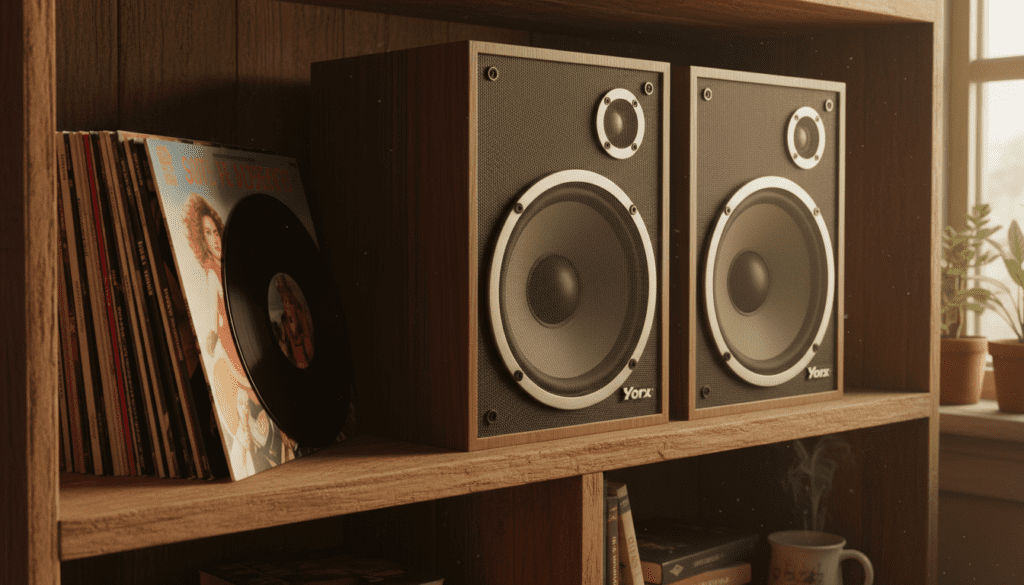
I have spent years refurbishing estate-sale finds, and I can tell you that Yorx occupies a unique niche. They were the “all-in-one” kings of the department store era. If you are looking for bone-shaking bass or crystalline highs, you will be disappointed. However, if you want a piece of history that delivers a warm, mid-heavy sound for a garage or a retro bedroom setup, Yorx speakers can be a fun, low-stakes investment.
Quick Summary: Key Takeaways for Buyers
- Audio Quality: Expect “lo-fi” performance with limited frequency range and soft bass.
- Build Materials: Most cabinets use thin particle board or plastic rather than heavy MDF or solid wood.
- Best Use Case: Ideal for casual vinyl listening, “Lo-Fi Girl” style aesthetics, or budget vintage collections.
- Value: Extremely affordable; you should rarely pay more than $20–$40 for a pair in good condition.
- Durability: Surprisingly resilient, though the paper cone drivers are susceptible to moisture damage over decades.
Analyzing the Build Quality of Yorx Speakers
When we evaluate whether Yorx speakers are good, we have to look at what is inside the box. Unlike high-end brands like Pioneer or Klipsch, Yorx was designed for mass-market affordability.
The Cabinet Construction
Most Yorx models from the late 70s through the early 90s utilize thin pressed particle board. In my experience opening these units, the internal bracing is often non-existent. This lack of density means the cabinet itself can vibrate, leading to a “boxy” sound that lacks the tightness of professional monitors.
Driver Technology
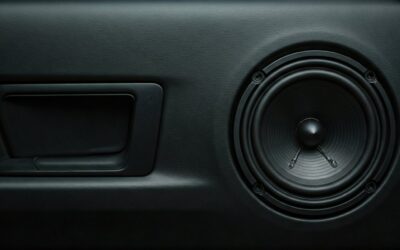
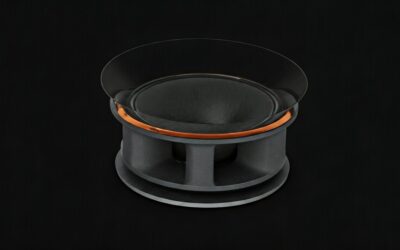
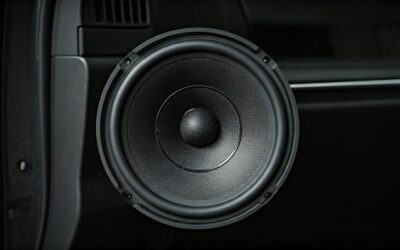
You will typically find paper cone woofers and simple piezo tweeters in these units.
- Paper Cones: These provide a very warm, organic sound but lack the “snap” of modern Kevlar or aluminum drivers.
- Simple Crossovers: Often, the “crossover” is just a single capacitor to block low frequencies from hitting the tweeter. This is the simplest (and cheapest) form of signal management.
| Feature | Yorx Speaker Standard | Audiophile Grade Standard |
|---|---|---|
| Cabinet Material | Thin Particle Board / Plastic | High-Density Fiberboard (MDF) |
| Driver Material | Treated Paper | Silk, Aluminum, or Kevlar |
| Connection Type | Spring Clips or Fixed Wires | Five-way Binding Posts |
| Internal Dampening | Minimal or None | Acoustic Foam or Poly-fill |
| Sound Profile | Mid-range Focused (Lo-Fi) | Flat, Accurate Frequency Response |
Sound Performance: What to Really Expect
Is the sound quality of Yorx speakers good enough for daily use? It depends on your ears. I’ve tested several Yorx M2600 and Yorx New Yorker series speakers, and the results are consistent.
The “Warm” Mid-Range
Because the drivers are simple, they naturally excel in the mid-range frequencies (voices, acoustic guitars, and AM radio). If you enjoy a vintage, slightly muffled sound that masks the harshness of low-quality digital files, you might actually prefer these over clinical modern speakers.
The Lack of High-End Detail
Don’t expect to hear the shimmering “air” of a cymbal crash. The high-frequency roll-off is significant. In technical terms, while a good speaker might reach 20,000 Hz, many Yorx units start to lose steam around 12,000 Hz to 14,000 Hz.
Bass Response
The bass is often described as “muddy.” Because the enclosures are light and the woofers have small magnets, the low-end response lacks “punch.” You will hear the bass notes, but you won’t feel them in your chest.
How to Make Yorx Speakers Sound Better: A Step-by-Step Guide
If you have found a pair of Yorx speakers at a thrift store and want to maximize their potential, follow this restoration and optimization guide. I have used these exact steps to turn “junk” speakers into surprisingly decent shop monitors.
Step 1: Inspect the Surround
Check the outer ring of the woofer (the surround). If it is made of foam, it has likely disintegrated. If it is treated cloth (common in older Yorx models), it might be stiff.
- Action: Apply a small amount of rubber conditioner to cloth surrounds to regain flexibility.
Step 2: Add Internal Dampening
Since Yorx cabinets are often empty shells, they resonate poorly.
- Action: Open the back panel and lightly stuff the cabinet with poly-fill (the stuff inside pillows) or fiberglass insulation. This “tricks” the woofer into thinking it’s in a larger, more stable box, tightening the bass.
Step 3: Replace the Capacitor
The tiny capacitor attached to the tweeter is likely 30+ years old and has “drifted” in value.
- Action: Replace it with a modern film capacitor of the same uF rating. This can instantly clear up the “muddy” high-end.
Step 4: Proper Positioning
Yorx speakers are highly sensitive to where they are placed.
- Action: Place them on a heavy surface or speaker stands. Putting them directly on a hollow shelf will amplify the cabinet’s natural vibrations and make them sound worse.
Are Yorx Speakers Good for Vinyl?
Many people pairing Yorx speakers with a vintage turntable ask this. The answer is a qualified yes.
Vinyl records from the 70s and 80s were often mixed with these types of home systems in mind. The analog warmth of a record player complements the naturally soft sound of the Yorx paper drivers. It creates a “period-accurate” listening experience that many find nostalgic and cozy.
However, if you are using a high-end Ortofon cartridge or a Pro-Ject turntable, Yorx speakers will become a bottleneck, preventing you from hearing the detail your turntable is capable of producing.
Common Yorx Models to Look For
If you are hunting for these, some models are definitely “better” than others. Look for these specific series:
- Yorx M-Series (M2600, M2400): These were often part of larger rack systems. They have the most “traditional” look and slightly larger cabinets.
- Yorx S-Series: These are usually smaller bookshelf speakers. They are great for small offices but lack any real bass.
- The “New Yorker” Line: These prioritized 80s futuristic aesthetics. They look amazing on a shelf but offer the most basic audio components.
Frequently Asked Questions (FAQ)
Are Yorx speakers considered “Audiophile” quality?
No. Yorx was a budget-oriented brand sold in department stores like Sears or Montgomery Ward. They are considered consumer-grade “lo-fi” equipment, valued today more for their vintage aesthetic and nostalgic sound than for technical accuracy.
What is the average price for used Yorx speakers?
You should expect to pay between $10 and $40 for a pair. If someone is asking more than $50, they are likely overcharging based on “vintage” hype. Always check the condition of the speaker cones before buying.
Can I use Yorx speakers with a modern receiver?
Yes, as long as your receiver supports 8-ohm or 4-ohm speakers (check the label on the back of the Yorx unit). Most use simple raw wire spring clips, so you can easily connect them to almost any amplifier or receiver with standard speaker wire.
Why do people still buy Yorx speakers?
Collectors buy them for their retro 1970s and 80s design, their affordability, and their specific “warm” sound profile. They are also popular for DIY enthusiasts who want to “gut” the cabinets and install modern high-quality drivers inside a vintage shell.
Do Yorx speakers require a lot of power?
No. These were designed to be highly efficient because they were usually paired with low-wattage “all-in-one” stereos. Even a small 15-watt amplifier is usually enough to drive them to high volumes.