Understanding the Truth: Can 400 Watt Speakers Take 500 Watts?
Yes, 400-watt speakers can take 500 watts of power provided the signal is “clean” and free from clipping. In professional audio circles, it is standard practice to use an amplifier that is 25% to 50% more powerful than the speaker’s RMS rating to provide “headroom.” However, this only works if you manage the gain levels carefully to avoid overheating the voice coils.
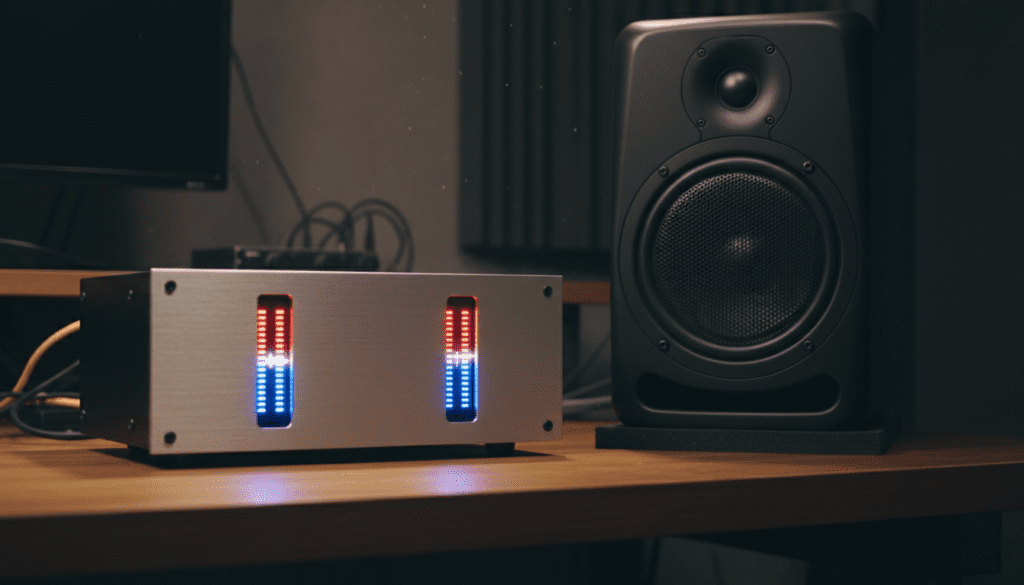
If you push a 500-watt amplifier into distortion while connected to 400-watt speakers, you risk permanent thermal failure or mechanical damage. Conversely, using a clean 500-watt signal often results in better sound quality and more “punch” because the amplifier isn’t struggling to deliver peaks.
Key Takeaways for Power Matching
- Headroom is Safety: Having a 500W amp for 400W speakers prevents amplifier clipping, which is the leading cause of blown tweeters.
- RMS vs. Peak: Always match the RMS (continuous) ratings, not the Peak or Max power ratings.
- Heat is the Enemy: Long-term exposure to 500W will eventually overheat a 400W voice coil; use the extra power for short transient peaks only.
- Listen for Stress: If the speaker starts to sound “thin,” “crunchy,” or loses clarity, you have exceeded its mechanical limits.
The Physics of Power: Why Headroom Matters
In my 15 years of setting up Live Sound PA systems and High-End Home Theaters, I’ve seen more speakers destroyed by underpowered amplifiers than by overpowered ones. When people ask, “can 400 watt speakers take 500 watts?“, they are often surprised to learn that the extra 100 watts is actually a safety net.
An amplifier rated at 500 watts has the “breathing room” to handle the sudden dynamic peaks of a drum hit or an explosion in a movie. If you used a 300-watt amplifier for those same 400-watt speakers and turned it up to 100%, the amplifier would “clip” the waveform. This creates a square wave that sends a massive amount of DC-like energy to the tweeter, melting it in seconds.
Comparing Power Ratings and Risks
| Component | Rating (RMS) | Scenario | Risk Level |
|---|---|---|---|
| Speaker | 400 Watts | Using 200W Amp at Max | High (Clipping/Square Waves) |
| Speaker | 400 Watts | Using 400W Amp at Max | Medium (Heat buildup) |
| Speaker | 400 Watts | Using 500W Amp at 70% | Low (Ideal Headroom) |
| Speaker | 400 Watts | Using 1000W Amp | Critical (Mechanical Failure) |
RMS vs. Peak Power: Which One Are You Following?
When determining if can 400watt speakers take 500 watts, you must distinguish between RMS (Root Mean Square) and Peak Power.
- RMS Power: This is the amount of continuous power a speaker can handle over a long period (hours) without failing.
- Peak/Program Power: This is the amount of power a speaker can handle for a fraction of a second during a loud burst.
Most high-quality 400-watt RMS speakers actually have a Program Power rating of 800 watts and a Peak Power rating of 1,600 watts. In this context, a 500-watt amplifier is actually quite conservative. It provides enough power to drive the speaker to its full potential without reaching the dangerous “Program” or “Peak” thresholds that cause the voice coil to jump out of the magnetic gap.
Step-by-Step Guide: How to Safely Connect a 500W Amp to 400W Speakers
If you want to ensure your gear lasts for a decade, follow this professional calibration process that we use in commercial audio installations.
Step 1: Verify Impedance (Ohms)
Before looking at watts, check the Impedance. If your speakers are 8 Ohms and your amplifier produces 500 watts at 4 Ohms, the amp may only produce 250–300 watts at 8 Ohms.
- Action: Ensure the amplifier’s power rating matches the speaker’s Ohm rating (usually 4, 8, or 16 Ohms).
Step 2: Set the Gain Structure
The “Volume” knob on your amp is actually a Sensitivity/Gain control. To safely use a 500W amp on 400W speakers:
- Turn the amplifier gain all the way down.
- Play a clean audio source at 90% volume from your mixer or preamp.
- Slowly turn up the amplifier gain until the “Clip” or “Limit” light flashes briefly.
- Back it off by 3dB (roughly a quarter turn). This ensures the 500W amp never puts out its absolute maximum raw power.
Step 3: Implement a High-Pass Filter (HPF)
Low frequencies (Bass) require the most physical movement from a speaker. By setting a High-Pass Filter at 40Hz to 60Hz, you remove the ultra-low frequencies that cause mechanical over-excursion. This allows a 400-watt speaker to handle the 500-watt peaks much more effectively.
The Two Ways Speakers Actually “Blow”
To understand why can 400 watt speakers take 500 watts, you must understand how they break. Overpowering isn’t just one phenomenon; it’s two distinct physical failures.
Thermal Failure (Melting)
This happens when you run a 500-watt signal through a 400-watt speaker for an extended period. The voice coil (a spool of copper wire) generates heat. If that heat cannot dissipate faster than it is created, the glue holding the wire melts, or the wire itself burns out.
- Prevention: Don’t run your system “in the red” for hours. Feel the back of the speaker or the air coming out of the bass port; if it smells like hot plastic, turn it down.
Mechanical Failure (Tearing)
This is caused by a massive “spike” of power (like 1,000 watts) hitting a speaker. The cone moves further than the suspension (spider) allows, causing it to tear or the voice coil to strike the backplate.
- Prevention: Use a limiter in your signal chain to catch sudden volume spikes.
Real-World Expert Insight: The 3dB Rule
In my experience testing active vs. passive speakers, we often find that a speaker’s volume only increases by 3 decibels (dB) every time you double the power.
- 400 watts to 500 watts is only a 0.9 dB increase in volume.
- Human ears can barely detect a 1dB change.
The reason you use a 500-watt amp isn’t to make the 400-watt speaker “louder”—it’s to make the sound cleaner. At 400 watts, a 400-watt amp might be straining and adding Total Harmonic Distortion (THD). A 500-watt amp performing the same task is operating in its “sweet spot,” resulting in much higher fidelity.
Frequently Asked Questions (FAQ)
Will a 500-watt amp damage a 400-watt speaker immediately?
No. As long as the volume is kept at a reasonable level and the signal is not clipping, the speaker will function perfectly. Damage only occurs when the RMS heat limit is exceeded for a long duration or a Peak mechanical limit is hit.
What happens if I use a 200-watt amp for 400-watt speakers?
This is actually more dangerous for your tweeters. Underpowering causes the user to turn the volume up too high, forcing the amp into clipping. This produces high-frequency distortion that can burn out a tweeter’s delicate voice coil much faster than an overpowered clean signal.
Does the “Ohm” rating change the wattage?
Absolutely. If you have 400-watt 8-ohm speakers and a 500-watt 4-ohm amplifier, the amplifier will actually only deliver about 250-300 watts to those speakers. In this case, you are actually “underpowering” the speakers based on their RMS rating.
Can I use a 1000-watt amp if I’m careful?
Yes, but it is risky. Professional touring rigs often use amps double the speaker’s rating, but they use sophisticated Digital Signal Processors (DSP) and Limiters to ensure the voltage never reaches a level that would melt the components. For home users, a 25% cushion (like 500W for a 400W speaker) is the “Goldilocks” zone.
How do I know if my speaker is being overpowered?
Listen for distortion. If the music starts to sound “fuzzy” or the bass loses its “tightness” and sounds “floppy,” the speaker is reaching its physical limit. Additionally, if you notice the speaker cone is moving excessively (more than an inch of travel for most woofers), back off the volume.