Can a Aftermarket Stereo Hook Up to Speakers Only?
Yes, you can absolutely hook up an aftermarket stereo directly to your vehicle’s speakers without an external amplifier. Most modern head units from brands like Pioneer, Sony, and Kenwood feature built-in internal amplifiers (usually 4-channel) designed specifically to power factory or aftermarket speakers through the standard wiring harness.
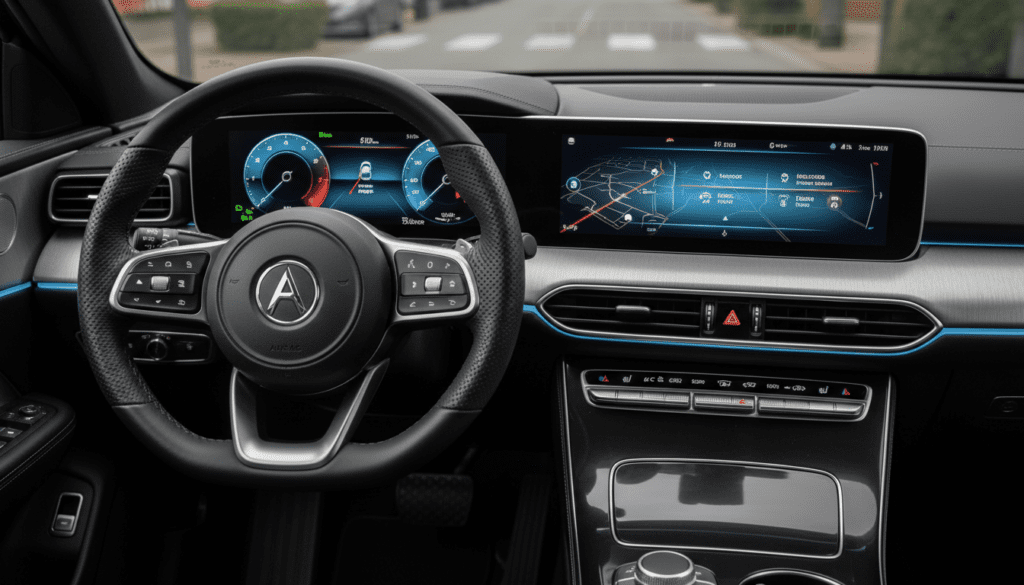
For the majority of DIY enthusiasts, this “speakers only” setup is the standard way to upgrade a car’s audio system. As long as your speakers are rated for the RMS power output of the stereo—typically between 14 and 22 watts per channel—the system will function perfectly. However, you must ensure you are using the correct wiring adapter to bridge the connection between the head unit and the factory speaker wires.
TL;DR: Key Takeaways for “Speakers Only” Setup
- Internal Amps: Almost all head units have built-in amps; no external amp is required for basic operation.
- Impedance Match: Ensure your speakers are 4-ohm (standard) to avoid overheating the head unit.
- Wiring Harness: Use a vehicle-specific wiring harness (like Metra or Scosche) for a plug-and-play experience.
- Power Limits: Head units provide enough power for volume, but lack the “thump” of dedicated external amplifiers.
- Bypass Modules: If your car has a factory-amplified system (like Bose or JBL), you may need a factory amp bypass to connect directly to speakers.
Understanding the “Can a Aftermarket Stereo Hook Up to Speakers Only” Logic
In my 15 years of car audio installation, the most common question I get is whether a “naked” stereo install is possible. Many beginners worry that the wires coming out of the back of a Sony or Alpine unit won’t have enough “juice” to move the speaker cones.
The reality is that Aftermarket Stereo manufacturers build their units for the average consumer who wants a simple replacement. The head unit acts as the “brain” and the “powerhouse” simultaneously.
Internal vs. External Amplification
When you ask, “can a aftermarket stereo hook up to speakers only,” you are referring to using the high-level (speaker-level) outputs. These are the eight wires (four pairs) that come out of the stereo’s main plug.
External amplifiers, by contrast, use the RCA Pre-amp outputs. If you aren’t using an external amp, those RCA plugs will simply stay empty. We rely entirely on the MOSFET (Metal-Oxide-Semiconductor Field-Effect Transistor) power chips inside the stereo to drive the sound.
Essential Tools for a DIY Stereo Installation
Before you start pulling your dash apart, you need the right kit. In my shop, I’ve seen too many people try to strip wires with kitchen scissors, which leads to “ground loops” and static.
| Tool Category | Recommended Item | Purpose |
|---|---|---|
| Panel Removal | Nylon Pry Tools | To remove dash trim without scratching the plastic. |
| Wire Connection | Crimp Connectors / Heat Shrink | Securely joining the stereo harness to the car harness. |
| Fasteners | Screwdriver Set & Socket Set | Most cars use 7mm, 8mm, or 10mm bolts for the radio. |
| Testing | Digital Multimeter | Checking for 12V constant and switched power. |
| Integration | Vehicle-Specific Harness | Avoids cutting the factory wires in your car. |
Step-by-Step Guide: How to Hook Up an Aftermarket Stereo to Speakers Only
Setting up an aftermarket stereo is a logical process. If you can follow a color-coded map, you can do this. Here is the workflow I use for every professional install.
Disconnect the Battery
I cannot stress this enough. Modern cars are packed with sensitive ECU components. Always disconnect the negative terminal of your battery before touching any wires. This prevents blowing the radio fuse or, worse, triggering an Airbag light.
Remove the Factory Radio
Use your nylon pry tools to gently pop the trim pieces surrounding the radio. Once the screws are exposed, remove them and pull the factory unit toward you. Unplug the large plastic connectors and the antenna cable.
Match the Wiring Harnesses
This is where the magic happens. You should have two harnesses: the one that came with your new Pioneer or Kenwood stereo, and the one you bought to match your car (e.g., a Metra 70-1721 for a Honda).
Match the colors. Yellow goes to Yellow (Constant power), Red goes to Red (Switched power), and Black goes to Black (Ground). Then, match the eight speaker wires (see the table below).
Secure the Connections
I recommend using Butt Connectors or Solder with Heat Shrink. Do not just twist the wires and use electrical tape. In a car, vibrations and heat will cause twisted wires to come loose, resulting in your speakers cutting out or shorting the head unit.
Install the Dash Kit and Mount
Slide your new stereo into the Dash Kit (the plastic housing that makes a universal stereo fit your specific dashboard). Secure it with the provided screws, then plug the joined harness into the car and the back of the stereo.
The “Smoke Test”
Before you put the dash back together, reconnect the battery. Turn the key to “ACC.” If the stereo lights up, check each speaker using the Fader and Balance settings. If all four corners are playing clearly, you’ve successfully answered the question: can a aftermarket stereo hook up to speakers only?
Standard Wiring Color Codes (CEA-2006 Standards)
Most major brands like JVC, Clarion, and Boss follow a universal color code. This makes “speakers only” hookups much easier.
| Wire Color | Function | Polarity |
|---|---|---|
| White | Front Left Speaker | Positive (+) |
| White/Black | Front Left Speaker | Negative (-) |
| Gray | Front Right Speaker | Positive (+) |
| Gray/Black | Front Right Speaker | Negative (-) |
| Green | Rear Left Speaker | Positive (+) |
| Green/Black | Rear Left Speaker | Negative (-) |
| Purple | Rear Right Speaker | Positive (+) |
| Purple/Black | Rear Right Speaker | Negative (-) |
Expert Pro Tip: If your speakers sound “thin” or have no bass after the install, you likely have the polarity reversed on one speaker (Positive connected to Negative). This causes Phase Cancellation, where one speaker pushes while the other pulls, “canceling” the sound waves.
Dealing with Complex Factory Systems (The Bypass Problem)
While the answer to “can a aftermarket stereo hook up to speakers only” is usually “yes,” there is one major exception: Factory Amplified Systems.
If your car has a badge that says Premium Sound, Infinity, Rockford Fosgate, or Harman Kardon, there is a hidden amplifier somewhere in the trunk or under a seat.
- The High-Level Problem: If you hook your new stereo’s speaker wires into the factory amp’s input, you are “double-amping” the signal. This leads to massive distortion and “hissing” at low volumes.
- The Solution: You must use an Amplifier Integration Interface (like the PAC TATO or Crux modules). These boxes take the high-level signal and step it down to a level the factory amp can handle.
- The Direct Bypass: Alternatively, you can run new speaker wires directly from the head unit to each speaker, bypassing the factory amp entirely. This is more labor-intensive but results in the cleanest sound.
Why You Might (Or Might Not) Want an External Amp
While you can run on speakers only, you should understand the trade-offs.
- Pros of Speakers-Only Setup:
- Cons of Speakers-Only Setup:
Expert Troubleshooting: Common Setup Issues
Even the best DIYers hit snags. Here are the issues I see most frequently when hooking up an aftermarket stereo to speakers.
No Sound, But Stereo is On
This usually happens because of the Blue/White (Remote Turn-on) wire. Some cars have a factory antenna booster that needs power. Even if you aren’t using an external amp, try connecting the blue/white wire from the stereo to the corresponding wire on the car’s harness.
The Stereo Resets Every Time the Car Turns Off
You have swapped the Red (Switched) and Yellow (Constant) wires. The yellow wire must always have 12V from the battery to “remember” your clock and radio presets.
Engine Whine (Alternator Noise)
If you hear a high-pitched squeal that gets louder when you rev the engine, you have a bad Ground. Ensure the black wire is connected to a clean, unpainted metal part of the car’s chassis.
Frequently Asked Questions
Can I use my steering wheel controls if I hook up a stereo to speakers only?
Yes, but you will need a separate Steering Wheel Control (SWC) Interface like the Axxess ASWC-1. The speaker connections and the steering wheel data are separate systems.
Will my factory sub-woofer work with an aftermarket stereo?
Usually, no—not without a specific adapter. Factory sub-woofers almost always have their own dedicated amp. If you are doing a “speakers only” install, the sub will remain silent unless you use an integration harness that retains the factory amplifier.
Is it safe to connect 2-ohm speakers to a 4-ohm aftermarket stereo?
I don’t recommend it. Most aftermarket head units (like those from Sony or Alpine) are designed for 4-ohm loads. Connecting 2-ohm speakers (often found in Bose systems) will draw too much current, causing the stereo to go into “Protect Mode” or burn out the internal chips.
Do I need to run new speaker wires?
In 95% of cases, no. You can use the existing factory wiring. You only need to run new wires if your car is very old (pre-1980s) or if the original wires have been damaged by water or previous owners.
Can I connect 6 speakers to a 4-channel head unit?
Yes, you can “bridge” or wire speakers in series/parallel, but be careful with the Ohm load. If you wire two 4-ohm speakers in parallel, the stereo sees 2 ohms, which can be dangerous for the head unit. Most people just wire the “tweeters” and “mids” together on the front channels using a crossover.