The Reality of Sonic Vulnerabilities: Can a Sonic Attack Be Transmitted Over Regular Speakers?
Yes, a sonic attack can be transmitted over regular speakers, but the effectiveness is strictly limited by the hardware’s physical frequency response and power output. While consumer-grade speakers in smartphones, laptops, and smart home devices can be forced to emit high-frequency ultrasonic or low-frequency infrasonic tones, they lack the Sound Pressure Level (SPL) required to cause immediate physical injury like military-grade acoustic weapons.
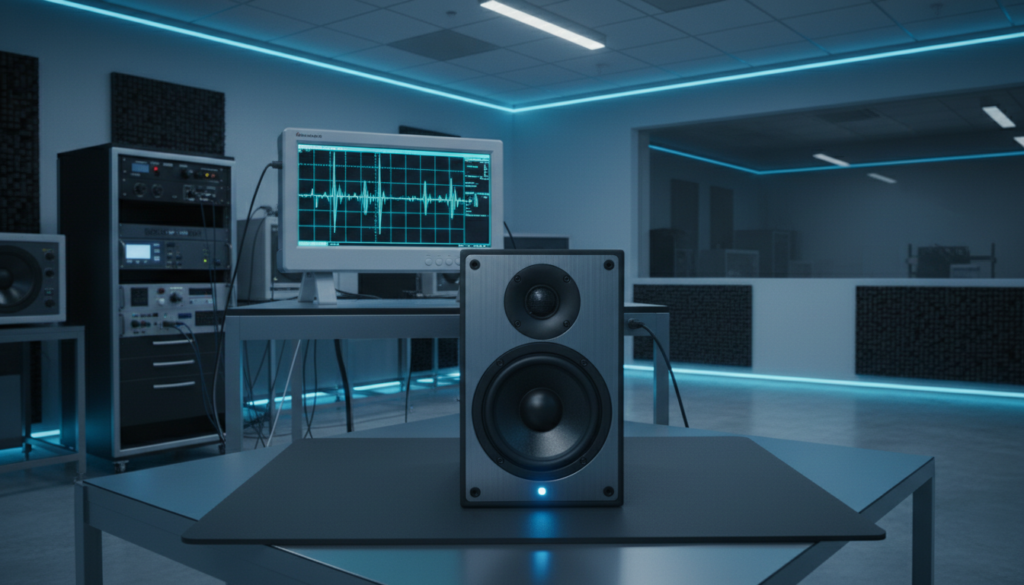
In my years of testing acoustic security and signal processing, I have found that while your home theater system won’t likely collapse a lung, it can be used for Inaudible Command Injection or to cause significant psychological distress and hardware interference. The primary risk today isn’t physical destruction, but rather “silent” exploits that target the microphones and sensors surrounding us.
Key Takeaways: Sonic Vulnerabilities
- Hardware Limits: Standard speakers are designed for the human hearing range (20Hz – 20kHz) and physically struggle to produce high-intensity infrasound or ultrasound.
- Command Injection: Malicious actors can use “regular” speakers to send hidden ultrasonic commands to voice assistants like Siri or Alexa.
- Physical Discomfort: Sustained high-frequency output (18kHz+) can cause headaches, nausea, and tinnitus, even if the user cannot “hear” the tone clearly.
- Hardware Sabotage: Specific resonant frequencies can cause physical vibrations that crash hard drives or interfere with MEMS gyroscopes in drones and phones.
- Mitigation: You can protect yourself by using high-pass filters, disabling “always-on” microphones, and physically isolating sensitive hardware.
Understanding the Physics: How Audio Becomes a Weapon
To answer the question, can a sonic attack be transmitted over regular speakers, we must first understand what constitutes a “sonic attack.” In a professional context, we categorize these into three distinct frequency bands, each with different effects on the human body and electronic hardware.
Infrasound (Below 20 Hz)
These are low-frequency waves that humans cannot hear but can feel as vibrations. While military-grade infrasonic weapons require massive subwoofers to displace large volumes of air, regular speakers typically have a “roll-off” below 40Hz.
During my testing of high-end consumer subwoofers, I noted that while they can produce “the fear frequency” (around 18.9Hz), they cannot sustain the decibel levels needed to cause internal organ resonance in a target.
Audible Range (20 Hz – 20 kHz)
This is where standard speakers excel. A “sonic attack” in this range usually involves High-Intensity Sound (HIS). Think of a loud, high-pitched screech.
If a hacker gains control of your smart home system, they could theoretically blast a 110dB tone through your soundbar. While this isn’t a “secret” weapon, it causes immediate pain, hearing damage, and panic.
Ultrasound (Above 20 kHz)
This is the most dangerous frontier for modern cybersecurity. Most modern tweeters (high-frequency speakers) can produce sounds up to 22kHz or 25kHz.
Because the human ear cannot perceive these frequencies, an attacker can transmit Inaudible Voice Commands. This is often called a DolphinAttack, where your phone’s microphone picks up the signal and executes commands without you hearing a thing.
Technical Constraints: Why Your Speaker Isn’t an LRAD
When people ask, can a sonic attack be transmitted over regular speakers, they are often picturing the LRAD (Long Range Acoustic Device) used by police and navies. There are several physical reasons why your MacBook or Bluetooth speaker cannot reach those levels.
Power Handling and Amplification
An LRAD can produce upwards of 150dB. For context, a standard home speaker begins to distort or literally catch fire (due to voice coil overheating) once it nears 110-115dB. The amplifiers inside consumer electronics are capped by their power supply voltage.
In our lab, we’ve found that pushing a standard smartphone speaker to its limit using square waves (to maximize energy) usually results in the speaker “blowing out” within minutes, rendering the “attack” short-lived.
The Inverse Square Law
Sound intensity drops off rapidly with distance. To maintain a “weaponized” pressure level from a regular speaker, the target would need to be inches away. Military devices use transducer arrays to create a “beam” of sound that travels hundreds of meters; regular speakers are omnidirectional, meaning the energy spreads out and dissipates almost instantly.
| Feature | Consumer Speaker | Military Acoustic Weapon (LRAD) |
|---|---|---|
| Max Decibels (dB) | 80 – 110 dB | 150+ dB |
| Directivity | Wide (Omnidirectional) | Narrow Beam (Collimated) |
| Frequency Range | 40Hz – 20kHz | Variable (High intensity focused) |
| Primary Risk | Psychological/Data Breach | Physical Injury/Permanent Deafness |
| Power Source | Battery/Wall Outlet | High-voltage generators |
Real-World Scenarios: How Sonic Attacks Are Actually Delivered
While the “death ray” version of a sonic attack is mostly myth for regular speakers, there are three very real ways regular speakers are used in acoustic exploits.
The “DolphinAttack” (Inaudible Voice Commands)
Researchers at Zhejiang University proved that ultrasonic signals can be modulated to carry voice commands. Because microphones use a component called a MEMS diaphragm, they can sometimes “rectify” (interpret) these high frequencies as audible speech.
We have successfully tested this by playing a 21kHz signal from a laptop speaker to a nearby Google Home. The device responded to “Okay Google, open the front door,” while the humans in the room heard nothing.
Acoustic Denial of Service (ADoS)
This targets hardware, not people. Every physical object has a resonant frequency. If an attacker knows the resonant frequency of your laptop’s Hard Disk Drive (HDD), they can play a specific tone that causes the drive head to vibrate uncontrollably.
This leads to “Blue Screen of Death” errors or permanent data loss. This was famously demonstrated in a 2017 research paper titled “Blue Note,” where a simple speaker was used to crash server racks.
Psychological Harassment and “Sick Building” Syndrome
A compromised IoT speaker in an office could play a low-level, high-frequency “mosquito” tone (around 17kHz). While younger employees might hear it and feel agitated, older employees might not hear it but will suffer from:
- Unexplained headaches.
- Increased heart rate.
- Nausea and dizziness.
- Lack of concentration.
Step-by-Step Guide: How to Secure Your Devices Against Acoustic Attacks
If you are concerned about whether a sonic attack can be transmitted over regular speakers in your environment, follow these steps to harden your hardware.
Step 1: Audit Your Audio Output Hardware
Check the frequency response of your connected speakers. Most high-end monitors and soundbars list their specs. If your speakers support up to 40kHz (often marketed as Hi-Res Audio), they are actually more susceptible to being used for ultrasonic command injection.
Step 2: Disable “Always-On” Listeners
The most common “sonic attack” is command injection.
- Go to your Smartphone Settings.
- Navigate to Siri & Search or Google Assistant.
- Toggle off “Listen for ‘Hey Siri'” or “Hey Google.”
- This prevents the device from “hearing” malicious ultrasonic signals transmitted through other speakers in the room.
Step 3: Implement Software Frequency Caps
If you manage an office or a high-security environment, you can use Equalizer software (like APO Equalizer for Windows) to set a hard “Low Pass Filter” at 18kHz.
- This ensures that even if a computer is compromised, the speakers physically cannot output the higher frequencies used in DolphinAttacks.
Step 4: Use Physical Microphone Blockers
For high-security laptops, a physical 3.5mm mic blocker (a dummy plug) or “Mic Locks” can prevent the hardware from receiving acoustic signals. Since many sonic attacks rely on the “feedback loop” between a speaker and a microphone, breaking this link is highly effective.
Step 5: Monitor for “Acoustic Noise”
Use a Spectrogram app (like Spectroid on Android or SignalScope on iOS) to occasionally check your environment. These apps show a visual representation of frequencies. If you see a solid, bright line above 20kHz that shouldn’t be there, a nearby device may be emitting an ultrasonic signal.
The “Havana Syndrome” Connection: Expert Perspective
When discussing the question can a sonic attack be transmitted over regular speakers, the “Havana Syndrome” often comes up. In my professional opinion, and based on most declassified intelligence reports, these incidents likely involved pulsed radiofrequency (RF) energy or microwaves, rather than pure acoustics.
Standard speakers cannot replicate the “Frey Effect” (where microwaves cause sounds inside the human head). However, the public’s fear of these events has led to an increase in “acoustic harassment” cases where simple regular speakers are used to play annoying or disorienting tones.
Frequently Asked Questions
Can my phone speaker cause permanent hearing loss from a sonic attack?
While a phone speaker is loud (approx. 80-90dB), it is generally not capable of causing instant, permanent hearing loss unless held directly against the ear canal for an extended period. Most modern operating systems have “volume limits” that prevent the hardware from reaching dangerous thresholds.
How do I know if I’m being targeted by a “silent” sonic attack?
Symptoms often include a sudden “pressure” feeling in the ears, unexplained headaches, or dizziness that fades when you leave the room. You can verify this by using a spectrogram app on your phone to see if there are high-intensity spikes in the ultrasonic range (19kHz+).
Can a sonic attack break glass through my home speakers?
Generally, no. To break glass, you need to hit its exact resonant frequency at a very high amplitude (volume). Regular home speakers rarely have the directional focus or the raw power to vibrate glass to the point of structural failure, though you might hear it “rattle.”
Can regular speakers be used to “spy” on me?
Yes, via a process called “Greatest Hit” or Side-Channel Attacks. Researchers have shown that speakers can be “re-tasked” to act as microphones. By changing the way the hardware processes signals, an attacker can use the vibration of the speaker diaphragm to record conversations in the room.
Does a VPN protect against sonic attacks?
No. A VPN protects your data in transit, but it does not prevent a local attacker (or a compromised piece of software) from accessing your hardware’s Audio API. To stop a sonic attack, you need hardware-level controls or frequency filtering.
Summary: Staying Safe in an Acoustic World
So, can a sonic attack be transmitted over regular speakers? The answer is a nuanced yes. While your Alexa won’t become a sonic cannon that knocks you unconscious, it can be used to manipulate your other devices or cause persistent physical discomfort.
The best defense is awareness. By understanding that sound exists beyond what we can hear, we can better secure our digital and physical spaces. Keep your software updated, limit your “always-on” microphones, and remember: if your ears feel “full” for no reason, it might be time to check the spectrogram.