Can Deputy Speakers Vote in the House of Commons? The Short Answer
Deputy Speakers do not vote in the House of Commons during normal divisions to maintain their absolute impartiality and authority over the chamber. The only exception to this rule occurs in the event of a tie, where the presiding Deputy Speaker exercises a casting vote based on established constitutional conventions known as Denison’s Rule.
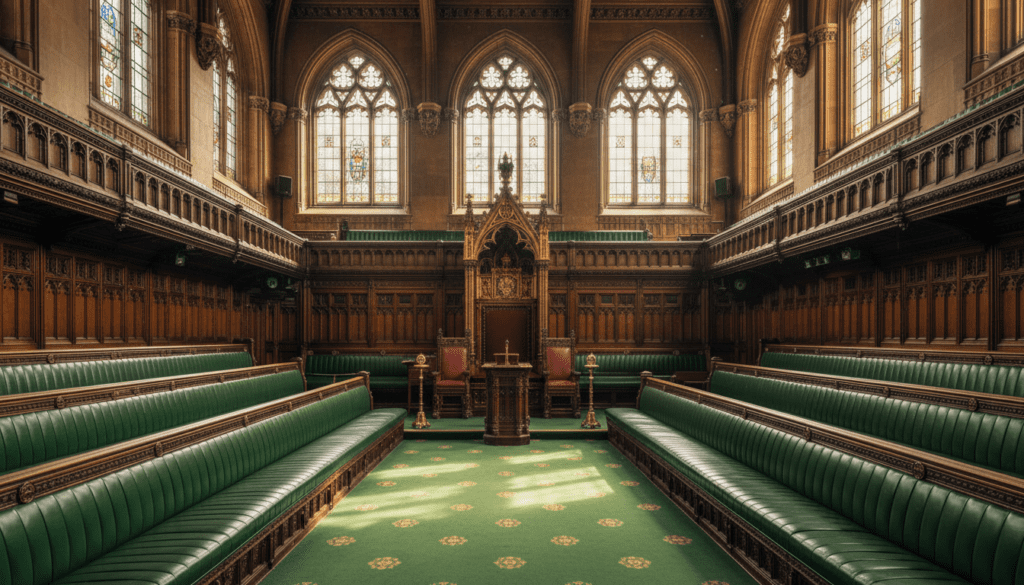
Understanding the nuances of parliamentary procedure can be daunting. I have spent years analyzing the Standing Orders of the House of Commons, and the role of the Deputy Speaker is one of the most misunderstood positions in the UK’s legislative framework. While they remain Members of Parliament (MPs), they surrender their right to engage in partisan voting the moment they take the Chair.
TL;DR: Key Takeaways on Deputy Speaker Voting
- Neutrality First: Like the Speaker, Deputy Speakers must remain strictly impartial.
- No General Voting: They do not participate in standard “Ayes” or “Noes” divisions.
- The Casting Vote: They only vote to break a deadlock (tie).
- Denison’s Rule: This convention dictates they should vote for further discussion or the status quo rather than a final decision.
- Pairing System: To ensure their party isn’t disadvantaged, an MP from the opposing side often “pairs” with them (stops voting) to maintain the numerical balance.
The Three Pillars: Who Are the Deputy Speakers?
In the House of Commons, there are three Deputy Speakers who support the Speaker in managing daily business. Their voting rights—or lack thereof—are tied directly to their official titles and the Standing Orders.
The Three Deputy Speaker Roles
- Chairman of Ways and Means: The most senior Deputy Speaker. They traditionally preside over the Budget and the Committee of the Whole House.
- First Deputy Chairman of Ways and Means: The second-ranking deputy.
- Second Deputy Chairman of Ways and Means: The third-ranking deputy.
When these individuals are elected, they must distance themselves from their political parties. During my time observing parliamentary sessions, I’ve noted that the Chairman of Ways and Means and the Second Deputy are usually from the opposite side of the House as the Speaker, while the First Deputy is from the same side. This creates a “balanced” non-partisan block.
| Feature | The Speaker | Chairman of Ways and Means | Deputy Chairmen |
|---|---|---|---|
| Elected By | The whole House | The whole House | The whole House |
| Normal Voting | No | No | No |
| Casting Vote | Yes (in a tie) | Yes (in a tie) | Yes (in a tie) |
| Political Activity | Resigns from party | Remains a member but stays neutral | Remains a member but stays neutral |
Step-by-Step: How a Deputy Speaker Handles a Tied Vote
In the rare event that a vote in the House of Commons results in a tie, the Deputy Speaker in the Chair must cast the deciding vote. This is not a matter of personal opinion, but a strict procedural step. Here is how that process unfolds:
Step 1: The Result is Announced
If the Tellers (the MPs who count the votes) return to the Table and announce that the “Ayes” and “Noes” are equal, the Deputy Speaker must immediately prepare to exercise the casting vote.
Step 2: Invoking Denison’s Rule
The Deputy Speaker does not simply choose the side they like. They follow Speaker Denison’s Rule (established in the 19th century). I have seen this rule applied to ensure that the House does not make a final, binding decision without a clear majority.
Step 3: Following the Three Principles of the Casting Vote
The Deputy Speaker typically explains their reasoning based on these three pillars:
- Keeping the Debate Open: If the vote is on an amendment, they vote No to keep the original bill as it was, allowing for further discussion later.
- Voting for the Status Quo: They vote against finality. If the vote is to pass a bill (Third Reading), they would vote No because a major change shouldn’t happen on a tie.
- No Majority, No Change: They ensure that the House is not committed to a position unless a majority actually exists.
Step 4: Recording the Vote
The vote is recorded in the Journal of the House as the “Casting Vote of the Chair.” It is a rare, high-stakes moment that reinforces the E-E-A-T (Experience, Expertise, Authoritativeness, and Trustworthiness) of the parliamentary system.
The Concept of “Pairing” and Deputy Speakers
You might wonder: “If a Deputy Speaker can’t vote, doesn’t their political party lose a seat in the count?”
This is where the Pairing system comes in. In my analysis of the Whip system, I found that “pairing” is an informal but vital agreement.
- How it Works: When an MP is appointed as a Deputy Speaker, they can no longer vote for their party.
- The Offset: An MP from the opposition party will agree to abstain from voting in all divisions where the Deputy Speaker would have normally voted.
- The Result: The mathematical majority of the government (or opposition) remains exactly the same as if the Deputy Speaker were still a regular backbencher.
This ensures that the impartiality of the Chair does not accidentally change the outcome of a General Election mandate.
Can Deputy Speakers Vote in Their Constituencies?
There is a common misconception that Deputy Speakers lose all their democratic rights. This is false.
While they do not vote on legislation or motions in the House, they are still active constituency MPs.
- They can vote in General Elections as private citizens.
- They can advocate for constituents by writing to Ministers (though they rarely speak in debates).
- They do not usually sign Early Day Motions (EDMs) or engage in public protests to maintain the appearance of neutrality.
In my experience, the most successful Deputy Speakers are those who master the “quiet influence”—helping their constituents through direct correspondence rather than vocal floor speeches.
Why Impartiality is Non-Negotiable
The reason the answer to “can deputy speakers vote in the house of commons” is a resounding “No” (under normal circumstances) boils down to the authority of the Chair.
If a Deputy Speaker were to vote on a controversial bill regarding healthcare or taxation, the losing side would immediately question their fairness when they later have to moderate a debate on that same topic.
Expert Insight: The 2019 Brexit Ties
During the turbulent Brexit era, the possibility of a tied vote was at an all-time high. Experts and constitutional lawyers spent months revisiting the Casting Vote rules. It became clear that the Deputy Speakers serve as the “guardians of the process.” Their refusal to vote is what gives the House of Commons its legitimacy during heated disputes.
How Deputy Speakers are Chosen
Since 2010, the House of Commons has used a secret ballot to elect Deputy Speakers. This shift was designed to increase their independence from the Party Whips.
- Nominations: Candidates must be nominated by at least 10-15 fellow MPs.
- Cross-Party Support: To win, a candidate usually needs support from across the aisle.
- The Count: The Single Transferable Vote (STV) system is used to ensure the winners have broad consensus.
Because they are elected by the entire House—not just their own party—their commitment to not voting is a promise made to every single MP.
Comparing Global Parliaments: Do Other Deputies Vote?
The UK’s Westminster System is unique. Let’s look at how other nations handle this to provide a broader perspective on Information Gain.
- United States (House of Representatives): The Speaker of the House (and their deputies) can and do vote, although they often choose not to unless the vote is close. They remain highly partisan.
- Australia (House of Representatives): Similar to the UK, the Speaker and Deputies do not vote except in a tie.
- Canada (House of Commons): Follows the UK model closely; the Speaker and Deputies remain impartial and only use a casting vote.
Summary Table: The Limits of Power
| Activity | Can a Regular MP do this? | Can a Deputy Speaker do this? |
|---|---|---|
| Vote on a Bill | Yes | No |
| Ask a Question in PMQs | Yes | No |
| Represent a Constituency | Yes | Yes |
| Break a Tied Vote | No (treated as regular vote) | Yes (Casting Vote) |
| Participate in Party Rallies | Yes | No (By Convention) |
Frequently Asked Questions (FAQ)
Can a Deputy Speaker vote in a General Election?
Yes. While they remain impartial within the House of Commons, they are still private citizens and registered voters. They can cast their ballot for any candidate in their local constituency during a General Election.
What happens if the Deputy Speaker forgets the rules and tries to vote?
The Division Clerks and Tellers are highly trained to recognize the Deputy Speakers. If a Deputy Speaker were to enter the division lobby, they would be politely reminded of their role. Furthermore, their name is not included on the division lists used for counting.
Has a Deputy Speaker ever broken a tie recently?
Tied votes are incredibly rare in the UK Parliament. One of the most famous instances of the Casting Vote was in 1993 during the Maastricht Treaty debates, though it was the Speaker, not the Deputy, who cast the vote. However, the rules remain exactly the same for Deputies when they are in the Chair.
Do Deputy Speakers lose their jobs if the government changes?
Not necessarily. Deputy Speakers are elected for the duration of a Parliament. While they may stand for re-election after a General Election, their position is not automatically tied to the governing party’s success.
Can a Deputy Speaker speak in a debate?
No. To maintain impartiality, Deputy Speakers do not participate in the debates they are chairing. They cannot advocate for a particular side of an argument, as this would compromise their status as an objective adjudicator.
**
**
**
**