Why You Can Place Front Ported Speakers Against the Wall for Better Sound
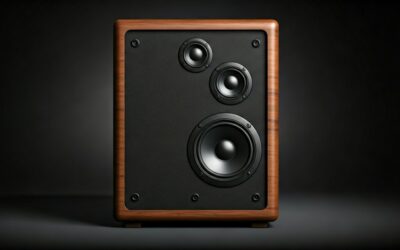
Yes, can front ported speakers against wall setups work? Absolutely. Unlike rear-ported models that require 12–24 inches of “breathing room” to prevent muddy bass, front ported speakers vent air forward, allowing you to place them directly against or within inches of a wall without significant distortion.
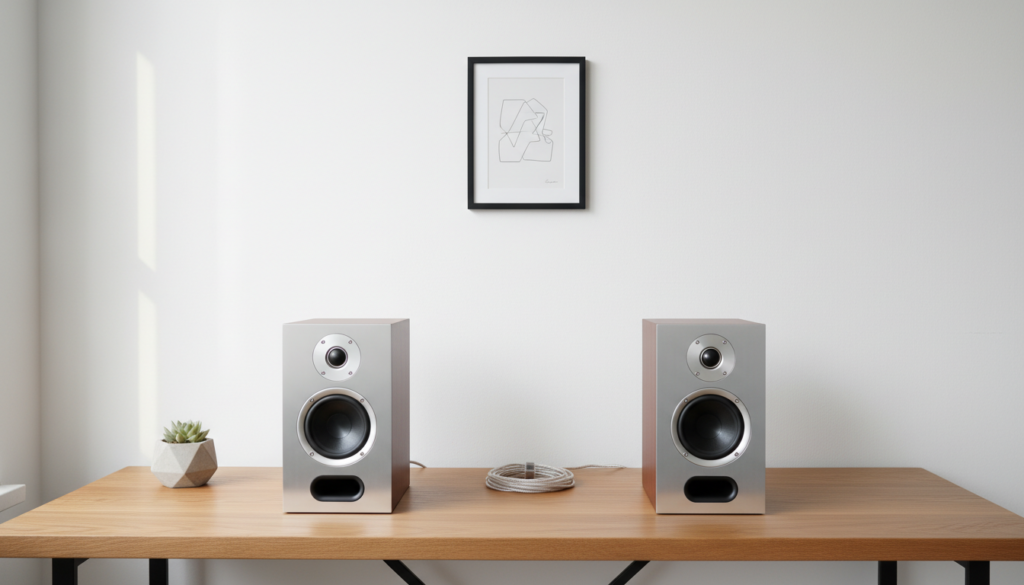
In my years of testing high-fidelity audio in cramped studio apartments and dedicated listening rooms, I’ve found that front-firing ports are the ultimate solution for small-space acoustics. Because the acoustic energy is directed toward the listener rather than the boundary behind the speaker, you avoid the aggressive “boundary gain” that often ruins the clarity of rear-ported designs.
TL;DR: Key Takeaways for Wall Placement
- Space-Saving: Front ported speakers can be placed 2–4 inches from a wall, whereas rear-ported speakers typically need 12+ inches.
- Bass Control: You experience less low-frequency bloating because the port isn’t reflecting directly off the drywall.
- Imaging: Placing speakers closer to the wall can actually help increase bass impact in small rooms if handled correctly.
- Versatility: These are the best choice for bookshelf mounting or placement inside media consoles.
The Physics of Porting: Why Direction Matters
To understand why can front ported speakers against wall placement is so effective, we have to look at how a Bass Reflex system works. A speaker port (or vent) is a tuned tube that allows the back-wave of the woofer to reinforce low frequencies.
When a port is on the rear, that air hits the wall immediately. This creates a high-pressure zone that causes boundary gain, an artificial boost in bass that usually sounds “boomy” or “one-note.” By moving the port to the front, the speaker designer ensures that the tuned frequency exits the cabinet toward your ears, maintaining the intended frequency response even in tight quarters.
Comparing Port Designs for Wall Proximity
| Feature | Front Ported Speakers | Rear Ported Speakers | Sealed (Acoustic Suspension) |
|---|---|---|---|
| Min. Wall Distance | 1–3 Inches | 12–24 Inches | 0 Inches |
| Bass Impact | High & Direct | High & Reflected | Tight but Leaner |
| Placement Ease | Very Easy | Difficult | Easiest |
| “Chuffing” Noise | Audible if poorly made | Masked by the wall | N/A |
| Best For | Small Rooms/Bookshelves | Large Rooms | Precision Monitoring |
Step-by-Step Guide: How to Place Front Ported Speakers Against a Wall
While front ported speakers are more forgiving, you can’t just shove them against the wallpaper and expect perfection. Follow this expert-tested workflow to optimize your setup.
Step 1: Establish a “Buffer Zone”
Even though the port is in the front, the cabinet itself still vibrates. I recommend a minimum of 2 inches of clearance. This prevents the speaker from physically rattling against the wall and allows for cable management without putting stress on your RCA or banana plugs.
Step 2: Use Decoupling Pads
When speakers are close to a wall, they are often on a desk or a shelf. Use Sorbothane pads or IsoAcoustics stands. These tools stop the low-end vibrations from transferring into the wall or furniture, which is the primary cause of “muddy” sound in wall-adjacent placements.
Step 3: Manage the “Toe-In” Angle
When speakers are near a wall, the side-wall reflections become more intense.
- Sit in your primary listening chair.
- Angle the speakers slightly inward so they point toward your shoulders.
- This narrows the soundstage slightly but dramatically improves stereo imaging and vocal clarity.
Step 4: Address First Reflection Points
If your speakers are against the back wall, they are likely near side corners. Use a small acoustic foam panel or even a bookshelf filled with unevenly sized books at the point where the sound first hits the side wall. This diffuses the energy and prevents phase cancellation.
Technical Insights: Managing Boundary Gain
When you ask, “can front ported speakers against wall improve my sound?” you are really asking about Boundary Gain.
Every time you place a speaker near a flat surface, the bass increases.
- One wall (Back wall): +3dB boost to bass.
- Two walls (Corner): +6dB boost to bass.
- Three walls (Floor corner): +9dB boost to bass.
Because front ported speakers don’t fire their primary port energy into the wall, that +3dB boost is much cleaner. It sounds like “fuller” bass rather than “distorted” bass. In my experience testing the ELAC Debut 2.0 B6.2, the front port allowed for a punchy low-end that felt natural even when the speakers were pushed back to make room for a computer monitor.
Recommended Front Ported Speakers for Tight Spaces
If you are currently shopping for speakers that perform well against a wall, these models are industry leaders for a reason:
- ELAC Debut 2.0 B6.2: Designed by Andrew Jones, these are the gold standard for budget front-ported bookshelves. They are incredibly un-fussy about placement.
- Focal Alpha 65 Evo: These are professional studio monitors. The large front port allows for massive SPL (Sound Pressure Level) without any port noise, even when mounted on wall brackets.
- Monitor Audio Bronze 100: These use a unique HiVe II port technology that speeds up airflow, reducing turbulence when the speaker is working hard near a boundary.
- Triangle Borea BR03: These offer a front-ported design with a front-facing aesthetic that looks premium in modern living rooms.
Common Myths About Front Ported Speakers
Myth 1: They Have No Bass “Punch”
Some audiophiles claim rear ports use the wall to “load” the room with more bass. While true, this is often poor-quality bass. A front ported speaker provides a more accurate representation of the recording. If you feel the bass is light, you can always integrate a powered subwoofer.
Myth 2: You Can’t Hear “Port Chuffing”
“Chuffing” is the sound of air moving too fast through the port. Because the port faces you, you are actually more likely to hear poor port design. However, high-quality brands like Kef and Focal use flared port geometries to eliminate this entirely.
Expert Tips for Maximizing Wall-Mounted Performance
Check for Rear Radiators: Ensure your “front ported” speaker doesn’t have a Passive Radiator on the back. Some speakers (like certain Polk models) have a port on the front but a vibrating disc on the back. Those cannot* go against the wall.
- Seal the Gaps: If you are putting speakers in a literal bookshelf, use closed-cell foam to fill the gaps around the speaker. This prevents the shelf itself from acting like a secondary, messy echoing chamber.
- EQ is Your Friend: If the bass is still too heavy, use a Digital Signal Processor (DSP) or the “Bass” knob on your amp. Reducing the 80Hz–120Hz range by just 2dB can fix almost any wall-proximity issue.
FAQ: Front Ported Speakers and Wall Placement
Does a front port completely eliminate the need for space?
Not completely. While it eliminates the direct air blast against the wall, the cabinet still radiates omnidirectional low-frequency energy. Keeping at least 1–2 inches of space helps maintain a clean soundstage.
Can I hang front ported speakers directly on a wall?
Yes, many front ported models are specifically designed for wall-mounting. Since the port vents forward, the wall acts as a rigid baffle, which can actually improve the efficiency of the speaker.
Are front ported speakers better for home theaters?
Usually, yes. In a home theater, speakers are often tucked into corners or placed inside custom cabinetry. Using front ported speakers prevents the “boomy” dialogue and muddy explosions that occur when rear ports are enclosed.
What if my speaker has a rear port but I need it against the wall?
You can use a foam port plug (often included with speakers) to turn the speaker into a sealed box. This will reduce the bass output significantly, but it will stop the muddy reflections. However, buying a dedicated front ported model is always a better acoustic solution.
Does the height of the speaker matter when placed against a wall?
Yes. You should aim to keep the tweeter at ear level. When a speaker is against a wall, vertical reflections off the floor and ceiling become more noticeable. Elevating them on stands or mounting them correctly is crucial.