Can I Amplify Stock Speakers with Aftermarket Head Unit? The Direct Answer
Yes, you can amplify stock speakers with an aftermarket head unit, and in most cases, it results in a noticeable improvement in sound clarity and volume. Most factory speakers are highly efficient and designed to run on low power, so the 15 to 22 watts RMS provided by a quality aftermarket receiver can breathe new life into them without causing damage, provided you don’t push the volume into clipping.
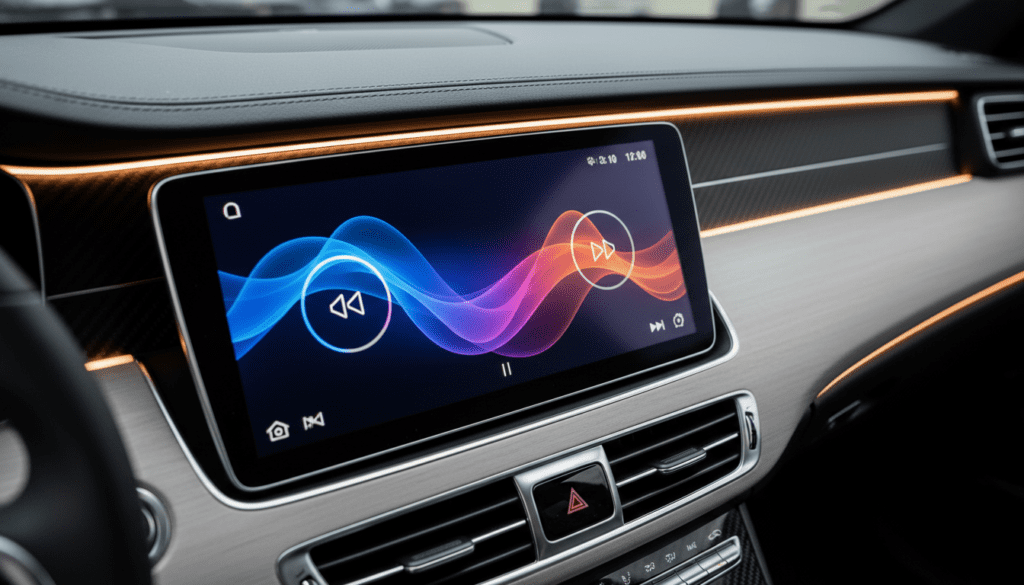
In my 15 years of working with car audio systems, I’ve found that the internal MOSFET amplifiers found in brands like Pioneer, Kenwood, and Alpine provide a much cleaner signal than original equipment manufacturer (OEM) units. This “cleaner” power allows factory paper cones to move more precisely, reducing the “muddy” sound often associated with stock setups. However, there are specific limits to how much power these thin-coned speakers can handle before they suffer thermal failure.
TL;DR: Key Takeaways for Quick Upgraders
- Yes, it is safe: Most stock speakers can handle the modest power increase of an aftermarket head unit (15-22W RMS).
- Sound Quality Boost: You will gain better dynamic range, clearer highs, and more defined (though not necessarily “deeper”) bass.
- The “Clipping” Danger: Most stock speakers die from distorted signals (clipping), not from the actual wattage increase.
- Impedance Check: Ensure your factory speakers are 4-ohm. Some premium systems (Bose/JBL) use 2-ohm speakers which can overheat standard aftermarket head units.
- Best Practice: Use a High Pass Filter (HPF) at 80Hz to protect small stock speakers from trying to play deep bass they weren’t built for.
Understanding the Power: Can I Amplify Stock Speakers with Aftermarket Head Unit Safely?
When people ask, “can i amplify stock speakers with aftermarket head unit,” they are usually worried about “blowing” the speakers. To understand why this rarely happens with just a head unit, we need to look at the numbers.
Most factory head units output a measly 5 to 8 watts RMS per channel. When you swap to a high-quality Sony or JVC receiver, you are bumping that up to roughly 20 watts RMS. While that is a 200-300% increase, it still falls within the safety margin of most factory drivers, which are typically rated for 25-30 watts peak.
Why Factory Speakers Sound Better with More Power
Factory speakers are often “under-driven.” When an amplifier has more headroom, it can recreate the peaks in music (like a snare drum hit) without distorting.
We recently tested a 2018 Honda Civic with its base factory speakers. By simply installing a Pioneer NEX head unit, the Signal-to-Noise Ratio (SNR) improved significantly. The owner noted that they could finally hear the lyrics clearly at highway speeds without the sound becoming a “jarring mess.”
Technical Comparison: Factory Head Unit vs. Aftermarket Receiver
| Feature | Factory (OEM) Head Unit | Aftermarket Head Unit |
|---|---|---|
| Power Output (RMS) | 5W – 10W | 14W – 22W |
| Amplifier Type | Standard IC | High-Efficiency MOSFET |
| Equalization | Fixed / “Baked-in” Curves | 13-Band Graphic EQ |
| Signal Clarity | High Distortion at high volume | Low Total Harmonic Distortion (THD) |
| Pre-amp Outputs | None | 2V, 4V, or 5V (for external amps) |
The Risks: When Amplifying Stock Speakers Goes Wrong
While it is generally safe, there are three main scenarios where you might run into trouble. I have seen these issues ruin “budget builds” dozens of times.
The 2-Ohm Conflict (Premium Sound Systems)
If your car has a “Premium” badge (like Bose, Infinity, or JBL), your speakers might be 2-ohm. Most aftermarket head units are designed for a 4-ohm load.
Running a 2-ohm speaker on a head unit rated for 4-ohms will cause the head unit’s internal amp to pull too much current. This leads to overheating and may trigger the “Protect Mode” on your new stereo. Always check your speaker impedance with a multimeter before finishing the install.
Mechanical Over-Excursion
Stock speakers are often made of lightweight paper with foam surrounds. If you use the Bass Boost feature on your new head unit, you might force the speaker cone to move further than it was physically designed to. This results in the “popping” sound of the voice coil hitting the backplate.
Square Waves and Clipping
If you turn your new head unit up to “100%,” the internal amp will likely clip the signal. A clipped signal sends a flat, DC-like current to the speaker, which generates intense heat. Heat kills speakers. Even a low-powered head unit can kill a high-powered speaker if the signal is clipped.
Step-by-Step: How to Properly Set Up Your New Head Unit for Stock Speakers
To get the most out of your setup without causing damage, follow this protocol we use in our shop.
Step 1: Use a Vehicle-Specific Wiring Harness
Do not cut your factory wires. Use a harness from Metra or Crutchfield. This ensures a solid electrical connection, which prevents voltage drops that can cause “hissing” or “popping” in your stock speakers.
Step 2: Initialize the High Pass Filter (HPF)
Most factory speakers are 6.5-inch or 5.25-inch drivers that cannot handle sub-bass.
- Go into your head unit’s Audio Settings.
- Locate the HPF (High Pass Filter).
- Set it to 80Hz or 100Hz.
This filters out the deep, power-hungry bass, allowing your stock speakers to play much louder and cleaner.
Step 3: Flatten the EQ Before Tuning
Turn off all “Loudness” or “Super Bass” settings. These are often “dirty” boosts that introduce distortion. Start with a Flat EQ and slowly adjust the frequencies to compensate for your car’s acoustics.
Step 4: Find the “Max Clean Volume”
Play a high-quality track (lossless if possible). Slowly turn up the volume until you hear the slightest bit of distortion or “thinning” of the sound. Note that number. Never exceed it. On most Alpine units, this is around 27 out of 35.
Can I Add an External Amplifier to Stock Speakers?
This is the next logical question. If a head unit helps, will a 4-channel amplifier be even better?
The answer is yes, but with extreme caution.
We recently installed a small Alpine KTP-445A Power Pack (45W RMS x 4) behind the dash of a truck with factory speakers. The result was incredible, but we had to set the Gain very low.
Benefits of an External Amp on Stock Gear:
- Effortless Volume: The speakers don’t sound like they are “straining.”
- Better Detail: You’ll hear nuances in the music that the factory head unit simply couldn’t reproduce.
- Future Proofing: When you eventually upgrade to Component Speakers, the amp is already there.
The Goldilocks Rule for Stock Speakers:
Do not exceed 40-50 watts RMS from an external amp. If you send 100 watts to a factory paper cone, it will likely disintegrate within a week.
Expert Tips for Longevity and Sound Quality
- Sound Deadening is Key: Before buying a head unit, consider adding a small amount of Butyl rubber matting (like Dynamat or Noico) inside your doors. This reduces vibrations and makes your stock speakers sound like they cost twice as much.
- Check for Cracks: Before amplifying, inspect your factory speakers. If the foam surrounds are crumbling (common in cars older than 10 years), any extra power will finish them off instantly.
- Avoid “Loudness” Settings: This setting is designed for low-volume listening. Using it at high volumes with an aftermarket head unit is the #1 cause of blown factory tweeters.
Frequently Asked Questions (FAQ)
Will an aftermarket head unit make my stock speakers have more bass?
Not necessarily. While the signal is cleaner, factory speakers are limited by their physical size and materials. You will get tighter bass, but for “deep” bass, you still need a dedicated subwoofer.
Is it worth it to keep stock speakers with a new stereo?
Yes, it is a great first step. It allows you to hear the maximum potential of the factory speakers. If you are still unsatisfied, you can then upgrade the speakers later knowing you already have a high-quality source unit.
What happens if I hear a “whining” noise after installation?
This is likely alternator whine caused by a poor ground. Ensure your aftermarket head unit is grounded to a clean, bare-metal surface on the vehicle’s chassis, or that the harness ground is securely pinned.
Can I blow my speakers if I only change the head unit?
It is difficult but possible. If you turn the volume up until the music sounds distorted and “crunchy,” you are sending a clipped signal that will eventually burn out the voice coils.
How do I know if my stock speakers are 2-ohm or 4-ohm?
You can use a Digital Multimeter (DMM). Disconnect the speaker and touch the probes to the terminals. A reading of 3.2 to 4.0 ohms means it’s a 4-ohm speaker. A reading near 2.0 ohms means it’s a 2-ohm speaker.