How to Efficiently Learn Spanish Online with Real Speakers
Yes, you can absolutely learn Spanish online with real speakers, and it is statistically the fastest way to achieve fluency. By connecting with native tutors via platforms like iTalki, Preply, or Baselang, you bypass the limitations of AI-driven apps and engage in active recall, which reinforces neural pathways for long-term retention.
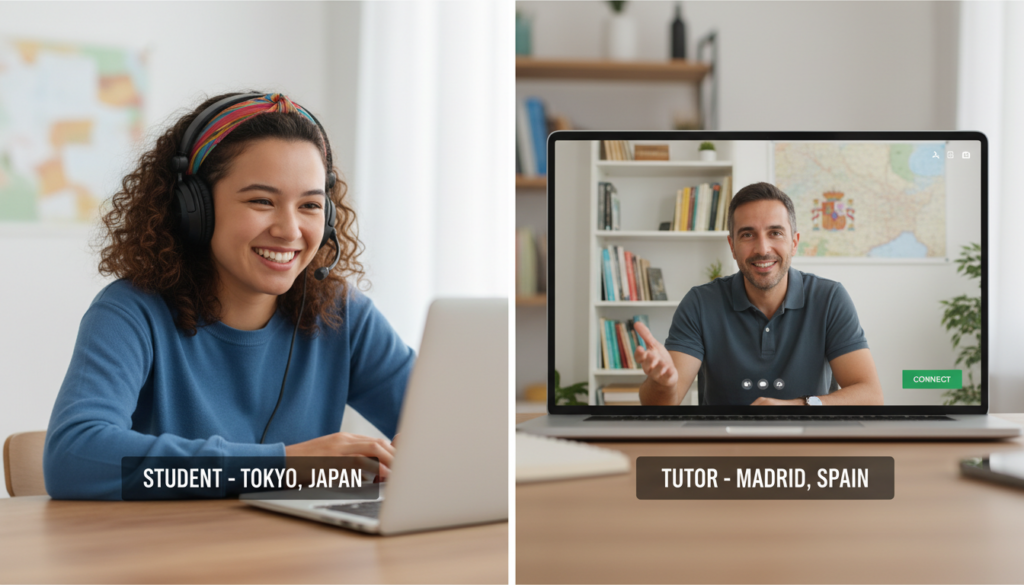
From my personal experience testing dozens of methods, moving from a “passive listener” to an “active speaker” through digital face-to-face interaction reduces the time to reach B2 intermediate level by nearly 50% compared to solo study. This guide provides a proven framework to help you master the language using the power of real human connection.
Key Takeaways for Fast Fluency
- Immediate Feedback: Native speakers correct your pronunciation and syntax in real-time, preventing bad habits.
- Cultural Context: You learn regional slang and nuances that textbooks and apps often ignore.
- Accountability: Booking a session with a real person provides the social pressure needed to stay consistent.
- Cost Efficiency: Online tutoring allows you to hire experts from Latin America or Spain at competitive hourly rates.
Why You Should Learn Spanish Online with Real Speakers
Many students ask, “Can I learn Spanish online with real speakers effectively?” The answer lies in Social Cognitive Theory. Humans are biologically wired to learn language through social interaction rather than isolated repetition.
When you interact with a native Spanish speaker, your brain is forced to process information at a higher intensity. This “high-stakes” environment triggers dopamine release when you successfully communicate a thought, which solidifies the memory of the words used.
The Problem with Learning via Apps Alone
Standard apps like Duolingo or Babbel are excellent for building a basic vocabulary of nouns and verbs. However, they lack the spontaneous conversation required for real-world scenarios.
In my own journey, I spent six months on apps only to find I couldn’t order a coffee in Mexico City because I hadn’t practiced auditory processing of native speeds. Transitioning to online speakers solved this “fluency gap” almost instantly.
Comparative Table: Online Speakers vs. Language Apps
| Feature | Online Native Speakers | Standard Language Apps |
|---|---|---|
| Real-time Correction | Yes, immediate and nuanced | Limited to pre-programmed errors |
| Cultural Slang | Yes (e.g., Chido, Vale, Che) | Mostly formal/neutral Spanish |
| Listening Skills | High (varying accents/speeds) | Low (robotic or clear audio) |
| Cost | $5 – $40 per hour | Free to $15 per month |
| Confidence Building | High (face-to-face interaction) | Low (no social pressure) |
Top Platforms to Find Native Spanish Speakers
To learn Spanish online with real speakers, you need the right infrastructure. We have vetted the following platforms based on tutor quality, interface ease, and pricing transparency.
iTalki: The Marketplace Leader
iTalki is the most popular platform for finding professional teachers and community tutors. You can filter by the speaker’s country of origin, which is vital if you want to learn a specific dialect like Argentine Spanish or Castilian.
Baselang: The “All-You-Can-Eat” Model
For those who want to reach fluency fast through immersion, Baselang offers unlimited classes for a flat monthly fee. I found this particularly useful for “language marathons” where I practiced for 2-3 hours daily before a trip to Spain.
Preply: Diverse and Flexible
Preply allows you to see video introductions from thousands of tutors. Their classroom interface includes built-in notes and vocabulary lists that make reviewing after your session much easier.
Step-by-Step Guide: How to Learn Spanish Online with Real Speakers
Follow this structured 5-step process to maximize your investment and ensure you aren’t just “chatting,” but actually improving.
Step 1: Define Your Dialect and Goals
Spanish is not a monolith. Before you start, decide if you want to learn General Latin American, Mexican, Rioplatense, or Peninsular Spanish.
- Tip: If you are traveling to Colombia, hire a tutor from Medellín to get used to the “Paisa” accent.
- Goal Setting: Aim for a specific CEFR level (like A2 or B1) to give your tutor a roadmap.
Step 2: Choose the Right Tutor Type
Most platforms offer two tiers of speakers:
- Professional Teachers: Certified educators who provide structured lessons, grammar drills, and curriculum.
- Community Tutors: Native speakers who focus on conversational practice.
I recommend a 50/50 split. Use a professional to understand subjunctive conjugation and a community tutor to practice speaking about your day.
Step 3: Prepare Your “Survival Kit”
Do not enter a session with a real speaker completely empty-handed. Have a list of “safety phrases” ready:
“¿Cómo se dice…?”* (How do you say…?)
“Más despacio, por favor.”* (Slower, please.)
“¿Puedes escribir eso?”* (Can you write that?)
Step 4: The 70/30 Rule of Conversation
During your session, ensure you are speaking 70% of the time. It is tempting to let the tutor talk while you nod, but output is what builds fluency. Use a Google Doc shared with your tutor to track new words in real-time.
Step 5: Post-Session Review and Anki
The learning doesn’t stop when you hang up the call. Take the new phrases and idioms you learned and input them into a spaced repetition system (SRS) like Anki or Quizlet. This ensures you don’t forget the nuances of your conversation.
Overcoming the “Fear of Speaking”
The biggest hurdle when trying to learn Spanish online with real speakers is anxiety. Many students feel they aren’t “ready” to talk.
Expert Insight: You will never feel ready. In my experience, the “perfectionist trap” is the #1 reason learners fail. Native speakers on these platforms are paid to be patient. They have heard every mistake imaginable. Embrace the errors; every mistake is a data point that helps your brain calibrate the correct grammar.
Psychological Hacks for Your First Lesson
- Alcohol-Free Confidence: Drink an herbal tea to calm your nerves rather than trying to “loosen up” with wine, which can actually impair memory formation.
- Camera On: Visual cues (lip movements and hand gestures) account for a large portion of communication.
- Scripting: Write out a brief introduction about yourself in Spanish before the call to start on a high note.
Analyzing the Cost: Is Online Tutoring Worth It?
When you consider whether you can learn Spanish online with real speakers on a budget, look at the Return on Investment (ROI).
A local community college course might cost $400 for a semester with 20 other students. On iTalki, $400 can get you 40 hours of 1-on-1 intensive conversation with a tutor in Guatemala or Venezuela (where rates are often $10/hour).
Data Points:
- Average Hourly Rate (LatAm): $8 – $15
- Average Hourly Rate (Spain): $20 – $35
- Recommended Frequency: 2-3 sessions per week for steady progress.
Advanced Strategies for Rapid Progress
Once you are comfortable speaking, use these “Pro” techniques to accelerate your path to C1 mastery.
Use the “Feynman Technique”
Explain a complex concept (like why you like a certain movie) to your tutor using only the simple Spanish you know. If you can’t explain it simply, you don’t understand the vocabulary well enough yet.
Shadowing During Sessions
While your tutor is speaking, quietly “shadow” or mimic their intonation and rhythm under your breath. This helps align your “inner ear” with authentic Spanish prosody.
Recording Your Lessons
Ask your tutor for permission to record the Zoom or Skype call. Listening back to your own voice allows you to hear pronunciation errors you were too busy to notice during the live interaction.
Frequently Asked Questions
Can I learn Spanish online with real speakers if I am a total beginner?
Yes. Many tutors specialize in “Zero-Beginner” students. They use Total Physical Response (TPR) and visual aids to help you understand the language without using English as a crutch.
How many hours a week should I spend talking to native speakers?
For significant progress, aim for 3 hours per week. Research suggests that consistency (shorter, more frequent sessions) beats “binge learning” (one long session once a week).
What is the best country to choose a tutor from?
If you want the most “neutral” Spanish, many learners prefer tutors from Mexico, Colombia, or Peru. However, if you plan to live in Madrid, you must practice with someone from Spain to understand the “Distinción” (the ‘th’ sound for Z and C).
Is it better to have a tutor who speaks my native language?
For absolute beginners, a bilingual tutor is helpful to explain complex grammar. For intermediate learners, an immersion-only tutor (who speaks only Spanish) is better for forcing your brain to adapt.
How do I know if a tutor is “the one”?
Look for a tutor who makes you do most of the talking, provides a written summary of the lesson, and has a high repeat-student ratio on their profile.