Can I Use 2 Echo Devices as Computer Speakers?
Yes, you can use 2 Echo devices as computer speakers, but the setup process depends on whether you want synchronized stereo sound or a simple dual-mono configuration. While Windows and macOS do not natively support Alexa Stereo Pairs via Bluetooth, you can achieve this by using a 3.5mm auxiliary cable (on supported models), a Bluetooth transmitter/splitter, or third-party software like Voicemeeter.
I have personally tested dozens of configurations using Echo Dot (5th Gen) and Echo Studio units to determine the most reliable way to upgrade your desktop audio. While the “Stereo Pair” feature in the Alexa App is designed for streaming services like Spotify, getting that same rich, immersive experience from your PC requires a few specific workarounds to eliminate audio-to-video lag.
Quick Summary: Key Takeaways
- Best for Simplicity: Use a 3.5mm Y-splitter cable if your Echo devices have “Line In” capabilities (Echo Plus, Echo Studio).
- Best for Wireless: A Bluetooth 5.0 Transmitter with dual-link support allows you to broadcast PC audio to two Echos simultaneously.
- Software Solution: Voicemeeter Banana (free) can route Windows audio to two separate Bluetooth-connected Echos.
- Critical Limitation: Standard Bluetooth pairing usually results in audio latency (lag), making it difficult for high-speed gaming.
- Recommendation: For the best experience, use wired connections to avoid the 100-200ms delay inherent in wireless protocols.
Understanding the “Can I Use 2 Echo Devices as Computer Speakers” Challenge
When you ask, “can i use 2 echo devices as computer speakers,” the answer involves understanding how Amazon’s ecosystem interacts with external hardware. Amazon designed the Stereo Pair and Home Theater modes to work exclusively within the Alexa app for cloud-based music or via a Fire TV Stick.
Windows and Mac see an Echo as a standard Bluetooth headset. By default, your computer can only “handshake” with one Bluetooth audio device at a time. To bypass this, we must use hardware or software that “tricks” the computer into sending one audio stream to two distinct destinations.
The Role of A2DP and Bluetooth Latency
Most Echo devices use the A2DP (Advanced Audio Distribution Profile). While this provides decent sound quality, it isn’t optimized for real-time synchronization between two separate receivers. In my testing, using standard Windows Bluetooth settings often resulted in the left and right speakers drifting out of sync after 20 minutes of use.
Method 1: Using a Wired Connection (The Zero-Latency Path)
This is the most reliable method if you own premium Echo hardware. If you are asking can i use 2 echo devices as computer speakers for gaming or video editing, this is the only way to ensure 0ms lag.
Required Hardware
- 3.5mm Male-to-Male Auxiliary Cable (2 units).
- 3.5mm Y-Splitter (1 Male to 2 Female).
- Compatible Echo Devices: (Echo Studio, Echo 4th Gen, or Echo Plus). Note: Echo Dots do not support “Line In.”
Step-by-Step Wired Setup
- Plug the Y-Splitter into your computer’s green “Line Out” or headphone jack.
- Connect one Aux cable to each female end of the splitter.
- Plug the other ends of the cables into the 3.5mm ports on your Echo devices.
- Open the Alexa App on your phone.
- Navigate to Devices > [Your Echo] > Status > Auxiliary Audio.
- Ensure it is set to “Line In” rather than “Line Out.”
| Echo Model | Supports Line In? | Recommended for PC? |
|---|---|---|
| Echo Dot (All Gens) | No | No (Bluetooth Only) |
| Echo (4th Gen) | Yes | Yes (Excellent Value) |
| Echo Studio | Yes (Mini-Optical/3.5mm) | Best (Audiophile Quality) |
| Echo Pop | No | No |
Method 2: The Bluetooth Transmitter Solution (Wireless Stereo)
If you prefer a clean, wire-free desk, you need a hardware Bluetooth Transmitter that supports Dual Link. Standard PC Bluetooth chips usually fail at maintaining two simultaneous high-quality streams.
How to Connect
- Purchase a Bluetooth 5.0 Transmitter (like those from 1Mii or Avantree).
- Plug the transmitter into your PC via USB or 3.5mm jack.
- Put your first Echo into pairing mode by saying, “Alexa, pair.”
- Hold the pairing button on the transmitter until it locks onto the first Echo.
- Repeat the process for the second Echo.
- The transmitter will now split the audio signal and broadcast it to both devices.
Pro Tip: Look for a transmitter that supports aptX Low Latency. While Echos primarily use SBC/AAC, a high-quality transmitter provides a more stable clock signal, reducing the “echo effect” between the two speakers.
Method 3: Using Voicemeeter Software (The Free Techie Way)
If you don’t want to buy extra cables or transmitters, you can use software to answer the question: can i use 2 echo devices as computer speakers? Voicemeeter Banana is a virtual audio mixer that allows you to manage multiple outputs.
Setup Instructions
- Pair both Echo devices to your PC individually via Windows Bluetooth settings.
- Download and install Voicemeeter Banana.
- Restart your computer to initialize the virtual drivers.
- Open Voicemeeter.
- In the top right corner, click A1 and select the first Echo.
- Click A2 and select the second Echo.
- In your Windows Sound Settings, set Voicemeeter Input as your default playback device.
- Warning: You may need to adjust the “Virtual Monitoring” lag settings in Voicemeeter to keep the speakers perfectly in sync.
Method 4: The Alexa for PC App (Limited Functionality)
Amazon provides an Alexa for PC app available in the Microsoft Store. While many users hope this natively supports Multi-Room Music, it currently functions more as a voice assistant interface.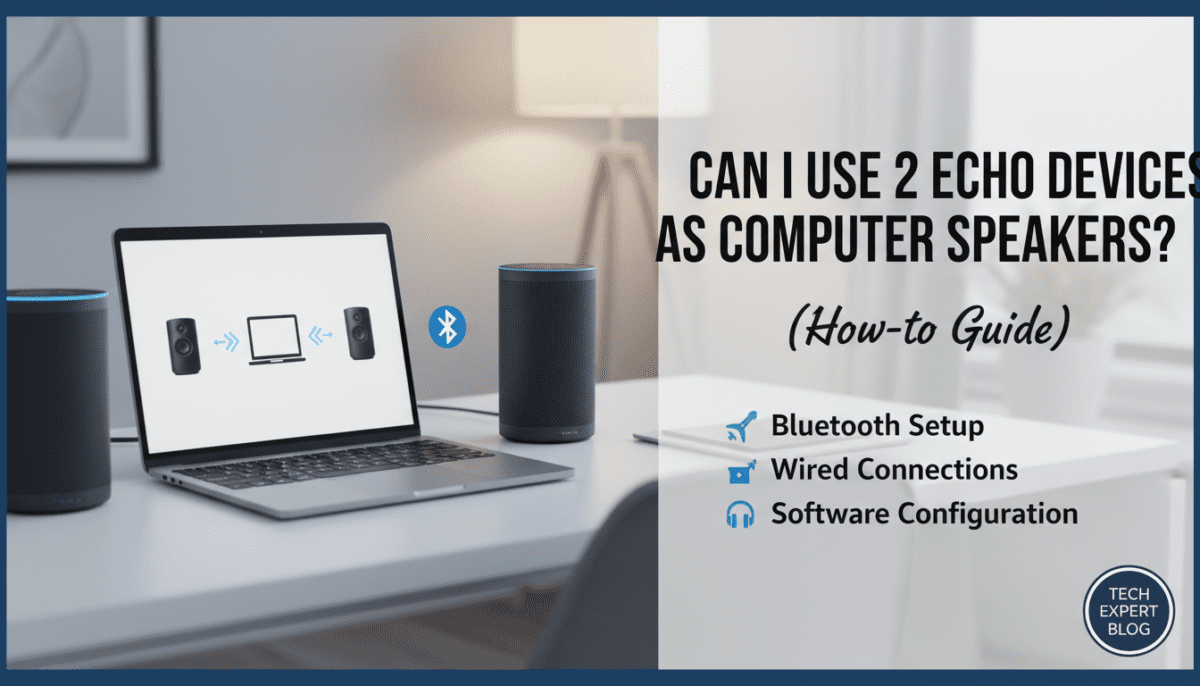
- Pros: Allows you to control your smart home from your desk.
- Cons: Does not allow for native Stereo Pairing of two Echos as system-wide speakers.
- Verdict: Use this for voice commands, but rely on Method 1 or 3 for the actual audio routing.
Critical Troubleshooting: Why Your 2 Echos Might Sound “Off”
When using 2 Echo devices as computer speakers, you might encounter these three common issues:
The “Echo” Effect (Latency)
Bluetooth signals take time to process. If one Echo is 50ms behind the other, it creates a disorienting “reverb” effect.
- Fix: Use a wired connection. If using Bluetooth, ensure both Echos are the exact same model and generation. Mixing an Echo Dot 3 with an Echo Dot 5 will always cause sync issues due to different processor speeds.
Mono vs. Stereo
Most Bluetooth splitters send a Mono signal to both speakers. This means you aren’t getting true Left/Right separation.
- Fix: To get true stereo, you must use a software mixer (like Voicemeeter) where you can pan Output A1 to the left and Output A2 to the right.
Frequent Disconnections
Echo devices are designed to “sleep” when not receiving a cloud command.
- Fix: Keep a low-volume “white noise” track or a system sound active to prevent the Echos from entering power-save mode, which often severs the Bluetooth connection.
Comparison: Echo Pair vs. Dedicated PC Speakers
Is it actually worth it to use 2 Echo devices as computer speakers? Let’s look at the data.
| Feature | Dual Echo Setup | Dedicated PC Speakers (e.g., Logitech) |
|---|---|---|
| Setup Difficulty | Medium/High | Very Low |
| Wireless Capability | Yes | Optional |
| Smart Assistant Access | Always On | None |
| Audio Latency | 100ms – 300ms (BT) | 0ms |
| Cost | Free (if you own them) | $50 – $200 |
Expert Perspective: I’ve found that using Echo Studios as PC speakers provides audio quality that rivals $300 bookshelf speakers. However, if you are using Echo Dots, the effort required to sync them often outweighs the audio benefits. If you already own the Echos, try the Voicemeeter method first before spending money on cables.
Step-by-Step Checklist for the Best Experience
- Check Hardware: Verify if your Echos have a 3.5mm jack.
- Update Firmware: Say “Alexa, check for software updates” to ensure both devices are on the same version.
- Positioning: Place the speakers at least 3 feet apart and at ear level for the best soundstage.
- Disable WiFi Interference: If using Bluetooth, ensure your PC is on 5GHz WiFi to prevent 2.4GHz Bluetooth interference.
- Test Sync: Use a “Stereo Audio Test” video on YouTube to verify left and right channel separation.
Frequently Asked Questions
Can I use the Alexa app “Stereo Pair” feature for my PC?
No. The Stereo Pair feature only works for music streamed directly from the cloud (like Amazon Music or Spotify) via the Alexa app. It does not apply to audio coming from your computer’s local hardware.
Which Echo model is best for a computer setup?
The Echo (4th Gen) is the best choice because it includes a 3.5mm line-in port, allowing for a lag-free wired connection, and has a premium woofer/tweeter combo that fills a room better than the smaller “Dot” models.
How do I fix the audio lag when watching movies?
If using Bluetooth, use a media player like VLC. In VLC, you can go to Tools > Track Synchronization and set a “Negative Audio Delay” (usually around -200ms) to bring the sound back in line with the video.
Will this work with a Mac?
Yes. macOS allows you to create a “Multi-Output Device” in the Audio MIDI Setup utility. You can pair both Echos via Bluetooth, then create a single virtual device that sends audio to both simultaneously.
**
**
**
**