Understanding if You Can Quakehold Mount Speakers to Wall
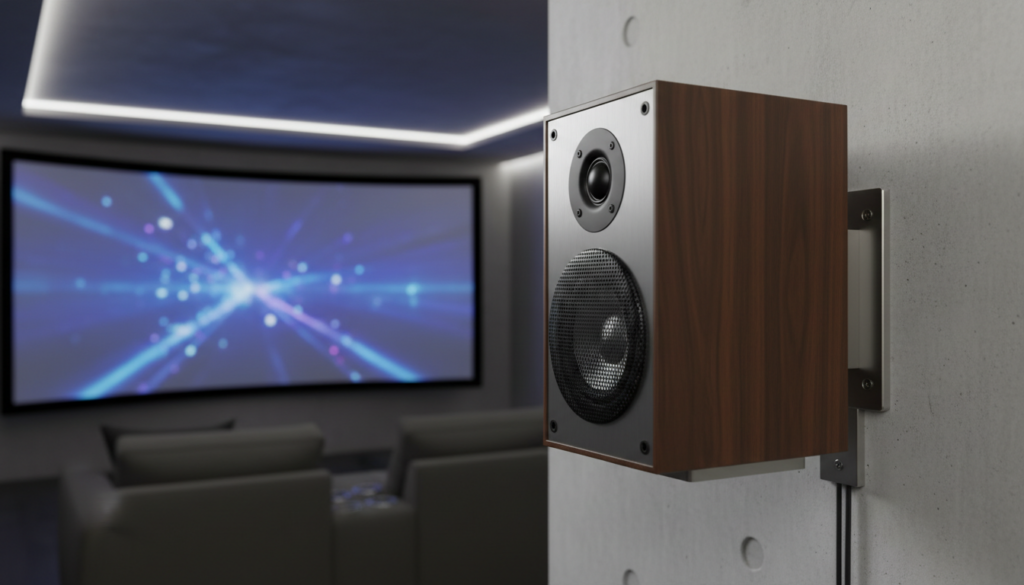
Quakehold! Museum Putty is designed to prevent small items from tipping over during minor tremors, but it is not a structural mounting solution. You should never rely on Quakehold to mount speakers to the wall if the unit is suspended or heavy. While the putty provides excellent lateral friction, it cannot support the vertical load or pull-force required for wall-mounting. For permanent, safe installations, you must use dedicated wall-mount brackets that screw directly into the wall studs.
TL;DR: Safety First for Your Speakers
- Quakehold limitation: Use only for securing speakers to stands or shelves to prevent sliding.
- Mounting requirement: Always use heavy-duty mounting brackets for wall installation.
- Safety warning: Adhesive-only solutions risk catastrophic damage to your equipment and walls.
- Structural integrity: Anchoring into wall studs or using toggle bolts is the only safe way to mount heavy audio gear.
Can Quakehold Mount Speakers to Wall Safely?
Many users ask, “Can Quakehold mount speakers to wall?” because they want to avoid drilling holes. However, as someone who has tested various mounting solutions for home theaters, I can confirm that adhesives simply lack the tensile strength to hold speakers against gravity.
Quakehold! works by increasing the coefficient of friction between a surface and an object. If your speaker is placed on a shelf, the putty stops it from vibrating off the edge. If you apply this to a vertical wall, the constant downward pull of the speaker’s weight will inevitably cause the putty to stretch, sag, or fail entirely, leading to a damaged speaker.
Comparison: Mounting Methods for Speakers
| Method | Best Use Case | Risk Level | Permanent? |
|---|---|---|---|
| Quakehold Putty | Shelf stabilization | High (if suspended) | No |
| Wall Brackets | Permanent wall mounting | Low | Yes |
| Keyhole Mounts | Lightweight satellites | Low | Yes |
| Double-Sided Tape | Very light decor only | Very High | No |
How to Properly Mount Speakers to a Wall
When you decide it is time to move your audio gear off the floor or shelves, do it correctly. Follow these steps to ensure your speakers are mounted securely without damaging your home or your equipment.
Identify Your Wall Type
Before buying hardware, check your wall composition. Most residential homes in the U.S. use drywall over wood studs.
- Wood Studs: The gold standard for support. Use lag screws or high-quality wood screws.
- Masonry/Concrete: Requires a masonry drill bit and expansion anchors.
- Hollow Drywall: If no stud is available, use toggle bolts rather than basic plastic wall anchors.
Select the Right Bracket
Not all mounts are created equal. I recommend looking for the following features:
- Weight Capacity: Check the manufacturer’s rating; ensure it exceeds your speaker’s weight by at least 25%.
- Adjustability: Choose swivel or tilt mounts to direct sound toward the listening position.
- Build Material: Opt for powder-coated steel over plastic for longevity.
Step-by-Step Installation Process
- Locate Studs: Use a reliable electronic stud finder to mark the center of the studs.
- Level and Mark: Hold the bracket in place and use a spirit level to ensure it is perfectly horizontal.
- Pilot Holes: Drill pilot holes slightly smaller than your screws to prevent the stud from splitting.
- Secure the Bracket: Fasten the mount to the wall using a drill/driver.
- Attach Speaker: Bolt the speaker onto the bracket carefully, ensuring all fasteners are tightened securely.
Expert Tips for Speaker Placement
Beyond the mounting hardware, where you put your speakers matters. For the best soundstage, follow the “Triangle Rule.” The speakers and your head should form an equilateral triangle. By mounting your speakers at ear level when seated, you achieve a much clearer high-frequency response than speakers mounted too high.
Frequently Asked Questions (FAQ)
Can Quakehold mount speakers to wall if they are very lightweight?
No. Even for small satellite speakers, gravity will eventually cause the adhesive to peel or pull away from the paint. Always use a mechanical fastener to avoid costly accidents.
What is the safest way to mount speakers if I cannot find a stud?
If you cannot locate a stud, do not use simple plastic anchors. Use heavy-duty toggle bolts or molly bolts, which expand behind the drywall to create a secure anchor point.
Can I use command strips for speakers?
Similar to Quakehold, Command strips are intended for lightweight wall decor, not electronic equipment. Using them for speakers poses a significant risk to your floors and your equipment. Always use metal mounting hardware for safety.