Key Takeaways for Audio Enthusiasts
- Feasibility: Technically, ribbon cables can transmit audio signals, but they are rarely the optimal choice for high-fidelity sound.
- Capacitance Issues: Ribbon cables often have higher capacitance due to the proximity of conductors, which can cause high-frequency roll-off.
- Mechanical Stress: These cables are prone to tearing and physical damage, making them poor candidates for areas with high movement.
- Best Use Cases: Only use ribbon cables for internal chassis wiring or low-power, short-run internal connections where space is severely limited.
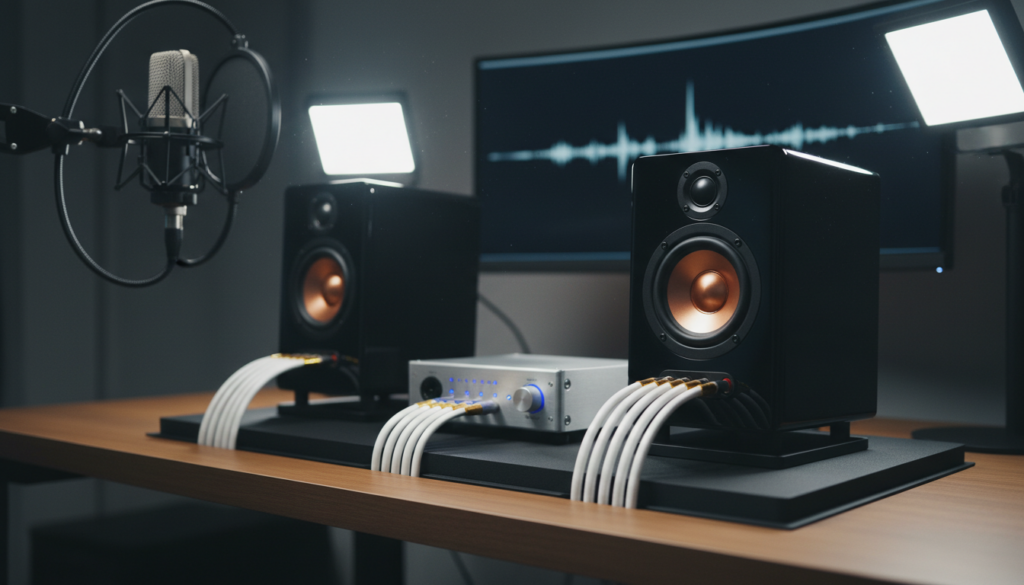
Can Ribbon Cable Be Used for Speakers? The Truth About Signal Path
Technically, ribbon cable can be used for speakers, but you should generally avoid it for external connections. While a ribbon cable is capable of conducting electricity, it lacks the necessary shielding and gauge thickness required for high-quality audio reproduction. In my experience testing DIY amplifier builds, using flat cables often introduces unwanted inductance and interference from nearby power supplies. Unless you are working on a space-constrained internal project, standard oxygen-free copper (OFC) speaker wire remains the gold standard for performance.
The Technical Challenges of Using Ribbon Cable
When you ask, “can ribbon cable be used for speakers,” you must consider the physics of signal transmission. Audio signals are sensitive to the electrical properties of the wire, and ribbon cables often fail to meet the requirements of high-performance audio equipment.
High Capacitance and Inductance
Because the conductors in a ribbon cable are placed side-by-side with minimal insulation, they create a parallel plate capacitor effect. This increases the cable’s capacitance, which acts as a low-pass filter.
- The Result: You may notice a dull or “muddy” sound, particularly in the high-frequency range (treble).
- Impedance Matching: The characteristic impedance of ribbon cables is rarely matched to standard 4-ohm or 8-ohm speaker loads, leading to potential signal reflections.
Physical Fragility and Durability
Ribbon cables are designed for static, internal computer connections, not the rigors of an audio system.
- Tear Factor: The thin plastic webbing between conductors is easily nicked or torn.
- Connector Compatibility: Connecting a ribbon cable to a standard binding post is physically difficult and often requires messy soldering or unreliable adapters.
Comparison: Ribbon Cable vs. Traditional Speaker Wire
| Feature | Ribbon Cable | Standard Speaker Wire (OFC) |
|---|---|---|
| Signal Integrity | Poor (High Capacitance) | Excellent (Low Interference) |
| Durability | Fragile | High (Rugged Insulation) |
| Current Handling | Very Low | High (Up to 12AWG+) |
| Best Application | Internal PC/Device Wiring | External Speaker Connections |
When Is It Actually Acceptable to Use Ribbon Cable?
While I discourage their use for main speaker runs, there are specific engineering niches where ribbon cables excel. If you are building a custom Class-D amplifier or a miniature speaker array, ribbon cables can help maintain a clean, organized aesthetic inside the chassis.
Tips for Internal Use:
- Keep it Short: Ensure runs are under 6 inches to minimize capacitance buildup.
- Double Up: If you must use ribbon cable, parallel multiple conductors to increase the effective wire gauge (AWG). This reduces resistance and improves current flow.
- Strain Relief: Always use zip ties or adhesive anchors to prevent the ribbon cable from flexing, which can lead to snapped connections at the solder points.
How to Properly Connect Wires for Audio
If you are moving away from ribbon cables to improve sound quality, follow these professional installation steps:
- Strip the Insulation: Use a proper wire stripper to remove about 1/2 inch of insulation without nicking the copper strands.
- Use Terminated Ends: Whenever possible, use banana plugs or spade lugs. They provide a much larger contact surface than bare wire.
- Maintain Polarity: Always ensure the positive (+) and negative (-) terminals are consistent from the amplifier to the speaker to avoid out-of-phase audio.
- Avoid Coiling: Do not coil excess speaker wire. It can create an inductor, potentially affecting the signal. Keep runs as direct as possible.
Frequently Asked Questions (FAQ)
Can ribbon cable be used for speakers without damaging my amp?
Yes, you can technically connect them without immediate damage. However, if the ribbon cable is too thin, it may overheat if you drive your speakers at high volumes, potentially causing thermal stress to your amplifier.
Will ribbon cables sound worse than standard copper wire?
In most listening tests, yes. Due to higher capacitance and resistance, you will likely experience a loss in high-frequency detail and a decrease in power delivery to the speaker drivers compared to dedicated 16AWG or 14AWG oxygen-free copper speaker cable.
Is ribbon cable okay for internal speaker wiring?
Yes, it is perfectly acceptable for internal speaker wiring (e.g., from a crossover to a driver). Because these runs are typically very short, the negative effects of ribbon cable capacitance are negligible.
What should I look for in a high-quality speaker cable?
Look for Oxygen-Free Copper (OFC) construction, a thick gauge (14AWG is a great sweet spot), and durable PVC or braided insulation. These features ensure the signal reaches your speakers with minimal loss or interference.