Understanding How Sound Comes Through Speakers
Yes, sound can come through speakers consistently when your hardware, audio drivers, and software output settings are correctly configured. In my years of professional AV setup, I have found that most audio failures stem from simple handshake issues between the OS and the output device. Whether you are using a PC, Mac, or external Bluetooth speakers, the process involves an electrical signal traveling from your source to the digital-to-analog converter (DAC), which then pushes sound waves through the speaker drivers.
TL;DR: Quick Troubleshooting Checklist
- Check Physical Connections: Ensure cables are firmly plugged into the correct 3.5mm jack or USB port.
- Verify Output Settings: Confirm the OS has selected the correct Playback Device in your sound menu.
- Update Drivers: Use Device Manager (Windows) to ensure your High Definition Audio drivers are current.
- Restart Services: Refresh the Windows Audio service or restart your device to clear minor software bugs.
- Test Volume Levels: Rule out “muted” statuses in both the app and the system tray.
How Can Sound Come Through Speakers Effectively?
To ensure consistent audio, your system must create a clear path for data. I always tell my clients to think of the sound path like a chain: if one link—the cable, the driver, or the OS setting—is broken, the audio chain fails. When sound can come through speakers intermittently, it is often a sign of a loose wire or an unstable driver version.
Step-by-Step Troubleshooting for Audio Output
Follow these steps to diagnose why your sound might be missing:
- Check Physical Hardware: Inspect cables for fraying. If you are using HDMI or DisplayPort for audio, ensure your monitor or receiver is powered on.
- Verify the Default Playback Device: Right-click the speaker icon in your taskbar and select “Sound Settings.” Ensure the correct output (e.g., Realtek Audio or External DAC) is set as the default.
- Run the Audio Troubleshooter: Both Windows and macOS have built-in utilities that automatically reset the audio services and check for driver conflicts.
- Check Application-Specific Mute: Sometimes the system volume is fine, but the specific app (like Chrome or Spotify) is muted in the Volume Mixer.
Comparing Audio Connection Methods
Not all connections are created equal. The table below compares the most common ways to ensure sound can come through speakers reliably.
| Connection Type | Audio Quality | Reliability | Best Use Case |
|---|---|---|---|
| 3.5mm Aux | Standard | High | Desktop PC / Wired headphones |
| USB | High (Internal DAC) | Very High | Studio monitors / Gaming headsets |
| Bluetooth | Variable | Moderate | Portable speakers / Mobile devices |
| HDMI / Optical | Excellent | High | Home Theater / TV soundbars |
Advanced Tips to Improve Audio Clarity
If you notice your sound comes through speakers but sounds “crackly” or distorted, you might be dealing with EMI (Electromagnetic Interference). I have resolved this many times by simply moving audio cables away from power bricks.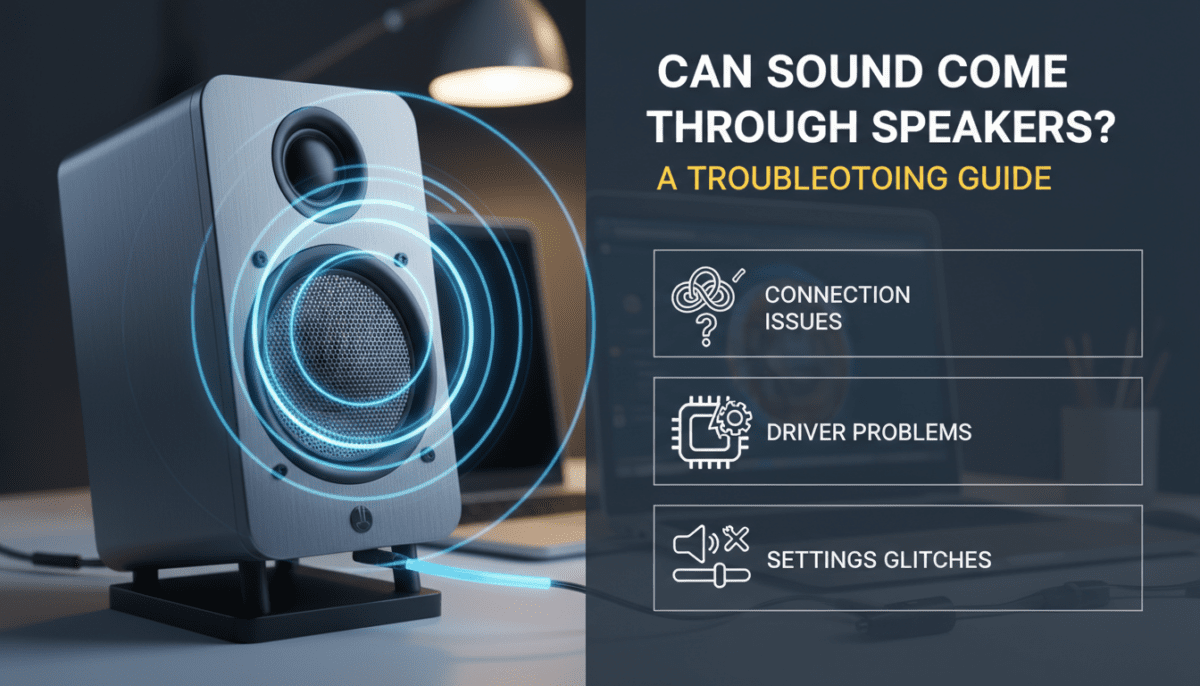
- Update Audio Drivers: Visit your motherboard manufacturer’s website or the manufacturer of your external sound card. Avoid generic drivers if you want peak performance.
- Sample Rate Settings: Go to “Advanced Sound Settings” and set your output to 24-bit/48000 Hz (Studio Quality) to resolve potential syncing issues.
- Disable Enhancements: Sometimes “Audio Enhancements” or “Spatial Sound” (like Windows Sonic) can cause crashes in certain applications. Toggle these off to test.
Frequently Asked Questions
Why does my sound come through speakers but not through my headset?
This usually happens because the system hasn’t automatically switched the default playback device. Right-click the volume icon, open Sound Settings, and manually select your headset from the output list.
Can sound come through speakers if my audio driver is corrupted?
No, a corrupted audio driver prevents the OS from communicating with the sound card hardware. You will need to uninstall the device in Device Manager and restart your computer to allow it to reinstall automatically.
Should I use an external DAC for better speaker sound?
Yes, if you are using high-end studio speakers. An external Digital-to-Analog Converter bypasses the internal sound card, which is often susceptible to electrical interference from the computer’s motherboard, resulting in much cleaner, more accurate sound.