Understanding Magnetic Interference: Can the Magnet on Speakers Touch Metal?
Yes, the magnet on speakers can touch metal without causing immediate electrical failure, but it is generally not recommended for optimal performance. While the magnet itself is an insulator or encased in a motor structure, touching an external metal surface can distort the magnetic field (flux), potentially leading to audio distortion, reduced efficiency, or physical rattling. In my years of custom car audio installations, I have found that while “touching” isn’t fatal, “mounting” against a large steel plate often shifts the Thiele/Small parameters of the driver.
[!IMPORTANT] TL;DR / Key Takeaways * Direct Contact: Physically safe but magnetically risky. It won’t short-circuit the speaker but may dampen the sound quality. * Magnetic Flux: Bringing a speaker magnet near ferrous metals (iron, steel) can “pull” the magnetic field away from the voice coil. * Installation Tip: Use non-ferrous spacers (MDF, plastic, or aluminum) if your mounting depth is tight. * Heat Dissipation: Some high-end speakers use the magnet structure to dissipate heat; touching metal can either help or hinder this depending on the surface area.
The Physics of Speaker Magnets and Metal Interaction
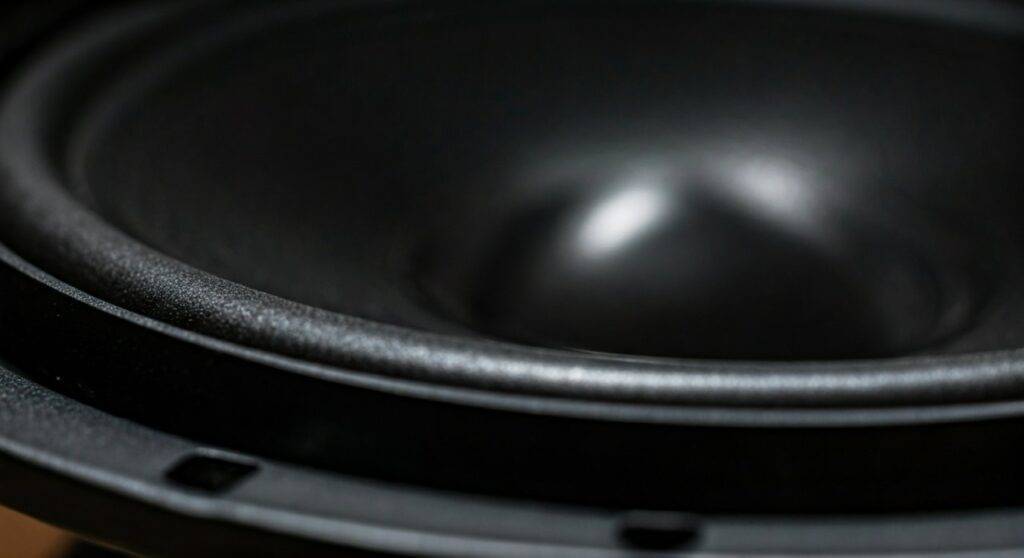
To understand why you might worry about can the magnet on speakers touch metal, we have to look at how a speaker motor functions. A speaker operates on the principle of electromagnetism. The permanent magnet (usually Ferrite or Neodymium) creates a stationary magnetic field.
When an AC signal flows through the voice coil, it creates a varying magnetic field that reacts against the permanent magnet, moving the cone back and forth. If you place a large piece of steel directly against the back of the magnet, you provide a “path of least resistance” for the magnetic flux. This is known as shunting.
How Magnetic Flux Leaks
Most modern speakers are designed with a “focused” magnetic gap. However, stray flux always exists. When a speaker magnet touches a car door’s steel frame or a metal home theater rack:
- Field Distortion: The magnetic field lines are pulled toward the external metal.
- Reduced BL Product: In technical terms, the motor strength (BL) can drop, leading to “mushy” bass response.
- Inductance Changes: The proximity of metal can slightly alter the impedance curve of the speaker.
Real-World Scenarios: When Magnets Meet Metal
In professional audio environments, we frequently encounter situations where space is at a premium. Here is how different metals affect your speaker magnets.
Ferrous Metals (Steel, Iron)
These are the primary concern. Since these metals are magnetic, they actively interact with the speaker’s motor. If you are installing a subwoofer and the magnet is stuck tight against a steel brace, you are likely losing a small percentage of your motor’s “shove.”
Non-Ferrous Metals (Aluminum, Copper, Brass)
If the question is can the magnet on speakers touch metal like aluminum, the answer is a much more confident “yes.” Aluminum is paramagnetic and will not “steal” the magnetic flux. In fact, many high-end speakers use aluminum baskets because they don’t interfere with the magnetic circuit.
Structural Vibrations
The biggest “real world” problem isn’t the magnetism—it’s the noise. If a speaker magnet touches metal, and that metal isn’t perfectly rigid, you will hear a metallic “clatter” or “buzz” every time a bass note hits. I always recommend at least a 2mm gap or a foam gasket to prevent this mechanical interface.
Comparing Magnet Types and Metal Sensitivity
Not all magnets react to external metal in the same way. The material composition of your speaker determines how much you should worry about proximity.
| Magnet Type | Material Strength | Sensitivity to External Metal | Recommended Clearance |
|---|---|---|---|
| Ferrite (Ceramic) | Moderate | High (Large stray field) | 0.5 – 1.0 inches |
| Neodymium | Very High | Low (Highly focused field) | 0.25 inches |
| Alnico | High | Moderate | 0.5 inches |
| Shielded Magnets | Varies | Very Low | Can typically touch |
Step-by-Step: How to Safely Install Speakers Near Metal
If you are working in a tight space, such as a shallow car door or a thin wall cavity, follow these steps to ensure can the magnet on speakers touch metal without ruining your audio experience.
Step 1: Check for Magnetic “Pull”
Before final mounting, slowly bring the speaker toward the metal surface. If you feel a strong physical pull before the speaker is even seated, you have a high-leakage ferrite magnet. This indicates that the metal will definitely interfere with the flux.
Step 2: Apply an Isolation Barrier
If the magnet must be close to the metal, apply a layer of butyl rubber (Sound Deadener) like Dynamat or Hushmat to the metal surface. This serves two purposes:
- It provides a physical cushion to prevent rattling.
- It forces a small “air gap” which significantly reduces magnetic shunting.
Step 3: Use Non-Magnetic Spacers
If the speaker is touching the metal and preventing the basket from seating properly, use an MDF (Medium Density Fiberboard) or HDPE plastic speaker ring. Adding just 1/2 inch of clearance can restore the intended magnetic profile of the motor.
Step 4: Verify the Pole Vent
Many high-performance speakers have a hole in the center of the magnet (the pole vent). This is for cooling the voice coil. If the magnet on speakers touches metal in a way that blocks this hole, the speaker will overheat and eventually burn out. Always ensure at least 0.75 inches of “breathing room” behind a vented pole piece.
Expert Insights: The “Bucking Magnet” Exception
In the days of CRT televisions, engineers used “shielded” speakers. These had a second magnet glued to the back in reverse polarity (a bucking magnet) and a metal can over the whole assembly. If you own these types of speakers, they can touch any metal surface with zero impact on performance, as the magnetic field is entirely self-contained.
Common Myths About Speaker Magnets and Metal
Myth 1: Touching metal will “drain” the magnet.
- Reality: Magnets do not “leak” power like a battery. While a metal object can temporarily redirect the field, it doesn’t reduce the permanent magnetism of the ferrite or neodymium material itself.
Myth 2: It will short out the amplifier.
- Reality: Unless the metal is touching the speaker terminals (the positive and negative wire inputs), there is no electrical path to the amplifier. The magnet is electrically inert.
Myth 3: The speaker will sound quieter.
- Reality: This is partially true. If the metal shunts enough flux away from the gap, the efficiency of the speaker (Sensitivity/dB) can drop slightly, requiring more power to reach the same volume.
Practical Advice for DIY Installers
When I’m consulted on custom builds, my rule of thumb is “The Pinky Test.” If you can’t fit your pinky finger between the magnet and the nearest metal bracket, you should probably use a spacer.
Specific recommendations for different environments:
- Car Audio: Use closed-cell foam (CCF) on the back of the magnet if it’s within 5mm of the window track.
- Home Audio: If building a DIY cabinet with internal metal bracing, use stainless steel hardware near the driver, as 300-series stainless is non-magnetic.
- Marine Audio: Ensure the magnet isn’t touching aluminum hulls to prevent galvanic corrosion, which can occur if moisture is trapped between different materials.
Frequently Asked Questions
Can a speaker magnet damage a car’s computer or electronics?
Generally, no. Most automotive ECUs are shielded and located far from speaker mounting locations. However, you should avoid placing speakers directly on top of external hard drives or old-fashioned navigation systems that use spinning magnetic media.
Will putting a magnet on a metal shelf make the speaker sound worse?
If the speaker is inside a wooden cabinet and the cabinet is on a metal shelf, there is no issue. If the raw driver magnet is resting directly on a steel shelf, you may experience a slight loss in bass “tightness” due to magnetic field interference and potential vibrations.
Does the size of the metal object matter?
Yes. A small screw or a thin wire won’t affect the magnetic field. A large, flat sheet of cold-rolled steel or a heavy structural I-beam will have a much more significant effect on the magnetic flux.
**
**
**
**