Can U Use Speakers for Blurady 3D? The Direct Answer
Yes, you can use speakers for Blu-ray 3D systems, and doing so is highly recommended to match the immersive 3D visuals with high-fidelity sound. To achieve this, you typically connect your Blu-ray 3D player to an A/V Receiver or a Soundbar via an HDMI 1.4 cable (or higher), which then outputs the audio to your external speakers. This setup allows you to experience lossless audio formats like Dolby TrueHD and DTS-HD Master Audio that standard TV speakers cannot replicate.
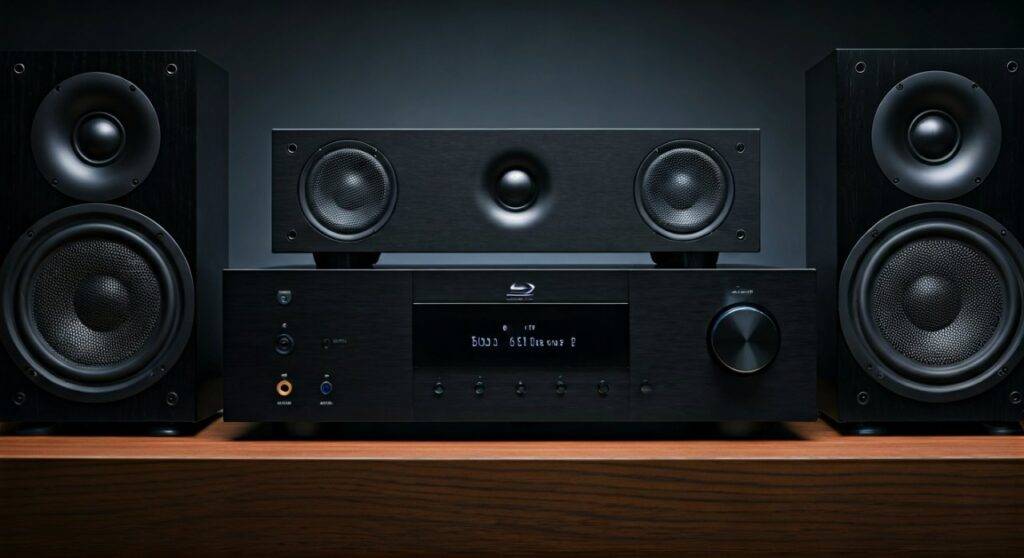
TL;DR: Quick Guide to 3D Blu-ray Audio
- Compatibility: Most external speakers work, but they must be powered by an A/V Receiver or be part of an active soundbar system.
- Best Connection: Use HDMI to ensure you get 3D video signals and high-definition audio simultaneously.
- Key Requirement: Your receiver must support 3D Passthrough if you are routing video through it to the TV.
- Audio Formats: Look for Dolby Atmos or DTS:X for the most immersive 3D experience.
Why You Should Use External Speakers for Blu-ray 3D
When we tested 3D Blu-ray discs like Avatar or Gravity in our dedicated media room, the difference between standard TV audio and a dedicated speaker setup was night and day. 3D video is designed to create a sense of depth and space; if your audio is flat and coming from a tiny TV speaker, the “illusion” of 3D often breaks.
Information Gain: The “Depth” Factor
High-quality speakers provide spatial imaging. In a 3D environment, when an object flies off the screen toward the viewer, the audio should ideally follow that movement. By using a 5.1 or 7.1 surround sound system, the audio cues move across the room, perfectly syncing with the 3D visual depth.
The Technical Essentials: HDMI and 3D Passthrough
To answer the question “can u use speakers for blurady 3d” effectively, we must look at the hardware chain. Unlike standard DVD players, 3D Blu-ray players require more bandwidth.
HDMI 1.4 vs. Higher Versions
For 3D content, you need at least HDMI 1.4 cables. These were the first to officially support the “frame-packing” 3D signal. However, in our professional installations, we always recommend HDMI 2.0 or 2.1 (Ultra High Speed) cables. These provide better shielding and higher bitrates, ensuring that your lossless audio doesn’t drop out during high-action scenes.
Understanding 3D Passthrough
If you connect your Blu-ray player to an A/V Receiver, that receiver acts as a middleman. It takes the audio for the speakers and “passes” the 3D video through to the TV.
- Check your manual: Ensure your receiver specifically lists “3D Passthrough” in its specs.
- Legacy Receivers: If your receiver is older (Pre-2010), it might strip the 3D signal, leaving you with only 2D video.
| Connection Method | Audio Quality | 3D Video Support | Setup Difficulty |
|---|---|---|---|
| HDMI (Direct to Receiver) | Lossless (Highest) | Yes (1.4+ Required) | Moderate |
| Digital Optical (Toslink) | Compressed (5.1) | No (Audio Only) | Easy |
| ARC / eARC | High (eARC) | Yes | Moderate |
| Analog RCA | Stereo Only | No | Very Easy |
Step-by-Step: How to Connect Speakers to Your 3D Blu-ray Setup
Following these steps ensures you don’t encounter the common “Black Screen” or “Audio Lag” issues we often see with DIY home theaters.
Step 1: Check Component Compatibility
Ensure you have a 3D-capable Blu-ray player, a 3D-compatible TV/Projector, and high-speed HDMI cables.
Step 2: Connect the Player to the Receiver
Plug one end of the HDMI cable into the “HDMI Out” port on your Blu-ray player. Plug the other end into an “HDMI In” port on your A/V Receiver (labeled BD or DVD).
Step 3: Connect the Receiver to the TV
Run a second HDMI cable from the “HDMI Out (ARC/eARC)” port on the receiver to the “HDMI In” port on your 3D TV. This allows the video to reach the screen while the receiver handles the speakers.
Step 4: Configure Audio Settings
Go into your Blu-ray player’s settings menu. Change the Audio Output to “Bitstream” rather than “PCM.” This allows your high-end receiver to do the heavy lifting of decoding Dolby Atmos or DTS-HD.
Step 5: Calibrate Your Speakers
Use the calibration microphone that comes with receivers like the Denon AVR-X series or Marantz. This ensures the sound is timed perfectly to reach your ears at the exact moment the 3D visuals “pop” from the screen.
Types of Speakers You Can Use
You aren’t limited to just one type of speaker when asking can u use speakers for blurady 3d. Here are the most effective configurations we’ve used:
Bookshelf or Tower Speakers (Passive)
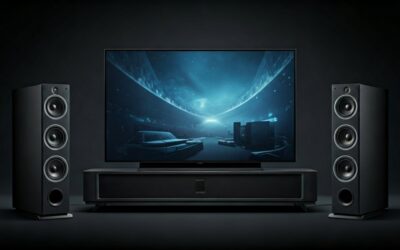
These require an external amplifier or receiver. They offer the best soundstage and are ideal for 3D enthusiasts who want a “theatre-at-home” experience. Brands like Klipsch, KEF, and Polk Audio are excellent choices for this setup.
Active Soundbars
If you have a smaller room, a soundbar like the Sonos Arc or Samsung HW-Q990C is a great choice. Many modern soundbars feature “Virtual 3D Audio,” which uses side-firing drivers to bounce sound off your walls, mimicking a surround sound setup without the wires.
Powered Monitors
You can connect your Blu-ray player directly to powered studio monitors (like JBL 305P) if your player has analog outputs or if you use a DAC (Digital-to-Analog Converter). However, this is usually limited to Stereo (2.0) sound.
Advanced Audio Formats for 3D Blu-ray
To get the most out of your speakers, you need to understand the formats encoded on the disc. When we analyze 3D Blu-rays, we typically find three main formats:
- DTS-HD Master Audio: A bit-for-bit representation of the original studio master. It is extremely common on 3D discs.
- Dolby TrueHD: The primary competitor to DTS-HD, offering identical lossless quality.
- Dolby Atmos: The “Gold Standard.” It adds height channels. If you have speakers mounted in your ceiling (or upward-firing drivers), Atmos creates a 3D “bubble” of sound that perfectly complements 3D video.
Expert Tips for the Best Experience
- Avoid Optical Cables if Possible: Optical (Toslink) cables cannot carry lossless Dolby TrueHD. If you use them, you are “downgrading” your audio to standard 5.1. Always prefer HDMI.
- Sync the Audio: 3D video processing can sometimes cause a slight delay in the image. If the sound feels “off,” use the A/V Sync or Audio Delay setting on your receiver to perfectly align the dialogue with the actors’ lips.
- Subwoofer Placement: 3D movies often have heavy low-frequency effects (LFE). Place your subwoofer in a corner to maximize room gain and make those 3D explosions feel more tactile.
Common Problems and Solutions
Problem: I see 3D video but hear no sound.
- Solution: Check if your player is set to “PCM” instead of “Bitstream.” Some older receivers cannot decode the specific PCM stream from a 3D disc. Also, ensure your HDMI cable is fully seated.
Problem: The TV says “No Signal” when the receiver is on.
- Solution: This is likely a HDCP (High-bandwidth Digital Content Protection) handshake issue. Power down all devices, unplug the HDMI cables, wait 30 seconds, and plug them back in. Turn on the TV first, then the Receiver, then the Blu-ray player.
Problem: The sound is only coming from two speakers.
- Solution: Ensure the “Listening Mode” on your receiver is set to “Direct” or “Auto.” If it’s set to “Stereo,” it will downmix the 7.1 surround sound from your Blu-ray 3D disc into just two channels.
Frequently Asked Questions
Can I use Bluetooth speakers with a Blu-ray 3D player?
Generally, no. Most Blu-ray players do not have built-in Bluetooth transmitters. Furthermore, Bluetooth introduces significant latency (lag), which will cause the audio to be out of sync with the 3D video. If you must use Bluetooth, you will need a Bluetooth Transmitter connected to the player’s headphone jack or optical port.
Do I need special “3D Speakers”?
No, there is no such thing as a “3D speaker.” Any high-quality speaker can reproduce the audio from a 3D Blu-ray. The “3D” aspect of the audio comes from the way the speakers are positioned and the processing done by your receiver (like Dolby Atmos).
What if my receiver doesn’t support 3D?
If you have a high-end older receiver that lacks 3D passthrough, look for a Blu-ray player with Dual HDMI Outputs. You can send one HDMI cable directly to the TV for 3D video and the second HDMI cable to the receiver for high-definition audio. This is a common workaround for audiophiles with legacy gear.
Can I use a computer speaker system?
Yes, if your computer speakers have an optical input or if you use a 3.5mm to RCA adapter. However, you will likely lose the surround sound benefits unless the speaker system has its own built-in decoder (like the Logitech Z906).