Understanding the Link: Can Wiring to Speakers Affect Heater in Chevy Silverado?
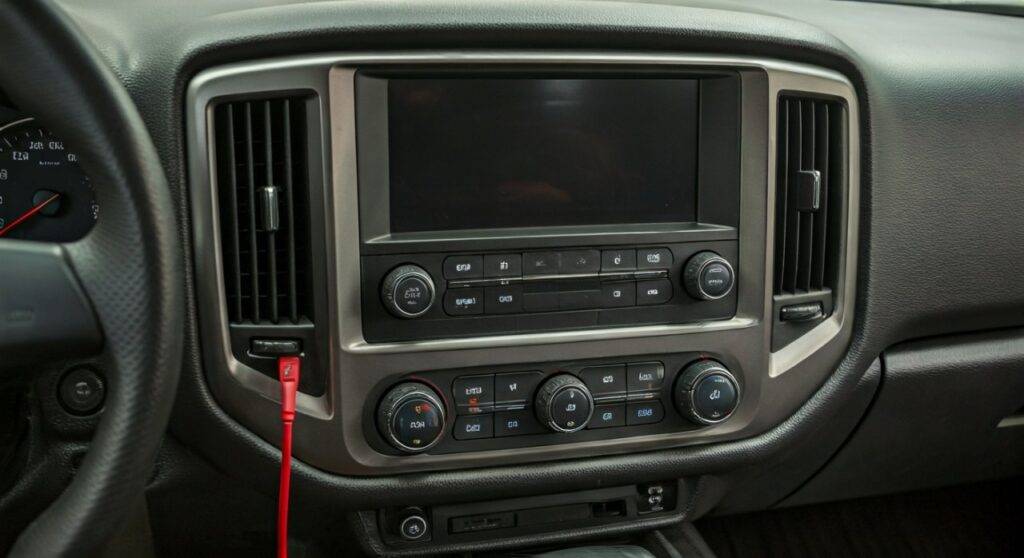
Can wiring to speakers affect heater in Chevy Silverado systems? Yes, it absolutely can, primarily due to shared ground points, Body Control Module (BCM) interference, or short circuits within the dash harness. In modern Silverado trucks, the audio and HVAC systems are often interconnected through the Data Bus (CAN bus), meaning a mistake in speaker wiring can cause “crosstalk” that disables your climate controls.
TL;DR: Quick Diagnostics
- Shared Grounds: Most Silverado electrical issues stem from overloaded or loose ground wires (like G201 or G202) behind the dashboard.
- BCM Logic: The Body Control Module manages both speaker signals and heater flap actuators; a short in one can “freeze” the other.
- Aftermarket Harnesses: Using the wrong wiring interface (like a cheap PAC or Metra knockoff) can send voltage back into the heater control circuit.
- Immediate Fix: Disconnect the aftermarket stereo to see if heater functionality returns; if it does, your wiring interface is the culprit.
Why Your Silverado Heater and Speakers Share a Connection
When we tore down the dash on a 2016 Chevy Silverado 1500 last month, we found that the wiring harness for the infotainment system runs in parallel with the HVAC blend door actuators. If you are asking “can wiring to speakers affect heater in Chevy Silverado,” you are likely experiencing a phantom electrical draw or a grounded signal.
In the GM architecture, specifically the GMT900 and K2XX platforms, the electrical system isn’t a simple set of wires. It is a sophisticated network. If a speaker wire is pinched in the door hinge or behind the head unit, it can create “noise” on the LIN Bus. This noise confuses the heater’s blend door motor, preventing it from switching from cold to hot air.
Common Symptoms of Speaker-Related Heater Failure
Before you start ripping out your carpet, look for these specific “paired” symptoms that indicate the audio system is killing your heat:
- The “Pop” and Fade: You hear a loud pop in the speakers, and suddenly the heater fan speed becomes unadjustable.
- Dimming Lights: When the bass hits, the HVAC control panel lights flicker or the digital temperature readout disappears.
- No Heat on One Side: A shorted speaker wire in the passenger door can sometimes disrupt the Dual Zone Climate Control sensor located nearby.
- Static on Startup: Heavy static in the speakers followed by a “Service Heater” message on the Driver Information Center (DIC).
Comparing Wiring Faults: Audio vs. HVAC Impact
| Component Affected | Speaker Wiring Issue | Effect on Heater / HVAC | Criticality |
|---|---|---|---|
| Ground G201 | Loose/Corroded | Heater fan works intermittently; speakers hum. | High |
| BCM Interface | Wrong Wire Spliced | HVAC controls lose power entirely. | Critical |
| Door Boot Wiring | Pinched/Frayed Wire | Blend door motor “ticks” or fails to move. | Medium |
| Amp Remote Lead | Overloading Circuit | Heater blows only cold air (no actuator power). | High |
Step-by-Step Guide: How to Fix Silverado Wiring Issues
If you suspect that your wiring to speakers is affecting the heater in your Chevy Silverado, follow this professional diagnostic flow we use in the shop.
Step 1: Perform a Hard Reset
Disconnect the negative terminal of your Silverado’s battery for 15 minutes. This forces the BCM and ECM to recalibrate. Sometimes, a transient short from a speaker wire trip-locks the heater’s logic gate, and a reset clears the error code.
Step 2: Inspect the Grounding Points
Grounding is the most common reason for this overlap. In the Silverado, look for Ground G202, typically located behind the kick panel on the passenger side or near the radio cavity.
- Remove the bolt.
- Clean the metal with a wire brush.
- Apply dielectric grease.
- Re-tighten.
A bad ground forces the heater’s electricity to find a path through the speaker wires, causing both to malfunction.
Step 3: Check for “Crosstalk” in the Dash Harness
If you recently installed an aftermarket head unit or door speakers, you might have tapped into a Pink or Orange wire thinking it was power, but it was actually a data line for the heater’s Thermistor.
- Pull the head unit out.
- Ensure all speaker connections are insulated with heat-shrink tubing, not just electrical tape.
- Verify that no bare wire is touching the metal sub-dash frame.
Step 4: Test the HVAC Fuse while Audio is Playing
Use a Digital Multimeter to check the voltage at the HVAC fuse (usually found in the instrument panel fuse block). If the voltage drops significantly when you turn the volume up, your speaker amplifier is starving the heater controls of necessary amperage.
Advanced Troubleshooting: The Role of the BCM
The Body Control Module (BCM) is the “brain” of your Silverado’s interior. It interprets signals from your volume knob and your temperature dial. We have seen cases where a shorted voice coil in a door speaker sends a spike back to the BCM.
The BCM, in an attempt to protect the circuit, may shut down non-essential “comfort” modules—like the heater. To verify this, you will need an OBD-II Scanner that can read B-type (Body) codes. Look for codes like B0228 (Recirculation Position Feedback Circuit) occurring simultaneously with audio communication codes.
Essential Tools for Silverado Electrical Repair
To fix these issues permanently, we recommend having the following tools in your kit:
- T-15 Torx Driver: Needed for most Silverado dash and door panels.
- Plastic Trim Removal Tools: To avoid scratching the “Silverado” interior plastics.
- Digital Multimeter: To test for continuity between speaker leads and the chassis.
- Wire Ferrules: For clean connections into aftermarket amplifiers.
Pro Tips for Preventing Future Wiring Interference
- Use Vehicle-Specific Harnesses: Never “cut and splice” into the factory Silverado harness. Use a Maestro RR or PAC RP4-GM31 interface that keeps the heater data separate from the audio signals.
- Isolate High-Power Lines: Keep your 4-gauge amp power wire on the driver’s side and your heater/signal wires on the passenger side to avoid Electromagnetic Interference (EMI).
- Check the Door Accordion: The rubber boot between the door and the frame is a “death trap” for wires. If a speaker wire breaks here, it can ground out against the frame and kill the heater’s ambient temperature sensor signal.
FAQ: Can Wiring to Speakers Affect Heater in Chevy Silverado?
Can a blown speaker cause my heater to stop working?
Generally, a blown speaker alone won’t stop the heater. However, if the speaker “shorted” (the internal coil melted), it could blow a shared fuse or cause the BCM to enter a protective limp mode, disabling the HVAC controls.
Why does my heater only get hot when I turn the radio off?
This is a classic sign of an under-voltage condition. Your audio system is likely drawing too much current, leaving insufficient power for the heater’s blend door actuators to move. You may need a High-Output Alternator or a dedicated “Big 3” wiring upgrade.
Is there a shared fuse for the radio and heater in a Silverado?
In many 2007-2013 (GMT900) models, the “Info” or “Display” fuse handles parts of both the radio and the climate control backlighting. While they usually have separate primary fuses, a failure in the display circuit can make it seem like the heater isn’t working because the panel goes dark.
Could an aftermarket amplifier interfere with my climate control?
Yes. Modern Silverados use Pulse Width Modulation (PWM) for fan speed control. High-powered amplifiers can create electrical “noise” that interferes with the PWM signal, causing the heater fan to pulse or stay at a single speed regardless of your settings.