Can You Change the Speakers in a Leased Car? The Direct Answer
Yes, you can change the speakers in a leased car, provided that you return the vehicle in its original factory condition at the end of the lease term. Most leasing companies, such as BMW Financial Services, Toyota Financial Services, or Ford Credit, view aftermarket audio equipment as a modification that must be reversed to avoid excessive wear and tear charges or “de-installation” fees.
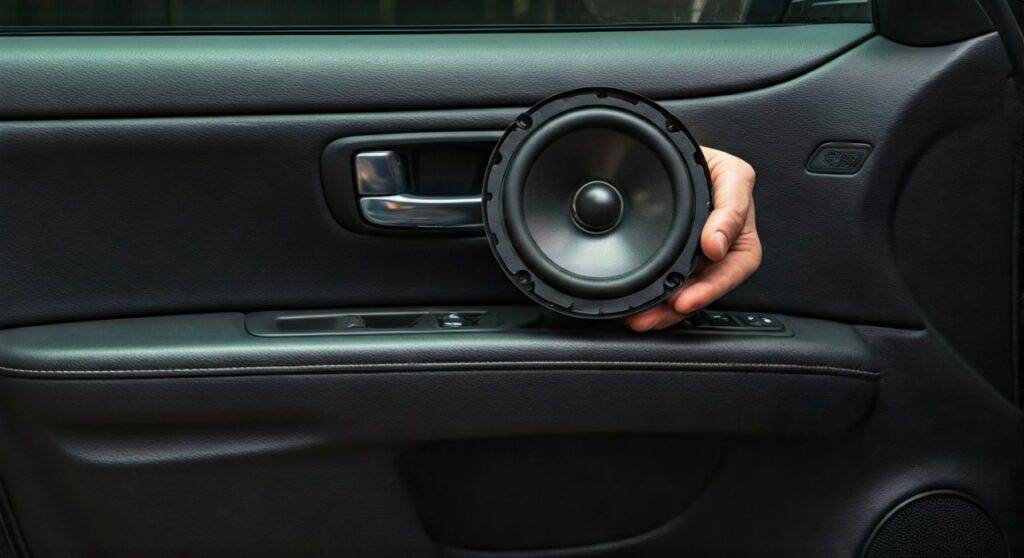
I have spent over a decade in the automotive aftermarket industry, and I’ve seen countless drivers successfully upgrade their sound systems. The secret lies in non-destructive installation—meaning you must avoid cutting factory wires, drilling new holes in the metal door frame, or damaging the interior trim. If you can swap the speakers and then swap them back before the inspection, you are in the clear.
Quick Summary: The “Lease-Safe” Audio Upgrade
| Feature | Recommended Action | Risk Level |
|---|---|---|
| Wiring | Use Plug-and-Play Harnesses (Metra/Scosche) | Low |
| Mounting | Use Vehicle-Specific Brackets | Low |
| Speaker Type | Drop-in Coaxial or Component | Medium |
| Cutting Wires | NEVER cut the factory harness | High (Costly) |
| Sound Deadening | Use removable/targeted sheets | Medium |
| OEM Parts | Store in a climate-controlled box | Essential |
Understanding Your Lease Agreement and Modifications
Before you pick up a screwdriver, you must understand the legal language of your lease. Most contracts include a “Modifications” or “Alterations” clause. These clauses generally state that any changes made to the vehicle must be removed without leaving any permanent damage.
Why Leasing Companies Care About Your Speakers
Leasing companies view the car as an asset that will be resold at an auction or a used car lot. An aftermarket sound system, even if it sounds “better” to you, might be seen as a liability for the next owner. If you install speakers in a leased car and leave them there, the dealership will likely charge you for the labor to reinstall the original equipment plus the cost of the original speakers themselves.
The Magnuson-Moss Warranty Act
In the United States, the Magnuson-Moss Warranty Act protects you. A dealer cannot “void” your entire car warranty simply because you changed the speakers. However, if your DIY installation causes a short circuit that fries the Head Unit or the Body Control Module (BCM), that specific repair will not be covered under warranty.
Step-by-Step Guide: How to Install Upgraded Speakers in a Leased Car
If you want to install upgraded speakers in a leased car without risking your security deposit, follow this professional “reversible” workflow.
Inventory Your Factory System
Before removing anything, take high-resolution photos of the door panels, speaker grilles, and factory head unit. Note the exact sound quality and volume levels. This establishes a baseline for when you have to revert the car to stock in three years.
Source “Plug-and-Play” Components
The goal is a “zero-cut” installation. You should never use electrical tape and wire nuts on a leased vehicle’s wiring.
- Wiring Harnesses: Buy adapters (e.g., Metra 72-series) that clip directly into the car’s factory plug and then connect to your new speakers.
- Speaker Brackets: Modern cars often use odd-shaped, molded plastic speakers. Use PVC or ABS plastic brackets that bolt into the factory holes.
Safe Removal of Door Panels
Use nylon trim removal tools rather than metal screwdrivers. Metal will scratch or gouge the soft-touch plastics found in modern interiors like those in Audi or Mercedes-Benz.
- Locate hidden screws behind the door handle or inside the armrest “cup.”
- Pop the clips starting from the bottom of the door.
- Pro Tip: Keep a bag of spare OEM door clips. These often break during removal, and replacing them ensures the door doesn’t rattle after you put it back together.
Proper Storage of OEM Speakers
This is the most common mistake I see. People throw their factory speakers in a damp garage where the paper cones rot.
- Wrap the factory speakers in bubble wrap.
- Store them in a climate-controlled environment (like a closet inside your house).
- Label the box with the car’s year, make, and model.
The Reversion Process (The “De-Mod”)
Approximately 60 days before your lease return date, schedule a weekend to “de-mod” the car.
- Remove your aftermarket speakers and brackets.
- Reinstall the factory speakers using the original screws.
- Verify that the fader, balance, and tweeters are all functioning correctly.
Best Speaker Brands for Leased Vehicle Upgrades
When you can change the speakers in a leased car, you want high-efficiency options that don’t require adding a massive, permanent amplifier. Look for brands that offer “Plug-and-Play” kits specifically for your model.
- Focal Inside Series: They make specific kits for BMW, Mini, and Toyota that require zero cutting.
- Kicker KS Series: Known for having a shallow mounting depth, which prevents interference with the window glass.
- JL Audio C1 Series: Excellent “bang for your buck” and highly efficient, meaning they sound great even on factory head unit power.
- Hertz Cento: A great choice for those who want a “warm” sound without modifying the vehicle’s electrical system.
Cost Analysis: DIY vs. Professional Installation
| Expense Item | DIY Estimated Cost | Professional Shop Cost |
|---|---|---|
| Pair of Mid-Range Speakers | $80 – $200 | $100 – $300 |
| Wiring Harness Adapters | $15 | Included in labor |
| Mounting Brackets | $20 | Included in labor |
| Labor (Install) | $0 (4 hours of time) | $150 – $250 |
| Labor (Removal/Revert) | $0 (3 hours of time) | $100 – $200 |
| Total Project Cost | $115 – $235 | $350 – $750 |
My Recommendation: If you are comfortable with basic tools, the DIY route is better for leased cars. Why? Because many “pro” shops prioritize speed and might “snip” a wire to save 5 minutes—a move that could cost you hundreds at the lease return.
Expert Tips for Information Gain: What the Dealer Won’t Tell You
The “Stealth” Amplifier Option
If you want better sound but don’t want to touch the door speakers, consider a Micro-Amplifier with a T-Harness. Brands like Kicker and Alpine offer tiny amps that hide behind the dashboard. By using a T-Harness, you tap into the audio signal without cutting a single factory wire. When the lease is up, you simply unplug the harness and the car is back to factory specs.
Sound Deadening Precautions
Adding Butyl rubber sound deadening (like Dynamat or Hushmat) significantly improves speaker performance. However, this stuff is incredibly difficult to remove.
- The Workaround: Only apply small squares of deadening directly behind the speaker magnet on the outer door skin. Do not cover the entire inner door panel, or the inspector might flag it as a “permanent modification.”
Watch Out for “Riveted” Speakers
Some manufacturers, like Volkswagen and Rivian, rivet their speakers into the door frame. To replace these, you must drill out the rivets. While you can replace them with screws later, some strict inspectors might notice the change. In these cases, I suggest using stainless steel screws and nuts for the reinstall to make it look as “factory” as possible.
Frequently Asked Questions (FAQ)
Will changing my speakers void my lease agreement?
No, changing the speakers does not void the lease agreement itself. However, it violates the “return in original condition” clause if you don’t swap them back. If you return the car with aftermarket speakers, the dealer can charge you for the parts and labor to restore the original system.
Can I leave the upgraded speakers in the car when I return it?
You can, but it is a poor financial decision. You will not get extra credit for the “upgrade,” and the dealership may still charge you for not having the original equipment. It is always better to remove your high-quality speakers and sell them on the secondary market or install them in your next vehicle.
Should I tell the dealership I am changing the speakers?
In my experience, no. Most dealership service advisors are trained to discourage any modifications to avoid potential liability. As long as you perform a clean, reversible installation, there is no need to notify the lessor.
What happens if I accidentally cut the factory speaker wire?
If you cut the wire, you must repair it using a solder joint and heat shrink tubing. Avoid using “butt connectors” or “vampire taps,” as these are easily spotted by inspectors and can lead to corrosion and signal loss over time.