Can You Clean Guitar Speakers? The Essential Guide to Maintenance
Yes, you can clean guitar speakers, but you must use extreme caution because most professional drivers utilize delicate uncoated paper cones. To clean them safely, use a soft-bristled brush or low-pressure compressed air to remove surface dust; never apply liquid cleaners, as moisture can warp the paper and ruin the speaker’s tonal integrity.
I have spent over 15 years maintaining vintage Marshall and Fender cabinets, and I have seen firsthand how a simple buildup of “stage gunk” or household dust can dampen high-end response. While the magnet and frame are rugged, the cone, surround, and dust cap require a “surgical” touch. This guide provides the exact protocols we use in professional backline maintenance to keep your gear sounding crisp for decades.
TL;DR: Key Takeaways for Speaker Care
- Dry Cleaning Only: Avoid water, solvents, or “all-purpose” cleaners on the cone.
- Tools Required: Use a soft makeup brush, a microfiber cloth, and a low-PSI air duster.
- The “Golden Rule”: If the dust isn’t affecting the sound or movement, leave it alone to avoid accidental punctures.
- Environmental Control: Store cabinets in 45-55% humidity to prevent paper rot or voice coil corrosion.
- Cabinet Covers: The best way to “clean” a speaker is to prevent it from getting dirty with a high-quality padded cover.
## Understanding the Anatomy: Can You Clean Guitar Speakers Safely?
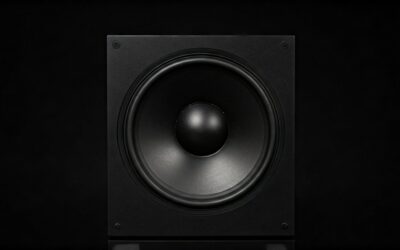
Before picking up a brush, you must understand what you are touching. A guitar speaker is a mechanical transducer made of several distinct parts. Most vintage-style speakers, like the Celestion Greenback or Jensen P12N, use cellulose (paper) pulp for the cone.
If you apply moisture to this paper, it softens. Once it dries, it may become brittle or “cockle” (warp), leading to voice coil rub. This creates a scratchy, distorted sound that is usually terminal.
Speaker Component Sensitivity Scale
| Component | Material | Cleaning Risk | Recommended Tool |
|---|---|---|---|
| Cone | Paper / Hemp | Extreme | Soft Brush / Air |
| Dust Cap | Paper / Felt / Aluminum | High | Air / Light Brushing |
| Surround | Paper / Cloth (Doped) | Medium | Dry Microfiber |
| Basket/Frame | Steel / Aluminum | Low | Damp Cloth |
| Magnet | Ceramic / Alnico | Low | Microfiber |
## Step-by-Step Guide: How to Clean Your Guitar Speakers
If your speakers have been sitting in a dusty garage or a smoky bar for years, follow these steps to restore them. We recommend removing the speaker from the cabinet (the “baffle”) for the most thorough results.
Step 1: The Initial Air Blast
Start by using a can of compressed air or an electric air duster. Hold the nozzle at least 8–10 inches away from the cone.
Pro Tip: Do not spray in long bursts. Use short, controlled puffs to dislodge loose “bunnies” and surface grit. Aim the air from the center dust cap outward toward the basket.
Step 2: Manual Dusting with a Soft Brush
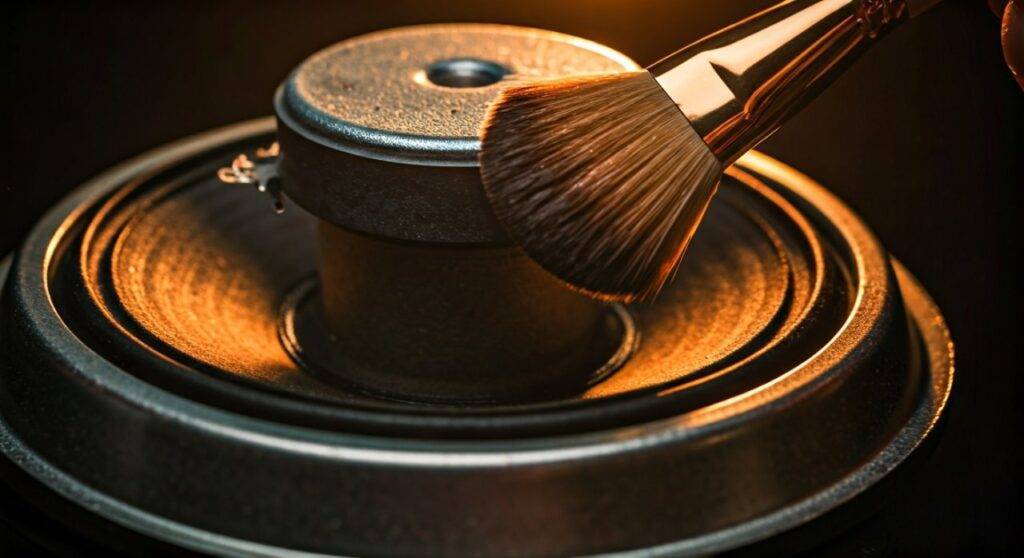
For stubborn dust that clings to the paper fibers, use a high-quality synthetic makeup brush or a soft painter’s brush.
- Hold the speaker at a 45-degree angle so gravity pulls dust away from the center.
- Gently “sweep” following the circular ribs of the cone.
- Apply zero downward pressure; let the bristles do the work.
Step 3: Cleaning the Metal Basket and Magnet
The metal “chassis” of the speaker can be cleaned more aggressively. Use a microfiber cloth slightly dampened with a 70% isopropyl alcohol solution to wipe away grime or “sticker residue” from the magnet. Ensure no liquid drips onto the paper cone.
Step 4: Managing “Dope” Buildup
Many speakers have a shiny, sticky substance on the outer edge called “Dope.” This is an intentional treatment used to dampen vibrations and strengthen the edge. Do not attempt to clean this off. It is supposed to be tacky. If dust is stuck to it, leave it be; trying to scrub it will only tear the paper.
## Why Professional Maintenance Matters for Tone
When people ask, “can you clean guitar speakers,” they are often worried about tone loss. Over years, a heavy layer of dust adds “mass” to the cone. While it seems negligible, even a few grams of weight can shift the resonant frequency of the speaker, making it sound darker and less responsive to pick attack.
In my experience, “dirty” speakers often suffer from:
- Reduced High-End: Dust acts as a natural low-pass filter.
- Heat Retention: A thick layer of grime on the dust cap can prevent heat from escaping the voice coil, potentially leading to premature failure during high-volume sessions.
- Mold Growth: In humid environments, dust provides the organic matter mold needs to eat away at your paper cones.
## Preventive Care: Protecting Your Investment
Cleaning is a reactive measure. To ensure you rarely have to ask can you clean guitar speakers, implement these preventive strategies.
Use Padded Cabinet Covers
If your amp isn’t being played, it should be covered. Brands like Tuki or Studio Slips make heavy-duty covers that keep dust and UV rays away from your speaker cloth. UV light is particularly dangerous as it breaks down the chemical bonds in paper cones, making them “crunchy” and prone to tearing.
Humidity Control (The 50% Rule)
We keep our studio at a constant 50% relative humidity.
- Too Dry (<30%): Paper becomes brittle; the spider (the rear suspension) can crack.
- Too Wet (>60%): Paper softens; the adhesive holding the voice coil can fail; metal parts begin to rust.
The Grill Cloth Inspection
Your grill cloth (the fabric on the front of the amp) is your first line of defense. If it is torn, replace it immediately. Small holes allow spiders and insects to enter the cabinet; I have personally found spider nests and even rodent damage inside “clean” looking vintage cabinets because of a 1-inch tear in the cloth.
## Expert Troubleshooting: When Cleaning Isn’t Enough
Sometimes what looks like “dirt” is actually a sign of mechanical failure. Before you start cleaning, perform these checks:
- The “Pencil Test” for Cone Rot: Gently press a soft eraser against the cone. If the paper feels “mushy” or leaves an indentation, the fibers are breaking down due to age or moisture. Cleaning will not help; it likely needs a reconing.
- Ghost Notes & Fret Buzz: If you hear a “rubbing” sound at low volumes, it might be dust trapped in the voice coil gap. This usually requires a professional with a vacuum and specialized shims to clear.
- Oxidation on Terminals: If your amp is cutting out, check the spade connectors on the back of the speaker. Use DeoxIT D5 contact cleaner on the metal tabs only to ensure a solid electrical connection.
## Frequently Asked Questions (FAQ)
Can I use a vacuum cleaner on my guitar speaker?
I strongly advise against using a standard household vacuum. The suction is often too powerful and can “suck” the cone forward, potentially deforming the spider or tearing the paper. If you must use one, use a small, battery-operated keyboard vacuum with a brush attachment and very low suction.
Is it safe to use Windex or soap on a speaker cone?
Absolutely not. Chemicals like ammonia or even mild dish soap will break down the wood-pulp fibers of the cone. This will cause the cone to lose its “stiffness,” resulting in a flubby, undefined bass response and a permanent loss of “mojo.”
How often should I clean my guitar speakers?
If you keep your amp in a case or covered, you should only need to perform a light “air dusting” once every 2 to 3 years. If you play in smoky clubs or outdoor festivals, an annual inspection and light brushing are recommended to prevent buildup.
What if there is mold on my speaker cone?
Mold is a serious issue. If you see white or green fuzzy spots, do not try to “wipe” them off, as this spreads spores. You can lightly mist the area with a highly diluted mixture of white vinegar and water, but this is a “last resort” tactic. If the mold is extensive, the speaker is a health hazard and should be reconed.