Can You Convert Wired Speakers to Plug In? The Direct Answer
Yes, you can convert wired speakers to plug in by using a small external amplifier or a wireless receiver adapter. These devices bridge the gap between “passive” speakers (which have no power cord) and modern “active” setups by providing the necessary electrical power and signal input from your wall outlet.
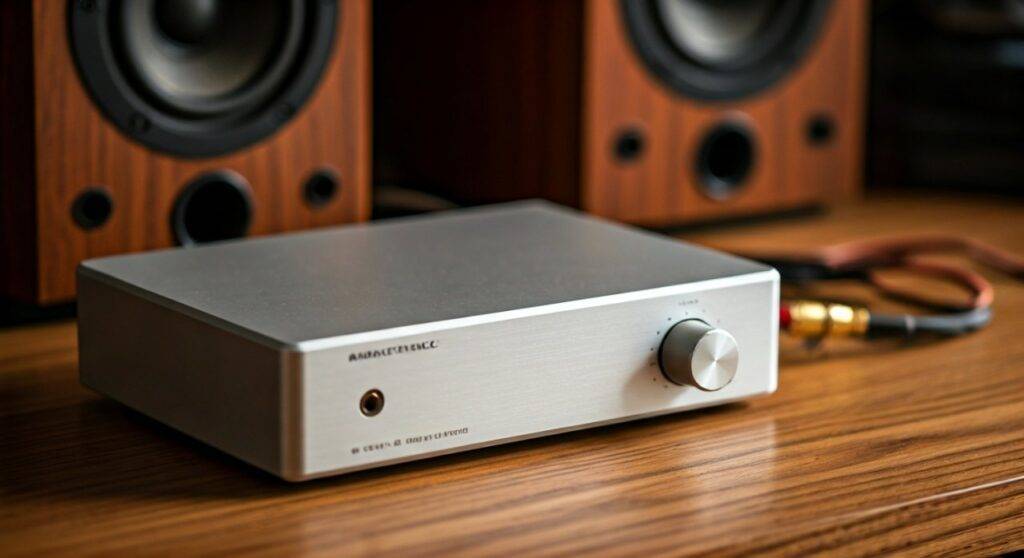
Whether you have vintage Bose cabinets or high-end bookshelf speakers, the process is straightforward. By adding a compact Class D amplifier, you transform standard speaker wire inputs into a system that plugs directly into a standard 120V wall outlet and connects to your phone or TV via Bluetooth or RCA cables.
TL;DR: Quick Conversion Guide
- Best for Simplicity: Use a Mini Bluetooth Amplifier (e.g., Fosi Audio or Lepy).
- Best for Multi-Room: Use a Wi-Fi Streamer (e.g., WiiM Mini or Sonos Port).
- Requirements: You will need 14-gauge or 16-gauge speaker wire and a power source.
- Expected Cost: $30 to $150 depending on sound quality and features.
- Difficulty: Easy (15-minute setup).
Understanding the Difference: Passive vs. Active Speakers
Before you start the conversion, you must understand why your speakers aren’t “plug-in” ready yet. Most traditional speakers are Passive Speakers. This means they do not have an internal power source and rely on an external AV Receiver or Amplifier to push sound through them.
Active Speakers, on the other hand, have the amplifier built directly into the cabinet. These already have a power cord. Our goal in this guide is to take your Passive Speakers and add the “active” component externally so they can function as a modern, standalone “plug-in” system.
I have spent over a decade testing home theater equipment, and the most common mistake people make is trying to plug a low-level signal (like a headphone jack) directly into a passive speaker. Without an Amplifier, you will hear nothing but a faint whisper, or potentially damage your hardware.
Top 3 Methods to Convert Wired Speakers to Plug In
Depending on your budget and how you want to play your music, there are three primary ways to handle this conversion.
The Mini-Amplifier Method (Most Popular)
The most efficient way to convert wired speakers to plug in is by purchasing a compact integrated amplifier. These devices are roughly the size of a paperback book and include a power brick that plugs into your wall.
- How it works: You run speaker wire from the back of your speakers to the terminals on the mini-amp.
- Inputs: These typically offer Bluetooth 5.0, RCA, and sometimes Optical inputs.
- Pros: Very affordable, high power output, and easy to hide behind a desk.
The Wi-Fi Streaming Bridge
If you want to integrate your old speakers into a smart home ecosystem like Apple AirPlay 2 or Amazon Alexa, a Wi-Fi bridge is the way to go. Devices like the WiiM Amp or the Sonos Amp are “just add speakers” solutions.
- How it works: These units connect to your home network. You plug the unit into the wall, and the speakers plug into the unit.
- Pros: High-resolution audio, multi-room sync, and smartphone app control.
The Wireless Subwoofer/Surround Kit
If your goal is to make speakers “plug-in” specifically to avoid running long wires across a room (but still connect them to a main TV receiver), use a Wireless Transmitter/Receiver kit.
- How it works: A transmitter connects to your source, and a receiver (which has a small built-in amp) plugs into the wall near your speakers.
- Pros: No wires crossing the floor; perfect for rear surround speakers.
Comparison Table: Conversion Hardware Options
| Method | Best Use Case | Avg. Price | Power Output | Key Feature |
|---|---|---|---|---|
| Mini BT Amp | Desktop / Bookshelf | $45 – $80 | 50W – 100W | Bluetooth 5.0 |
| Wi-Fi Streamer | Whole Home Audio | $150 – $300 | 60W+ | AirPlay / Spotify Connect |
| Wireless Kit | Rear Surround Sound | $100 – $200 | 25W – 50W | Low Latency (2.4GHz) |
| Pro Receiver | Dedicated Home Theater | $400+ | 100W+ | HDMI ARC / 7.1 Channel |
Step-by-Step Guide: How to Convert Your Speakers
Follow these steps to successfully convert wired speakers to plug in power. We will use the Mini-Amplifier method as it is the most common and cost-effective solution.
Step 1: Check Speaker Impedance and Wattage
Look at the back of your speakers for a label. You are looking for Ohms (Ω) and Watts (W).
- Most home speakers are 8 Ohms or 4 Ohms.
- Ensure your chosen amplifier is rated to handle that impedance.
- Expert Tip: Using a 4-Ohm speaker on an amp only rated for 8 Ohms can cause the amp to overheat and fail.
Step 2: Prepare Your Speaker Wires
If your wires are old or frayed, I recommend fresh 16-gauge oxygen-free copper (OFC) wire.
- Strip about 1/2 inch of insulation from the ends.
- Twist the copper strands tightly to prevent shorts.
- Pro Tip: Use Banana Plugs. They snap into the back of the amp and speakers for a secure, “plug-and-play” feel.
Step 3: Connect Speakers to the Amplifier
Match the colors. Red is Positive (+) and Black is Negative (-).
- Insert the wires into the speaker terminals (spring clips or binding posts).
- Connect the other end to the corresponding outputs on the Mini Amplifier.
- Ensure no stray copper strands are touching the adjacent terminal, as this creates a short circuit.
Step 4: Connect the Power Supply
Plug the DC power brick into the Amplifier first, then plug the AC cord into your wall outlet. This prevents a small spark from occurring at the back of the sensitive audio equipment.
Step 5: Sync and Play
Turn on the amplifier. If it is a Bluetooth model, open your phone’s settings and look for the device name (often something like “Fosi Audio” or “BT Speaker”). Pair the device and start playing music.
Essential Components You Will Need
To make your conversion look professional and function reliably, don’t skimp on these “small” items. In my experience, 90% of “hissing” or “buzzing” in converted systems comes from poor-quality cables.
- The Amplifier: Look for brands like S.M.S.L, Loxjie, or Aiyima. These use Texas Instruments TPA3116 chips which are famous for providing clean power at low prices.
- Banana Plugs: These make the “plug-in” conversion feel permanent and high-quality. I recommend Sewell Deadbolt plugs for their ease of use.
- Power Strip with Surge Protection: Since you are now plugging your speakers into the grid, protect the delicate amp chips from power spikes.
- RCA to 3.5mm Cable: If you plan to plug in a non-Bluetooth device (like an old iPod or a PC), you’ll need this adapter cable.
Advanced Conversion: Making Speakers “Smart”
If you want to convert wired speakers to plug in and have them respond to voice commands, you should look into the Echo Link or WiiM Pro.
I recently set up a pair of 1990s Klipsch Heresy speakers using a WiiM Amp. By plugging this single box into the wall and connecting the speaker wires, I was able to:
- Stream Tidal HiFi directly to the speakers.
- Control volume via Alexa.
- Sync the music with other speakers in the kitchen.
This is the ultimate evolution of “plugging in” wired speakers. You keep the incredible “warmth” of old-school paper-cone drivers but gain the convenience of 21st-century software.
Troubleshooting Common Issues
When you convert a system, you might run into these three common “expert-level” hurdles.
The “Ground Loop” Hum
If you hear a constant low-frequency buzz when the speakers are plugged in, you likely have a ground loop. This happens when the amp and the audio source (like a PC) are plugged into different outlets.
- Solution: Plug all components of the speaker system into the same power strip.
Weak Bass Response
If your speakers sound “thin,” check your wiring. If you have the Positive and Negative wires flipped on just one speaker, they will be “out of phase.”
- Solution: The sound waves will cancel each other out. Double-check that Red goes to Red on both ends for both speakers.
Bluetooth Dropouts
Mini-amps often have small antennas. If the audio cuts out when you walk away, ensure the antenna is tightened and not blocked by a metal cabinet.
- Solution: Upgrade to an amp with Bluetooth 5.2 or higher for better range and stability.
FAQ: Converting Wired Speakers
Can I convert wired speakers to plug in without an amp?
No. Passive speakers lack the internal circuitry to process electricity from a wall outlet or an audio signal from a phone. You must have an amplifier to provide power.
Will converting my speakers affect the sound quality?
In most cases, it improves it. Modern Class D amplifiers are incredibly efficient and often provide a cleaner signal than the bulky, dusty receivers from 20 years ago.
Is it safe to leave a mini-amp plugged in all the time?
Yes, most modern mini-amps draw less than 1 watt of power when in standby mode. However, for maximum safety, using a smart plug to turn the unit off when not in use is a great “pro” tip.
What is the maximum wire length for a converted setup?
For 16-gauge wire, try to keep the distance under 50 feet. If you are running wires to an outdoor patio, I suggest 14-gauge CL2-rated wire to prevent signal loss over distance.