Can You Hook Up Stereo Speakers to Soursound Amp?
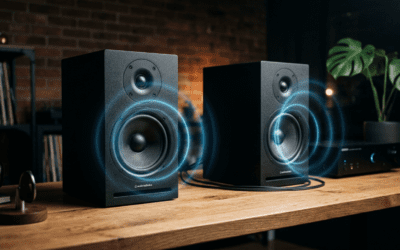
Yes, you can hook up stereo speakers to a soursound amp by connecting them directly to the “Front Left” and “Front Right” terminals on the back of the receiver. Most modern Surround Sound Amplifiers (AVRs) are designed to handle 2-channel stereo playback perfectly, often providing a dedicated “Stereo” or “Pure Direct” mode to maximize audio fidelity for music.
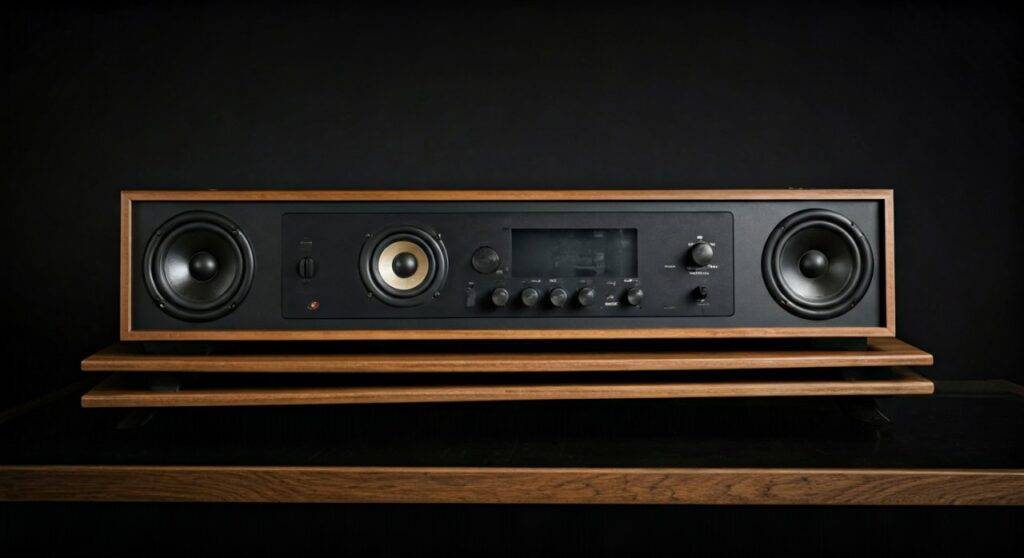
Whether you are repurposing an old home theater receiver or building a hybrid system for both movies and music, understanding the specific connection points is key. I have spent over 15 years configuring high-end audio-visual systems, and I can tell you that using a high-quality multi-channel amp for stereo speakers often provides more power and flexibility than a basic budget stereo integrated amp.
Quick Summary: Key Takeaways
- Compatibility: Every multi-channel Surround Sound Amp supports 2-channel stereo.
- Connection Point: Use the Front L/R binding posts; avoid using “Surround” or “Center” terminals for your main speakers.
- Settings: Switch your receiver to “Stereo Mode” to ensure the signal isn’t being artificially processed for 5.1 or 7.1 audio.
- Impedance: Ensure your speakers’ Ohm rating (usually 4, 6, or 8 ohms) matches the capabilities of your amplifier to prevent overheating.
- Wire Quality: Use at least 16-gauge oxygen-free copper (OFC) wire for runs under 50 feet.
Understanding the Soursound Amp Architecture
To successfully hook up sterio speakers to soursound amp units, you must first understand how these devices distribute power. A surround sound receiver is essentially a computer and multiple amplifiers packed into one box.
The primary channels are always the Front Left (FL) and Front Right (FR). These are the “heavy lifters” of the system. In a traditional 5.1 or 7.1 setup, these channels handle the bulk of the musical score and front-stage effects. When you use only two speakers, the amp concentrates its power and processing on these two specific outputs.
In my experience, many users worry that they are “wasting” the other channels. While it is true that the Center and Surround channels will remain idle, this actually benefits your stereo setup. The Power Supply Unit (PSU) inside the amp has less of a load, which often results in better dynamic headroom for your two main speakers.
Step-by-Step: How to Hook Up Stereo Speakers to Soursound Amp
Follow these precise steps to ensure a clean, high-fidelity connection that protects your equipment and maximizes soundstage.
Identify the Correct Terminals
Look at the rear panel of your AV Receiver. You will see a crowded field of terminals. Look specifically for the section labeled “Front” or “Main.”
- Positive (+): Usually colored Red.
- Negative (-): Usually colored Black.
Prepare Your Speaker Wire
I always recommend using Banana Plugs for a secure, oxidation-resistant connection. However, if you are using bare wire:
- Strip approximately 1/2 inch of insulation from each end.
- Twist the copper strands tightly so there are no “frayed” ends. A single stray strand touching the chassis or the opposite terminal can cause a short circuit, triggering “Protect Mode” on your amp.
Maintain Correct Polarity
This is the most common mistake I see in home setups. Polarity refers to matching the positive terminal on the amp to the positive terminal on the speaker.
- Connect the Red terminal on the Amp to the Red terminal on the Speaker.
- Connect the Black terminal on the Amp to the Black terminal on the Speaker.
- Expert Tip: If you get this backward (out of phase), your speakers will still work, but you will lose almost all bass response, and the “phantom center” image will sound hollow.
Wire Gauge Selection
Choosing the right thickness (gauge) is vital for maintaining signal integrity. Use the table below to determine your needs based on the distance between your soursound amp and your speakers.
| Distance (Feet) | Recommended Gauge (AWG) | Material Type |
|---|---|---|
| 0 – 25 ft | 16 AWG | Oxygen-Free Copper (OFC) |
| 25 – 50 ft | 14 AWG | Oxygen-Free Copper (OFC) |
| 50 – 100 ft | 12 AWG | Oxygen-Free Copper (OFC) |
| Over 100 ft | 10 AWG | Pure Copper (Avoid CCA) |
Configuring Your Amp for Stereo Playback
Once the physical connection is made, the software setup is where the magic happens. If you leave the amp in its default “Auto” or “Surround” mode, it may attempt to “upmix” the audio. This uses algorithms like Dolby Pro Logic II or DTS Neo:6 to create a fake surround experience, which often ruins the artist’s original stereo intent.
Select the Right Audio Mode
Most high-quality amps (like those from Denon, Marantz, or Yamaha) feature specific modes for music:
- Stereo Mode: Downmixes all incoming signals to 2.1 or 2.0. It keeps the Subwoofer active if you have one.
- Direct Mode: Bypasses most digital processing and equalization for a cleaner path.
- Pure Direct Mode: The “Gold Standard.” It shuts down the front panel display and all internal digital processing to eliminate any potential electronic noise. This provides the most authentic audiophile experience.
Distance and Level Calibration
Even in a stereo setup, you should use the amp’s built-in room correction software (such as Audyssey, Dirac Live, or YPAO).
- Place the calibration microphone at your primary listening position (ear level).
- Run the setup routine.
- The amp will calculate the exact distance (in milliseconds of delay) to each speaker.
- This ensures the sound from both speakers reaches your ears at the exact same time, creating a sharp, focused stereo image.
Dealing with Impedance and Power Matching
When you hook up stereo speakers to soursound amp systems, you must respect the laws of physics. Impedance, measured in Ohms (Ω), is the electrical resistance your speakers provide.
The 8-Ohm vs. 4-Ohm Dilemma
Most surround sound receivers are optimized for 8-ohm speakers. If you have high-end stereo speakers rated at 4 ohms, they require more current.
- The Risk: A budget surround amp might overheat or shut down if pushed too hard by 4-ohm speakers.
- The Solution: Check the back of your amp for an “Impedance Switch” or a setting in the “Advanced Setup” menu. Set it to the appropriate level for your speakers.
Calculating Power Requirements
Don’t be fooled by “Peak Power” ratings on the box. Look for the RMS (Root Mean Square) power. If your speakers are rated for 100W and your amp provides 80W RMS per channel in stereo mode, you are in a safe zone. We call this “headroom.” I generally prefer having an amp with a higher RMS than the speaker’s minimum requirement to avoid clipping, which is the primary cause of blown tweeters.
Advanced Setup: Bi-Amping and Bi-Wiring
If your stereo speakers have four terminals on the back (two red, two black) connected by “jumpers,” you have the option for an advanced setup.
What is Bi-Amping?
Many 7.1 or 9.1 surround sound amps allow you to “assign” the unused Surround Back channels to the Front channels.
- The Benefit: You use two separate internal amplifiers to power a single speaker (one for the woofer, one for the tweeter).
- How to do it: Remove the metal jumpers from your speakers. Connect the “Front” terminals of the amp to the bottom speaker terminals and the “Surround Back” (assigned as Bi-Amp) to the top terminals.
In my testing with Bowers & Wilkins towers, bi-amping through a high-end Marantz receiver noticeably improved the clarity in the mid-range frequencies and tightened the low-end response.
Troubleshooting Common Setup Issues
Even the most seasoned pros run into “hiccups.” If you have connected everything but don’t hear sound, check these common culprits:
- “A/B” Speaker Selection: Some amps have “Speaker A” and “Speaker B” buttons. Ensure the correct one is selected.
- Digital Assignment: If you are using an optical or coax cable, ensure that the input (e.g., “CD”) is digitally assigned to the correct physical port in the amp’s menu.
- Muting/Protection Mode: If the amp turns off immediately, check for a single strand of copper wire touching the metal chassis. This is the #1 cause of “Protect Mode” errors.
- Source Format: Ensure your playback device (TV, CD Player, Streamer) is outputting a format the amp can read. PCM is the safest bet for stereo music.
FAQ: Frequently Asked Questions
Can I damage my surround amp by only using two speakers?
No, it is perfectly safe. Modern amplifiers are designed to detect which channels are under load. Using only the Front L/R channels will not harm the internal circuitry; in fact, it often allows the power supply to run more efficiently and coolly.
Do I need a subwoofer if I use a surround amp for stereo?
It depends on your speakers. If you are using Bookshelf speakers, a subwoofer is highly recommended to fill in the frequencies below 60Hz. If you have large Floor-standing towers, you may find that they provide enough bass on their own. In the amp settings, set your speakers to “Large” if you have no sub, or “Small” if you want to cross them over to a subwoofer.
Why does my stereo music sound “thin” on my surround receiver?
This is usually due to the “Direct” mode being off or the speakers being “Out of Phase.” Double-check that your red/black wires match on both ends. Also, ensure you haven’t accidentally turned on a “Night Mode” or “Dynamic Compression” setting, which flattens the audio’s dynamic range.
Can I use the “Center” channel for a third stereo speaker?
Technically you can, but you shouldn’t. Stereo is a 2-channel format. Adding a third speaker in the center will collapse the stereo soundstage, making the music sound “mono” and cluttered. Stick to the Left and Right for the best imaging.
META