Can You Make House Speaker Systems Out of Car Speakers?
Yes, you can make house speaker systems out of car speakers, but you must use a dedicated 12V DC power supply and ensure your amplifier is stable at 4 ohms. While car speakers are designed for the small cabin of a vehicle, they can function effectively in a home environment if you house them in a proper wooden enclosure (MDF) to compensate for the lack of a car door’s “infinite baffle” effect.
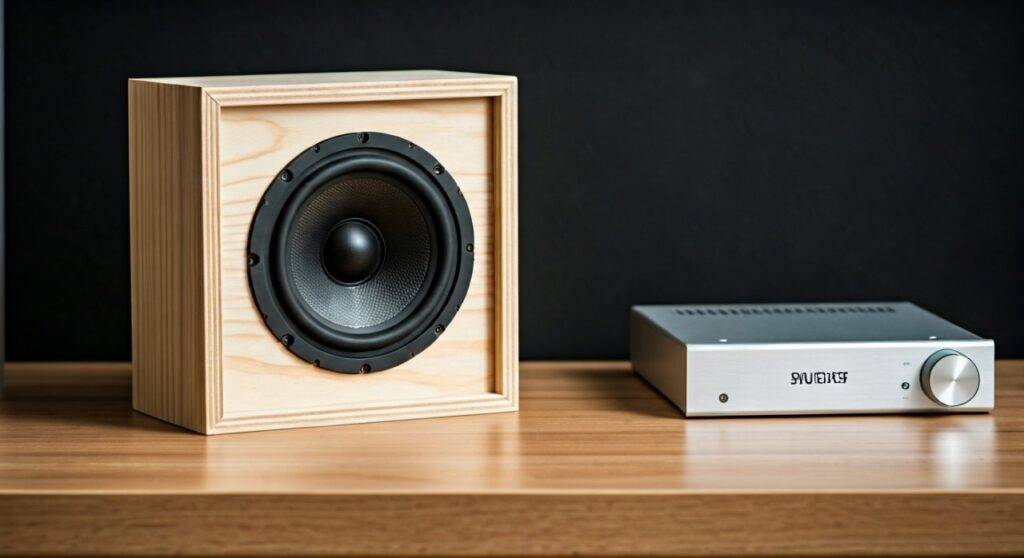
In my years of custom audio fabrication, I’ve repurposed dozens of component speakers and subwoofers for home use. The transition isn’t just “plug and play” because home audio typically runs on 8 ohms and 120V AC, whereas car audio is optimized for 4 ohms and 12V DC. If you don’t account for these electrical differences, you risk overheating your equipment or causing a fire.
TL;DR: Key Takeaways for DIY Home Audio
- Feasibility: Totally possible and often cost-effective if you already own high-quality car drivers.
- The Power Gap: You cannot plug car speakers directly into a wall; you need an AC-to-DC power converter or a home amplifier rated for low impedance.
- Impedance Match: Most car speakers are 4-ohm; most home receivers prefer 8-ohm. Using a 4-ohm speaker on an 8-ohm-only amp will likely trigger “Protect Mode.”
- Enclosures are Mandatory: Car speakers are “free-air” drivers; without a box, they will have zero bass response in a living room.
- Best Use Case: Great for garage setups, man caves, or budget-friendly desktop monitors.
The Technical Reality: Why Car Speakers Differ from Home Speakers
Before you grab your screwdriver, you need to understand the fundamental physics that separate these two worlds. Car speakers are engineered to survive extreme temperature swings, humidity, and high-vibration environments.
Understanding Impedance (The “Ohms” Factor)
In my testing, the biggest hurdle for DIYers is electrical resistance, measured in ohms.
- Home Speakers: Usually 8 ohms.
- Car Speakers: Usually 4 ohms (some are even 2 ohms).
Why this matters: A 4-ohm speaker pulls twice as much current from an amplifier as an 8-ohm speaker. If you connect 4-ohm car speakers to a standard home theater receiver designed for 8 ohms, the receiver will run extremely hot. I’ve seen budget receivers literally smoke because they couldn’t handle the current draw. Always check that your amp is “4-ohm stable.”
Voltage and Current Requirements
Your house runs on Alternating Current (AC), but car audio components require Direct Current (DC). To make house speaker systems out of car speakers using a car amplifier, you must convert your home’s 110V/220V AC into a steady 12V to 14.4V DC signal.
| Feature | Car Speakers | Home Speakers |
|---|---|---|
| Standard Impedance | 4 Ohms | 8 Ohms |
| Power Source | 12V DC (Battery) | 120V/240V AC (Wall) |
| Environment | Near-field / Small Cabin | Far-field / Large Room |
| Durability | Water/Heat Resistant | Dry / Climate Controlled |
| Mounting | Infinite Baffle (Doors) | Sealed or Ported Boxes |
Essential Equipment to Build Your System
To successfully make house speaker systems out of car speakers, you need more than just the drivers. Here is the professional “build sheet” we use in the shop:
- Car Speakers: Coaxial or Component sets (6.5-inch or 6×9-inch are common).
- Power Supply: A 12V DC Switching Power Supply (at least 30 Amps for a basic setup).
- Amplifier: You can use a Car Amplifier (requires the 12V PSU) or a Class D Home Amp that supports 4-ohm loads.
- Enclosure Material: 3/4″ MDF (Medium Density Fiberboard) or Birch Plywood.
- Speaker Wire: 14-gauge or 16-gauge oxygen-free copper.
- Source: A Bluetooth module, DAC, or a simple 3.5mm-to-RCA cable.
Step-by-Step Guide: How to Make House Speaker Systems Out of Car Speakers
Follow this workflow to ensure your DIY project sounds professional and stays safe.
Step 1: Calculate Your Power Needs
Don’t guess on the power supply. If your car amplifier is rated for 500 Watts RMS, you cannot use a tiny 2-amp wall wart.
- The Math: Amps = Watts / Volts.
- Example: A 300W system at 12V needs a 25-Amp power supply. I recommend using a Mean Well Switching Power Supply for its reliability and clean signal.
Step 2: Designing the Enclosure
Car speakers are typically designed for “Infinite Baffle” applications (like a car door). When you move them into a house, they need a box to prevent the sound waves from the back of the cone from canceling out the waves from the front.
- Sealed Boxes: Best for “tight” bass and a smaller footprint.
- Ported Boxes: Better for higher volume and deeper bass, but harder to tune correctly.
- Expert Tip: For 6.5-inch car speakers, a 0.25 to 0.5 cubic foot sealed box is usually the “sweet spot” for balanced sound.
Step 3: Preparing the 12V Power Supply
If you are using a car amplifier in your house:
- Connect the Positive (+) terminal of the PSU to the +12V and Remote (REM) terminals on the amp.
- Connect the Negative (-) terminal of the PSU to the Ground (GND) terminal on the amp.
- Warning: Ensure the PSU is unplugged from the wall while wiring to avoid accidental shorts.
Step 4: Wiring the Speakers
Connect your speakers to the amplifier using high-quality wire. Since car speakers are 4 ohms, you can wire them in Series to create an 8-ohm load if your home receiver is struggling with heat.
- Series Wiring: (Positive of Amp) -> (Positive of Speaker 1) -> (Negative of Speaker 1) -> (Positive of Speaker 2) -> (Negative of Speaker 2) -> (Negative of Amp).
Step 5: Testing and Tuning
Start with the volume at zero. Slowly increase the gain. Because car speakers are designed for small spaces, they may sound “bright” or “harsh” in a room. Use an Equalizer (EQ) to pull down the frequencies around 2kHz – 5kHz to make them sound more natural in a home setting.
Common Pitfalls to Avoid
I have seen many DIY projects fail due to these three common mistakes:
- Using a Car Battery Charger as a Power Supply: Do not do this. Battery chargers produce “dirty” unregulated power that contains AC ripple. This will cause a loud “hum” through your speakers and can eventually fry the amplifier’s capacitors.
- Thin Enclosure Walls: Car speakers move a lot of air. If you use thin plywood or plastic bins, the walls will vibrate (resonate), creating a muddy, distorted sound. Use 3/4 inch MDF and wood glue for every joint.
- Ignoring Airflow: Car amplifiers generate heat. If you hide the amp inside the speaker box or a cabinet without ventilation, it will reach thermal shutdown within 20 minutes of heavy use.
The Sound Quality Debate: Are Car Speakers Good for Home Audio?
Can you make house speaker systems out of car speakers and expect audiophile quality? The answer is “it depends.”
Car speakers are designed for off-axis listening. In a car, the speakers are at your feet or in the dash, rarely pointed at your ears. In a home, you usually sit directly in front of them (on-axis). This means car speakers might sound incredibly detailed but also “tiring” over long periods because the tweeters are tuned to be very aggressive.
However, if you use high-end brands like Focal, Morel, or JL Audio, the component sets can rival home bookshelf speakers costing twice as much. The “secret sauce” is the crossover. Using a high-quality external crossover will significantly improve the imaging of your DIY home system.
Frequently Asked Questions
Can I use a computer power supply (PSU) for car speakers?
Yes, a PC Power Supply is a popular choice for DIYers. You need to “jump” the green wire to a black wire on the 24-pin connector to turn it on. Use the yellow wires for +12V and black wires for ground. Note that most PC PSUs provide about 15-20 Amps on the 12V rail, which is enough for a modest setup but not a massive subwoofer.
Will 4-ohm car speakers damage my 8-ohm home receiver?
It is possible. If you play the music at low volumes, most modern receivers will survive. However, at high volumes, the low impedance causes the receiver to pull more current than its transistors can handle. This leads to clipping and potential permanent damage to the receiver’s output stage.
Do car speakers need a crossover in a home setup?
If you are using coaxial car speakers (where the tweeter is built into the middle), the crossover is already built-in. If you are using component car speakers (separate woofer and tweeter), you must use the included crossover box. Connecting a tweeter directly to an amplifier without a high-pass filter will destroy it instantly.