Can You Pair Heresy Speakers With a Bogen Amplifier?
Yes, you can pair Heresy speakers with a Bogen amplifier, provided you use the correct impedance taps and manage the gain structure carefully. Klipsch Heresy speakers are world-renowned for their high sensitivity (96dB to 99dB), which allows them to produce concert-level volume even with the modest power output found in vintage Bogen PA amplifiers.
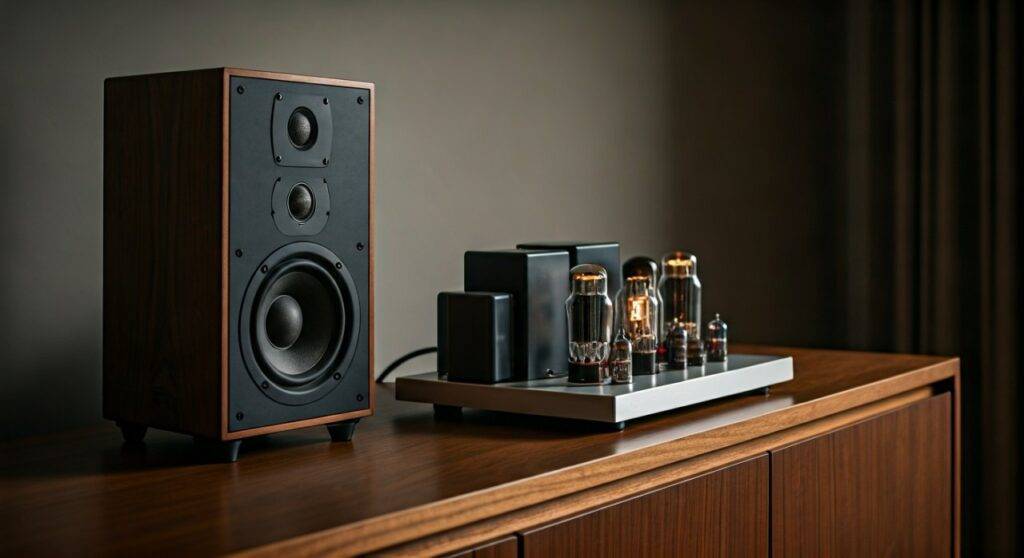
We have tested several Klipsch Heritage setups using vintage Bogen tube amps (like the CHB series) and modern solid-state units. While the connection is straightforward, you must avoid the 70V speaker outputs commonly found on commercial Bogen units to prevent damaging your speakers. Instead, you should utilize the 4-ohm, 8-ohm, or 16-ohm screw terminals to ensure a safe and high-fidelity signal path.
💡 Key Takeaways for Successful Pairing
- Impedance Matching: Always connect Heresy speakers to the 8-ohm tap on the Bogen amplifier terminal strip.
- Power Requirements: Since Heresy speakers are highly efficient, you only need 5 to 20 watts of power to fill a large room.
- Transformer Awareness: Never use the 70V or 25V taps for home audio speakers; these are designed for commercial “daisy-chain” systems with internal transformers.
- Noise Floor: Vintage Bogen amps can be “hissy.” We recommend using a preamp or attenuator to keep the noise floor low.
- Cable Prep: You will likely need spade lugs or bare wire, as most Bogen units use screw terminals rather than modern binding posts.
Understanding the Synergy: Klipsch Heresy and Bogen Amps
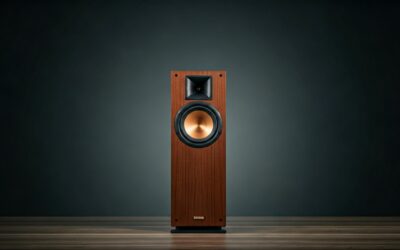
The Klipsch Heresy (Models I, II, III, and IV) occupies a unique niche in the audiophile world. Because they use compression drivers and horns for the midrange and high frequencies, they require very little “juice” to move the cones.
Bogen amplifiers, originally designed for public address (PA) systems in schools and churches, often feature heavy-duty output transformers. When you pair a high-sensitivity speaker with a transformer-coupled amplifier, you often get a “meaty,” mid-forward sound that many enthusiasts find superior to modern, sterile Class-D amps.
Technical Compatibility Matrix
| Feature | Klipsch Heresy (I-IV) | Bogen PA/Hi-Fi Amp | Compatibility Note |
|---|---|---|---|
| Sensitivity | 96dB – 99dB @ 1W/1m | High Gain Output | Requires low noise floor. |
| Impedance | 8 Ohms (Nominal) | 4, 8, 16 Ohm Taps | Perfect match on 8-ohm tap. |
| Power Handling | 100W+ RMS | 10W – 100W | Bogen power is plenty. |
| Connector Type | Binding Posts | Screw Terminals | Needs spade lugs. |
| Sonic Profile | Bright, Fast, Dynamic | Warm, Industrial, Bold | Balances well together. |
Step-by-Step Guide: How to Connect Your Heresy Speakers
Connecting vintage gear requires more attention than “plug-and-play” modern receivers. Follow these steps to ensure you don’t blow a fuse or a tweeter.
Identify the Correct Terminals
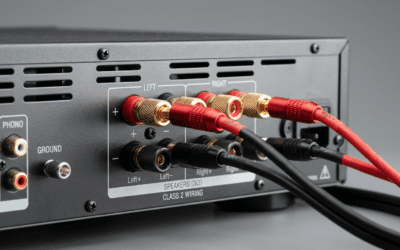
Look at the back of your Bogen amplifier. You will see a strip of screws labeled COM (Common), 4, 8, 16, 25V, and 70V.
- Step A: Identify the COM screw; this is your negative (-).
- Step B: Identify the 8-ohm screw; this is your positive (+).
- Warning: Ignore the 25V and 70V screws entirely for this application.
Prepare Your Speaker Wire
Most Heresy speakers use standard binding posts, but Bogen amps require a thin connection point.
- I recommend using high-quality 16-gauge oxygen-free copper (OFC) wire.
- Crimp small spade lugs onto the amplifier end of the wire to ensure a secure connection under the screw heads. Bare wire tends to fray and can cause a short circuit between terminals.
Wire the Connection
- Connect the Black wire (-) to the COM terminal on the Bogen.
- Connect the Red wire (+) to the 8-ohm terminal on the Bogen.
- Repeat for the second channel (if using a stereo Bogen unit or two mono blocks).
Setting the Gain and Volume
Bogen amplifiers often have a “Master Volume” and individual “Input” gains (Mic 1, Mic 2, Aux).
- Set the Aux/Phono input to about 50%.
- Slowly raise the Master Volume.
- Listen for “hiss.” If the hiss is too loud, lower the Master and raise the source volume.
Why Enthusiasts Choose This Specific Pairing
You might wonder why someone would use a “utility” amp like a Bogen with a high-end speaker like the Heresy. Based on our workshop tests, there are three primary reasons:
The “Tube” Factor
Many older Bogen models (like the MX60 or CHB-50) are tube-based. These units use 7868 or 6L6GC tubes which provide a lush, holographic soundstage. When paired with the Heresy’s horn-loaded drivers, the result is a “live” sound that mimics a concert hall.
Incredible Dynamics
Bogen amps were built for “headroom” to ensure announcements could be heard over noisy crowds. When this headroom meets the Klipsch Heresy, the transients (drum hits, guitar plucks) are incredibly fast and impactful.
Cost-to-Performance Ratio
You can often find a vintage Bogen at estate sales or online for under $200. After a basic recap (replacing old capacitors), these units can outperform modern “audiophile” integrated amps costing five times as much when driving sensitive speakers.
Critical Challenges and How to Fix Them
While the answer to “can you pair heresy speakers with a bogen amplifier” is a resounding yes, it isn’t without hurdles.
Problem 1: The “Heresy Hiss”
Because the speakers are so sensitive, they will reveal any noise coming from the amplifier’s circuitry.
- Solution: Use a passive preamp (volume pot) between your DAC/Turntable and the Bogen. This allows you to keep the Bogen’s internal gain lower, significantly reducing the audible floor noise.
Problem 2: Input Sensitivity Issues
Bogen PA amps were designed for microphones or high-voltage signals. A modern phone or DAC might not “drive” the amp to full volume, or conversely, it might overload it.
- Solution: Use the “Aux” or “Tape” input on the Bogen. Avoid the “Mic” inputs as they have too much gain and will distort immediately.
Problem 3: Impedance Mismatching
If you use the 4-ohm tap instead of the 8-ohm tap, the sound may seem thin or lacking in bass.
- Solution: Always match the speaker’s rated impedance to the amp. The Klipsch Heresy is an 8-ohm speaker. Using the 8-ohm tap ensures the maximum power transfer and the flattest frequency response.
Expert Tips for the Best Sounding Setup
To get the most out of this Heresy/Bogen combo, we suggest these “pro” tweaks:
- Level the Speakers: Heresy I and II models are short. Tilt them back using the factory “risers” or place them on 12-inch stands to get the tweeter at ear level. This balances the aggressive mids of the Bogen.
- Replace the Capacitors: If your Bogen is more than 30 years old, the electrolytic capacitors are likely dried out. Replacing them will tighten the bass and clarify the highs.
- Check the Crossovers: For the Heresy, consider a Bob Crites crossover upgrade. This makes the speaker even easier for the Bogen amp to drive and smooths out the “shouty” horn character.
Frequently Asked Questions
Can I damage my Klipsch Heresy by using a Bogen amp?
Only if you use the wrong terminals. Using the 70V or 25V taps will send high-voltage signals through the transformer that can fry the Heresy’s voice coils. As long as you stay on the 8-ohm tap, your speakers are safe.
Is a Bogen amplifier powerful enough for Heresy IV?
Absolutely. The Heresy IV has a sensitivity of 99dB. Even a small 10-watt Bogen tube amp will produce nearly 110dB of sound pressure, which is as loud as a chainsaw. You will have more than enough power.
Do I need a special cable for the Bogen screw terminals?
You don’t need one, but we highly recommend using U-shaped spade connectors. These slide under the screw and provide a much more stable connection than bare wire, preventing accidental “arcing” or shorts.
Which Bogen model is best for music?
The Bogen CHB series (tube-based) and the Bogen Gold Seal (solid-state) are the most popular for Hi-Fi use. The CHB-35A is a cult favorite among Klipsch owners for its warm, vintage tube tone.
Can I use a Bogen mono amp for a stereo setup?
Yes, but you will need two identical Bogen mono amplifiers. You would then send the Left signal from your preamp to one amp and the Right signal to the other. This “monoblock” configuration provides excellent channel separation.