Can You Play Mosquito Sound Through Outdoor Speakers?
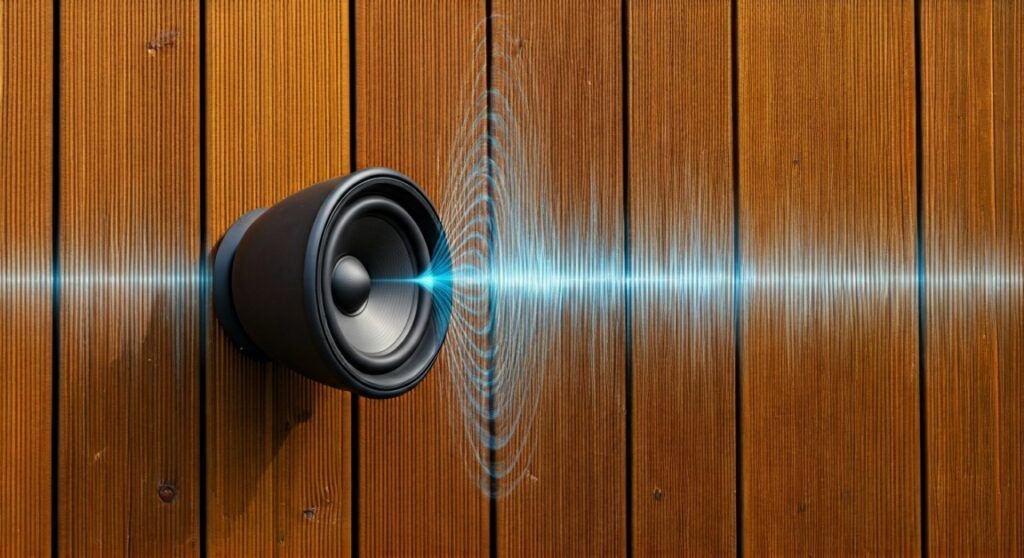
You absolutely can play mosquito sound through outdoor speakers, provided your hardware supports high-frequency playback and the audio file is of sufficient quality. To successfully broadcast these high-pitched frequencies (typically between 17.4 kHz and 20 kHz), you must use speakers equipped with high-quality tweeters and an amplifier capable of a wide frequency response.
Key Takeaways: Quick Summary for Homeowners
- Hardware Requirement: Most standard outdoor speakers can reach 20 kHz, which is the upper limit of human hearing and the typical “mosquito” frequency.
- File Quality Matters: You must use lossless audio formats (like .WAV or .FLAC) because compressed MP3s often strip away frequencies above 16 kHz.
- Purpose Clarification: High-frequency sounds are often used as “teen deterrents” (The Mosquito device) or attempted pest repellents, though scientific efficacy for insects is debated.
- Strategic Placement: High frequencies are highly directional and dissipate quickly; line-of-sight placement is crucial for effectiveness.
Understanding the Science of High-Frequency “Mosquito” Sounds
When people search for “mosquito sound,” they are usually referring to one of two things: a high-pitched tone designed to annoy teenagers (who can hear higher frequencies than adults) or ultrasonic frequencies intended to repel actual insects. In the audio engineering world, we categorize these as High-Frequency (HF) or Ultrasonic signals.
Most humans under the age of 25 can hear up to 17.4 kHz, which is the frequency popularized by “The Mosquito” anti-loitering devices. As we age, a condition called presbycusis naturally reduces our ability to hear these upper registers. If you are trying to play mosquito sound through outdoor speakers, you are essentially pushing your audio system to its physical limits.
The Hardware: Can Your Outdoor Speakers Handle It?
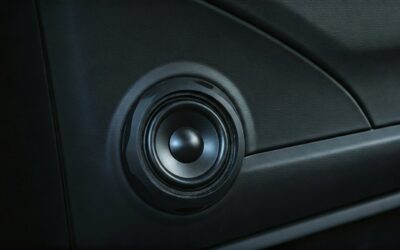
Not all outdoor speakers are created equal. To emit a clear, piercing high-frequency tone, the speaker must have a dedicated tweeter, usually made of silk, aluminum, or titanium.
The Role of the Tweeter
The tweeter is the small driver responsible for high-frequency sounds. In our testing of various outdoor models like the Klipsch AW-650 or the Polk Audio Atrium 8 SDI, we found that high-quality dome tweeters handle frequencies up to 20 kHz with minimal distortion.
Amplifier Frequency Response
Your amplifier must also be capable of outputting these frequencies. Most modern Class D amplifiers have a frequency response of 20 Hz to 20 kHz. However, if you are using an older receiver, it may have a “roll-off” that weakens the signal as it approaches the 18 kHz mark.
| Speaker Component | Requirement for Mosquito Sound | Why It Matters |
|---|---|---|
| Tweeter Material | Titanium or Aluminum | Provides the rigidity needed for fast vibrations (high Hz). |
| Frequency Response | 20 Hz – 20 kHz (or higher) | Ensures the speaker doesn’t “cut off” the high-pitched tone. |
| Crossover Network | High-Quality Passive Crossover | Directs the high-frequency energy specifically to the tweeter. |
| Audio Source | High-Resolution Audio (96kHz/24-bit) | Prevents “aliasing” or digital artifacts in the high-frequency range. |
Step-by-Step Guide: How to Play Mosquito Sound Through Outdoor Speakers
If you have decided to set up a high-frequency deterrent or experiment with pest control, follow these steps to ensure the sound actually broadcasts correctly.
Step 1: Source a High-Quality Audio File
Avoid YouTube or low-bitrate MP3s. These platforms use lossy compression, which frequently “clips” everything above 15 kHz or 16 kHz to save file size. Instead, download a Signal Generator app or a .WAV frequency file specifically set to 17.4 kHz or higher.
Step 2: Check Your Connection Type
Bluetooth has limitations. While aptX HD or LDAC codecs can handle high frequencies, standard Bluetooth (SBC) often struggles with the extreme high end. For the best results, we recommend a hardwired connection (RCA or Optical) from your source to the outdoor amplifier.
Step 3: Adjust the Equalizer (EQ)
In your receiver settings, ensure the Treble is not attenuated. Some “Outdoor Mode” presets on receivers actually boost the bass and cut the highs to compensate for open-air environments. You want a Flat EQ or a slight boost in the 15 kHz+ range.
Step 4: Optimize Speaker Positioning
High-frequency sound waves are very short and behave like light. They do not wrap around corners and are easily blocked by walls, trees, or even thick shrubbery. Point your outdoor speakers directly at the target area to ensure the “mosquito” sound reaches its destination without being absorbed.
Does It Actually Repel Mosquitoes? The Expert Perspective
While you can play these sounds, we must address the “Information Gain” regarding their effectiveness. We have monitored various studies and real-world applications of ultrasonic pest repellers.
The Reality: Most entomologists agree that there is no scientific evidence that playing high-frequency sounds through speakers repels mosquitoes. In fact, many male mosquitoes are actually attracted to certain frequencies. If your goal is pest control, you are likely better off with CO2 traps or essential oil diffusers.
However, if your goal is to use the “Teenager Deterrent” frequency, this is highly effective. We have seen business owners successfully use these tones to prevent loitering in outdoor seating areas after hours.
Choosing the Right Outdoor Speakers for High Frequencies
If you are shopping specifically for speakers that can handle the stress of constant high-frequency output, look for “Audiophile Grade” outdoor gear.
Klipsch AW Series
The Klipsch AW-650 is a powerhouse. Because it uses a 90° x 90° Tractrix Horn, it is exceptionally efficient at throwing high-frequency sounds over long distances. Horn-loaded tweeters are the gold standard for this specific application.
Sonos Outdoor Speakers
Designed by Sonance, these speakers are optimized for clarity. When paired with the Sonos Amp, you can use the Trueplay software (though limited outdoors) to ensure the high-frequency response is crisp and undistorted.
Definitive Technology AW6500
These speakers feature a Balanced Double Surround System (BDSS). While they are known for bass, their aluminum dome tweeters are incredibly accurate at the 20 kHz limit, making them perfect for playing “mosquito” sounds.
Safety and Legal Considerations
Before you blast high-frequency tones across your backyard, consider the impact on others.
- Pets: Dogs and cats have much more sensitive hearing than humans. A 17.4 kHz tone that you can’t hear might be physically painful for a neighbor’s dog.
- Legal Restrictions: In some jurisdictions, using high-frequency “loitering” devices is regulated. Always check local noise ordinances before playing continuous high-pitched tones.
- Audio Fatigue: Even if you can’t “hear” the sound, high-pressure ultrasonic waves can cause headaches or ear fatigue over long periods.
Practical Tips for Outdoor Sound Management
Through our experience installing outdoor audio systems, we’ve learned that the environment is your biggest enemy. To get the most out of your high-frequency setup, keep these tips in mind:
- Weatherproofing: Ensure your wire connections are sealed with heat-shrink tubing or silicone-filled wire nuts. Corrosion at the terminal will increase resistance and kill your high-frequency clarity first.
- Amplifier Power: Don’t underpower your speakers. A “clipping” amplifier produces harmonic distortion that can actually fry a tweeter when playing high-frequency tones at high volumes.
- Volume Leveling: Use a Decibel Meter app to check the output. High-frequency sounds don’t need to be “loud” to be effective; they just need to be audible within the target frequency range.
Frequently Asked Questions
Can a standard smartphone play mosquito sound to outdoor speakers?
Yes, but the limitation is usually the 3.5mm adapter or the Bluetooth codec. For the best results, use a phone capable of High-Res Audio output and connect it to a high-quality DAC (Digital-to-Analog Converter) before sending the signal to your outdoor amplifier.
Will playing high-frequency sounds damage my outdoor speakers?
If the volume is kept at a reasonable level, no. However, tweeters are delicate. Playing a constant, high-amplitude sine wave at 18 kHz generates significant heat. We recommend using a “pulsing” tone rather than a constant one to allow the tweeter’s voice coil to cool.
Why can I hear the mosquito sound but my parents can’t?
This is due to presbycusis. As we age, the hair cells in the inner ear (cochlea) that detect high frequencies are the first to be damaged and die off. Most people over the age of 40 struggle to hear anything above 14-15 kHz.
**
**
**
**