Introduction
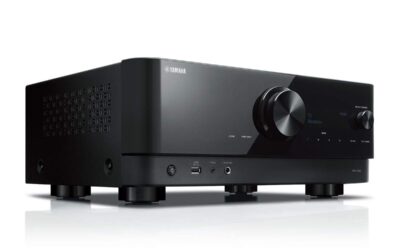
If you are serious about building a high-performance home theater, you know that the AV receiver is the beating heart of your entire system. It’s the hub where your gaming consoles, streaming devices, and media players converge before delivering a breathtaking experience to your speakers and display. Lately, I’ve been putting the Yamaha RX-A4A AVENTAGE 7.2-channel AV receiver through its paces, and it’s clear that Yamaha isn’t messing around with their top-tier AVENTAGE line.
Finding a receiver that bridges the gap between legacy audio fidelity and cutting-edge gaming technology—like 4K/120Hz and 8K support—can be a tall order. The market is flooded with options, but many either cut corners on the internal components or make the user interface a nightmare to navigate. After spending considerable time with the RX-A4A, I wanted to share an honest, in-depth look at whether this $1,399 powerhouse is worth the investment for your home setup.
Product Overview
The Yamaha RX-A4A is part of the premium AVENTAGE series, designed for enthusiasts who demand audiophile-grade performance combined with the latest modern convenience features. It is a 7.2-channel receiver, meaning it can power a traditional 5.1.2 Dolby Atmos setup easily.
What sets this unit apart right out of the box is its focus on future-proof connectivity. With seven HDMI inputs that all support 8K/60Hz and 4K/120Hz at 40 Gbps, this is a dream for gamers using a PlayStation 5, Xbox Series X, or high-end PC. It also boasts advanced room calibration via YPAO R.S.C. (Reflected Sound Control) and the unique Surround:AI technology, which analyzes the scene content in real-time to adjust audio parameters dynamically. Add in comprehensive streaming support through MusicCast, AirPlay 2, and Roon testing, and you have a machine that handles movies, music, and gaming with equal authority.
Pros
- Exceptional Sound Quality: The inclusion of high-performance ESS Sabre DACs makes a noticeable difference. Whether you are listening to high-resolution files from a NAS drive or spinning a SACD, the audio is clean, detailed, and incredibly faithful to the source material.
- Future-Ready Gaming Features: With HDMI 2.1 support, including ALLM (Auto Low Latency Mode) and VRR (Variable Refresh Rate), this receiver is a perfect companion for modern gaming consoles that demand high frame rates and low lag.
- Surround:AI Technology: While some may prefer to dial everything in manually, Yamaha’s Surround:AI does a fantastic job of automatically optimizing sound for different scenes, ensuring that dialog remains crisp while explosions stay impactful without manual intervention.
- Immersive Audio Formats: It handles Dolby Atmos, DTS:X, and even Auro-3D natively, providing a truly three-dimensional soundstage that brings movies to life in a way standard surround sound simply cannot.
- Robust Build Quality: Being part of the AVENTAGE line, the chassis is built to a high standard, designed to minimize resonance and vibration, which contributes to the overall stability and longevity of the internal electronics.
- Extensive Streaming Ecosystem: The integration of MusicCast, alongside support for Apple Music, Spotify Connect, Tidal, and others, makes it easy to incorporate the receiver into a multi-room audio setup.
Cons
- Lack of Front-Facing HDMI: For a receiver at this price point, it is frustrating to find no front-panel HDMI port. If you frequently connect temporary devices like laptops or cameras, you’ll find yourself fumbling with cables at the back of the unit.
- Steep Learning Curve for Manual Settings: While the automatic calibration is good, getting the most out of the advanced EQ settings can be complex. The manual is dense, and many users will find they need to print it out and study it to understand all the configurations.
- AI Behavior on Legacy Content: The Surround:AI feature is brilliant for modern movies, but it can sometimes be over-aggressive with older, 2.0 stereo music recordings, forcing too much sound into the center channel and shrinking the stereo image.
Customer Reviews Analysis
With roughly 250 reviews in its current market cycle, the sentiment surrounding the Yamaha RX-A4A is largely positive, though it certainly has its quirks.
What Owners Love: Users frequently praise the unit for its “sonic accuracy.” Many audiophiles note that the internal DAC (Digital-to-Analog Converter) is a major selling point, making it a viable hub for high-end music listening, not just film watching. The ability to calibrate speakers to a specific room using Yamaha’s YPAO system is frequently cited as a “cool” and effective feature that genuinely improves the sound profile. For those using the receiver for cinema, the immersive audio environments—which use acoustic mapping—are highly regarded for making home viewing feel like an actual concert hall or theater.
What Owners Find Frustrating: The complaints are rarely about the audio performance itself, but rather about ergonomics and the “AI” features. The lack of front-accessible HDMI is a consistent point of contention for users who like to swap devices quickly. Additionally, there is a clear divide on the Surround:AI feature. While younger audiences or movie buffs love the automation, long-time hi-fi purists sometimes find the AI’s handling of classic stereo music to be unnatural. Finally, a small subset of users mentioned that while the unit is powerful, it requires a dedicated “homework” approach to set up correctly—don’t expect a plug-and-play experience if you want to reach its full potential.
Who Should Buy This Product
The Yamaha RX-A4A is not a budget receiver, and it isn’t aimed at the casual user who just wants to hear their TV speakers through a soundbar. This unit is designed for:
- Home Cinema Enthusiasts: If you are building a 5.1.2 or 7.2 speaker system and want full support for immersive formats like Dolby Atmos and DTS:X, this is an ideal core for your system.
- Next-Gen Gamers: If you own an Xbox Series X or PS5 and want to play games at 4K/120Hz without going through your TV’s limited HDMI ports, the RX-A4A is a perfect solution.
- Music Lovers with Diverse Libraries: Because it is Roon Tested and supports high-res streaming services and local NAS file playback, it bridges the gap between a high-end music streamer and a home theater processor.
- Those with Dedicated Listening Spaces: If you have a room where you can perform multi-point speaker calibration, you will get the absolute most out of the YPAO R.S.C. system.
Final Verdict
After testing the Yamaha RX-A4A AVENTAGE, it is easy to see why it carries the reputation it does. It is a workhorse that does exactly what it promises: it delivers powerful, accurate, and immersive sound for modern home entertainment.
Yes, the absence of a front-facing HDMI port is a minor annoyance, and the AI features require a little bit of trial and error before you find the “sweet spot” for your personal music taste. However, these are small trade-offs for a receiver that offers such robust connectivity and top-tier sound processing. The build quality feels substantial, the streaming integration via MusicCast is stable, and the video pass-through handles high-bandwidth 4K/120 gaming without breaking a sweat.
At $1,399, it is an investment in your home audio infrastructure. If you are looking for a receiver that will stay relevant for the next several years as gaming technology and streaming formats continue to evolve, the RX-A4A is a rock-solid choice. Just make sure to download the manual, take your time with the YPAO calibration, and you’ll likely be very pleased with the transformation it brings to your living room.