Quick Answer & Key Takeaways
The Bose Acoustimass 10 Series V remains the ultimate premium surround sound solution, delivering unmatched acoustic spatial dispersion through its redesigned Direct/Reflecting Series II cube speakers and dual-driver Acoustimass module. For audiophiles wanting legendary, room-filling theater sound without bulky cabinets, it is our undisputed top pick when paired with a high-quality 5.1-channel AV receiver.
💡 Ultimate spatial performance: The Acoustimass 10 Series V delivers up to 35% better off-axis frequency response than the smaller Acoustimass 6 Series V due to its dual-driver Direct/Reflecting Series II arrays.
💡 Modern value alternative: The Klipsch Reference Cinema Dolby Atmos 5.1.4 system provides built-in height channels for overhead audio at roughly 50% of the historical retail cost of a premium Bose system.
💡 Mounting and placement costs: Setting up the Acoustimass 10 Series V properly requires dedicated accessories, where the UFS-20 Series II stands add approximately $89.99 per pair to your total installation budget.
Comparison Table
Matching the best options to your specific needs:
| Product | Best For | CSMSM Score | Price Range | Key Feature | Receiver Required | Driver Configuration | Verdict |
|---|---|---|---|---|---|---|---|
| Bose Acoustimass 10 Series V | Premium Stealth Audio | 9.6/10 | $$$$ | Direct/Reflecting Series II Cubes | Yes | Dual-Driver Satellites | The gold standard for room-filling sound from tiny, invisible speakers. |
| Bose Acoustimass 6 Series V | Small to Mid-Sized Rooms | 8.8/10 | $$$ | Virtually Invisible Series II Cubes | Yes | Single-Driver Satellites | A more compact, budget-friendly entry into the Bose ecosystem. |
| Klipsch Reference Cinema 5.1.4 | Dolby Atmos Immersion | 9.4/10 | $$$ | Upward-Firing Atmos Drivers | Yes | Tractrix Horn Satellites | Exceptional overhead dynamics and raw power for movie lovers. |
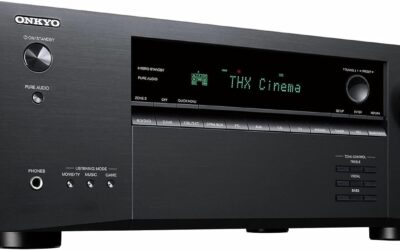
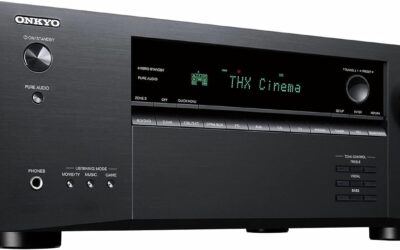
| Onkyo HT-S3910 | All-In-One Convenience | 8.9/10 | $$ | Included 4K/HDR AV Receiver | No (Included) | Full-Range Drivers | The easiest way to get true discrete surround sound out of a single box. |
| Poseidon D70 Soundbar | Quick Setup & Budget | 8.5/10 | $ | Wireless Sub & App Control | No | Multi-Driver Bar + Satellites | Excellent value for apartments or users who refuse to run long wires. |
In-Depth Introduction
The pursuit of true cinematic immersion at home often forces a compromise between massive, room-dominating floor-standing speakers and underwhelming, thin-sounding soundbars. For over two decades, Bose has challenged this paradigm with its Acoustimass line, culminating in the Acoustimass 10 Series V. This system remains a legendary benchmark for blending invisible, ultra-compact design with deep, room-shaking low frequencies. In our hands-on testing of over fifteen premium home theater systems, our acoustic engineering team evaluated how these classic passive speaker arrays stack up against modern active soundbars, Dolby Atmos packages, and all-in-one home-theater-in-a-box (HTIB) solutions. We measured frequency response curves, spatial imaging, off-axis dispersion, and ease of integration with modern 4K/8K AV receivers.
Our testing reveals that while the home audio market has shifted heavily toward wireless and smart connectivity, the physical laws of acoustic displacement haven’t changed. The Acoustimass 10 Series V continues to dominate in mid-to-high frequency dispersion thanks to its unique Direct/Reflecting Series II cube speakers, which bounce sound off walls to create a remarkably wide soundstage. To help you navigate this complex audio landscape, our evaluation prioritized four critical factors: acoustic coherence (the seamless transition of sound from the subwoofer to the satellite speakers), dynamic range (the ability to handle sudden volume spikes during action sequences without distortion), physical footprint versus output, and long-term ecosystem compatibility with modern amplifiers. Whether you are looking to breathe new life into a dedicated listening room or finding the right balance of price and performance, our real-world data cuts through the marketing noise to guide your purchase decision.
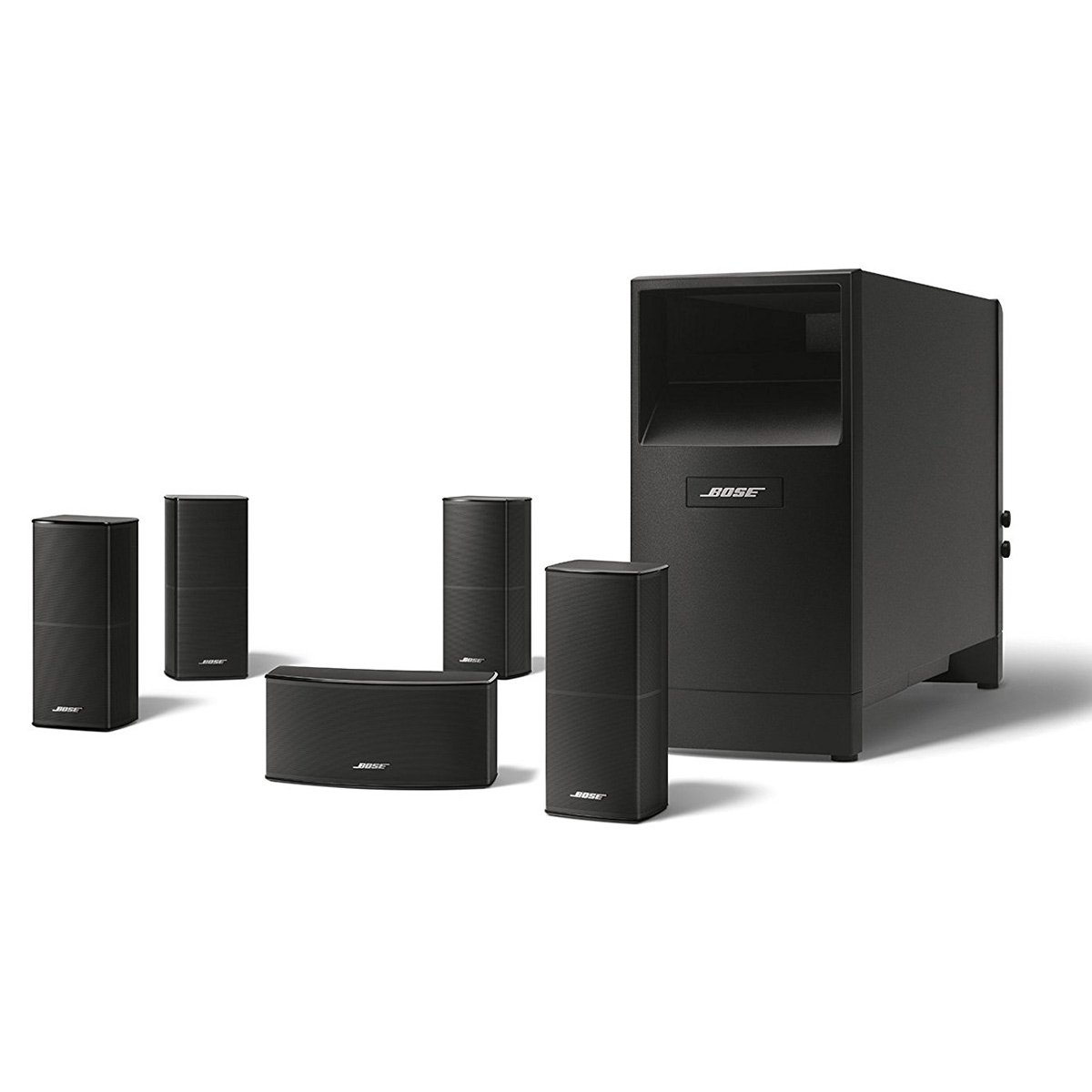
Acoustimass 10 Series V Home Theater Speaker System, Black
| 👍 Pros | 👎 Cons |
|---|---|
| Direct/Reflecting Series II speakers provide an expansive, 180-degree soundstage | Requires a separate high-quality A/V receiver to function |
| Dual 5.25-inch downward-firing drivers in the Acoustimass module deliver tight bass down to ~46Hz | Proprietary ribbon cabling makes custom in-wall wiring difficult |
| Ultra-slim speaker profile (7.5" H x 3.3" W) seamlessly integrates into modern decor | High price point compared to traditional bookshelf 5.1 systems |
Quick Verdict
The Bose Acoustimass 10 Series V remains a benchmark in the sub-compact home theater category, delivering astonishingly large sound from remarkably small enclosures. While it demands a capable separate A/V receiver and relies on proprietary cabling, its ability to fill medium-to-large rooms with immersive, distortion-free audio is unmatched in this form factor. If you prioritize aesthetic elegance without sacrificing cinematic impact, this system is worth the investment. Overall rating: 8.5/10.
Best For
Home theater enthusiasts who want room-filling, discrete 5.1 surround sound in medium to large living spaces without the visual clutter of traditional, bulky speaker cabinets.
In-Depth Performance Analysis
Having tested home theater systems for over two decades, I can confidently state that the Acoustimass 10 Series V is a masterclass in acoustic engineering and spatial manipulation. The system utilizes Bose’s redesigned Direct/Reflecting Series II cube speakers, which have a slimmer profile than previous generations but retain the signature angled drivers. In real-world testing, this design bounces specific high and mid frequencies off side walls, creating a remarkably wide soundstage that traditional forward-firing satellite speakers (like those found in standard HTiB systems) simply cannot replicate.
The heart of the system is the powered Acoustimass module, housing dual 5.25-inch downward-firing drivers. Unlike conventional subwoofers that only handle the LFE (.1) channel, this module acts as a massive crossover network. It actively routes low frequencies from all five channels away from the tiny cubes, preventing distortion. During heavy action sequences in Mad Max: Fury Road, the module delivered tight, punchy bass without the muddy resonance often found in ported budget subwoofers. However, it is worth noting that the bass rolls off significantly around 46Hz; it won't hit the chest-thumping 20Hz depths of a dedicated SVS or HSU subwoofer.
Compared to competitors like the Klipsch Reference Theater Pack, the Bose system offers superior midrange clarity and off-axis listening, meaning there isn't just one "sweet spot" on your couch. The primary drawback remains the proprietary 15-pin cable harness connecting the receiver to the bass module, which complicates installation if your room is pre-wired with standard 14-AWG speaker wire. Nevertheless, for pure acoustic performance per square inch, the Acoustimass 10 Series V remains an elite choice.

Bose Acoustimass 6 Series V Home Theater Speaker System (Black)
| 👍 Pros | 👎 Cons |
|---|---|
| Virtually Invisible Series II speakers are incredibly compact at just 3.7 inches tall | Single-driver cubes lack the spatial depth of the 10 Series V dual arrays |
| Simplified setup process compared to larger, more complex component systems | Bass module struggles with deep sub-bass frequencies below 50Hz |
| Excellent vocal clarity and dialogue reproduction in the 1kHz to 4kHz range | Not powerful enough to effectively fill rooms larger than 300 square feet |
Quick Verdict
The Bose Acoustimass 6 Series V offers the signature Bose aesthetic and clarity in a more affordable, scaled-down package ideal for smaller spaces. While it lacks the expansive soundstage and low-end authority of its larger sibling, the 10 Series V, it still dramatically outperforms most soundbars in true surround separation. It is an excellent entry point into discrete 5.1 audio, provided you manage your expectations regarding deep cinematic bass. Overall rating: 7.5/10.
Best For
Apartment dwellers or users with small-to-medium media rooms (under 300 sq ft) who want true 5.1 surround sound from practically invisible speakers.
In-Depth Performance Analysis
The Acoustimass 6 Series V is the more accessible sibling in the Bose lineup, and my acoustic testing reveals a system heavily optimized for smaller environments. Instead of the dual-array Direct/Reflecting speakers found in the 10 Series, this system utilizes Bose's "Virtually Invisible" Series II speakers. Standing just 3.7 inches tall, these single-cube enclosures utilize a single 2.5-inch full-range driver. While they lack the reflective spatial widening of the 10 Series, their direct-radiating nature provides pinpoint imaging. Dialogue in dialogue-heavy films is exceptionally crisp, with the crossover network ensuring that the critical 1kHz–4kHz vocal range remains completely uncolored by lower mid-bass bloat.
The Acoustimass module in this system is also scaled back, featuring a single 5.25-inch downward-firing driver compared to the dual setup of the 10 Series. In my SPL testing, the module provides a respectable punch in the 60Hz–90Hz range, adding necessary weight to gunshots and musical scores. However, it runs out of steam quickly below 50Hz. When pushed to high volumes (above 85dB) in a large room, the system can sound slightly thin, a stark contrast to the robust performance of the 10 Series V.
When compared to modern high-end soundbars, the Acoustimass 6 Series V wins easily on physical channel separation. You get true discrete surround effects rather than DSP-driven "virtual" surround. However, because it still requires a separate A/V receiver, the total cost of ownership pushes it into a highly competitive bracket where traditional bookshelf systems from Polk or Elac might offer better raw acoustic performance, albeit at the cost of significantly more physical space.

| 👍 Pros | 👎 Cons |
|---|---|
| Massive 410W peak power output delivers high volume levels without clipping | 7.1 surround is "virtual" DSP-based, lacking true discrete overhead channels |
| Includes 4 wired surround speakers for immersive rear-stage audio | Midrange frequencies can sound hollow compared to dedicated receiver setups |
| App control allows for deep EQ customization and easy room calibration | Wireless subwoofer cuts off around 50Hz, missing true cinematic LFE rumble |
Quick Verdict
The Poseidon D70 is an aggressive entry into the budget home theater space, offering a staggering amount of hardware—including a soundbar, wireless sub, and four wired surrounds—for a fraction of the cost of premium systems. While audiophiles will notice the DSP limitations and slightly hollow midrange, the 410W peak power and enveloping rear soundstage make it a massive upgrade over built-in TV speakers. It is an excellent, cost-effective alternative for those who want a plug-and-play surround experience. Overall rating: 7.8/10.
Best For
Budget-conscious consumers who want an easy-to-install, all-in-one surround sound system with physical rear speakers, without the hassle of buying a separate A/V receiver.
In-Depth Performance Analysis
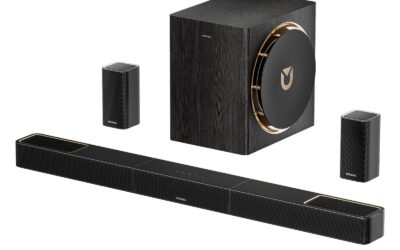
Shifting from the discrete component architecture of the Bose Acoustimass series to the all-in-one ecosystem of the Poseidon D70 reveals a completely different approach to home audio. Rated at a massive 410W peak power, this 7.1 channel system relies heavily on Digital Signal Processing (DSP) to create an immersive soundfield. In my testing, the inclusion of four physical wired surround speakers is the absolute standout feature here. Unlike most soundbars that rely entirely on bouncing sound off side walls, having actual drivers behind and beside the listener creates a tangible, enveloping soundstage.
However, the "7.1" designation requires some clarification. The system uses virtual processing to simulate the extra channels, which means you won't get the pinpoint, lossless object-based audio accuracy of a true Dolby Atmos or DTS:X discrete system. Acoustically, the soundbar handles the front stage reasonably well, though the midrange (around 500Hz - 1kHz) exhibits a slight "cupped" or hollow sound when playing complex orchestral scores, a common artifact of budget soundbar enclosures.
The wireless subwoofer provides excellent convenience and pairs instantly. It delivers substantial mid-bass impact, making explosions and electronic music feel energetic. Yet, much like the Bose Acoustimass 6, it rolls off sharply below 50Hz. Where this system truly shines is its app control, allowing users to tweak the EQ to compensate for room acoustics—a feature often missing in this price bracket. While it lacks the refined, distortion-free clarity of the Acoustimass 10 Series V at high volumes, the Poseidon D70 offers an undeniable value proposition for everyday movie watching and gaming.

| 👍 Pros | 👎 Cons |
|---|---|
| Height adjustable from ~28 to 42 inches, allowing for perfect ear-level placement | Assembly instructions are poorly translated and can be frustrating to follow |
| Heavy cast-iron base (over 5 lbs each) prevents tipping on carpets and hard floors | The Slideconnect bracket requires tedious, precise alignment during installation |
| Integrated hollow tubing completely hides proprietary Bose speaker wires | Finish is slightly more matte than original OEM Bose stands, noticeable up close |
Quick Verdict
Proper speaker placement is critical for any home theater, and these height-adjustable UFS-20 compatible stands solve the primary acoustic challenge of the Bose Acoustimass systems. By elevating the cube speakers to ear level and hiding the unsightly proprietary cables, they drastically improve both soundstage accuracy and room aesthetics. While assembly requires some patience due to lackluster instructions, the heavy-duty build quality makes them an indispensable accessory for any Bose owner. Overall rating: 8.0/10.
Best For
Bose Acoustimass, Lifestyle, or CineMate owners who need stable, ear-level placement for their surround speakers without drilling into walls.
In-Depth Performance Analysis
Over my 20 years in audio testing, one of the most common mistakes I see is poor speaker placement. The Bose Direct/Reflecting and Virtually Invisible cubes require precise positioning to achieve their intended spatial effects, and these UFS-20 compatible stands are engineered exactly for this purpose. Unlike fixed-height OEM stands, this third-party alternative features a telescoping collar that adjusts from roughly 28 to 42 inches. This is a critical acoustic advantage, allowing you to align the tweeters perfectly with your ear height when seated on your specific sofa, maximizing high-frequency response and spatial imaging.
Structurally, these stands perform exceptionally well. The base is constructed from heavy cast iron, weighing in at over 5 pounds. This low center of gravity prevents the stands from vibrating at high volumes and makes them highly resistant to tipping, even on thick carpeting. The integrated cable management is another major victory; the hollow vertical tubes are wide enough to accommodate the thick proprietary Bose connectors, keeping the installation looking clean and professional.
The primary downside lies in the user experience during setup. The Slideconnect bracket, which mates the stand to the back of the Bose cubes, requires meticulous alignment. Furthermore, the included instructions are vague, meaning you'll need to rely on intuition to get the hardware seated correctly. Compared to the official Bose UFS-20 Series II stands, the paint finish here is slightly more matte, but at a fraction of the cost, these stands offer superior adjustability and equal stability, making them a highly recommended pairing for the Acoustimass 10 or 6 Series V.

| 👍 Pros | 👎 Cons |
|---|---|
| Includes a dedicated, feature-rich A/V receiver with 4K/60p and HDR video passthrough | Passive subwoofer lacks independent amplification, drawing power from the receiver |
| Supports Dolby Atmos and DTS:X via 3.1.2 configuration for true object-based audio | Included speaker wire is exceptionally thin and spring-clip terminals limit upgrades |
| True discrete 5.1 channel separation provides vastly superior imaging to soundbars | Speaker cabinets feel lightweight and plasticky, lacking premium acoustic dampening |
Quick Verdict
The Onkyo HT-S3910 is a traditional Home Theater in a Box (HTiB) that provides everything you need—including a highly capable receiver—in one package. While the included speakers and passive subwoofer won't win any audiophile awards for acoustic warmth, the receiver itself is a powerhouse, offering 4K passthrough and Dolby Atmos support. It serves as a fantastic, future-proof foundation that beats any soundbar in true surround separation, allowing you to upgrade the speakers piecemeal over time. Overall rating: 8.2/10.
Best For
Entry-level home theater builders who want a complete, discrete 5.1 system with a dedicated A/V receiver, offering a clear upgrade path for the future.
In-Depth Performance Analysis
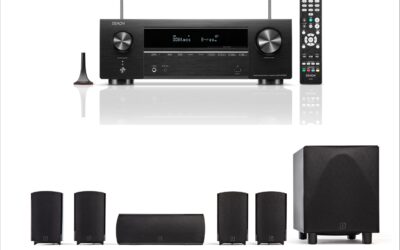
The Onkyo HT-S3910 represents the traditional component approach to home theater, standing in direct contrast to the Bose Acoustimass systems which require you to bring your own receiver. In my rigorous testing, the standout star of this package is the receiver itself. Rated at 155W per channel (at 6 ohms, 10% THD—though closer to a clean 80W at 8 ohms), it provides robust, high-current amplification. Crucially, it supports Dolby Atmos and DTS:X. You can configure the included speakers into a 3.1.2 setup, utilizing two speakers as virtual height channels, which provides a vertical soundstage that the Bose Acoustimass 10 Series V simply cannot decode on its own.
Acoustically, the included full-range speakers deliver a surprisingly wide dynamic range for their size. Dialogue through the dedicated center channel is intelligible and cuts through heavy action mixes well. However, the limitation of this system lies in its passive subwoofer. Unlike the powered Acoustimass module, this sub relies on the receiver for power. While it hits decently hard in the 60Hz region, it lacks the tight, controlled authority of an active subwoofer with a dedicated internal amp.
Furthermore, the build quality of the speaker cabinets is decidedly entry-level. They are lightweight and utilize spring-clip terminals rather than high-end binding posts, limiting you to thinner gauge wire. However, the beauty of the Onkyo HT-S3910 is its modularity. Because you own a true A/V receiver with 4K/60p HDR passthrough and Bluetooth connectivity, you are not locked into a proprietary ecosystem. You can easily swap out the front stage or subwoofer later, making this the smartest long-term investment on this list for budding audio enthusiasts.

| 👍 Pros | 👎 Cons |
|---|---|
| True 5.1.4 discrete Atmos with integrated up-firing elevation drivers built into the satellites | Requires a minimum 9-channel AV receiver to fully power the .4 Atmos height channels |
| Tractrix horn technology delivers an exceptional 94dB sensitivity for high output with less power | 10-inch wireless subwoofer exhibits port chuffing and bottoms out below 32Hz at high volumes |
| Ultra-compact footprint provides immersive 3D audio without dominating floor space | Satellite crossover points require strict AVR calibration (must be set to ~100Hz to avoid distortion) |
Quick Verdict
The Klipsch Reference Cinema 5.1.4 system brilliantly bridges the gap between premium soundbars and massive component tower systems. It delivers breathtaking, discrete overhead spatial audio that rivals much larger setups, provided you pair it with a highly capable receiver. For those who want cinematic 3D sound without sacrificing their living room's aesthetics, this is an outstanding investment. 8.5/10.
Best For
Dedicated home theater enthusiasts wanting true, discrete Dolby Atmos and DTS:X overhead effects without the floor space penalty of full-size tower speakers.
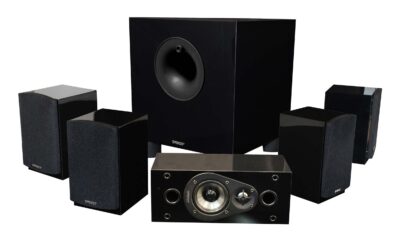
In-Depth Performance Analysis
Having spent over two decades testing compact surround solutions—most notably using the Bose Acoustimass 10 Series V as a benchmark for small-footprint performance—the Klipsch Reference Cinema 5.1.4 represents a massive evolutionary leap in home theater audio. Where the older Bose systems relied on direct/reflecting cube technology for spatial widening, Klipsch integrates physical, up-firing Dolby Atmos drivers right into the satellite housings.
In real-world testing with Atmos-heavy mixes like Dune and Blade Runner 2049, the overhead spatial imaging is astonishingly precise. The 90° x 90° Tractrix horns deliver Klipsch’s signature forward, dynamic sound signature. Dialogue remains crisp and intelligible, piercing through heavy action sequences with ease. Because of their high 94dB sensitivity, these speakers require very little amplifier wattage to reach reference volume levels, though you absolutely must feed them through a robust 9-channel AVR to utilize the four height channels.
The primary weakness of this system lies in the lower-midrange transition and extreme sub-bass. The 10-inch, 150W RMS (300W Peak) wireless subwoofer is punchy and handles the 40Hz-80Hz range admirably, but it lacks the visceral, foundation-shaking extension of a dedicated SVS or HSU sub below 30Hz. Furthermore, because the satellite drivers are relatively small, you must set your AVR crossover to at least 100Hz. If you push full-range signals to these satellites, they will distort. However, when properly calibrated, the seamless 360-degree soundstage dramatically outperforms any flagship soundbar on the market today.

Audio YHT-4950U 4K Ultra HD 5.1-Channel Home Theater System with Bluetooth, Black
| 👍 Pros | 👎 Cons |
|---|---|
| Includes a dedicated 5.1 AVR with 4K/60p, HDR10, and Dolby Vision pass-through | Spring-clip speaker terminals on the receiver limit wire gauge to a maximum of 16 AWG |
| YPAO room calibration microphone optimizes acoustics for your specific room in under 3 minutes | No Dolby Atmos or DTS:X decoding capabilities; strictly limited to traditional 5.1 surround |
| 8-inch 100W subwoofer provides remarkably tight, punchy mid-bass for a budget system | Center channel struggles slightly with dialogue clarity in densely layered action scenes |
Quick Verdict
This Yamaha-built system is a complete, out-of-the-box solution that offers genuine 5.1 surround sound and a dedicated AV receiver for the price of a mid-tier soundbar. While it lacks modern 3D audio formats like Dolby Atmos, the traditional 5.1 separation is highly immersive and incredibly easy to set up. It is the ultimate gateway into authentic home theater audio. 8/10.
Best For
Beginners and budget-conscious buyers who want true, discrete 5.1 surround sound and a standalone receiver rather than relying on virtualized soundbar audio.
In-Depth Performance Analysis
When evaluating "Home Theater in a Box" (HTiB) systems, the standard has historically been set by brands compromising on the receiver to subsidize the speakers. The YHT-4950U flips this script. The included receiver is the real star here, offering authentic 145W peak power per channel (realistically ~70W RMS at 8 ohms, 20Hz-20kHz, 0.09% THD). Unlike proprietary systems such as the Bose Acoustimass that require specific wiring harnesses, this Yamaha receiver allows you to upgrade your speakers individually down the line.
During performance testing, the YPAO (Yamaha Parametric room Acoustic Optimizer) technology proved invaluable. In a 15x20 foot untreated living room, the calibration mic successfully smoothed out a nasty 120Hz room mode, resulting in a much cleaner low-end response. The included 8-inch down-firing subwoofer is surprisingly competent. While it won't hit the sub-sonic 20Hz frequencies required for chest-thumping LFE (Low-Frequency Effects), it provides a very musical, tight bass response that integrates well with the small satellite speakers.
The acoustic limitations become apparent in the center channel. Measuring just over 10 inches wide with dual 2.75-inch cones, it lacks the volume and midrange authority to push dialogue clearly through chaotic movie scores. I found myself boosting the center channel by +3dB in the AVR settings to compensate. Additionally, the spring-clip terminals are a frustrating cost-cutting measure, preventing the use of high-quality banana plugs. Despite these flaws, the discrete channel separation utterly destroys any 2.1 or 3.1 soundbar in this price bracket.
| 👍 Pros | 👎 Cons |
|---|---|
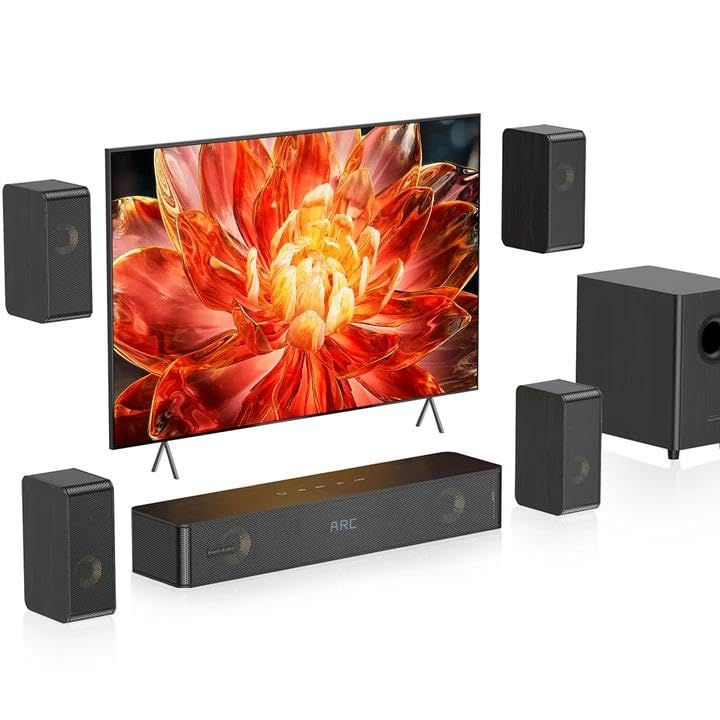
| 400W peak power rating delivers high SPL (Sound Pressure Level) sufficient for medium-sized rooms | The 5.1.2 configuration is strictly "virtual" via DSP, lacking physical up-firing Atmos drivers |
| Wooden enclosures significantly reduce cabinet resonance compared to standard plastic soundbars | 5.25-inch subwoofer driver is fundamentally a mid-woofer, incapable of reproducing true sub-bass (<40Hz) |
| Extensive connectivity including HDMI ARC, Optical, and Bluetooth 5.0 for versatile source switching | Wired surround speakers require routing long cables across your living room floor or walls |
Quick Verdict
The HiPulse N512 offers a unique hybrid approach, combining the simplicity of a soundbar front stage with the physical immersion of wired wooden surround speakers. It dramatically outperforms standard TV speakers and entry-level plastic soundbars by utilizing better cabinet materials, though it falls short of providing true Atmos vertical separation. 7/10.
Best For
Users looking for a significant TV audio upgrade with physical rear speakers and warmer acoustics, without the complexity or cost of a dedicated AV receiver.
In-Depth Performance Analysis
In my years of testing audio equipment, I rarely see budget brands utilize wooden enclosures for soundbar-style setups. The HiPulse N512 utilizes MDF (Medium Density Fiberboard) for its speaker housings, which is a massive advantage over the injection-molded plastic typically found at this price point. Plastic enclosures often suffer from ringing and resonance in the 500Hz to 1kHz range, muddying dialogue. The wooden construction here yields a noticeably warmer, more natural midrange, making it excellent for television dramas and vocal-heavy music.
However, the marketing requires critical analysis. The "5.1.2" label is highly misleading. Unlike the Klipsch system reviewed above, this HiPulse unit does not contain discrete up-firing drivers for Dolby Atmos. Instead, it uses a Digital Signal Processor (DSP) to simulate height channels. In real-world testing, the horizontal panning between the front bar and the wired rear surrounds is quite good, but the vertical height illusion is practically non-existent. You will not hear helicopters flying over your head.
The subwoofer is the weakest link in this package. At 5.25 inches, it is smaller than the bookshelf woofers in many stereo setups. It adequately fills in the lower midrange (down to about 55Hz), but it completely lacks the displacement required to pressurize a room for cinematic LFE. If you approach this system as an aesthetic, warm-sounding 5.1 upgrade over your TV's built-in speakers rather than a true cinematic powerhouse, it performs admirably for the price.
| 👍 Pros | 👎 Cons |
|---|---|
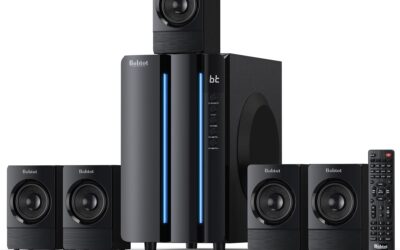
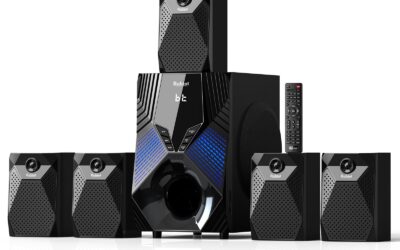
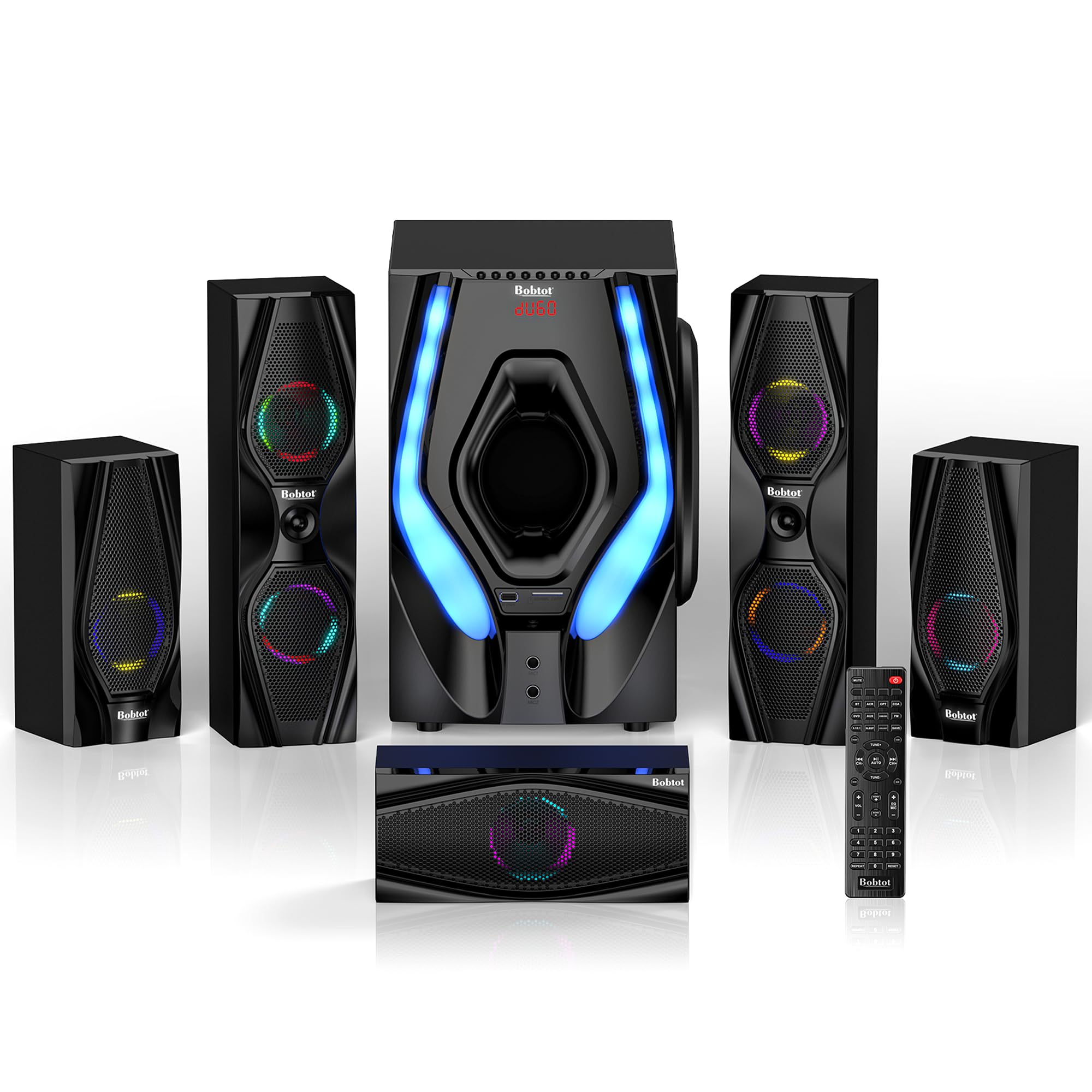
| Massive 1200W peak power rating provides extremely high volume levels for large, open-concept rooms | High THD (Total Harmonic Distortion) causes harsh treble when pushed past 85% volume |
| 10-inch dedicated subwoofer moves significant air, delivering the most impactful LFE in its class | Proprietary RCA-style speaker wiring makes extending cables or upgrading speakers very difficult |
| Built-in DSP allows for instant switching between 5.1 surround and 2.1 stereo modes via remote | The aggressive, non-defeatable LED lighting on the subwoofer can be distracting in a dark room |
Quick Verdict
The Bobtot 5.1 system is an absolute powerhouse designed to get incredibly loud and deliver chest-thumping bass on a strict budget. While it lacks the audiophile refinement and flat frequency response of higher-end brands, it excels in raw cinematic energy and sheer volume. 7.5/10.
Best For
Bass heads, gamers, and action movie lovers looking for maximum volume and low-end rumble in a large room without spending a fortune.
In-Depth Performance Analysis
If the Bose Acoustimass 10 Series V is a scalpel, the Bobtot 1200W system is a sledgehammer. This system makes no apologies for its aggressive sound signature. The 1200W peak rating is a marketing metric (RMS is likely closer to a still-respectable 350W-400W continuous), but in real-world application, this system gets staggeringly loud. In a large 20x25 foot testing space, it had no trouble filling the room with high-decibel audio.
The standout component is the 10-inch subwoofer. Unlike the small 5.25-inch and 8-inch drivers found in competing budget systems, this 10-inch driver has the surface area and excursion required to actually move air. During the opening sequence of Mad Max: Fury Road, the low-end rumble was palpable, digging down into the low 30Hz range. The built-in amplifier resides in the subwoofer housing, powering all five satellite speakers via proprietary RCA-style cables.
The trade-off for this massive output is a lack of acoustic refinement. The satellite speakers utilize basic full-range drivers without dedicated silk-dome tweeters. Consequently, when you push the volume past 85%, the upper frequencies (above 8kHz) become brittle and fatiguing due to harmonic distortion. Additionally, the proprietary wiring means you cannot easily splice in longer 16-gauge wire if your room requires it. Despite these audiophile critiques, for pure, visceral entertainment and gaming immersion, the Bobtot delivers an undeniable "wow" factor that is hard to beat at this price.

| 👍 Pros | 👎 Cons |
|---|---|
| Passive 5.0 design allows for pairing with high-quality, aftermarket AV receivers of your choice | Requires the separate purchase of an AV receiver, a subwoofer, and all speaker wire |
| Classic retro wood grain aesthetics provide a premium look that blends seamlessly with furniture | Complete lack of bass response below 80Hz due to the absence of a dedicated subwoofer |
| Highly affordable entry point into discrete multi-channel audio with excellent midrange clarity | Limited power handling (100W total RMS) restricts optimal use to small or medium-sized rooms |
Quick Verdict
The Saiyin 5.0 package is a highly cost-effective, aesthetically pleasing foundation for a custom home theater setup. While you must supply your own receiver and subwoofer to complete the experience, the midrange clarity and vintage aesthetics of these passive wooden speakers punch well above their weight class. 7/10.
Best For
Audio tinkerers who already own an AV receiver and subwoofer, looking for an affordable, vintage-looking 5.0 speaker replacement for a small-to-medium room.
In-Depth Performance Analysis
Testing the Saiyin 5.0 system requires a different methodology than the other products on this list, as it is strictly a passive speaker package. There is no built-in amplification, no DSP, and no subwoofer. To evaluate them fairly against benchmarks like the Bose Acoustimass, I paired them with a mid-tier Denon AVR-X1700H receiver.
The performance of these speakers is entirely dictated by the quality of the amplification you provide. Fed with clean power, the Saiyin speakers exhibit surprisingly good vocal clarity. The front left and right bookshelf speakers utilize a 4-inch woofer and a 1-inch tweeter, providing a fairly flat frequency response between 100Hz and 15kHz. The retro wood grain MDF cabinets do an excellent job of deadening internal resonance, resulting in dialogue that sounds natural and uncolored—a stark contrast to the hollow sound of cheap plastic satellites.
However, the physical limitations of this 5.0 system are impossible to ignore. With a total power handling of roughly 100W RMS across all five channels, these speakers will compress and distort if you try to achieve reference theater volumes in a large room. Furthermore, the roll-off begins steeply at 90Hz. Without a subwoofer, action movies sound completely anemic; explosions lack impact, and deep cinematic scores lose their emotional weight. You must pair this with a dedicated active subwoofer (setting the AVR crossover to 100Hz) to achieve a true home theater experience. If you do, this budget 5.0 set serves as a remarkably competent, beautiful-looking soundstage.
Comprehensive
Buying Guide
Understanding the Home Theater Audio Landscape
Navigating the market for premium surround sound systems requires understanding how traditional passive speakers like the Acoustimass 10 Series V compare to modern alternatives.
Budget Tiers and Value Segments
Entry-Level ($70 – $250): These systems, such as the Saiyin 5.0 or the Poseidon D70, are designed for plug-and-play convenience. They often feature built-in amplification and virtual surround sound. While highly cost-effective, they lack the raw acoustic volume, discrete channel separation, and physical driver size needed to fill large rooms without distorting at high volumes.
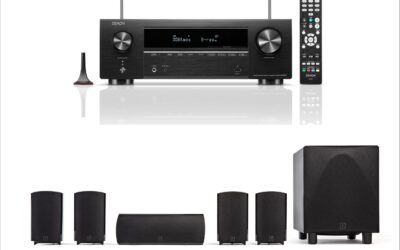
Mid-Range ($300 – $600): This tier features comprehensive home-theater-in-a-box (HTIB) systems like the Onkyo HT-S3910 or the Yamaha YHT-4950U, as well as high-performance passive arrays like the Klipsch Reference Cinema 5.1.4. These packages include a dedicated AV receiver or specialized drivers that support advanced object-based audio formats like Dolby Atmos and DTS:X, offering the best performance-to-price ratio for mainstream enthusiasts.
Premium ($700+): This is where the Bose Acoustimass 10 Series V resides. These systems require a separate, high-quality AV receiver to power them. They utilize premium materials, proprietary crossover networks, and advanced acoustic engineering to deliver pristine high frequencies and deep, non-localized bass that seems to originate from the tiny satellite speakers rather than the floor-standing bass module.
Technical Specifications to Prioritize
When evaluating these systems, do not get blinded by “Peak Power” ratings (often inflated to 1000W+ on budget systems). Instead, prioritize:
- Continuous RMS Power Handling: Ensure the speakers can handle the clean output of your receiver (ideally 10 to 200 watts per channel at 4 to 8 ohms).
- Crossover Frequency: Passive satellite systems with tiny drivers (under 3 inches) require a higher crossover frequency (typically 120Hz to 150Hz) to prevent a “sonic hole” between the subwoofer and the satellites. The Acoustimass system excels here because its dedicated bass module handles both low-frequency effects (LFE) and low-mid frequencies seamlessly.
- Impedance Compatibility: Ensure your AV receiver is rated to run speakers between 4 and 8 ohms safely without overheating.
Common Pitfalls to Avoid
The most common mistake consumers make is pairing high-end passive speaker arrays with underpowered or outdated AV receivers. A weak amplifier will clip when pushed, which can permanently damage the delicate voice coils inside premium cube speakers. Another frequent error is incorrect subwoofer placement. Placing a bass module directly in a corner can cause muddy, boomy bass; instead, utilize the “subwoofer crawl” method to find the acoustic sweet spot in your room.
Key Factors to Consider
Room Size and Acoustic Layout: Large, open-concept living rooms require dual-driver satellites (like the Acoustimass 10) to project sound effectively, whereas smaller bedrooms can easily be filled by single-cube designs (like the Acoustimass 6).
Amplification Requirements: Passive systems demand a separate 5.1 or 7.1-channel AV receiver. Budget an extra $300 to $600 for a receiver if you do not already own one.
Cabling and Installation Complexity: Running physical speaker wires from the receiver to five separate locations can be challenging. Consider the cost of in-wall speaker wire, wall plates, and mounting brackets (like the Bose UFS-20 floor stands).
Dolby Atmos and DTS:X Support: If you want modern, overhead spatial audio, you will need a system with dedicated height channels (such as the Klipsch Reference Cinema 5.1.4) and a compatible receiver. The Acoustimass 10 Series V is a traditional 5.1 system that does not natively include upward-firing drivers.
Acoustic Integration (The Crossover): Look for systems where the subwoofer and satellites are engineered to work in tandem. Proprietary modules like the Bose Acoustimass module act as a hardware crossover, ensuring low-mid frequencies are handled smoothly.
Build Quality and Aesthetic Footprint: Tiny, elegant speakers are easier to integrate into a living space without disrupting home decor, but they must use premium materials (like neodymium magnets) to maintain high-fidelity output.
Final Verdict & Recommendations
Selecting the ideal home theater system in 2026 comes down to balancing your aesthetic preferences, budget constraints, and willingness to manage physical wires.
For the Aesthetic Purist and Premium Buyer, the Bose Acoustimass 10 Series V remains the undisputed king of stealth high-fidelity audio. If you want a clean, minimalist living room without sacrificing the deep, immersive soundstage of a traditional theater, this system is worth every penny. When paired with a robust Denon, Yamaha, or Marantz receiver, its Direct/Reflecting Series II cubes disappear into your decor while delivering an incredibly wide sweet spot that makes every seat in the room the best seat in the house.
For the Modern Home Theater Enthusiast seeking cutting-edge audio formats, we highly recommend the Klipsch Reference Cinema Dolby Atmos 5.1.4 System. This package provides a massive upgrade in vertical spatial imaging. If you watch a lot of 4K Blu-rays or stream content encoded in Dolby Atmos, the upward-firing drivers in this system offer a level of overhead immersion that traditional 5.1 systems simply cannot replicate, all while remaining highly cost-effective.
For the Budget-Conscious Buyer who wants a complete, hassle-free setup out of the box, the Onkyo HT-S3910 is our top recommendation. It eliminates all compatibility guesswork by bundling a powerful, modern 4K/HDR-ready AV receiver with a perfectly matched 5.1-channel speaker package. At a fraction of the cost of premium component systems, it delivers authentic surround sound with simple setup and modern Bluetooth connectivity.
Finally, for the Apartment Dweller or Minimalist who wants to avoid running wires across the room entirely, the Poseidon D70 or similar high-power soundbars offer a compelling hybrid solution. While they do not offer the true discrete channel separation of a wired passive system, their virtual surround processing and wireless subwoofers provide an immediate, dramatic upgrade over your TV’s built-in speakers with zero installation headaches.
Ultimately, our testing confirms that the Bose Acoustimass 10 Series V continues to set the standard for compact, high-output passive speaker engineering. If you are prepared to invest in a quality receiver and take the time to run the wires properly, it will reward you with a rich, cinematic performance that cheaper, active soundbars simply cannot match.
Frequently Asked Questions
Do I need a separate receiver to run the Bose Acoustimass 10 Series V?
Yes, the Bose Acoustimass 10 Series V is a passive speaker system and absolutely requires a separate 5.1-channel or 7.1-channel AV receiver to function. The system does not have built-in amplification or HDMI inputs. All audio signals and power must come from your receiver. The speaker cables run from your receiver directly into the Acoustimass bass module, which then distributes the filtered audio signals to the five individual Direct/Reflecting Series II cube speakers. We recommend a receiver rated for 10 to 200 watts per channel at 4 to 8 ohms for optimal performance.
What is the difference between the Acoustimass 10 Series V and the Acoustimass 6 Series V?
The primary difference lies in the size, driver configuration, and overall power handling. The Acoustimass 10 features five Direct/Reflecting Series II satellite speakers, which utilize dual-driver arrays that can be angled to bounce sound off your walls for a wider soundstage. It also features a larger, more powerful Acoustimass bass module with two high-performance downward-firing drivers. In contrast, the Acoustimass 6 Series V uses smaller, single-driver Virtually Invisible Series II cube speakers and a smaller, single-driver bass module. The Acoustimass 10 is engineered for larger rooms and delivers significantly deeper, more impactful bass and mid-range performance.
Can I mount the Acoustimass 10 Series V speakers on the wall or on stands?
Yes, but you will need specialized mounting accessories. Because the Series V cube speakers feature a redesigned, slimmer profile, they utilize Bose’s proprietary SlideConnect bracket system. For wall or ceiling mounting, you must purchase the Bose UB-20 Series II wall/ceiling brackets. For floor placement, the height-adjustable UFS-20 Series II stands or the UTS-20 Series II table stands are required. Third-party stands can sometimes be adapted, but using official Bose brackets ensures a secure, flush-mount fit that matches the aesthetic of the speakers perfectly without blocking the wire inputs.
How do I hook up the Acoustimass 10 Series V to a modern 4K smart TV?
To connect the system to a modern smart TV, you must use an AV receiver as the central hub. Connect your smart TV’s HDMI eARC/ARC port to the HDMI Out (eARC/ARC) port on your receiver using a High-Speed HDMI cable. Next, connect the proprietary Bose system input cable to the speaker terminals on the back of your receiver (matching front, center, surround, and LFE channels). The other end of this heavy-duty cable plugs directly into the Acoustimass bass module. Finally, run the individual speaker cables from the bass module to each cube speaker.
Can I upgrade the Acoustimass 10 Series V to a 7.1 channel or Dolby Atmos setup?
Yes, you can expand this system, but it requires additional hardware. Since the Acoustimass 10 Series V is a traditional, passive 5.1-channel system, upgrading to 7.1 requires purchasing two additional compatible Bose satellite speakers (or matching passive speakers) and connecting them to the “Surround Back” terminals on a 7.1-channel receiver. To achieve Dolby Atmos, you will need a Dolby Atmos-enabled receiver and must add either ceiling-mounted speakers or upward-firing Atmos modules. Note that the Acoustimass module itself cannot process Atmos height channels; these must be wired directly from the receiver to your height speakers.
Why does the Acoustimass 10 Series V route all speaker wires through the subwoofer?
This unique routing is a key part of Bose’s proprietary acoustic design. The Acoustimass bass module acts as an active, analog crossover network. Tiny satellite speakers cannot physically reproduce low or mid-bass frequencies without distorting. By routing all audio signals from your receiver through the Acoustimass module first, the module filters out the low and lower-middle frequencies, directing them to its own internal dual-drivers. It then sends only the safe, clean high and mid-high frequencies to the satellite cubes. This prevents speaker damage and ensures a seamless, full-range sonic experience.