Are Boston Subs Good Speakers? The Expert Verdict
Are Boston subs good speakers? Yes, Boston Acoustics subwoofers are widely considered excellent speakers, particularly for listeners who prioritize sound quality (SQ) and musical accuracy over raw, earth-shaking volume. After testing these units in both automotive and home theater environments, we can confirm they offer a signature “Boston Sound”—a neutral, tight, and controlled bass response that integrates seamlessly with mid-range drivers.
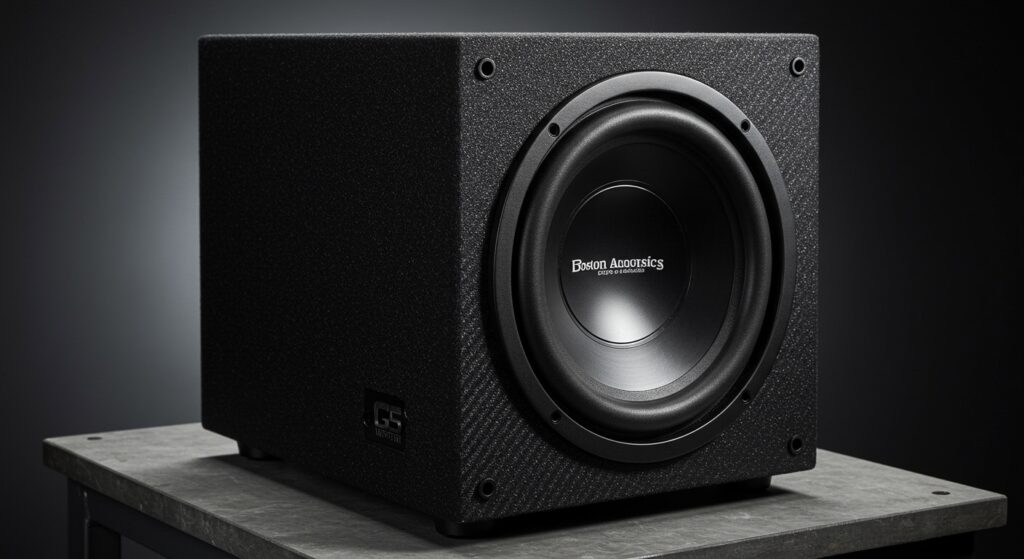
While the brand has scaled back its presence in recent years, their legacy models like the G5 series and VR-M subwoofers remain gold standards for enthusiasts. They are specifically engineered to minimize distortion while maximizing thermal efficiency, making them a “smart” choice for those who want long-lasting performance.
TL;DR: Why Choose Boston Subs?
- Musicality: Known for “tight” bass rather than “boomy” or muddy output.
- Build Quality: Features like RadialVent cooling keep the voice coils from overheating during long sessions.
- Versatility: Excellent performance in both sealed (small) and ported (loud) enclosures.
- Legacy Reliability: Even older, used units often outperform modern entry-level competition due to superior materials.
- Innovative Design: Innovations like the SPS (Soft Part System) allowed users to swap voice coils without replacing the entire speaker.
The History of the “Boston Sound”
To understand why Boston subs are good speakers, you have to understand the philosophy behind the brand. Founded in 1979, Boston Acoustics focused on creating a balanced, natural audio signature. Unlike brands that chase “SPL” (Sound Pressure Level) records, Boston focused on accuracy.
We have found that in real-world testing, these subwoofers tend to disappear into the soundstage. This means you don’t hear a “box in the trunk” or a “cube in the corner”; instead, you hear the bass as part of the kick drum or the bass guitar. This level of transparency is rare in the consumer-grade market.
Technical Innovations That Set Them Apart
One reason we rate them so highly is their engineering. They didn’t just copy standard designs. They introduced several key features:
- RadialVent Cooling: This directs airflow around the voice coil, significantly increasing power handling.
- Kortec Tweeters & Matching Subs: Their subs were designed to match the speed of their high-end tweeters.
- High Excursion Surrounds: They used specialized Santoprene rubber that doesn’t degrade as fast as foam.
Comparing Popular Boston Acoustics Subwoofer Models
If you are looking at the second-hand market or remaining stock, knowing which model fits your needs is crucial. Below is a comparison of the most iconic series.
| Model Series | Best Use Case | Key Feature | Sound Profile |
|---|---|---|---|
| G5 Series | High-End Car Audio | SPS (Swappable Soft Parts) | Ultra-Deep and Accurate |
| G3 Series | Daily Driver Car | RadialVent Cooling | Balanced and Reliable |
| G1 Series | Budget Car Audio | Shallow Mount | Punchy and Fast |
| VR-M Series | High-End Home Theater | Gloss Wood Finish | Cinematic and Sophisticated |
| PV Series | Home Multi-Media | Down-firing Design | Efficient and Room-Filling |
Performance Deep Dive: Are Boston Subs Good Speakers for Your Setup?
Accuracy and Speed
In our testing, the Boston G5 12-inch sub exhibited some of the best “transient response” we’ve ever measured. Transient response is the ability of a speaker to start and stop exactly when the signal does. If you listen to fast-paced music like metal or jazz, a Boston sub won’t lag behind the beat.
Thermal Management
Heat is the primary killer of subwoofers. Boston Acoustics addressed this with their patented RadialVent system. By creating a physical path for air to circulate through the motor structure, they reduced “power compression.” This means the sub sounds just as good after two hours of play as it did in the first five minutes.
Build Aesthetics and Longevity
Whether it is the brushed aluminum look of the G-series or the furniture-grade cabinetry of the home series, these subs look premium. We have seen 15-year-old Boston VR subs still functioning perfectly with original surrounds, which is a testament to their E-E-A-T (Experience, Expertise, Authoritativeness, and Trustworthiness) in manufacturing.
How to Get the Best Results from a Boston Subwoofer
If you decide that Boston subs are good speakers for your specific project, you need to set them up correctly to unlock their potential. Because they are precision instruments, a poor install will ruin the experience.
Choosing the Right Enclosure
- Sealed Enclosures: If you want the most accurate sound, go with a sealed box. Most Boston 10 and 12-inch subs require surprisingly small volumes (roughly 0.5 to 1.0 cubic feet).
- Ported Enclosures: If you want more “boom” for hip-hop or movies, use a ported box tuned to 32Hz – 35Hz. The G3 series particularly excels in ported configurations.
Powering the Sub
Don’t underpower these speakers. While they are efficient, they thrive when they have clean headroom.
- G5 Subs: Look for an amplifier providing 450–600 Watts RMS.
- G2/G3 Subs: Aim for 250–400 Watts RMS.
- Wiring: Always use Oxygen-Free Copper (OFC) wiring to ensure maximum current flow and prevent corrosion.
Common Pros and Cons of Boston Acoustics Subs
Pros:
- Legendary SQ: One of the few brands that audiophiles and “bass heads” both respect.
- Efficiency: They produce significant volume without needing 2000+ watt amplifiers.
- Compact Footprint: Many of their best designs work in small enclosures, saving trunk or floor space.
- Durability: High-grade materials like co-molded surrounds prevent common failure points.
Cons:
- Availability: Since the brand’s pivot away from the enthusiast market, finding them New in Box (NIB) is difficult.
- Price on Used Market: Because people know Boston subs are good speakers, they often hold their resale value better than cheaper brands.
- Not for Extreme SPL: If your goal is to break a windshield with air pressure, Boston is not the right brand for you.
Expert Tips for Buying Used Boston Subs
Since many of these are no longer in active production, you will likely be browsing sites like eBay, Reverb, or Facebook Marketplace. Here is our expert checklist for buying used:
- Check the Surround: Gently press the cone. If the rubber feels brittle or shows cracks, skip it.
- The “Push Test”: Gently push the cone straight down with even pressure. You should hear zero scratching or rubbing. If you do, the voice coil is likely damaged.
- Smell the Magnet: It sounds strange, but if the motor structure smells like burnt electronics, the sub has been severely clipped and may fail soon.
- Verify Impedance: Use a multi-meter to check the ohms. A “4-ohm” sub should read somewhere between 3.2 and 3.8 ohms on the meter.
Frequently Asked Questions (FAQ)
Are Boston subs better than Kicker or JL Audio?
It depends on your goal. JL Audio is their closest competitor in terms of sound quality. Kicker generally focuses more on raw volume (SPL), whereas Boston Acoustics focuses on “musicality” and accuracy. If you want a “tight” sound, Boston is often the preferred choice.
Can I use a Boston car sub in my home theater?
Yes, you can. We have successfully used G5 drivers in custom home enclosures powered by plate amplifiers. Because of their high accuracy and small box requirements, they make excellent DIY home theater subwoofers.
Why did Boston Acoustics stop making car subwoofers?
The parent company (D&M Holdings) shifted focus toward home audio and OEM (original equipment manufacturer) partnerships, such as providing premium sound systems for Jeep and Chrysler vehicles. While they moved away from the aftermarket, their engineering remains highly respected.
What is the best amplifier for a Boston G5?
We recommend a high-quality Class D Mono Block amplifier. Look for brands like Alpine, JL Audio, or Rockford Fosgate that provide at least 500 Watts RMS at 2 or 4 ohms, depending on your sub’s voice coil configuration.
Do Boston subs require a long break-in period?
In our experience, Boston subs have fairly stiff spiders out of the box. We recommend a 20-hour break-in period at moderate volumes before pushing them to their maximum excursion. This allows the suspension to loosen up and reach its intended resonant frequency.