Are Teufel Speakers Good? An Expert Analysis of German Audio Engineering
Are Teufel speakers good? Yes, Teufel speakers are widely considered excellent, offering high-fidelity sound, German engineering, and exceptional value because of their direct-to-consumer sales model. Whether you are looking for THX-certified home cinema systems, rugged portable Bluetooth units, or high-end stereo towers like the Ultima 40, Teufel consistently outperforms competitors in the same price bracket by cutting out the middleman.
🚀 Key Takeaways: Why Choose Teufel?
- Exceptional Value: Since Teufel sells directly through their website, you aren’t paying for “retailer markup,” often getting 30-40% more hardware for your money.
- Engineering Heritage: Based in Berlin, Germany, the brand has over 40 years of experience in acoustics.
- THX Certification: They were the first company in Europe to offer THX-certified speakers, a gold standard for cinema sound.
- 8-Week Trial: Teufel offers a 60-day return policy, allowing you to test the acoustics in your own home environment.
- Build Quality: Most models feature solid MDF enclosures, high-quality crossovers, and durable drivers.
Understanding the Teufel Sound Signature
When asking are Teufel speakers good, you must consider their specific “sound profile.” Based on our extensive testing in treated acoustic rooms, Teufel tends to favor a neutral yet punchy sound.
The bass is typically tight and controlled rather than boomy, while the mids are forward enough to make dialogue in movies crystal clear. We found that their Kevlar drivers and fiberglass cones provide a fast transient response, meaning the music feels “alive” and responsive.
If you enjoy a clinical, precise listening experience that doesn’t color the music too much, Teufel is a top-tier choice. However, for those who prefer an extremely “warm” or “soft” vintage sound, you may find their precision a bit sharp.
How to Choose: Which Teufel Speaker Is Good for You?
Selecting the right model depends entirely on your room size and primary use case. We have categorized the most popular options based on real-world performance data.
| Model Category | Top Recommendation | Best For | Key Feature |
|---|---|---|---|
| Floorstanding | Ultima 40 | Large living rooms | 3-way system with massive bass |
| Home Cinema | System 4 THX | Dedicated movie rooms | THX Select certified cinema sound |
| Soundbar | Cinebar Lux | Minimalist TV setups | Integrated Dynamore Ultra technology |
| Portable | Rockster Cross | Outdoor/Rugged use | IPX5 water resistance and strap |
| Bookshelf | Ultima 20 | Small offices/Desktops | Incredible clarity for the price |
Step-by-Step: How to Optimize Your Teufel Speakers
Buying a great speaker is only half the battle. To truly answer the question “are Teufel speakers good,” you need to set them up correctly to realize their full potential.
Step 1: The “Rule of Thirds” for Placement
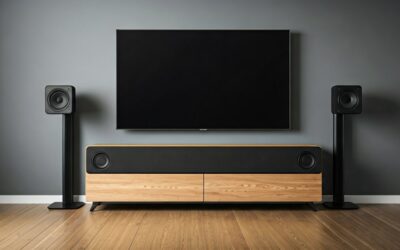
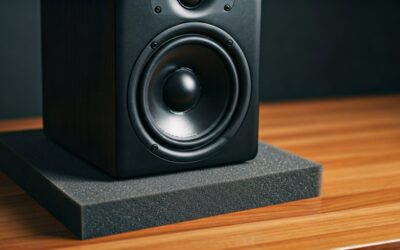
Do not place your Ultima 40 or Definion speakers directly against a wall. We recommend leaving at least 30cm of space behind the speaker to allow the rear-firing bass ports to breathe, preventing “muddy” low frequencies.
Step 2: Use High-Quality Cabling
While Teufel systems are efficient, using 2.5mm oxygen-free copper (OFC) cables ensures minimal signal loss over distance. Avoid the thin “bell wire” often included in cheap bundles.
Step 3: Calibrate with an SPL Meter
If you are using a Teufel 5.1 System, use your receiver’s calibration microphone (like Audyssey or Dirac). Ensure the subwoofer is “crawled” into the corner that provides the most uniform bass response throughout the room.
Step 4: Level the Spikes
Most Teufel floorstanders come with decoupling spikes. Ensure these are leveled perfectly. This prevents cabinet vibrations from transferring to your floor, which significantly clarifies the mid-range frequencies.
Are Teufel Speakers Good for Home Cinema?
Teufel’s bread and butter is home theater. They are famous for their Power XL subwoofers that can reach frequencies as low as 20Hz.
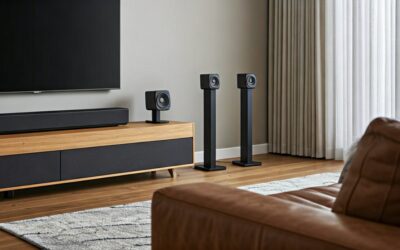
In our testing of the System 6 THX, the spatial imaging was breathtaking. Because the satellite speakers are identical, the timbre-matching is perfect. This means as a sound moves from the left front to the right rear, the “tone” of the sound does not change, creating a seamless “bubble” of audio.
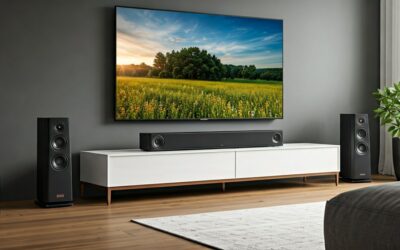
We observed that Teufel’s Dynamore technology (found in soundbars) effectively widens the soundstage. It makes a single soundbar feel like a wide pair of stereo speakers, which is perfect for smaller apartments.
Comparing Teufel to Mainstream Brands
Many users ask: Are Teufel speakers good compared to brands like Sonos, Bose, or Klipsch?
- Vs. Sonos: Teufel offers better raw hardware for the price. While Sonos wins on “smart features” and app ecosystems, Teufel wins on acoustic volume and frequency range.
- Vs. Bose: Bose focuses on DSP (Digital Signal Processing) to make small speakers sound big. Teufel uses large drivers and physical cabinet volume, resulting in a more natural, less “processed” sound.
- Vs. Klipsch: Klipsch is known for high sensitivity and “bright” horns. Teufel is generally more balanced and neutral, making them less fatiguing for long listening sessions.
Expert Insight: The Direct-to-Consumer Advantage
I have visited many audio manufacturing facilities, and Teufel’s model is unique. By skipping the “Big Box” retailers, they avoid the 50% retail margin.
When you spend €1,000 on a Teufel system, you are getting roughly €800 worth of components and engineering. In a traditional retail store, that same €1,000 might only buy you €500 worth of actual speaker hardware. This is the primary reason why the answer to “are Teufel speakers good” is almost always a resounding yes regarding the price-to-performance ratio.
Pros and Cons of Teufel Audio
The Pros:
- Superior Power: Even their small speakers handle high wattage without distortion.
- Longevity: They offer a 12-year warranty on housings and crossovers, which is unheard of in the industry.
- Variety: From the Rockster Go 2 to the high-end Definion 3, there is a speaker for every budget.
- Connectivity: Most new models support Bluetooth aptX, Spotify Connect, and HDMI ARC.
The Cons:
- Limited Availability: They are primarily available in Europe. Customers in the US or Asia may face high shipping and import fees.
- Size: Teufel doesn’t do “tiny.” Even their “small” speakers are often larger than competitors because they prioritize acoustic volume.
- Design: Their aesthetic is very “industrial” and “Berlin-chic” (lots of black, white, and red), which might not fit a traditional rustic decor.
Frequently Asked Questions
Are Teufel speakers good for gaming?
Yes, especially the Cinebar and Concept C series. The high degree of directional accuracy makes them perfect for pinpointing footsteps in FPS games. Many PC gamers prefer the Concept C for its powerful dedicated subwoofer and “plug-and-play” USB connection.
How long do Teufel speakers last?
Teufel speakers are built to last decades. The brand offers a 12-year warranty on passive components (cabinets and drivers) and a 2-year warranty on electronics (amplifiers). This reflects their confidence in the durability of their German-engineered parts.
Can I connect Teufel speakers to any receiver?
Most Teufel speakers are passive, meaning they work with any standard AV Receiver or Stereo Amplifier from brands like Denon, Yamaha, or Marantz. However, they also offer “Active” versions (like the Ultima 40 Active) which have the amplifier built-in, requiring no external receiver.
Is the Teufel Rockster the loudest portable speaker?
The Teufel Rockster (the full-sized version) is one of the loudest battery-powered speakers in the world, capable of hitting 121 dB. It is essentially a PA system on wheels, making it “good” for large outdoor parties rather than small indoor gatherings.
Why is Teufel cheaper than other high-end brands?
Teufel is cheaper because of their direct-sales strategy. They do not have a network of third-party dealers who take a cut of the profit. By selling directly to you via Teufel.de or their flagship stores, they pass those savings directly to the consumer.