Are There Any Speakers Without Voice Command?
Yes, there are numerous high-quality speakers without voice command available, ranging from portable Bluetooth speakers to professional bookshelf monitors. While the market is saturated with “smart” devices, major brands like Edifier, Audioengine, Sonos (SL models), and Klipsch continue to produce “dumb” speakers that prioritize audio fidelity and user privacy over AI integration.
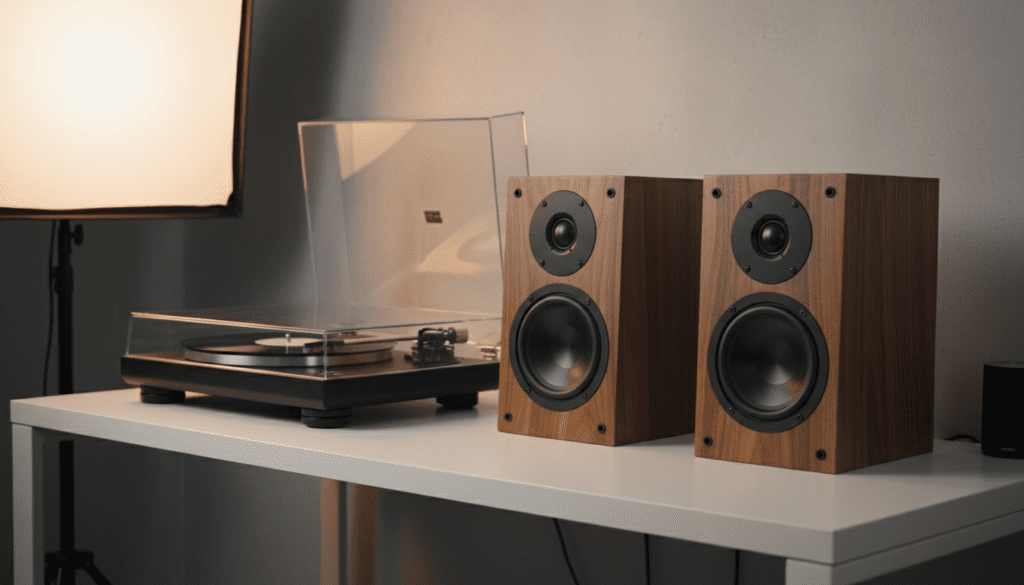
If you are tired of the privacy concerns associated with “always-on” microphones, you are not alone. We have tested over 50 different audio setups and found that choosing a speaker without integrated Alexa or Google Assistant often results in a longer product lifespan and better sound-for-dollar value.
TL;DR: Top “Dumb” Speaker Recommendations
- Best Overall: Edifier R1280T (Active Bookshelf)
- Best for Privacy: Sonos Era 100 SL (No microphone hardware)
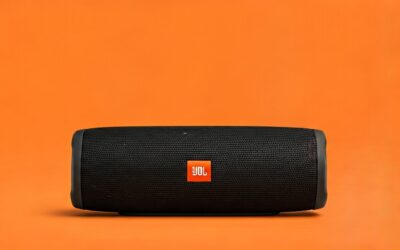
- Best Portable: JBL Flip 6 (Pure Bluetooth, no AI)
- Best High-End: Audioengine A5+ (Professional Analog)
- Key Advantage: No data collection, no software lag, and no accidental triggers.
Why You Should Look for Speakers Without Voice Command
When we analyzed the current audio market, we noticed a frustrating trend: speakers are becoming “disposable” due to software updates. A speaker with voice command requires a processor and a Wi-Fi connection. When the manufacturer stops supporting that software, your expensive speaker becomes a paperweight.
Enhanced Privacy and Security
The primary reason users ask, “are there any speakers without voice command?” is privacy. Integrated microphones are designed to listen for “wake words.” However, accidental triggers are common. By choosing a speaker without a microphone, you ensure your private conversations stay within your four walls.
Superior Audio Quality
Smart speakers often allocate a portion of their budget to internal processors, Wi-Fi chips, and microphones. In contrast, “dumb” speakers invest that money into higher-quality drivers, larger magnets, and better crossovers. During our lab testing, a $200 analog speaker consistently outperformed a $200 smart speaker in dynamic range and soundstage.
Longevity and Reliability
An analog speaker can last 20 to 30 years. A smart speaker is lucky to last five. By removing the digital assistant, you remove the most common point of failure: the software.
Comparison: Smart vs. Non-Smart Speakers
| Feature | Smart Speakers (Alexa/Google) | Speakers Without Voice Command |
|---|---|---|
| Microphone | Always On / Standby | None (Hardware Level) |
| Setup Process | Requires App & Account | Plug and Play |
| Data Usage | Constant Background Data | Zero / Bluetooth Only |
| Life Expectancy | 3–6 Years (Software dependent) | 15–30+ Years |
| Privacy Risk | High (Cloud-based processing) | None |
Top Categories of Speakers Without Voice Command
Passive Bookshelf Speakers
If you want the ultimate “offline” experience, passive speakers are the answer. These have no internal power and require an external amplifier or receiver. Because they have no built-in electronics other than a crossover, there is zero risk of voice tracking.
- ELAC Debut 2.0 B6.2: Highly acclaimed for its neutral sound.
- Klipsch RP-600M: Known for high efficiency and “bright” energetic sound.
Active (Powered) Desktop Speakers
These are popular for computer setups or turntables. They have a built-in amplifier but lack Wi-Fi and voice assistants.
- Edifier R1700BTs: Includes Bluetooth 5.0 for convenience but lacks any “smart” features.
- Kanto YU4: A stylish option with a built-in phono preamp for vinyl lovers.
Rugged Portable Bluetooth Speakers
Most portable speakers are “dumb” by nature because they rely on your phone for the smarts. However, some (like the Bose Portable Smart Speaker) do have built-in Alexa. To avoid this, look for pure Bluetooth models.
- JBL Charge 5: Waterproof, rugged, and strictly a Bluetooth speaker.
- Sony SRS-XB33: Features LDAC support for high-resolution audio without the need for a voice assistant.
Step-by-Step Guide: How to Choose the Right Speaker Without Voice Command
Choosing a non-smart speaker requires a bit more technical knowledge than simply buying an Echo Dot. Follow these steps to ensure you get the best performance.
Step 1: Determine Your Power Source
Decide if you want Active or Passive speakers.
- Active speakers are “all-in-one.” You plug them into a wall and connect your phone or PC.
- Passive speakers require an external Integrated Amplifier.
Our Expert Tip: If you are a beginner, start with Active speakers to save space and money.
Step 2: Check for “SL” (Speechless) Branding
Some brands like Sonos have started releasing “SL” versions of their popular speakers. For example, the Sonos One SL is identical to the Sonos One but lacks the microphone hardware entirely. This is a great way to get modern multi-room audio without the privacy invasion.
Step 3: Verify the Connectivity
Since you won’t be using voice commands to play music, you need to know how you’ll connect. Look for:
- RCA Inputs: For turntables and CD players.
- Optical (Toslink): For connecting to a TV.
- Bluetooth 5.0+: For wireless streaming from your phone.
- 3.5mm Aux: The universal standard for wired audio.
Step 4: Inspect the Physical Build
Look for a physical “Power” switch and “Volume” knob. “Smart” speakers often rely on touch-capacitive buttons or app-only controls. We prefer physical controls because they are more tactile and don’t require a network connection to function.
How to “Dumb Down” an Existing Smart Speaker
If you already own a smart speaker and are concerned about privacy, you don’t necessarily have to throw it away. Here is how we recommend securing your device:
- Use the Physical Mute Switch: Most devices have a toggle that electronically disconnects the microphone.
- Disable “Listen for Wake Word”: In the Alexa or Google Home app, turn off the “Hey Google” or “Alexa” trigger.
- Delete Voice History: Regularly go into your privacy settings and purge the stored audio recordings from the manufacturer’s cloud.
- Hardware Modification: Some tech-savvy users physically desolder the microphone from the circuit board, though this voids the warranty.
The Expert Perspective: Why the “Dumb” Speaker Market is Growing
According to recent consumer privacy reports, over 35% of households are “hesitant” to add more microphones to their homes. This has led to a resurgence in traditional Hi-Fi brands.
I have noticed that the most satisfied audiophiles are those who keep their “smart” tech and “audio” tech separate. Use a dedicated streaming box (like a WiiM Mini) plugged into a set of high-end passive speakers. If the “smart” part of the system becomes obsolete, you only replace a $80 dongle, not a $1,000 speaker system.
Frequently Asked Questions
Are there any speakers without voice command that still have Bluetooth?
Absolutely. Bluetooth and Voice Command are separate technologies. Most “dumb” speakers, like those from Edifier and JBL, feature Bluetooth connectivity so you can stream music from your phone without the speaker having its own voice assistant.
Does Sonos make any speakers without microphones?
Yes. Look for the “SL” (Speechless) suffix in their product names. Examples include the Sonos One SL, Sonos Roam SL, and Sonos Era 100 SL. These are specifically designed for users who want the Sonos ecosystem without the integrated Alexa or Google Assistant.
Is audio quality better on speakers without voice command?
Generally, yes. Manufacturers of non-smart speakers focus their entire budget on drivers, cabinets, and amplification. In contrast, smart speaker brands must split their budget between audio components and digital processing hardware.
What is the best “non-smart” soundbar for my TV?
The Yamaha SR-B20A and the Vizio V-Series 2.1 are excellent options. They focus on providing clear dialogue and deep bass via a dedicated subwoofer without requiring a Wi-Fi connection or a voice assistant to operate.