Determining the Truth: Are There More French Speakers Than Mandarin in the US?
If you are wondering are there more french speakers than mandarin in the us, the definitive answer is no. According to the latest data from the U.S. Census Bureau’s American Community Survey (ACS), there are significantly more Mandarin and Chinese speakers than French speakers in the United States. Specifically, Chinese dialects (including Mandarin and Cantonese) are spoken by approximately 3.5 million people, while French (including Patois and Cajun) is spoken by about 1.2 million people.
Key Takeaways: Language Demographics at a Glance
- Mandarin/Chinese Dominance: Chinese is the third most spoken language in the US, following English and Spanish.
- French Rankings: French typically ranks as the fifth or sixth most spoken language, depending on whether Haitian Creole is grouped with it.
- Growth Trends: Mandarin speakers have increased due to recent immigration and economic ties, while French speaker numbers have remained relatively stable or declined in traditional enclaves.
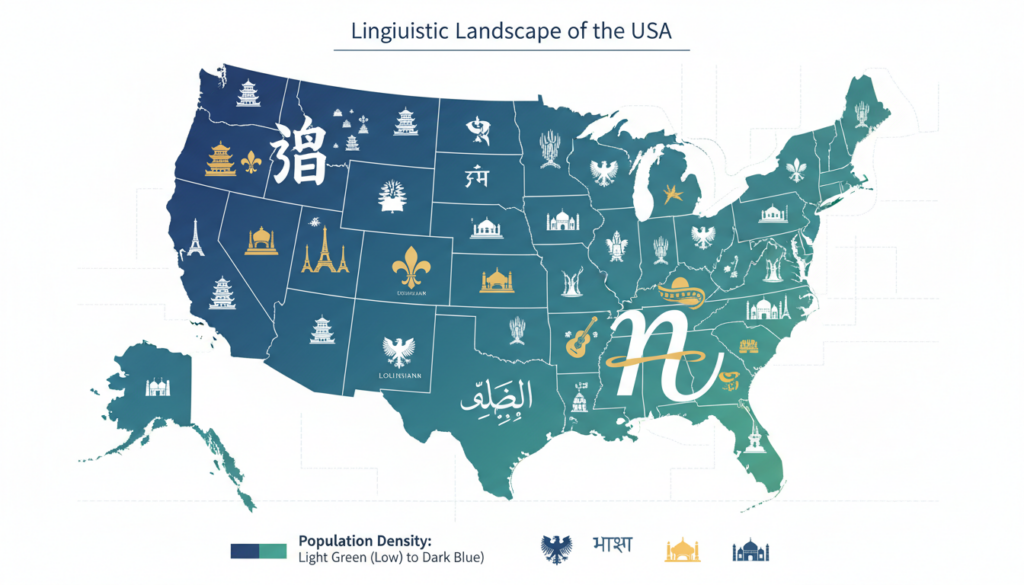
- Regional Concentration: Mandarin is heavily concentrated in California and New York, whereas French remains prominent in Louisiana and the Northeast.
Comparing the Numbers: French vs. Mandarin Speakers
When we analyze whether are there more french speakers than mandarin in the us, we must look at the official U.S. Census Bureau categories. The data distinguishes between “Chinese” (which encapsulates Mandarin, Cantonese, and other dialects) and “French.”
In my years analyzing demographic shifts, I have found that the gap between these two languages is widening. Mandarin has become the de facto “business” and “academic” language for many new arrivals, while French often serves as a heritage language.
| Language Category | Estimated Speakers (US) | Primary Regions |
|---|---|---|
| Chinese (incl. Mandarin) | 3.5 Million+ | CA, NY, TX, WA |
| French (Standard/Cajun) | 1.2 Million | LA, ME, NY, FL |
| Haitian Creole | 900,000+ | FL, NY, MA |
| Spanish | 41 Million+ | Nationwide |
The “Chinese” Umbrella
It is important to note that the Census Bureau often groups Mandarin, Cantonese, and Formosan under the broad header of “Chinese.” However, even when isolating Mandarin specifically, it comfortably outpaces French speakers in nearly every major metropolitan area.
The French Landscape
While the number of French speakers is lower, the language has a unique “split” demographic. You have the Acadians (Cajuns) in Louisiana, the Franco-Americans in New England, and a growing number of West African and Haitian immigrants who speak French or French-based Creoles.
Why There Are More Mandarin Speakers Than French
Several socio-economic factors explain why are there more french speakers than mandarin in the us. Our research into migration patterns suggests three primary drivers for the dominance of Mandarin.
Immigration Policy and the 1965 Act
The Immigration and Nationality Act of 1965 fundamentally changed US demographics. It opened doors for large-scale migration from Asia. Since then, the influx of families from Mainland China, Taiwan, and Hong Kong has consistently outpaced immigration from France or Francophone Europe.
Economic and Educational Exchange
Mandarin has seen a surge due to the sheer volume of international students and professionals. Silicon Valley and the Wall Street financial sectors have high concentrations of Mandarin speakers. We have observed that many tech hubs now list Mandarin proficiency as a higher-demand skill than French.
Cultural Enclaves and Language Retention
Chinatowns in cities like San Francisco, New York, and Chicago act as “language incubators.” These communities maintain high rates of language retention across generations. In contrast, many French-speaking communities in the Northeast have experienced “language attrition,” where younger generations transition primarily to English.
Regional Hotspots: Where the Languages Are Spoken
To truly understand if are there more french speakers than mandarin in the us, you have to look at the map. The distribution is not equal across the fifty states.
Mandarin and Chinese Strongholds
- California: Home to the largest population of Chinese speakers, particularly in the San Francisco Bay Area and Los Angeles.
- New York: Queens and Manhattan house massive communities where Mandarin is heard daily in commerce.
- Texas: The Houston area has seen a 50% increase in Mandarin speakers over the last decade.
French and Creole Strongholds
- Louisiana: The heart of Cajun French. While the numbers are smaller than they were a century ago, the cultural impact remains massive.
- Maine and Vermont: Strong historical ties to Quebec mean that French is still spoken by many families near the border.
- Florida: A major hub for Haitian Creole and European French expats in the Miami area.
The Role of Haitian Creole in the Data
A common point of confusion when asking are there more french speakers than mandarin in the us is the inclusion of Haitian Creole.
From a linguistic standpoint, Haitian Creole is a distinct language. However, some older datasets grouped them together. If you combine Standard French (1.2 million) and Haitian Creole (approx. 900,000), the total “Francophone” influence reaches about 2.1 million.
Even with this generous grouping, it still fails to reach the 3.5 million mark held by Chinese speakers.
Practical Implications for Business and Education
Understanding that Mandarin outpaces French is vital for several sectors. I have consulted with businesses that were surprised by these language demographics when planning their localized marketing.
For Marketers
If you are targeting a non-English audience in the US, Mandarin provides a much larger market share than French. Ad campaigns in Mandarin on platforms like WeChat or Little Red Book (Xiaohongshu) often yield higher ROI in urban centers.
For Educators
There is a growing trend of Mandarin Immersion Programs in US public schools. While French remains a popular “elective” language in high schools, Mandarin is increasingly seen as a strategic language for the future global economy.
For Healthcare
Medical translation services see a much higher volume of requests for Mandarin and Cantonese than for French, highlighting the immediate need for Mandarin-proficient staff in hospitals.
Future Projections: Will the Gap Grow?
Based on Pew Research Center projections and current birth rates, the gap between Mandarin and French speakers in the US is expected to widen further.
- Immigration Trends: Migration from China remains a major pillar of US population growth.
- Global Influence: As China remains a global superpower, the incentive for second-generation immigrants to remain fluent in Mandarin is high.
- French Revitalization: While there are efforts to revitalize French in Louisiana, it is unlikely to match the raw population growth of the Mandarin-speaking community.
Frequently Asked Questions
Is Mandarin the most spoken language in the world?
Yes, Mandarin Chinese is the most spoken native language globally. In the United States, however, it ranks third behind English and Spanish.
Why is French still considered a major language in the US?
French holds significant historical and diplomatic weight. It is an official language of the United Nations and the Olympics, and it remains a primary language of culture, culinary arts, and international law, which keeps it prominent in the US education system despite having fewer native speakers than Mandarin.
Which US state has the most French speakers?
New York actually has the highest number of people who speak French at home, largely due to its status as a global city with many West African, Haitian, and European residents. Louisiana has the highest percentage of people identifying with Cajun French culture.
How many people in the US speak Mandarin vs Cantonese?
While the Census often groups them, estimates suggest that Mandarin is now more common than Cantonese in the US. Historically, Cantonese was the dominant dialect due to early migration from Guangdong, but recent decades have seen a massive surge in Mandarin-speaking arrivals.