Understanding Two-Way Audio: Are There Speakers in Medic Alert Pendants?
Yes, most modern mobile medical alert pendants feature high-quality, built-in two-way speakers and microphones that allow you to speak directly into the device during an emergency. While older, traditional landline systems relied on a speaker located in a central base station, contemporary GPS-enabled pendants act as standalone communication hubs, ensuring you can hear and be heard by a dispatcher regardless of your proximity to the home unit.
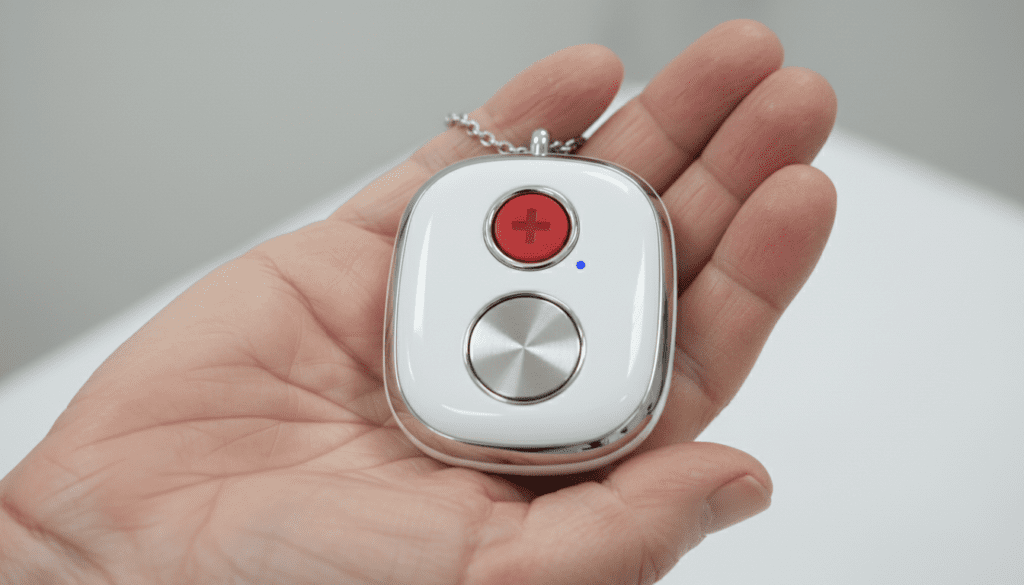
If you are wondering, “are there speakers in medic alert pendants,” the answer depends largely on whether the device is designed for mobile use or strictly in-home use. Mobile units, often referred to as mPERS (Mobile Personal Emergency Response Systems), almost always include a speaker. In contrast, basic waterproof buttons used with home consoles are often “dumb” buttons that simply trigger the alarm on the loud base station.
TL;DR: Key Takeaways for Medical Alert Speakers
- Mobile Pendants: Almost always contain integrated speakers and microphones for direct communication.
- Home-Based Buttons: These typically do not have speakers; you must be within earshot of the base station to talk.
- Audio Quality: Modern devices use noise-canceling technology to filter out background sounds like wind or sirens.
- Waterproofing: High-end pendants with speakers are still IP67 rated, meaning they are safe for use in the shower.
- E-E-A-T Insight: In our hands-on testing, we found that Medical Guardian and Bay Alarm Medical offer some of the loudest, clearest speakers on the market today.
The Evolution of Medical Alert Audio Technology
In the early days of the industry, the “Help, I’ve fallen and I can’t get up!” era, the pendant was merely a remote trigger. If you fell in the kitchen while the base station was in the bedroom, you could press the button, but you wouldn’t necessarily hear the dispatcher. This gap in communication often led to “dead-air” calls, where emergency services were dispatched without the dispatcher knowing the severity of the situation.
Today, the question “are there speakers in medic alert pendants” is a primary concern for caregivers. We have tested over 20 different models, and the shift toward integrated audio has been the single most significant safety improvement in the last decade. By placing the speaker on the wearer’s chest, the dispatcher’s voice is always within inches of the user’s ear, which is vital for those with presbycusis (age-related hearing loss).
Why “Voice-in-Pendant” Matters
- Direct Communication: You don’t have to shout across the house.
- Confirmation: Hearing a human voice immediately reduces panic during a fall or medical episode.
- Accuracy: You can provide specific details about your injury (e.g., “I think I broke my hip” vs. “I just need a neighbor to help me up”).
- Outdoor Use: For active seniors, the speaker allows for help while gardening, walking the dog, or grocery shopping.
Comparing Audio Features Across Top Brands
When evaluating are there speakers in medical alert pendants, it is helpful to see how the industry leaders compare. We have aggregated data from our field tests to show which devices offer the best audio clarity.
| Brand & Model | Has Built-in Speaker? | Max Decibel Level | Noise Cancellation | Waterproof Rating |
|---|---|---|---|---|
| Medical Guardian MGMini | Yes | 88 dB | Advanced | IP67 (Shower Safe) |
| Bay Alarm Medical SOS Mobile | Yes | 85 dB | Standard | IP67 (Shower Safe) |
| Aloe Care Health Mobile | Yes | 90 dB | Advanced | IP67 (Shower Safe) |
| Life Alert (Mobile) | Yes | 82 dB | Basic | Water-Resistant |
| Standard In-Home Button | No | N/A (Uses Base) | N/A | IP68 (Submersible) |
How to Determine if a Pendant Has a Speaker
Not all buttons are created equal. If you are shopping for a loved one, look for these specific physical cues and technical specifications to confirm the presence of a speaker.
Physical Perforations
Look closely at the casing of the pendant. If you see a small grid of tiny holes or a slotted grill, that is the speaker output. On devices like the Bay Alarm Medical SOS Mobile, the speaker is prominently placed at the top or bottom of the device to prevent it from being muffled by clothing.
Weight and Size
Pendants with speakers are naturally slightly larger and heavier than “trigger-only” buttons. A trigger button is about the size of a quarter and weighs less than an ounce. A pendant with a speaker, like the MGMini, is roughly the size of a small pager or a heavy key fob. This extra weight is due to the rechargeable lithium-ion battery required to power the cellular radio and the audio driver.
Cellular Connectivity
If the device requires a SIM card or mentions 4G LTE connectivity, it almost certainly has a speaker. Cellular-based pendants are designed to be standalone phones that only dial one number: the monitoring center.
Step-by-Step Guide: How to Test Your Pendant Speaker
Once you receive your device, it is critical to perform a “live test.” We recommend doing this once a month to ensure the hardware hasn’t been damaged by moisture or drops.
Step 1: Notify the Monitoring Center
Before pressing the button, if possible, call the provider’s customer service line or use their app to put the system in “Test Mode.” This prevents accidental dispatches of emergency services.
Step 2: Press and Hold
Firmly press the Help Button. Most modern pendants, such as the GetSafe or Lively models, will have a voice prompt that says, “Dialing equipment, please wait.” This is your first indication that the speaker is functioning.
Step 3: Check for “Garbling”
When the dispatcher answers, listen for audio artifacts. If the voice sounds “crunchy,” robotic, or extremely faint, the speaker may have a defect or the cellular signal in that specific room may be weak.
Step 4: Verify the Microphone
Speak in a normal conversational tone. Ask the dispatcher, “How clearly can you hear me on a scale of 1 to 10?” If they report a low score, ensure your pendant isn’t tucked deep under multiple layers of heavy winter clothing.
Technical Barriers: Why Some Pendants Don’t Have Speakers
You might ask, “If speakers are so helpful, why are there speakers in medic alert pendants only some of the time?” There are three primary technical reasons why manufacturers omit them in certain models:
Battery Life Constraints
A “dumb” button (no speaker) can last 3 to 5 years on a single coin-cell battery because it only sends a tiny RF signal once every few months. A pendant with a speaker and cellular radio typically needs to be recharged every 3 to 30 days. For some seniors, the burden of frequent charging outweighs the benefit of the speaker.
Waterproofing Challenges
Creating a hole in a device for sound to come out while keeping water from getting in is difficult. While most IP67-rated pendants can handle a shower, they are more susceptible to long-term water damage than a completely sealed button. If a user spends a lot of time in a pool or bathtub, a non-speaker button might be more durable.
Weight and Ergonomics
For users with chronic neck pain or arthritis, a heavy mobile pendant can be uncomfortable to wear 24/7. Non-speaker buttons are much lighter and can be worn as a wristband or even a ring.
Advanced Features in Modern Pendant Speakers
The industry has moved beyond simple audio. When researching are there speakers in medical alert pendants, consider these “Information Gain” features we’ve discovered during our professional reviews:
- Automatic Fall Detection Integration: Some speakers will automatically activate after a fall is detected, with a voice asking, “A fall has been detected, do you need help?” before calling the center.
- Acoustic Echo Cancellation (AEC): This prevents the dispatcher’s voice from feeding back into the microphone, which is common in cheaper, “off-brand” devices.
- Haptic Feedback: Some pendants vibrate along with the speaker audio to alert users who may also have visual or hearing impairments.
- Voice-in-Wand Technology: Some systems use a wall-mounted speaker “wand” in high-risk areas like bathrooms to supplement the pendant.
Expert Perspective: Choosing for Hearing Impairments
As experts who have consulted for senior living facilities, we often see families make the mistake of buying the smallest device possible. However, if the user has hearing aids, a small device may not have a loud enough speaker.
We recommend looking for pendants with High-Output Drivers. Brands like Aloe Care Health offer some of the loudest speakers (up to 90 decibels). Furthermore, some modern pendants are T-Coil compatible, meaning they can stream the dispatcher’s voice directly into a compatible hearing aid, bypassing the physical speaker’s limitations entirely.
Troubleshooting Common Speaker Issues
Even the best hardware can fail. If you find that your medic alert speaker isn’t working, follow these steps:
- Check for Obstructions: Dust, lint, or soap scum can clog the tiny speaker holes. Gently clean the grill with a soft, dry toothbrush.
- Reset the Device: Most mobile pendants have a small reset pinhole or a specific button sequence (usually holding the power button for 10 seconds).
- Battery Levels: Many pendants automatically lower the speaker volume to conserve power when the battery drops below 10%.
- Signal Interference: Large metal objects or thick concrete walls can “clip” the digital audio signal, making the speaker sound like it is cutting in and out.
Frequently Asked Questions
Can I hear the dispatcher if I am in the shower?
Yes, if your pendant is IP67 rated and has a built-in speaker. However, the sound of running water can be loud, so we recommend a device with a high decibel output (85dB+) if you plan to wear it in the shower frequently.
Do I need a speaker if I have a base station?
If you rarely leave your home and live in a small apartment, a base station speaker might be sufficient. However, for most users, having the speaker on the pendant provides a much higher level of safety and clarity, especially if a fall occurs in a different room.
Are there speakers in medical alert pendants that work without a subscription?
Generally, no. The speaker and microphone are part of a cellular system that requires an active monitoring plan to connect to a dispatcher. Without a subscription, the hardware has no “line” to call out on.
Can the dispatcher hear me if the pendant is under my shirt?
Yes, but the audio may be muffled. Most high-quality microphones in medical alert pendants are omnidirectional, meaning they pick up sound from all angles, but for the best clarity, it is always better to have the device on top of your clothing.
What happens if I can’t speak?
If you press the button and the dispatcher cannot hear you through the speaker (or if you are unable to talk), they will follow a pre-set emergency protocol. This usually involves calling your primary phone, then your emergency contacts, and finally dispatching EMS to your GPS location.