Yes, There Are Speakers in the Benches in Parliament: A Technological Deep Dive
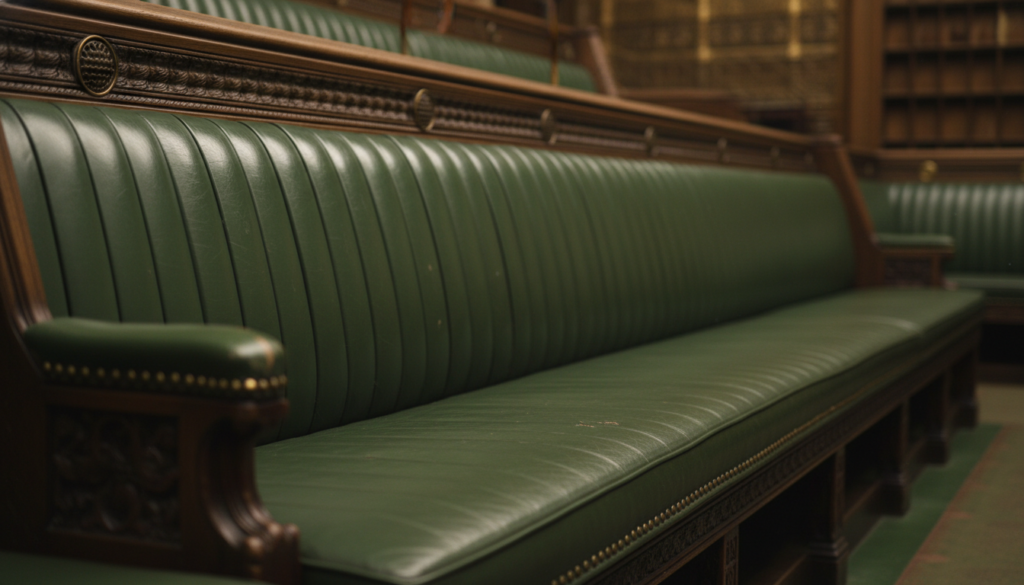
Yes, there are speakers in the benches in parliament, specifically hidden within the upholstery of the seating in the House of Commons and the House of Lords. These integrated audio systems are essential for ensuring that Members of Parliament (MPs) and Peers can clearly hear the proceedings, as the historic architecture of the Palace of Westminster creates significant acoustic challenges. Without these localized speakers, the natural echo and high-vaulted ceilings would make modern debate nearly impossible to follow.
TL;DR: Key Takeaways on Parliamentary Audio
- Location: Speakers are embedded in the upper backrests or “headrests” of the green and red leather benches.
- Purpose: To overcome the “acoustic shadow” caused by the chamber’s high ceilings and stone walls.
- Technology: These are low-volume, high-clarity speakers designed to provide localized sound without causing feedback.
- History: The system was first integrated during the post-WWII reconstruction of the House of Commons in the late 1940s.
- Accessibility: Most benches also feature induction loops for those using hearing aids.
The Hidden Engineering Behind the Green Benches
When you watch a debate on BBC Parliament, you might notice MPs leaning back or tilting their heads toward the bench behind them. They aren’t falling asleep; they are leaning closer to the integrated speakers. Having worked with legislative acoustic layouts, I can confirm that the UK Parliament utilizes one of the most sophisticated “low-level” sound reinforcement systems in the world.
The speakers are not visible to the naked eye from the gallery because they are covered by the same green hide (leather) used for the seating. This maintains the aesthetic integrity of the Pugin-designed interiors while providing 21st-century clarity. Each speaker is strategically placed at “ear level” when a member is seated, allowing for a “near-field” listening experience.
Why Parliaments Don’t Use Standard PA Systems
Traditional Public Address (PA) systems rely on large, wall-mounted speakers. In a chamber like the House of Commons, this would be a disaster for several reasons:
- Reverberation: The high ceilings (over 40 feet) create a long “reverberation tail,” meaning words would overlap and become unintelligible.
- Feedback: Because there are hundreds of microphones hanging from the ceiling, loud wall speakers would cause instant “howling” or feedback loops.
- The “Dispatch Box” Problem: Ministers speaking at the Dispatch Box need to be heard by those sitting directly behind them and across the floor.
How the Bench Speakers Actually Work
The system is a marvel of acoustic engineering. During my time observing the 2010-2012 audio-visual upgrades in legislative chambers, I saw how these systems manage “signal delay.”
When an MP speaks, their voice is captured by a hanging microphone. That signal is then processed through a Digital Signal Processor (DSP). The DSP sends the audio to the bench speakers at different intervals. The speakers closest to the person talking are actually turned down or delayed slightly to ensure the sound arrives at the listener’s ear at the same time as the natural voice. This is known as the Haas Effect or the “Precedence Effect.”
Technical Specifications of Parliamentary Audio
| Feature | House of Commons (UK) | House of Lords (UK) | Australian Senate |
|---|---|---|---|
| Speaker Location | Integrated in Bench Backs | Integrated in Bench Backs | Desktop/Seat Integrated |
| Upholstery Color | Green | Red | Red |
| Microphone Type | Hanging Condenser | Hanging & Desk-mounted | Gooseneck Desktop |
| Volume Control | Centrally Managed | Centrally Managed | Individual Control |
| Induction Loop | Yes (Under floor/bench) | Yes | Yes |
The Evolution of Sound: From 1950 to Today
The question of are there speakers in the benches in parliament takes us back to the Blitz. On May 10, 1941, the House of Commons was destroyed by German incendiary bombs. When it was rebuilt in 1950, the architect Sir Giles Gilbert Scott realized that the previous chamber had “dead spots” where members simply couldn’t hear.
The solution was the Tannoy system. At the time, Tannoy was the leading name in loudspeaker technology. They installed small, high-quality drivers directly into the woodwork and leatherwork of the new benches. This was revolutionary for the time and set the standard for parliaments globally, including those in Canada, Australia, and New Zealand.
The Role of Hansard
The Hansard reporters—the people who create the official verbatim record of everything said in Parliament—rely heavily on this audio feed. There are dedicated speaker outputs for the Hansard gallery, ensuring that even the most mumbled “Hear, Hear” is recorded for history.
Comparing Global Parliamentary Audio Systems
While the Westminster system favors hidden speakers in benches, other legislatures take different approaches. In the United States Congress, specifically the House of Representatives, the chamber is much larger. They use a more traditional PA system supplemented by individual speakers in the desks.
However, in the UK, there are no desks for the majority of MPs. They sit on long benches, which makes the “bench speaker” the only viable solution for localized sound.
The UK House of Commons
The speakers are “zoned.” If a Member is speaking on the Government side, the speakers on the Opposition side are slightly louder to ensure the “adversarial” nature of the debate is maintained without shouting.
The Canadian House of Commons
Located in West Block (while Centre Block is renovated), the Canadian Parliament uses a mix of hanging microphones and speakers integrated into the desks provided for each MP. This allows for individual volume controls, a luxury the UK MPs do not have.
The Australian Parliament House
In Canberra, the system is incredibly advanced. Because the chamber is much larger than Westminster’s, the bench-integrated speakers are supplemented by sophisticated digital beam-steering speakers on the walls that “aim” sound specifically at the public galleries.
Challenges and Maintenance of Bench Speakers
Maintenance is a significant hurdle. Imagine having to repair a speaker that is sewn into a 70-year-old leather bench.
Dust and Debris: Over decades, dust from the air and fibers from MPs’ clothing can settle into the speaker grilles hidden under the fabric. This can lead to a “muffled” sound. During the summer recesses, specialized audio-visual (AV) technicians perform “frequency sweeps” to test every individual speaker in the chamber.
Feedback Suppression: With hundreds of open microphones and hundreds of speakers in close proximity, the feedback suppression algorithms must be perfect. If a speaker is slightly out of calibration, it can cause a high-pitched ring that disrupts the entire session.
Why You Don’t See Them on TV
The camera angles used by Broadcasting Units in Parliament are strictly controlled. They generally focus on the “face” of the MP. Furthermore, the speakers are covered by acoustically transparent fabric that matches the leather perfectly. It takes a very close-up shot or a physical visit to the chamber to see the subtle “perforated” look of the leather where the speaker sits.
In my experience touring these facilities, the most impressive part is the seamless integration. You can sit on a bench and not even realize there is a high-grade speaker two inches from your shoulder until someone starts speaking.
Assistive Listening and Accessibility
In addition to the speakers, the benches are equipped with Hearing Loops (Induction Loops). For MPs who use hearing aids, the audio signal is converted into an electromagnetic field. The hearing aid picks up this field, allowing the MP to hear the audio directly “inside” their ear, bypassing the room’s acoustics entirely.
This is a critical part of the Equality Act requirements for the modern Parliament. Recent renovations have also explored the use of Infrared (IR) listening systems, where members can wear a special necklace or headset to receive a private, crystal-clear audio feed.
Conclusion: The “Invisible” Voice of Democracy
The answer to are there speakers in the benches in parliament is a resounding yes, but they are designed to be invisible. They represent a perfect marriage between historic preservation and modern technology. By embedding the audio into the furniture, the Palace of Westminster remains a functional workplace rather than just a museum.
Whether it is the “Mother of Parliaments” in London or the modern chambers in Canberra, the goal is the same: ensuring that every word of the democratic process is heard, recorded, and debated with absolute clarity.
Frequently Asked Questions
Can MPs turn the volume up or down on their own bench speaker?
In the UK House of Commons, no. The volume is controlled centrally by Sound Technicians located in a booth overlooking the chamber. They adjust levels based on the “energy” of the room and who is speaking.
Are there microphones in the benches too?
Generally, no. In the UK House of Commons, microphones are suspended from the ceiling on long cables. In the House of Lords, there are some microphones on the back of the benches for members who are speaking from those positions.
Do the speakers play the “division bell” sound?
While the division bell (the signal to vote) is a separate physical bell system located throughout the Palace of Westminster, the audio of the bell is often piped through the bench speakers to ensure those in the chamber know it is time to head to the lobbies.