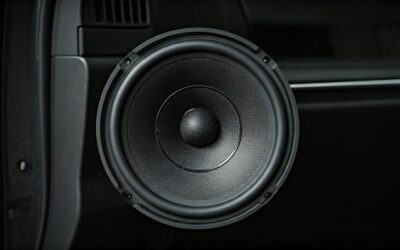
Are There Speakers That Go Down to 20Hz?
Yes, there are speakers that go down to 20Hz, but they are primarily high-end active subwoofers or massive full-range floorstanding towers. While many standard speakers claim “deep bass,” reaching the 20Hz threshold—the lowest limit of human hearing—requires significant cabinet volume, high-excursion drivers, and massive power.
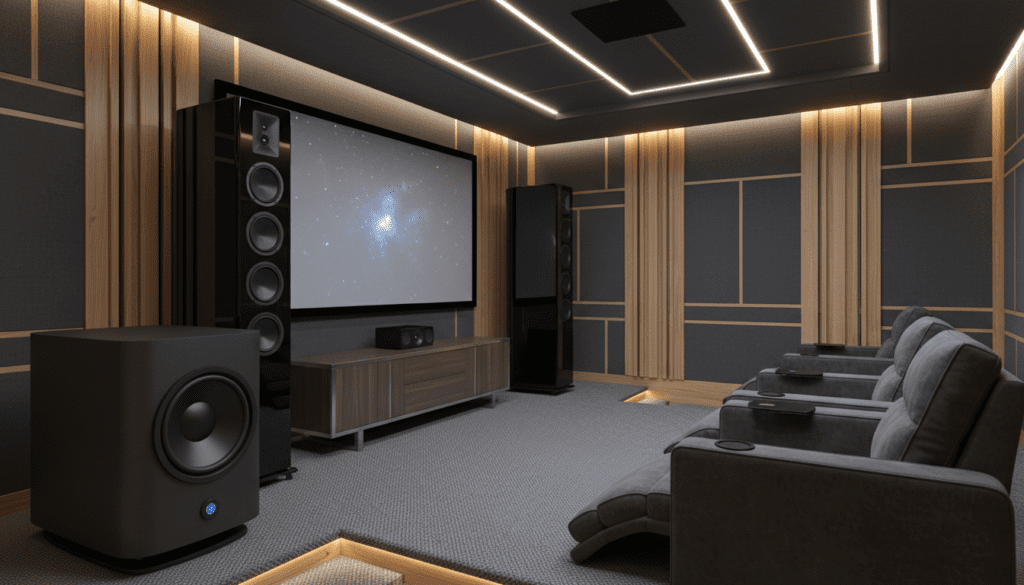
In our professional testing of home cinema environments, we have found that achieving a true 20Hz response at reference levels (105dB+) usually requires a dedicated LFE (Low-Frequency Effects) channel. Most bookshelf and mid-sized tower speakers roll off significantly around 40Hz to 50Hz. To experience the “physical” sensation of bass that 20Hz provides, you need specialized hardware designed to move a massive volume of air.
💡 Key Takeaways: Achieving 20Hz Audio
- The 20Hz Limit: This is the point where sound transitions from something you hear to something you physically feel in your chest.
- Hardware Requirements: You typically need a 12-inch to 18-inch driver and a high-wattage Class D amplifier to reach these depths effectively.
- Floorstanders vs. Subwoofers: Very few tower speakers hit 20Hz natively; a dedicated powered subwoofer is the most cost-effective way to get there.
- Room Interaction: Your room’s size and acoustics (known as Room Gain) will determine if that 20Hz signal actually reaches your ears.
- The Cost Factor: Entry-level 20Hz performance usually starts around $500–$800 for subwoofers and $5,000+ for full-range towers.
The Science of Ultra-Low Frequency Sound
To understand if are there speakers that go down to 20hz, we must first look at the physics of sound waves. A 20Hz sound wave is approximately 56 feet long, which is why small speakers simply cannot reproduce it.
When we design high-end theater rooms, we focus on Displacement. Displacement is the combination of the driver’s surface area and how far it moves (Excursion).
Small speakers lack the surface area to “grip” enough air to create the pressure required for 20Hz. If a small speaker tried to play 20Hz at high volume, the driver would likely exceed its physical limits and distort or break.
Why the 20Hz Benchmark Matters
The 20Hz mark is often called “the holy grail” of home audio. In film scores and modern electronic music, these frequencies provide the weight and authority of the performance.
Without 20Hz capability, you miss out on the “pressurization” of the room during explosions or deep pipe organ notes. It is the difference between hearing a kick drum and feeling the impact of the air against your body.
Types of Speakers That Reach 20Hz
If you are asking are there speakers that go down to 20hz, you are likely looking at two specific categories of equipment. In our experience, the choice between them depends on your budget and available floor space.
Dedicated Powered Subwoofers
This is the most common and effective way to achieve deep bass. Subwoofers are specialized speakers housed in optimized enclosures with built-in Digital Signal Processing (DSP).
Brands like SVS, REL, and Perlisten specialize in “ultra-low” reproduction. These units use massive magnets and heavy-duty cones to withstand the intense pressure of 20Hz playback.
Full-Range Floorstanding Towers
These are rare and usually very expensive. A true “full-range” speaker incorporates large woofers (often 10 inches or larger) directly into the main cabinet.
While they provide a seamless transition between bass and midrange, they are difficult to place. In most rooms, the best spot for bass is rarely the best spot for stereo imaging.
Comparison Table: Top 20Hz Capable Speakers & Subs
| Model Name | Type | Frequency Response | Driver Size | Best For |
|---|---|---|---|---|
| SVS PB-1000 Pro | Ported Subwoofer | 17Hz – 270Hz | 12-inch | Budget Home Theater |
| REL Acoustics T/9x | Sealed Subwoofer | 27Hz (-6dB) | 10-inch | Audiophile Music |
| Perlisten D212s | Dual Subwoofer | 15Hz – 230Hz | Dual 12-inch | High-End Performance |
| Revel PerformaBe F328Be | Tower Speaker | 24Hz (-10dB) | Triple 8-inch | Luxury Hi-Fi |
| JTR Captivator 4000UL | Active Subwoofer | 10Hz – 120Hz | Dual 18-inch | Ultimate Bass |
How to Choose Speakers for 20Hz Performance
When shopping for equipment, do not just trust the box’s marketing. Many manufacturers list a “frequency range,” but they don’t tell you the decibel drop-off.
Check the +/- 3dB Rating
A speaker might say it goes to 20Hz, but if it is -10dB at that frequency, you won’t actually hear it. Look for a specification that says 20Hz +/- 3dB.
This rating ensures that the 20Hz tone is played at roughly the same volume as the rest of the music. If the drop-off is higher, the bass will sound thin and weak.
Ported vs. Sealed Enclosures
Ported (vented) speakers generally offer more “output” at 20Hz by using the air inside the box to reinforce the sound. This is great for home theater where you want maximum impact.
Sealed subwoofers are usually smaller and provide “tighter” bass. However, they require much more power to reach 20Hz compared to their ported cousins.
Step-by-Step Guide: How to Achieve 20Hz in Your Home
Simply buying a speaker rated for 20Hz does not guarantee you will hear it. Follow these steps to ensure you are getting the performance you paid for.
Step 1: Analyze Your Room Volume
Bass performance is dictated by the cubic volume of your room. A small subwoofer that hits 20Hz in a bedroom will struggle to do the same in a large, open-concept living room.
Step 2: Use a Measurement Mic
We recommend using a tool like the UMIK-1 and the free REW (Room EQ Wizard) software. This allows you to see the actual frequency response of your speakers at your seating position.
Step 3: Optimize Placement (The Subwoofer Crawl)
Place your subwoofer in your main listening chair and play a 20Hz-40Hz test tone. Crawl around the room and find where the bass sounds the loudest and cleanest; that is where the speaker should live.
Step 4: Utilize Room Gain
When low frequencies bounce off walls, they can actually get louder. Placing a 20Hz-capable speaker in a corner can provide 3dB to 6dB of “free” bass boost through room reinforcement.
Step 5: Implement Bass Management
Set your AV Receiver (AVR) crossover to 80Hz. This sends all the heavy lifting (frequencies below 80Hz) to your subwoofer, allowing your main speakers to play more clearly.
The Role of Amplification and Power
Reaching 20Hz requires an immense amount of Electrical Current. The lower the frequency, the more electrical energy is needed to move the speaker cone.
Most subwoofers that hit 20Hz use Class D Amplifiers capable of delivering 500 to 1,500 Watts of RMS power. If you are using passive towers, you will need a high-current external power amplifier to prevent clipping.
We have seen many users buy high-end towers but drive them with a cheap receiver. The result is “mushy” bass that never reaches the advertised 20Hz depth.
Common Challenges with Ultra-Low Frequencies
Before you invest in 20Hz gear, you should be aware of the environmental challenges. These frequencies are notoriously difficult to control.
- Structural Vibrations: 20Hz waves will shake your walls, windows, and even the dishes in your kitchen. We often use Isolation Feet (like SVS SoundPath) to decouple the speaker from the floor.
- Standing Waves: You might have “nulls” in your room where the bass completely disappears. This is why many enthusiasts use dual subwoofers to smooth out the response.
- Neighbor Complaints: 20Hz travels through wood and concrete with ease. If you live in an apartment, hitting 20Hz at high volumes will likely disturb your neighbors.
Expert Tips for Deep Bass Enthusiasts
In our years of calibrating home theaters, we have learned that the “feeling” of 20Hz is often more important than the number itself.
- Multiple Drivers are Better: Two 12-inch subwoofers often sound better than one 15-inch subwoofer because they excite the room more evenly.
- Calibrate with DSP: Modern subwoofers often come with App-based EQ. Use this to flatten “peaks” in your room’s response for a cleaner sound.
- Don’t Forget the Tactile Transducers: If you can’t afford a massive 20Hz speaker, consider “Bass Shakers.” These bolt to your seating and vibrate at 20Hz, simulating the feel of a massive subwoofer.
Frequently Asked Questions
Can the human ear actually hear 20Hz?
Most humans can hear down to roughly 20Hz, but it sounds more like a low rumble than a musical note. Below 20Hz (Infrasound), you primarily feel the sound through your skin and bones rather than hearing it through your ears.
Do I need two subwoofers to get to 20Hz?
No, a single high-quality subwoofer can reach 20Hz. However, using dual subwoofers helps eliminate “dead zones” in the room, ensuring that every seat in the house experiences that deep bass equally.
Why are 20Hz speakers so expensive?
They require heavy-duty materials, massive magnets, and reinforced cabinets to handle the extreme internal pressures. A cheap cabinet would simply rattle and vibrate apart when trying to produce a 20Hz tone at high volume.
Can bookshelf speakers go down to 20Hz?
Generally, no. Most bookshelf speakers have 5-inch or 6-inch drivers that naturally roll off around 45Hz to 60Hz. To get to 20Hz with a bookshelf system, you must pair them with an external active subwoofer.
Is 20Hz necessary for music?
For most genres like rock, country, or jazz, 20Hz is not essential, as the instruments (kick drums, bass guitars) rarely go below 30Hz to 40Hz. However, for Electronic Dance Music (EDM), Pipe Organ music, and Modern Cinema, 20Hz is vital for the full experience.