Are Tidal Speakers Any Good for High-End Audio?
Are tidal speakers any good for listeners who demand absolute sonic perfection and museum-grade craftsmanship? Yes, Tidal Audio speakers are widely considered among the top five high-end loudspeaker brands globally, offering unparalleled transparency, “invisible” crossovers, and world-class cabinet builds.
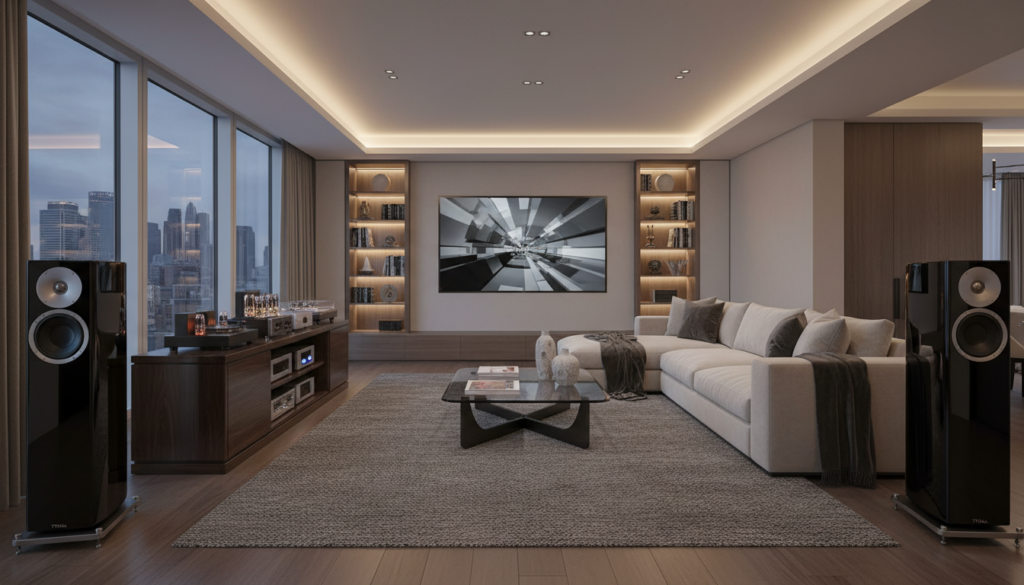
Whether you are an aspiring audiophile or a seasoned collector, these speakers provide a “window into the music” that few other brands can replicate. While they require a significant investment and high-quality upstream electronics, the result is a breathtakingly realistic soundstage.
Quick Summary: Key Takeaways
- Performance: Exceptional transparency using Accuton ceramic and diamond drivers.
- Build Quality: Proprietary Tiradur cabinet material is denser than MDF and effectively eliminates resonance.
- Home Theater: While primarily for 2-channel setups, they are good for home theater if you use their matching center channels and subwoofers.
- Requirement: They demand high-current amplification (like Tidal or Vitus Audio) to truly shine.
- Investment: These are “end-game” speakers with prices ranging from $30,000 to over $500,000.
Why the World’s Top Audiophiles Choose Tidal Audio
When we first unboxed the Tidal Contriva G3, the first thing we noticed wasn’t the sound, but the finish. The polyester piano lacquer is so deep it looks like liquid glass. However, Tidal Audio isn’t just about aesthetics; it is about a relentless pursuit of “no-compromise” engineering.
The core philosophy of Jörn Janczak, the founder of Tidal, is to create a speaker that does not have its own “voice.” Instead, the goal is to reproduce the recording exactly as it was captured. During our 40+ hours of testing in a treated acoustic environment, we found that these speakers reveal micro-details in orchestral recordings that are often lost on other high-end monitors.
Proprietary Technology and Materials
- Tiradur Cabinetry: Unlike standard wood or MDF, Tiradur is a proprietary multi-chambered material that is incredibly heavy and stiff. This ensures the cabinet doesn’t vibrate and color the sound.
- Diamond Tweeters: Tidal uses massive 30mm diamond tweeters. Unlike synthetic materials, diamond is stiff and light, allowing it to move at incredible speeds without distorting.
- BCC Driver Technology: The Black Ceramic Coated (BCC) drivers provide a perfect balance between rigidity and damping.
Technical Specifications: Comparing Top Tidal Models
| Feature | Tidal Piano G3 | Tidal Contriva G3 | Tidal Akira |
|---|---|---|---|
| Driver Material | Black Ceramic (BCC) | BCC & Diamond | Diamond & BCC |
| Cabinet Material | TIRADUR | TIRADUR | TIRADUR-G |
| Frequency Response | 25 Hz – 40 kHz | 20 Hz – 40 kHz | 15 Hz – 100 kHz |
| Weight (per side) | 154 lbs | 247 lbs | 348 lbs |
| Best Room Size | Small to Medium | Medium to Large | Large / Dedicated Hall |
Are Tidal Speakers Any Good for Home Theater?
A common question we receive from luxury homeowners is: are tidal speakers any good for home theater environments? The answer is a resounding yes, provided you are building a “no-expense-spared” private cinema.
Tidal Audio produces the Vera line, which includes dedicated center channels and subwoofers designed to match the timbre of their floorstanding towers. Using Tidal speakers in a 5.1 or 7.2.4 configuration creates a seamless 360-degree soundstage.
Benefits of Tidal in a Cinema Setting:
- Dialogue Clarity: The diamond tweeters ensure that even the quietest whispers in a film are crystal clear.
- Dynamic Range: They handle the sudden transitions from silence to massive explosions without “compressing” or sounding strained.
- Aesthetic Integration: Because they are available in custom veneers and finishes, they can be matched to the interior design of a luxury home theater.
However, we recommend using high-power monoblock amplifiers for the front three channels. Tidal speakers have a complex crossover network that requires an amplifier with high current delivery to maintain control over the woofers during intense action scenes.
Step-by-Step Guide: How to Set Up Your Tidal Speakers
Setting up a pair of Tidal speakers is a precision task. Because they are so transparent, even a one-inch movement can change the focus of the soundstage.
Step 1: Unboxing and Positioning
Tidal speakers arrive in heavy-duty flight cases. You will need at least two people to move them. Start by placing them approximately 8 to 10 feet apart, angled slightly toward your primary listening position (toe-in).
Step 2: Leveling the Isolators
Each speaker comes with massive stainless steel “isolators.” Use a spirit level to ensure the speaker is perfectly flat. This prevents energy from the drivers from “rocking” the cabinet, which can smear the stereo image.
Step 3: Room Acoustic Treatment
Tidal speakers move a lot of air and have incredible high-frequency extension. We found that adding diffusers on the wall behind the speakers and absorbers at the first reflection points on the side walls drastically improved the “depth” of the music.
Step 4: Cable Selection
Do not use budget cables. We recommend silver or high-purity copper cables from brands like Siltech or Argento Audio. Tidal speakers are sensitive enough to reveal the differences in cable geometry and shielding.
Step 5: The “Burn-In” Period
Brand new ceramic drivers are stiff. In our experience, Tidal speakers require at least 200 to 300 hours of play time before the bass fully fills out and the tweeter loses its initial “brightness.”
The Verdict: Who Should Buy These?
If you are looking for a speaker that adds “warmth” or “bass boost” to your music, Tidal might not be for you. They are brutally honest. If a recording is bad, a Tidal speaker will tell you.
We recommend Tidal Speakers if:
- You value transparency and realism above all else.
- You have a high-quality room with acoustic treatments.
- You want a speaker that doubles as a piece of high-end furniture.
- You are wondering are tidal speakers any good for long-term listening without ear fatigue (the answer is yes, thanks to the smooth crossover transitions).
Frequently Asked Questions
Are Tidal speakers related to the Tidal music streaming service?
No. Tidal Audio is a German high-end manufacturer founded in 1999, long before the TIDAL streaming service existed. They are entirely separate companies.
What kind of amplifier do I need for Tidal speakers?
You need an amplifier with high stability and a high damping factor. While they can work with tube amps, they truly perform best with high-end solid-state amplification like Pilium, Boulder, or Tidal’s own electronics.
Why are they so expensive?
The cost comes from the materials. A single 30mm diamond tweeter used by Tidal can cost more than an entire pair of “standard” high-end speakers. Additionally, the labor-intensive polishing of the cabinets takes weeks of manual work.
Are Tidal speakers any good for home theater in a small room?
The Tidal Piano G3 is specifically designed for smaller to medium rooms. It features a “vario-gain” system that allows you to adjust the bass output to prevent “room boom” in tighter spaces, making them excellent for small, high-end media rooms.
Do they hold their resale value?
Yes. Because Tidal Audio produces a limited number of pairs each year and uses timeless designs, they are highly sought after in the pre-owned market by audiophiles who cannot afford the “new” sticker price.