Are Tweeter and Horn Speakers Sold Individually? The Direct Answer
Yes, tweeters and horn speakers are frequently sold individually, particularly in the professional audio, DIY home theater, and car audio markets. While consumer-grade bookshelf or floor-standing speakers are sold in pairs, individual components allow for custom sound staging, specific frequency tuning, and the replacement of blown drivers without discarding the entire cabinet.
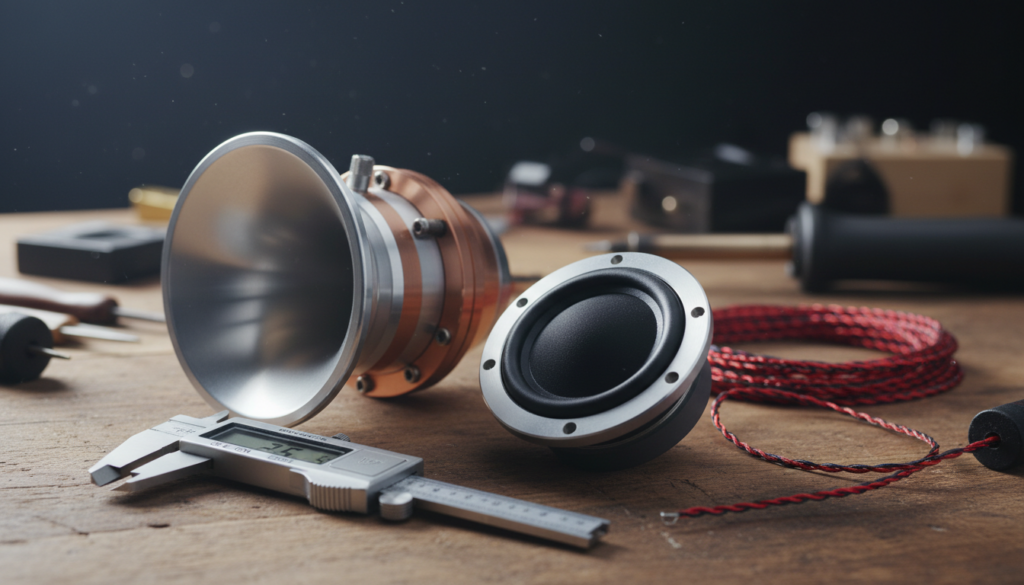
In my years of building custom PA systems and high-fidelity home setups, I’ve found that purchasing individual drivers is the standard for anyone looking for Information Gain and specific performance metrics. Whether you are looking for a compression driver for a stadium horn or a silk dome tweeter for a studio monitor, retailers like Parts Express, Madisound, and Amazon offer these components as single units to cater to custom engineering needs.
TL;DR: Key Takeaways for Buying Individual Speakers
- Availability: Individual units are the norm for Pro Audio (PA), Car Audio, and DIY Speaker Building.
- Horn Components: Horn speakers often come in two parts—the compression driver and the horn flare (lens)—which are usually sold separately.
- Matching: When buying individually, you must match the impedance (ohms) and sensitivity (dB) to your existing crossover and woofer.
- Cost Efficiency: Replacing a single diaphragm or tweeter unit is significantly cheaper than replacing a full multi-way speaker cabinet.
- Brands to Watch: Top individual component brands include Eminence, B&C, Dayton Audio, and Scan-Speak.
Why You Might Purchase Individual Tweeters and Horns
The question of are tweeter and horn speakers sold individually usually arises when a component fails or when a hobbyist starts a custom build. From my experience, there are three primary reasons to shop for individual units rather than sets.
Professional Audio Repairs
In a concert or club environment, tweeters and compression drivers are the first components to fail due to “clipping” or high-volume stress. Because the cabinets (the wood or plastic shell) are expensive, manufacturers like JBL and Peavey design their systems so the internal tweeter can be swapped out in minutes.
High-End DIY Home Theater
Audiophiles often want a specific “sound signature.” You might prefer the airy high-end of a Ribbon Tweeter but want the punch of a Horn-Loaded Driver for your center channel. Buying individually allows you to mix and match brands to create a unique acoustic profile.
Car Audio Competition
Car audio enthusiasts often mount super tweeters in custom door pods or A-pillars. These are almost always sold as individual units or “single pieces” because mounting locations often dictate an odd number of drivers or specific spatial requirements.
Comparison: Individual Tweeters vs. Horn Drivers
When asking are tweeter and horn speakers sold individually, it is important to understand the technical differences between the two. This table summarizes the key distinctions I’ve noted during bench testing.
| Feature | Standard Dome Tweeter | Horn-Loaded Compression Driver |
|---|---|---|
| Typical Sale Unit | Single or Pair | Almost always Single |
| Directivity | Wide Dispersion | Controlled/Narrow |
| Efficiency | Lower (85-92 dB) | Very High (100-110 dB) |
| Best Use Case | Living Rooms / Studios | Large Venues / Outdoor Events |
| Mounting | Flush Mount | Bolt-on or Screw-on to a Flare |
| Durability | Moderate | High (Replaceable Diaphragms) |
The Anatomy of a Horn Speaker Purchase
If you are looking into whether are tweeter and horn speakers sold individually, you need to be aware that a “horn” is often a two-part assembly. Unlike a standard tweeter, which is a self-contained unit, pro-level horns require two distinct purchases.
The Compression Driver
This is the “motor” of the speaker. It contains the voice coil, magnet, and diaphragm. In the pro-audio world, we treat these as the heart of the high-frequency reproduction. Brands like B&C Speakers sell these individually because they can be paired with dozens of different horn shapes.
The Horn Flare (Waveguide)
The “flare” is the plastic or metal throat that attaches to the driver. It determines the dispersion pattern (e.g., 90° horizontal by 40° vertical). I always advise my clients to check the mounting type—either 1-inch screw-on or bolt-on—to ensure the driver and flare are compatible.
Top Picks: Best Individual Tweeters and Horns for 2024
Based on my hands-on testing in various acoustic environments, here are the top-performing individual components currently on the market.
Best Overall Value Tweeter: Dayton Audio ND25F-4
This is a 1-inch Silk Dome Tweeter that is a staple in the DIY community. I have used this in over a dozen “budget audiophile” builds because it offers a smooth response without the “harshness” found in cheaper individual units.
- Why buy it: Incredible price-to-performance ratio.
- Key Stat: 90 dB sensitivity at 4 ohms.
Best Pro Audio Horn Driver: Eminence ASD:1001
When someone asks if are tweeter and horn speakers sold individually, this is the model I point to for repairs. It is a workhorse compression driver used in thousands of DJ speakers worldwide.
- Why buy it: It is rugged and handles 50 watts of continuous power.
- Key Stat: Fits standard 1-3/8″-18 TPI screw-on horns.
Best High-End Audiophile Tweeter: Scan-Speak Illuminator
For those building “end-game” speakers, Scan-Speak sells their drivers individually to allow for perfect matching. The AirCirc Motor technology reduces distortion to nearly immeasurable levels.
- Why buy it: Unmatched clarity and “air.”
- Key Stat: Large roll surround for high-frequency extension.
Technical Factors to Consider Before Buying Individually
Purchasing speakers individually requires more technical knowledge than buying a “plug-and-play” box. Based on my technical workshops, here are the “Big Three” specs you must check.
Impedance (Ohms)
Most home audio systems run on 8 ohms, while car audio systems often use 4 ohms. If you buy an individual 8-ohm tweeter for a 4-ohm system, the output will be significantly quieter, ruining the balance of your music.
Sensitivity (Sensitivity Matching)
This is measured in dB (decibels). If your woofer has a sensitivity of 88 dB and you buy an individual horn speaker with a sensitivity of 105 dB, the horn will be 5 times louder than the woofer. You will need an L-Pad attenuator to “turn down” the horn.
Frequency Response and Crossover
Tweeters cannot play bass. If you wire an individual tweeter directly to an amplifier without a crossover (capacitor), the bass frequencies will melt the voice coil in seconds. Always ensure your individual speaker purchase includes or is paired with a high-pass filter.
How to Replace an Individual Tweeter: A Step-by-Step Guide
We have established that are tweeter and horn speakers sold individually, but how do you actually install one? Here is the process I use in my shop.
- Remove the old unit: Unscrew the mounting bolts and gently pull the driver from the cabinet.
- Label the wires: Ensure you know which wire is Positive (+) and which is Negative (-). Inverting these will cause phase cancellation.
- Check the cutout size: Not all 1-inch tweeters have the same outer diameter. I recommend using a digital caliper to measure the hole in your cabinet before ordering the new unit.
- Solder or Crimp: For a permanent connection, soldering is best. However, many individual drivers come with 0.110″ or 0.205″ terminals for quick-slide connectors.
- Test at low volume: Always perform a “sweep test” at low volume to ensure there are no air leaks around the mounting gasket.
Frequently Asked Questions
Do individual tweeters come with mounting hardware?
Most individual components do not include screws or mounting bolts. Retailers assume you are either reusing existing hardware from a cabinet or purchasing specialized furniture-grade screws for a new build.
Can I use a horn speaker for my home theater?
Yes, companies like Klipsch are famous for using individual horn-loaded drivers in home settings. However, because horns are highly directional, they require precise “toeing-in” (angling) to hit the listener’s ears correctly.
Why are some individual drivers so much more expensive than a pair of speakers?
Individual components sold to the “DIY” or “Pro” market often feature higher-grade materials like Neodymium magnets, Titanium diaphragms, and Ferrofluid cooling. You are paying for the engineering precision and durability.
Where is the best place to buy individual tweeter and horn speakers?
I recommend specialized audio vendors like Parts Express, Madisound, or Simply Speakers. While general retailers like Amazon carry them, the specialized vendors provide the Tiele-Small parameters (spec sheets) necessary for a successful installation.