The Real Answer: Are Weather Proof Speakers Same as Water Proof?
No, weatherproof speakers and waterproof speakers are not the same; weatherproof typically means the device can withstand rain, humidity, and UV rays, while waterproof implies the speaker can be fully submerged in water for a specific period. If you are looking for equipment to leave by the pool or on a deck, understanding the IP (Ingress Protection) rating is the only way to ensure your investment doesn’t short-circuit after the first storm.
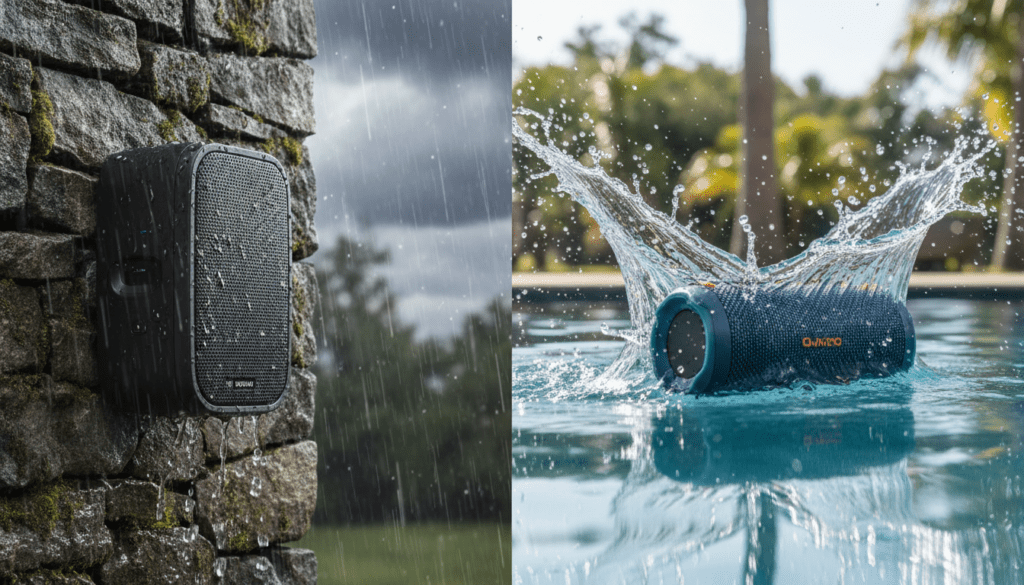
Throughout my decade of installing high-end outdoor audio systems in coastal environments, I’ve seen hundreds of “outdoor” speakers fail because owners confused these two terms. Weatherproof models are built for endurance against the elements, whereas waterproof models are built for accidental (or intentional) dunks in the pool.
Quick Summary: Key Takeaways
- Weatherproof focuses on protection against UV rays, extreme temperatures, and moisture.
- Waterproof focuses strictly on liquid immersion (usually rated IPX7 or higher).
- Always check the IP Rating: The first digit is for solids (dust), and the second is for liquids.
- Saltwater environments require specialized “marine-grade” hardware, which goes beyond standard weatherproofing.
- For permanent outdoor installations, look for UV-resistant housings and gold-plated connectors to prevent corrosion.
Decoding the Labels: Are Weather Proof Speakers Same as Water Proof?
When you shop for audio gear, manufacturers often use “weather resistant,” “weatherproof,” and “waterproof” interchangeably to catch your eye. However, from a technical engineering standpoint, they represent very different levels of protection.
What Defines a Weatherproof Speaker?
A weatherproof speaker is designed to live outdoors 24/7. These units feature UV-stabilized enclosures that won’t crack under the sun and powder-coated aluminum grilles that resist rust. I’ve installed Sonance and Klipsch landscape speakers that have survived five years of scorching heat and freezing winters because their internal components are sealed against atmospheric moisture.
What Defines a Waterproof Speaker?
A waterproof speaker is generally a portable device, like a JBL Flip or UE Boom. These are designed with heavy-duty rubber seals and internal gaskets. They are rated to survive being dropped into a meter of water. While they are great for the beach, they often lack the UV protection required for permanent outdoor mounting.
The Ingress Protection (IP) Scale
To know for certain if weather proof speakers are the same as water proof, you must look at the IP Rating chart. This is the industry standard for measuring durability.
| IP Rating | Protection Level | Best Use Case |
|---|---|---|
| IPX4 | Splashes from any direction | Under a covered patio or porch. |
| IPX5 | Low-pressure water jets | Exposed areas with heavy rain. |
| IPX6 | High-pressure water jets | Coastal areas with heavy storms. |
| IPX7 | Immersion up to 1 meter | Poolside or on a boat deck. |
| IP68 | Total dust-tight & deep immersion | Industrial or extreme environments. |
Why “Weatherproof” is Often Better for Permanent Installs
If you are mounting speakers to your house or hiding them in your garden, a “waterproof” rating is actually less important than a high-quality weatherproof construction.
UV Protection and Heat Dissipation
Standard waterproof speakers often use plastics that become brittle when exposed to sunlight for months. Weatherproof outdoor speakers use ABS plastics or polypropylene with UV inhibitors. This ensures the casing doesn’t flake or discolor, maintaining the structural integrity of the internal seal.
Corrosion Resistance
In my experience, the biggest killer of outdoor audio isn’t the rain; it’s the salt and oxidation. Weatherproof models utilize stainless steel hardware and brass or gold-plated terminals. If you use a standard waterproof portable speaker outside permanently, the charging ports and buttons will likely seize up within a year due to oxidation.
Temperature Fluctuations
True weatherproof speakers are tested for “thermal shock.” This means they can handle a 40-degree drop in temperature overnight without the speaker cone or surround (the rubber part) cracking. Most portable waterproof speakers are designed for use between 50°F and 95°F, making them poor choices for snowy climates.
Step-by-Step Guide: How to Choose the Right Speaker for Your Space
Choosing between weatherproof and waterproof depends entirely on your specific environment. Follow these steps to ensure you don’t waste money on the wrong tech.
Step 1: Evaluate Your Placement
- Fully Covered (Porch/Ceiling): You can save money by choosing weather-resistant speakers. Look for an IPX4 rating.
- Partial Exposure (Under Eaves): These will get hit by wind-blown rain. Aim for IPX5.
- Full Exposure (Garden/Fence): These require high-tier weatherproof ratings. Look for IPX6 and UV-rated plastics.
Step 2: Check the “Marine Grade” Status
If you live within 5 miles of the ocean, standard weatherproofing isn’t enough. You need Marine Grade certification. These speakers undergo salt-fog testing for 500+ hours. Brands like JL Audio and Rockford Fosgate dominate this space because they use non-corrosive materials in every screw and wire.
Step 3: Inspect the Connectivity
For permanent outdoor setups, you want passive speakers (wired to an indoor amplifier). Wireless/Bluetooth waterproof speakers are convenient, but their internal batteries degrade rapidly in extreme heat. Wired weatherproof speakers are the “set it and forget it” solution.
Step 4: Verify the Driver Material
Look for speakers using Carbon Fiber, Polypropylene, or Aluminum cones. Avoid any outdoor speaker that mentions “treated paper” or “silk domes” unless they are exceptionally well-sealed, as these materials soak up humidity and lose sound quality over time.
How to Install and Maintain Your Outdoor Audio System
Once you’ve decided that weather proof speakers are not the same as water proof, and you’ve bought the right pair, you need to protect them. Even the best gear requires proper setup to last.
Use Drip Loops
When running wire to your weatherproof speakers, always leave a small loop of wire hanging below the entry point of the speaker. This forces rainwater to drip off the wire before it can reach the terminals or enter the speaker housing.
Apply Dielectric Grease
I always recommend applying a small amount of dielectric grease to the wire connections. This non-conductive silicone grease creates an airtight seal that prevents moisture from reaching the copper wire, stopping green corrosion (oxidation) in its tracks.
Aim Downward
Most outdoor speakers have a slight “overhang” or “brim” on the grille. Mounting them with a slight downward tilt (about 5-10 degrees) prevents water from pooling against the woofer or sitting in the crevices of the grille.
Seasonal Cleaning
At least once a year, wipe down your speakers with a damp cloth and a very mild soap. Removing pollen, bird droppings, and salt spray prevents the chemicals in those substances from eating through the protective coatings of the speaker.
Comparison: Portable Waterproof vs. Fixed Weatherproof
| Feature | Portable Waterproof | Fixed Weatherproof |
|---|---|---|
| Power Source | Internal Battery (Li-ion) | Hardwired (Amp required) |
| Submersibility | High (IPX7+) | Low (Usually splash-proof) |
| UV Resistance | Low to Moderate | High (Designed for sun) |
| Sound Stage | Small/Directional | Wide/Immersive |
| Longevity | 2-4 years | 10-15 years |
Frequently Asked Questions
Can I leave my waterproof speaker outside all summer?
It is not recommended. While the speaker may handle a rainstorm, standard waterproof portable speakers lack the UV inhibitors needed to prevent the casing from becoming brittle. The internal lithium-ion battery can also become unstable or swell when exposed to direct sunlight and high temperatures.
Do weatherproof speakers need to be covered in winter?
If you live in a climate with heavy snow and ice, it is a “best practice” to cover them or bring them inside. While weatherproof speakers are built to survive cold, the expansion and contraction of ice inside the speaker grille can eventually deform the metal or damage the driver components.
What is the difference between IP67 and IPX7?
The “6” in IP67 means the device is completely dust-tight. The “X” in IPX7 means the device was not tested for dust protection, but it still meets the level 7 water immersion standard (1 meter for 30 minutes). For outdoor garden speakers, an IP66 or IP67 rating is ideal because it keeps out both rain and ants/dirt.
Are Bose outdoor speakers waterproof?
Most Bose outdoor speakers, like the Bose 251, are weatherproof, not waterproof. They are designed to withstand snow, rain, and salt spray, but they cannot be submerged in a pool. They are engineered to live outside permanently in extreme conditions.
Is “Weather Resistant” the same as “Weatherproof”?
No. Weather-resistant is the lowest tier of protection, usually meaning the device can handle a bit of humidity or a light mist. Weatherproof is a more robust term used for devices that can handle direct, heavy rainfall and long-term environmental exposure.